Your first hike in life is always an exciting adventure that leaves lasting memories. To ensure it brings only pleasant recollections, it's worth preparing thoroughly, especially when choosing your main "home" in nature. Among the vast array of camping gear, the tent for your first hike will become your fortress, protecting you from wind, rain, and insects. How can you navigate the assortment and choose a reliable option that won't let you down in a critical moment? Basic knowledge of construction types and materials will help you understand this issue. According to the recommendation of the ComfortShop editorial team, beginners should pay attention to universal models that combine ease of setup with a sufficient level of protection.
? Table of Contents
Determine the Construction Type: Classic or Modern
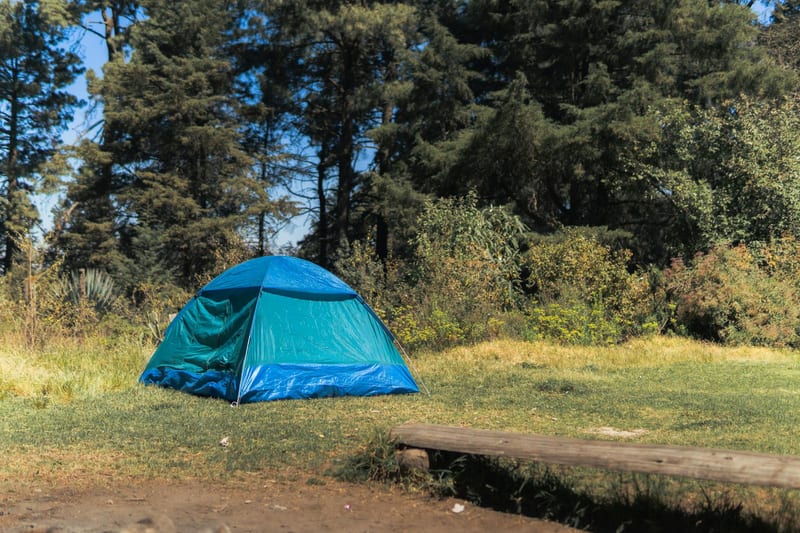
The first thing a buyer encounters is the variety of shapes and constructions. The most common are ridge tents and models shaped like a "hemisphere" or "dome." Ridge tents are a classic, known since the days of Soviet tourism. They are simple and cheap, but often heavier and less resistant to strong side winds. Their main drawback is the need for many pegs for tensioning.
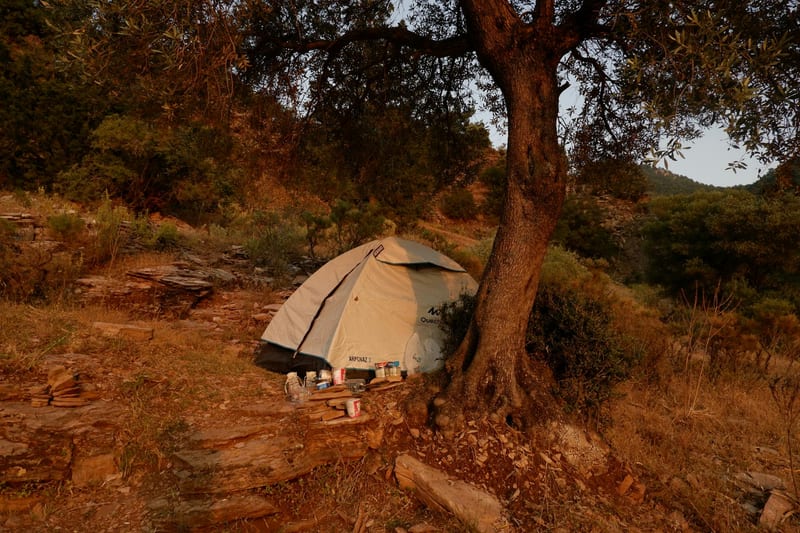
In contrast, modern dome tents are the optimal choice for beginners. Their poles cross, creating a rigid frame that doesn't require perfect tension. Such a tent for a hike sets up quickly, often by one person, and holds its shape well even in bad weather. It is dome constructions that experts recommend for first outings into nature, as they forgive mistakes during setup.
Number of Layers: Single or Double Protection
By the number of fabric layers, tents are divided into single-layer and double-layer. Single-layer models are light and compact, but have a significant drawback: condensation. At night, it's warmer inside the tent than outside, so moisture from breathing settles on the single wall, making the sleeping bag damp. This can ruin your mood and lead to hypothermia.
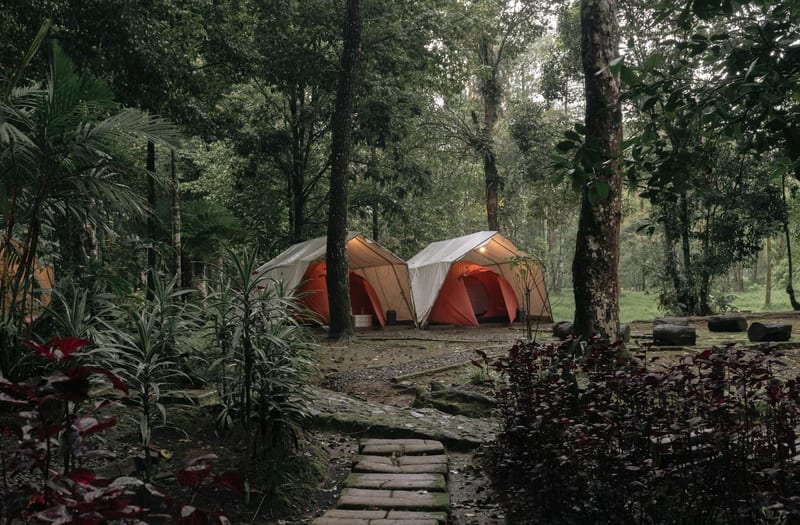
A double-layer tent for your first hike is the gold standard. It consists of an inner "bedroom" made of lightweight, breathable material and an outer flysheet that protects from rain. Moisture from breathing is expelled through the inner layer, while the flysheet remains dry. This design ensures a comfortable microclimate and is the best answer to the question of how to choose a tent for a beginner.
Materials: What to Choose for Durability
The weight, strength, and waterproofness of the tent depend on the material of the flysheet and floor. The most common materials are polyester and nylon. Polyester is less susceptible to UV damage, retains its color longer, and stretches less in the rain. Nylon is lighter but can stretch when wet, requiring re-tensioning of guy lines after rain.
The key parameter is the waterproofness of the flysheet, measured in millimeters of water column (mm H2O). For summer hikes, 2000-3000 mm is sufficient; for the shoulder seasons, it's better to choose a rating of 4000 mm or more. The tent floor should be even stronger — from 5000 to 10000 mm — as it is constantly in contact with damp ground. ComfortShop experts advise not to skimp on the floor material, as it is the most common cause of getting wet.
How to check seam quality before buying.
Pay attention to seam taping. Even the best material will leak if the seams are not treated. Quality tents have taped seams on the flysheet and floor. If you see that the seams are simply stitched, such a tent for beginners could ruin your trip. If in doubt, it's better to choose a model with taped seams from a trusted manufacturer.
Weight and Compactness: Balance for Hiking
For car trips, the weight of the tent doesn't matter, but for a hiking trip, every gram counts. The optimal weight for a two-person tent is between 2 and 3.5 kg. If you plan to carry your gear yourself, you should look for lighter models, even if they cost more. An overly heavy tent will tire you out quickly on the very first day of the route.
Compactness when packed is also important. Modern tents fit into a cylinder 40-50 cm long, which can be attached to a backpack vertically or horizontally. Remember: the smaller the packed volume of the tent, the more space remains for food, clothes, and the sleeping bag. This is one of the main practical tips for choosing a tent for long treks.
Interior Space and Vestibule: Comfort Above All
Manufacturers often indicate the tent's capacity (2, 3, or 4 people), but the actual space can differ. For a trip for two, a two-person tent is comfortable, but if you plan to take a lot of gear inside, it's better to consider a 3-person model. An extra 20-30 cm of width significantly increases comfort, especially in rainy weather when you have to sit inside for a long time.
The vestibule is the space between the entrance and the inner tent. It is very convenient for storing dirty shoes, backpacks, and cooking under the flysheet. If you often hike in rainy regions, a tent for your first hike with a large vestibule will be your salvation. Some models have two vestibules — one for entry, the other for ventilation or storing gear.
Is it worth buying a tent with a vestibule for a summer hike?
Even on summer hikes, the vestibule performs an important function — it protects the interior space from mosquitoes and dew. You can leave the entrance open for ventilation, while the mosquito netting of the vestibule keeps insects out. This significantly increases the comfort of sleeping outdoors.

Poles: Aluminum or Fiberglass
The poles are the skeleton of your tent. They come in aluminum and fiberglass. Fiberglass poles are cheaper but heavier and less resistant to strong winds — they can crack in a sudden gust. They are suitable for calm trips in the forest or by a lake where there are no strong winds.
Aluminum poles are the choice for serious hikes. They are lighter, more flexible, and have high strength. Even under severe bending, aluminum doesn't break but simply deforms, and it can often be straightened out. If you plan to hike in the mountains or open areas, it's better to invest in a tent with an aluminum frame right away. This is one of the most important tips for choosing a tent for long-term use.
Conclusion:
Choosing a tent for your first hike is a balance between weight, price, and protection. Beginners should focus on double-layer dome models with a polyester flysheet, taped seams, and aluminum poles. Such a tent for beginners will become a reliable companion for many years. As the ComfortShop reviewers note, you shouldn't chase ultra-cheap options — it's better to choose a proven model from a well-known brand that will last a long time and won't let you down in bad weather. Remember: a good tent is the key to a good rest and safety. Invest in quality, and your first hike will leave only positive emotions.
Frequently Asked Questions
Which tent is best for a first hike?
For your first hike, choose a two-person dome tent with a double layer (inner and outer flysheet) and waterproofness of at least 3000 mm. This provides a balance between weight, wind resistance, and ease of setup.
Is it worth buying the most expensive tent for beginners?
No, beginners don't need a professional tent costing 10,000 UAH. Choose an affordable model from trusted brands (e.g., Tramp or Alexika) — it will withstand rain and wind without being too light or expensive.
How do I determine how many people the tent should be for a hike?
For comfort, get a tent with extra space: one person should get a two-person tent, two people a three-person tent. This allows you to store gear inside and not feel cramped while sleeping.
Is a vestibule important in a tent for a first hike?
Yes, a vestibule is very useful: it protects the entrance from rain and allows you to keep shoes and backpacks dry. Choose a tent with a small vestibule — it will significantly increase comfort in bad weather.