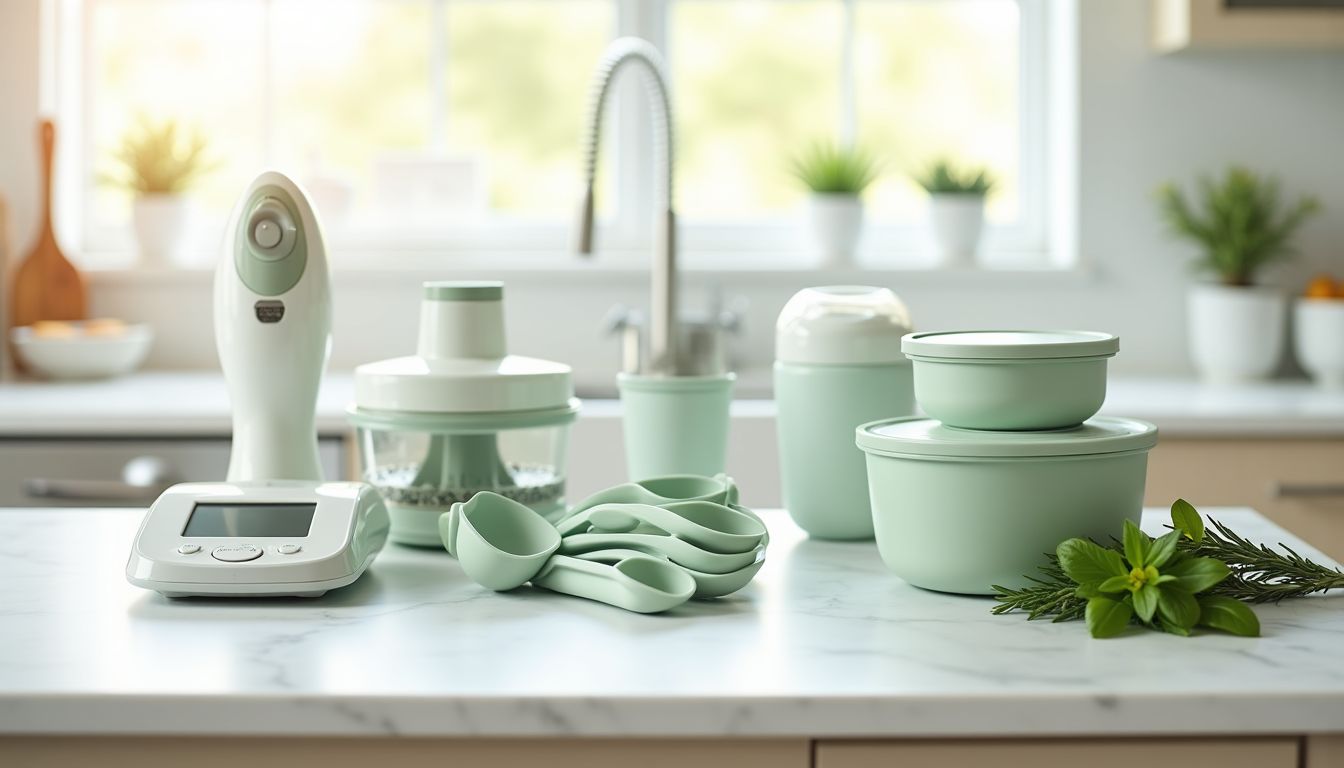
Bulk product dispensers are gradually transforming from a niche accessory into a must-have element of the modern kitchen. Convenience of storage, portion accuracy, and aesthetics — these are the three pillars on which their popularity rests. This review of cereal dispensers will help you navigate the variety of models presented on marketplaces. The ComfortShop editorial team analyzed the characteristics of the most common types of designs so that you can make an informed choice. We will examine the practicality, materials, and nuances of using these kitchen gadgets.
Table of Contents
Key Benefits of Using Dispensers
The main function of any dispenser is controlled product dispensing. Unlike regular jars, where you have to wield a spoon or pour "by eye," a dispenser delivers a precisely calibrated portion with a single press of a lever or turn of a handle. This is especially valuable for those who monitor their nutrition or simply appreciate order on the work surface.
The second important advantage is hygiene. The airtight body protects the contents from moisture, dust, and food moths, which is a real problem for open bags of flour or cereals. In addition, most models are easy to disassemble for washing, which meets safety standards.
The visual component should not be overlooked either. Uniform transparent containers with neat lids look much more attractive than a chaotic set of bags. This allows you to create a unified style in the food storage area.
Types of Designs: From Mechanical to Automatic
The market offers two main types of devices: mechanical and electronic. The choice between them depends on the budget, frequency of use, and the type of product you plan to store.
Mechanical Dispensers: Reliable Classics.
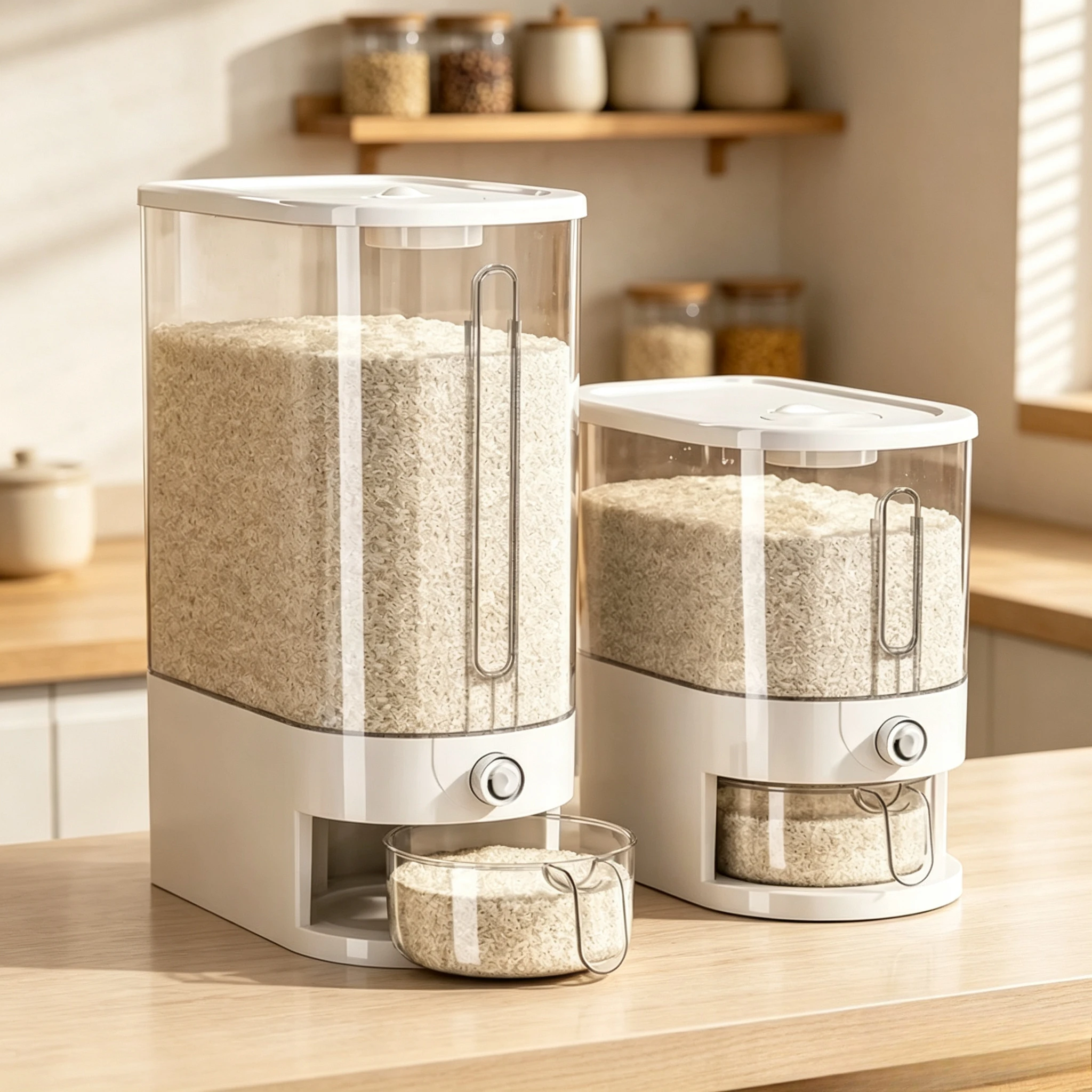
The most common option is a container with a compartment at the bottom. When you press a button or lever, a gate opens, and the product pours out under the force of gravity. Such models are ideal for medium-fraction cereals: buckwheat, rice, pearl barley. They do not require batteries and break extremely rarely, as confirmed by numerous reviews of cereal and coffee dispensers.
Models with a rotary mechanism deserve special mention. They work on the principle of an auger or a drum with blades. This design is better suited for products prone to caking, such as ground coffee or powdered sugar, since it mechanically loosens the contents during rotation.
Electronic Models: Precision Above All.
Electronic coffee dispensers are usually equipped with a display and can measure weight with gram precision. They are more expensive but indispensable for preparing beverages where precise formulation matters. However, according to the ComfortShop editorial analysis, for household storage of regular cereals, their functionality is often excessive.
Materials and Safety: What to Look For
Since dispensers come into contact with food, the material plays a primary role. The best kitchen dispensers are made of food-grade plastic (ABS, Tritan) or glass. Plastic is lighter and cheaper, but over time it may absorb odors or scratch. Glass is inert, eco-friendly, and durable, but such a body is heavier and more fragile.
It is important to check for silicone seals on the lid and in the dispensing mechanism. They are what ensure airtightness, protecting coffee from the evaporation of essential oils and cereals from the appearance of bugs. Before purchasing, it is worth looking at photos from the back or clarifying with the seller the information about the package contents.
Pay attention to the labeling. The product must be suitable for contact with food products (the "glass and fork" symbol). Low-quality plastic may release harmful substances upon contact with fatty or warm products.
Selection Features for Different Products
There is no universal solution. What is perfect for rice may not be suitable for oatmeal flakes or ground coffee. Let us consider the specifics of selection for particular tasks.
For fine-fraction cereals (semolina, corn grits), a dispenser with tightly fitted mechanism parts is needed. If the gap is too large, the product will spill out on its own. Conversely, for large flakes or star-shaped pasta, the opening must be wide enough to avoid jamming.
A dispenser for bulk products such as flour or powdered sugar should be equipped with an anti-dust system. Pay attention to models where the mechanism is fully enclosed and dispensing occurs into a receiving cup. This will protect the countertop from white residue.
For whole-bean coffee, models with a transparent body and UV protection or darkened plastic are often recommended. Light destroys aromatic compounds, so storage should be as dark as possible if you do not grind the beans within a week.
Analysis of Reviews and Evaluation Criteria
After analyzing open sources, the ComfortShop editorial team notes several recurring usage scenarios. Most buyers choose wall-mounted or magnetic models to save countertop space. Such gadgets are attached to the refrigerator or tiled wall, which is indeed convenient in a small kitchen.
Among the negative points in reviews, the fragility of mounts and too-stiff button travel are most often mentioned. This is worth considering: if there are children or elderly people in the family, it is better to choose models with a soft press or a large lever.
Before buying a cereal dispenser, pay attention to the volume. The most popular models are from 1 to 2 liters. Smaller ones require frequent refilling, and larger ones may be too heavy for wall mounting. Calculate the volume based on the rate of product consumption.
Practical Care Tips
The longevity of the gadget directly depends on proper care. Most plastic parts cannot be washed in a dishwasher at high temperatures, as they may deform. Hand washing in warm soapy water is recommended.
Before first use, be sure to rinse all elements that come into contact with food. After washing, thoroughly dry the mechanism to avoid mold formation in hard-to-reach places. Do not leave a wet container closed for a long time.
If you store coffee, do not mix a new portion of beans with the old one. This leads to an uneven taste of the beverage. It is better to wait until the container is completely empty, wash it, and only then pour in a fresh batch.
Conclusion:
Cereal and coffee dispensers are truly a useful purchase for those who value order, hygiene, and precision in the kitchen. According to the recommendation of the ComfortShop editorial team, for most users the optimal choice would be mechanical models made of transparent Tritan plastic or glass, with a volume of 1-1.5 liters, with an airtight lid and a convenient lever. Before placing an order, carefully study the characteristics of the specific seller and check the price on the marketplace website, as delivery conditions and warranty may differ.
Frequently Asked Questions
Do cereal and coffee dispensers really make life in the kitchen easier?
Yes, according to user reviews, they allow you to quickly measure the required portion without dirty spoons and spilled cereals. The ComfortShop editorial team analyzed the characteristics of popular models in the review so that you can choose an option that suits your habits.
How to choose a dispenser for bulk products — what to look at first?
Pay attention to the container volume, lid airtightness, material (food-grade plastic or glass), and the convenience of the dispensing mechanism. For coffee, portion accuracy is important, while for cereals, the width of the opening matters so that oatmeal or rice does not clog it.
Where to buy a cereal and coffee dispenser and how much does it cost?
Dispensers are sold on marketplaces (AliExpress, Rozetka, etc.) and in kitchenware stores — check the price and availability directly on the seller's website. ComfortShop does not sell products but only compares models and provides links to sellers.
Should you trust reviews on cereal and coffee dispensers before buying?
Reviews are useful, but keep in mind that they are subjective and depend on the specific seller and batch of goods. We advise combining them with an analysis of characteristics in our review and checking the warranty and return conditions with the seller directly.