Trekking poles have long ceased to be just an accessory for older people or professional climbers. Today, they are an essential piece of gear for anyone who takes hiking, mountain routes, or even ordinary walks over rough terrain seriously. In this material, the ComfortShop editorial team presents an honest review of trekking poles, relying solely on analysis of technical specifications, user reviews, and open data from manufacturers. We do not sell these products, but we will help you understand what to look for before purchasing.
Article Contents
Why do you need trekking poles at all
Many beginner hikers believe that poles are just extra weight in a backpack. However, the physiology of movement says otherwise: during an ascent or descent, the load on the knee joints and spine increases several times over. Trekking poles allow you to redistribute part of this load to your arms and shoulder girdle, which is especially noticeable on long distances exceeding 10–15 kilometers.
Besides joint health, poles perform three other critically important functions. First, they provide an additional point of support on slippery, rocky, or dirt trails, which reduces the risk of falling. Second, they are convenient for checking the depth of puddles, wading rivers, or probing unstable rocks. Third, poles are often used as a frame for setting up lightweight tents or tarps, making them a versatile tool on a hike.
Having analyzed open sources, the ComfortShop editorial team notes: experienced hikers rarely set out on a challenging route without poles, regardless of the season.
How to choose trekking poles: key parameters
Choosing trekking poles begins with understanding exactly where you plan to use them. For flat walks and easy trails, simpler models will suffice, while mountain hikes with large elevation changes require more reliable and lighter options. Let's look at the basic criteria that will help you make the right choice.
Material of manufacture
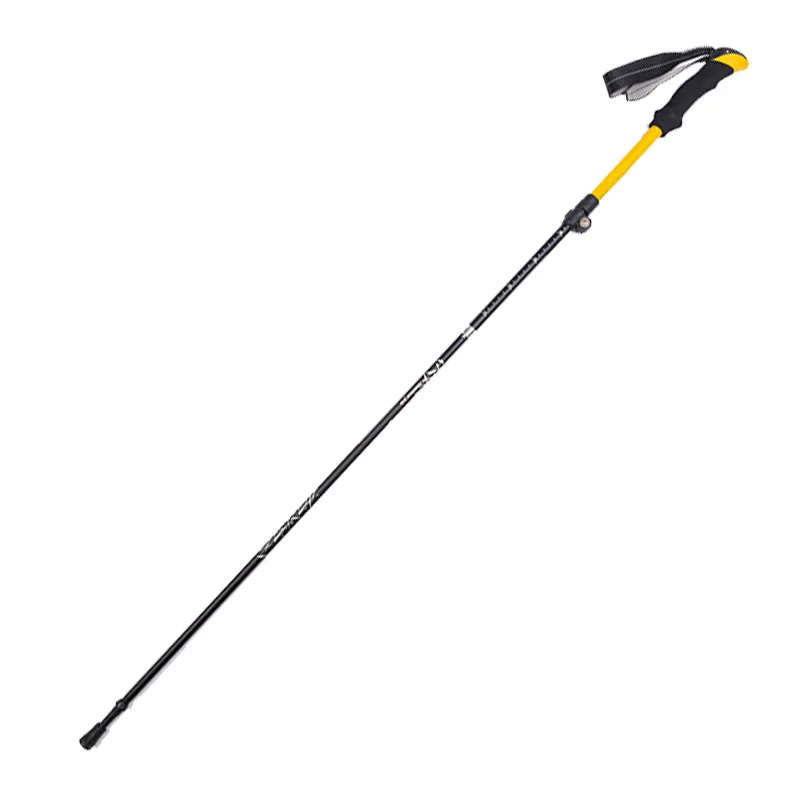
The most common materials for making trekking poles are aluminum and carbon. Aluminum models are cheaper, more resistant to impacts and deformation, but heavier. Carbon poles are significantly lighter and dampen vibration better upon contact with hard surfaces, but they are afraid of sharp lateral impacts and cost more. For most hikers, the optimal compromise is aluminum alloy 7075, which is used in the mid-price segment.
Type of construction
Poles come in telescopic (collapsible) and fixed-length types. Telescopic poles are more convenient for transportation and allow you to adjust the height for different conditions: shorter on ascents, longer on descents. Fixed models are lighter and more reliable, but require precise selection based on the user's height. Most hikers choose telescopic options because of their versatility.
The locking system should also be mentioned separately: internal (twist-lock) or external (clamp-lock). External clamps are more convenient to use; they can be adjusted even while wearing gloves, but they may snag on branches. The internal system is more compact but requires more time to adjust.
Handle and strap
Handles are made of cork, neoprene, or rubber. Cork handles are the most comfortable in hot weather: they do not slip in a sweaty palm and feel pleasant to the touch. Rubber ones are the cheapest, but in cold weather they can stiffen, and in heat they can cause chafing. Neoprene handles absorb moisture well and are suitable for cold conditions. The strap (wrist loop) should be adjustable and wide enough so as not to constrict the hand.
Best trekking poles for tourists: comparative analysis
Based on the analysis of specifications, the ComfortShop editorial team recommends paying attention to several categories of poles that are most frequently mentioned in positive user reviews. It is important to understand that specific brands and models may change depending on market availability, so before purchasing, it is worth checking current offers from sellers.
In the budget segment (up to 1000 hryvnias), aluminum telescopic models with rubber handles and simple external clamps dominate. They are perfect for occasional trips into nature, Nordic walking, and simple routes. Their main drawback is greater weight and faster wear of the locking mechanisms.
The mid-price range (1000–2500 hryvnias) offers a significantly wider selection: here you find poles with carbon sections, cork handles, and improved shock-absorption systems. The ComfortShop editorial team considers this segment optimal for most hikers who go on trips 2–4 times a year.
Premium models (from 2500 hryvnias) are distinguished by minimal weight, maximum rigidity, and thoughtful ergonomics. They are chosen by professional athletes, mountain hikers, and people for whom every gram of gear matters. Such poles often have additional features: interchangeable tips for different surface types, built-in anti-shock systems, and extended handles for a comfortable grip on steep ascents.
Trekking poles for mountains: selection features
Mountain routes place increased demands on gear, and trekking poles are no exception. The main difference of mountain models is increased strength with minimal weight, because at altitude every extra gram is felt especially acutely. Also important is the presence of a reliable locking system that will not fail at a critical moment.
For mountain hikes, it is better to choose poles with carbon sections or combined options where the lower section is made of aluminum for protection against impacts on rocks, and the upper ones are made of carbon to reduce weight. The presence of interchangeable tips is mandatory: a carbide tip for ice and dense snow, a rubber tip for rocky sections, and a wide basket for loose snow.
According to the recommendation of the ComfortShop editorial team, for high-altitude routes it is worth paying attention to models with an extended neoprene handle. This allows you to grip the pole lower during steep ascents without changing its length, saving time and energy on the route.
Nordic walking poles: what is the difference
Although Nordic walking poles look similar to trekking poles on the outside, there is a significant difference between them. Nordic walking is a type of physical activity with a clearly defined movement technique, where poles are used for pushing off rather than for support. Therefore, such poles have a fixed length, calculated by the formula: person's height × 0.68.
Trekking poles can be used for Nordic walking if you fix them at the required length, but specialized walking models have a different strap shape — it resembles a glove and secures the palm more tightly. They are also usually lighter and have thinner tips designed for asphalt or dirt paths, rather than rocky mountain trails.
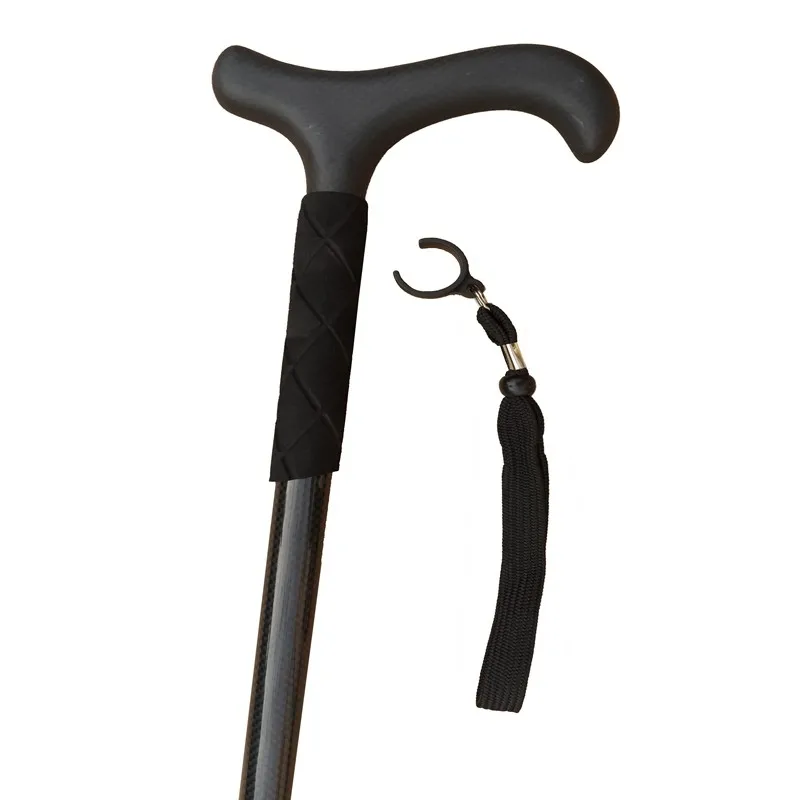
If you plan to engage primarily in Nordic walking in a park or city, it is better to purchase specialized poles. For universal use — both city and mountains — quality trekking models with length adjustment will work.
Review of hiking gear: what else to pay attention to
Trekking poles are only part of a hiker's overall gear, but their choice is closely related to other elements of equipment. For example, if you plan to use poles as support for a tent, it is worth checking their maximum length and strength in the extended state. Some manufacturers directly indicate in the specifications whether the model is suitable for such use.
An important point is compatibility with your backpack. Many modern backpacks have special attachments for trekking poles, allowing you to free your hands on difficult sections of the route. Before buying poles, check whether you can attach them to your backpack, especially if they are telescopic and have a collapsed length of over 40 centimeters.
Also pay attention to the weight of the poles in the context of the total weight of your gear. A difference of 100–150 grams per pair may seem insignificant, but on long distances it is noticeable. Having analyzed open sources, the ComfortShop editorial team notes that experienced hikers are often willing to pay more for lighter models precisely because of this factor.
Conclusion:
Trekking poles are an investment in joint health, safety on the route, and overall comfort during hikes. Based on the analysis of specifications, the ComfortShop editorial team recommends choosing models in the mid-price segment with an aluminum or combined body, cork handle, and external locking system. Before purchasing, be sure to check the current price and delivery terms on the seller's website, as market offers are constantly changing.
Frequently Asked Questions
How do trekking poles differ from Nordic walking poles?
Trekking poles usually have a sturdier construction, interchangeable tips, and are designed for support on challenging terrain, while Nordic walking poles are lighter and have special straps for active pushing off on flat surfaces.
What length of trekking poles do I need for mountain hikes?
The universal formula is to multiply your height in centimeters by 0.68, but for mountain routes it is better to choose telescopic models with adjustment so you can adapt the length for ascents and descents.
Which material is better for trekking poles: aluminum or carbon?
Aluminum is more reliable and cheaper; it bends but does not break, while carbon is lighter and stiffer but can crack from a point impact — for harsh conditions and budget considerations, aluminum is more often recommended.
Is it necessary for a beginner to buy the most expensive trekking poles?
No, for your first hikes a budget model with reliable locking and interchangeable tips is sufficient, but before purchasing always check the current price and availability on the website of a specific seller or marketplace.