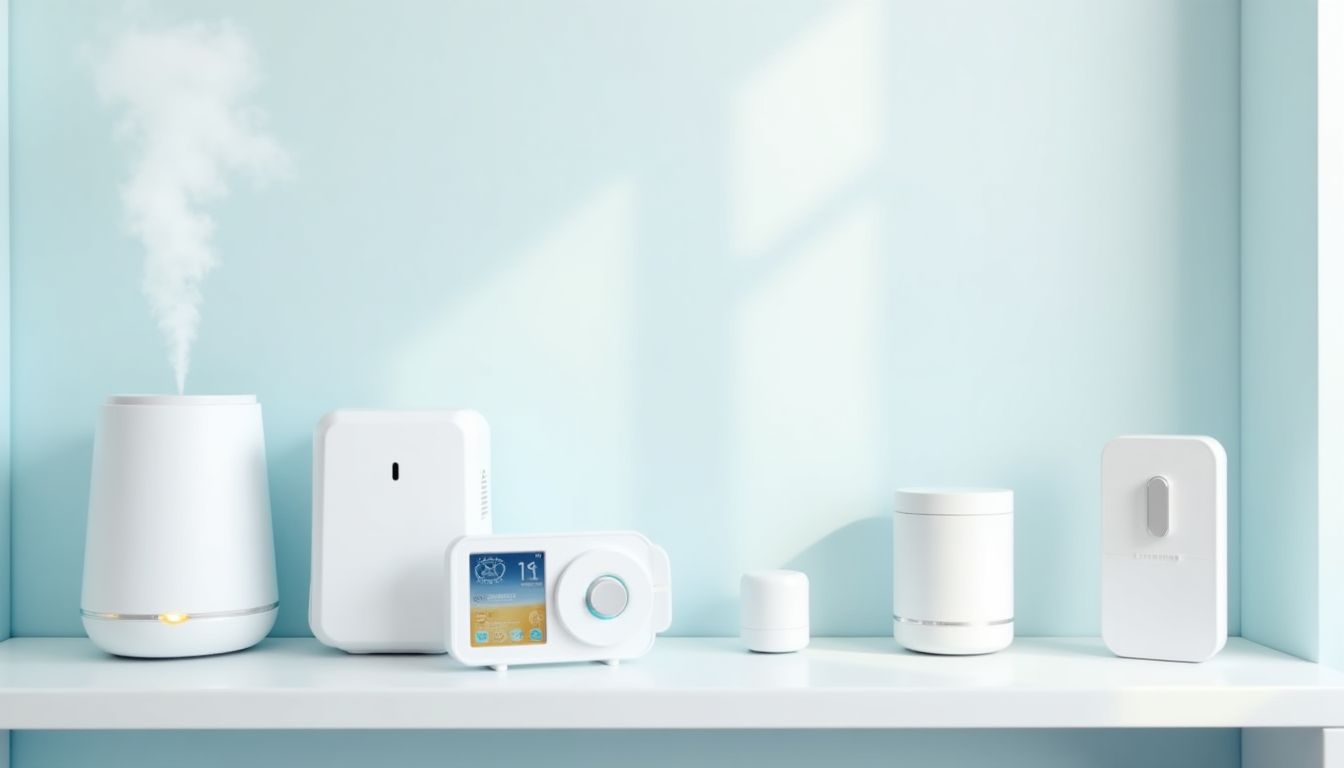
Maintaining a comfortable microclimate in the home is the key to good well-being, strong immunity, and the longevity of furniture. That is why a hygrometer for the apartment is gradually becoming as essential a device as the familiar thermometer. It helps control the humidity level, which directly affects our breathing, skin condition, and even sleep quality. In this material, the ComfortShop editorial team analyzed the key norms of air humidity in an apartment and explained where it is best to place the meter to get the most accurate data.
Table of Contents
- Why it is important to control air humidity in the apartment
- Humidity norms: which indicators are considered optimal
- Where to hang the hygrometer: basic placement rules
- Measurement specifics in different rooms
- How to correctly interpret hygrometer readings
- Choosing a hygrometer: what to pay attention to
- Conclusion:
Why it is important to control air humidity in the apartment
Air humidity in an apartment is a parameter that is often underestimated, although it is critically important for health. Excessively dry air dries out mucous membranes, which increases vulnerability to viruses and allergens. At the same time, an environment oversaturated with moisture creates ideal conditions for the reproduction of mold, dust mites, and pathogenic bacteria.
After analyzing open sources and doctors' recommendations, the ComfortShop editorial team notes: systematic monitoring with a humidity meter allows you to turn on a humidifier or dehumidifier in time. This is especially relevant during the heating season, when central heating radiators can reduce relative humidity to a critical 15–20%, which is significantly below the physiological norm.
In addition to affecting people, incorrect humidity levels damage wooden furniture, parquet, musical instruments, and books. Cracks in expensive furniture or peeling wallpaper are often the result of an unstable microclimate that could have been corrected in time.
Humidity norms: which indicators are considered optimal
Before choosing a place for the device, it is worth understanding which figures to focus on. State building codes and WHO recommendations define clear comfort limits for residential premises.
The optimal humidity for a living room is 40–60%.
Fluctuations within 30–65% are considered acceptable, but prolonged exposure to the extreme marks can already cause discomfort. For a children's room, doctors advise maintaining the indicator closer to the upper limit — 50–60%, since children's mucous membranes are especially sensitive to dry air.
In winter, when heating is on, the norm may temporarily drop to 30–40%, but it is important to use humidifiers. In summer, during rains or high temperatures, the hygrometer may show 65–75%, which is already a signal to ventilate or turn on a dehumidifier.
Where to hang the hygrometer: basic placement rules
The question of where to hang the hygrometer seems simple at first glance, but the accuracy of measurements depends precisely on the location. Based on an analysis of the operating characteristics of sensitive sensors, ComfortShop recommends following several basic rules to avoid false data.

First, the device must not be placed directly near sources of heat or moisture. Heating radiators, a kitchen stove, a bathroom, or an open window distort readings because they create local microzones with abnormal humidity. The best place is an interior wall of the room at a height of about 1.5 meters from the floor, where air circulates freely but without drafts.
Second, it is worth avoiding exterior walls that freeze in winter or heat up in summer. The temperature gradient near such surfaces affects the accuracy of the sensor. It is also not recommended to place the humidity meter on a windowsill, especially if there are plants there that actively evaporate moisture.
Measurement specifics in different rooms
Air humidity in an apartment is not uniform — it can differ significantly in each room. Therefore, for full control of the microclimate, it is desirable to have several devices or at least periodically move one meter between zones.
In the living room and bedroom, where a person spends the most time, the hygrometer should be placed at a distance of 1–2 meters from the bed or sofa, but not above the headboard itself. In a children's room, the device should be installed away from the crib to avoid the influence of the child's breathing on the sensor. In the kitchen, it logically makes sense to keep the meter near the dining area, not above the stove or sink.
For the bathroom and restroom, there are separate recommendations: humidity there will always be higher, and this is normal. If you monitor these zones, focus on a reading of up to 70% immediately after water procedures, with a gradual decrease to 50–60% within an hour, provided there is good ventilation.
How to correctly interpret hygrometer readings
It is not enough to simply hang the device on the wall — it is important to understand what the numbers on the display mean at a particular moment in time. Climate technology, in particular modern digital hygrometers, often shows not only relative humidity but also temperature, which allows for a comprehensive assessment of the microclimate.
Short-term deviations from the norm are not a reason to panic.
For example, after cooking or taking a shower, humidity may temporarily rise, and this is completely natural. Attention should be paid to average daily readings. If for several days the hygrometer consistently records less than 30% or more than 70%, measures should be taken: buy a humidifier, a dehumidifier, or check the ventilation system.
It is also important to take into account the inertia of the device. Mechanical models react to changes more slowly than electronic ones, so after moving the hygrometer to another room, you should wait 15–20 minutes before recording the result.
Choosing a hygrometer: what to pay attention to
The modern climate technology market offers three main types of meters: mechanical, electronic, and psychrometric. Each of them has its own advantages and operational features that should be taken into account before purchasing.
Mechanical models work without batteries and are distinguished by durability, but their accuracy is usually ±5–7%, which may be insufficient for people sensitive to humidity. Electronic hygrometers are compact and often equipped with additional functions — a thermometer, clock, and memory of maximum and minimum values. Their error usually does not exceed ±3%.
Psychrometric devices are considered the most accurate, but they require regular moistening of the fabric with distilled water and are more difficult to use at home. For an apartment, the optimal choice for most users will be a high-quality electronic hygrometer with the ability to calibrate. You can check the current price and availability of a specific model on the seller's website by following the affiliate link.
Conclusion:
A hygrometer for an apartment is a simple but extremely useful tool for maintaining a healthy microclimate. Follow the humidity norm within 40–60%, place the device on an interior wall at a height of about one and a half meters, away from radiators and drafts, and regularly analyze average daily readings. According to the recommendation of the ComfortShop editorial team, it is a systematic approach to measurement that will help create an atmosphere in the home that is comfortable for the health of the whole family.
Frequently Asked Questions
What is the optimal air humidity in an apartment?
For living rooms, humidity of 40–60% is considered comfortable, and for the bedroom and children's room — closer to 50–60%. In winter, with heating, readings often drop to 20–30%, so it is worth focusing on these humidity norms and, if necessary, additionally humidifying the air.
Where should a hygrometer be hung in an apartment so that the readings are accurate?
Hang the humidity meter at a height of 1.2–1.5 m from the floor, away from windows, doors, radiators, the air conditioner, and the kitchen hood. Do not place it near sources of steam (bathroom, kitchen) — humidity there is locally elevated and does not reflect the real microclimate of the apartment.
Can one hygrometer be used for the whole apartment?
Yes, but for an objective picture it is better to have a device in each key zone — the bedroom, living room, and children's room, because humidity in different rooms can differ by 10–15%. If the budget is limited, periodically move one humidity meter between rooms and record the readings.
Which hygrometer for an apartment is better — mechanical or digital?
Digital models are usually more accurate (±3–5%) and often combine the functions of a thermometer and clock, while mechanical ones require periodic calibration. Before purchasing, compare the characteristics of specific models and check the current price and delivery terms on the seller's website.