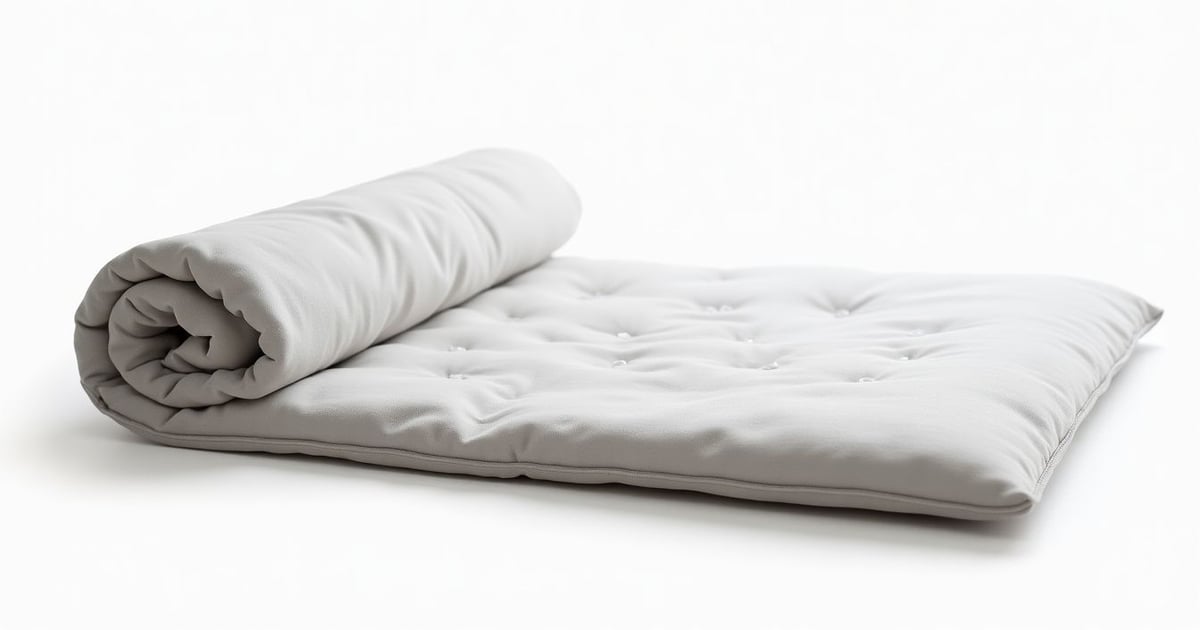
Choosing the right sleeping pad is the foundation of comfortable outdoor recreation and the key to quality sleep after an active day. Every traveler sooner or later faces a dilemma: choose a classic closed-cell foam pad or a modern inflatable alternative. Both options have their strengths, but they are suitable for different conditions and travel styles. To make an informed choice, it is worth analyzing in detail how an inflatable sleeping pad differs from a closed-cell foam pad, and which criteria are decisive for you. According to the recommendation of the ComfortShop editorial team, the best sleeping pad is the one that meets your specific hiking needs.
Article Contents
Design and Working Principle: What's the Difference?
A closed-cell foam pad, also known as a foam pad or isomat, is made from foamed polyethylene or EVA. Its structure has closed pores filled with air, which provides thermal insulation. Such a pad does not require inflation — it is immediately ready for use and can be laid out on any surface.
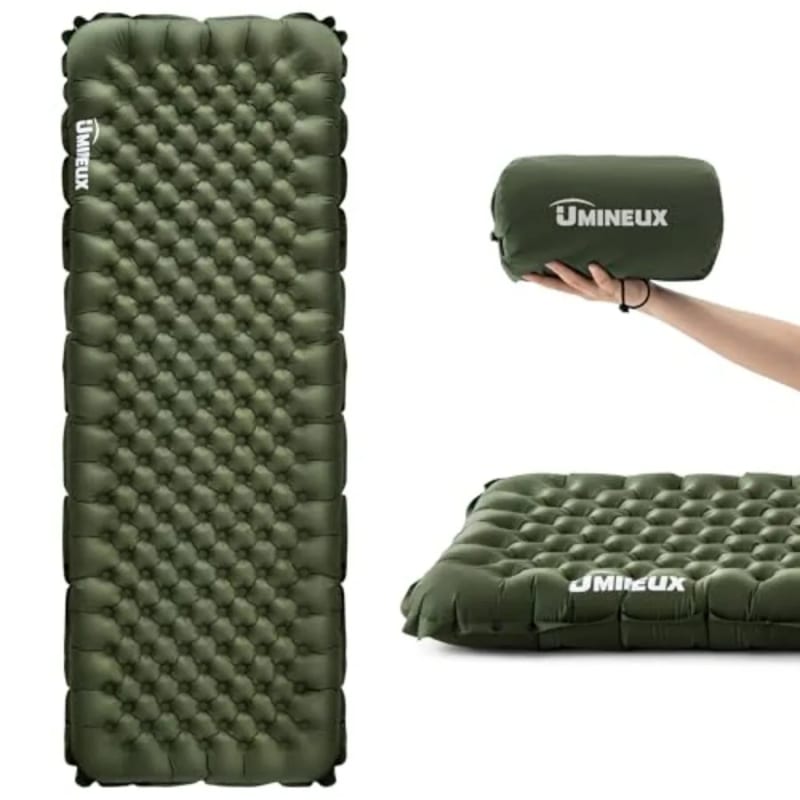
An inflatable sleeping pad for tourism works on a different principle. When folded, it takes up minimal space, but for use, it needs to be filled with air. Modern models often have an internal filler (synthetic fiber or Primaloft) for additional thermal insulation. It is the design that determines which option will be more convenient during a long trek.
Closed-cell foam models win in reliability — they cannot be punctured and are not afraid of sharp stones or branches. Inflatable pads, on the other hand, require careful handling and a repair kit, but offer an unparalleled level of comfort, close to a home bed.

Which option to choose for extreme conditions?
For winter hikes or overnight stays on snow, a closed-cell foam pad is the undisputed leader. Its closed pores do not let cold from the ground through, and heat loss through convection is minimal. An inflatable pad, even with insulation, requires an additional underlay to prevent heat loss through the air inside.
Weight and Compactness: What Matters More in a Backpack?
One of the main arguments in favor of inflatable models is their compactness when folded. A modern inflatable sleeping pad for tourism can be folded to the size of a small can or bottle, freeing up significant volume in the backpack. This is especially valuable for long, self-sufficient hikes.

Weight is also a significant factor. Light inflatable models weigh from 350 to 600 grams, making them an ideal choice for ultralight tourism. Closed-cell foam pads, although they come in different thicknesses, are generally heavier and bulkier. A standard foam pad weighs about 400-500 grams but takes up much more space — it is attached to the outside of the backpack.

ComfortShop specialists advise considering the type of trip: for bike tours or trekking with frequent moves, the compactness of an inflatable pad will be a significant advantage. If you are traveling by car or boat, volume is not a decisive factor, and you can choose any option.
Sleep Comfort and Thermal Insulation
The level of comfort is an area where inflatable pads show a clear advantage. The thickness of an inflatable sleeping pad for tourism can reach 7-10 cm, allowing you to sleep even on uneven, rocky surfaces without feeling roots or stones. A closed-cell foam pad, even the thickest (2-3 cm), only partially smooths out unevenness.
Thermal insulation is measured by the R-value. Closed-cell foam models have a stable R-value that does not change over time. For inflatable pads, this indicator can vary, but modern models with insulation show high values, suitable even for winter overnight stays. However, it is important to remember that damage to an inflatable pad can completely negate its thermal insulation properties.
For people with back problems or those who value maximum comfort, the choice of a sleeping pad for sports often leans towards inflatable models. They provide better body support and allow you to adjust firmness by changing the degree of inflation.
Durability and Resistance to Damage
In terms of reliability, the closed-cell foam pad is the undisputed leader. It cannot be punctured, it is not afraid of sparks from a campfire, sharp stones, or accidental cuts. This is an ideal option for harsh operating conditions, children's hikes, or mass events where the pad is used intensively.
Inflatable pads require careful handling. Modern materials (e.g., TPU) are quite durable, but the risk of puncture remains. Most manufacturers include a repair kit with the products, which allows you to quickly fix small damages in the field. The average service life of a high-quality inflatable pad with careful use is 3-5 years.
ComfortShop reviewers note that for family outings into nature or fishing, it is better to choose closed-cell foam models. For serious hikes where every gram counts, an inflatable pad justifies the risk of damage with its compactness and comfort.
Price and Availability: What to Choose on a Limited Budget?
The price range for both types of pads is very wide. Closed-cell foam models are generally cheaper. A simple foam pad can be purchased for 200-500 hryvnias, while a high-quality inflatable sleeping pad for tourism starts from 1000-1500 hryvnias and can reach 5000-7000 hryvnias for premium models.
However, it is worth considering the price-to-durability ratio. A cheap inflatable pad can quickly fail, while a high-quality closed-cell foam pad can last for decades. For those going on a hike for the first time or planning infrequent trips, an inexpensive but reliable closed-cell foam option is the optimal choice.
Reviews from experienced hikers on choosing a sleeping pad for hikes often lean towards a compromise solution: having both types of pads. A closed-cell foam pad — for the base camp or as an additional insulator, an inflatable one — for the main sleep in the tent. This allows you to combine the advantages of both systems.
Conclusion:
The answer to the question of whether to choose an inflatable or closed-cell foam sleeping pad depends solely on your needs. If the priority is maximum reliability, ease of use, and undemanding conditions — your choice is the classic closed-cell foam pad. If you value compactness, sleep comfort, and are willing to take good care of your gear — a modern inflatable pad will be the ideal companion. ComfortShop specialists recommend beginners start with a closed-cell foam option, and experienced travelers invest in a high-quality inflatable model for maximum comfort on long journeys.
Frequently Asked Questions
Which sleeping pad is better to choose for long hikes — closed-cell foam or inflatable?
For long hikes, it is better to choose a closed-cell foam pad because it is lighter, more compact, and does not require time for inflation, saving energy and space in the backpack.
Is an inflatable pad suitable for sports and active recreation?
Yes, an inflatable sleeping pad for tourism is great for sports due to better cushioning and comfort, but it is heavier and may be less reliable in harsh conditions.
What are the main advantages of a closed-cell foam pad over an inflatable one?
A closed-cell foam pad has advantages in durability, puncture resistance, and ease of use — it does not need to be inflated, making it ideal for extreme hikes.
Can an inflatable pad be used for winter hikes?
An inflatable sleeping pad for tourism can be used in winter, but only with a high thermal insulation rating (R-value), otherwise it may not protect against the cold, whereas a closed-cell foam pad is usually warmer.