A refrigerator organizer has long ceased to be just a fashionable accessory for perfect Instagram photos. It is a working tool that helps maintain order, save food, and simplify daily kitchen routines. But are all these containers, boxes, and stands really as useful as they are made out to be? Let's figure out which refrigerator organizers withstand review and which only take up space. The ComfortShop editorial team analyzed the characteristics of popular solutions to separate real benefits from marketing promises.
Article Contents
- What is a refrigerator organizer and what tasks does it solve
- What an organizer in the refrigerator helps with in practice
- How to choose a refrigerator organizer: key criteria
- Refrigerator organizers: review of popular solutions
- Mistakes that negate the benefits of organizers
- Organizer for food in the refrigerator: how to set up a storage system
- Conclusion:
What is a refrigerator organizer and what tasks does it solve

A refrigerator organizer is a system of containers, trays, stands, or dividers that structure the internal space of the compartment. The main goal is not just to arrange food nicely, but to create a logical storage system where every item has its place. This is especially relevant for small refrigerators, where every centimeter of shelf space is worth its weight in gold.
The most common types of organizers include plastic containers with handles, pull-out drawers, egg holders, bottle holders, silicone mats, and multi-tier shelves. Each type solves a specific problem: some help group small items, others help utilize vertical space that usually remains empty. A properly selected set can increase the useful capacity of the refrigerator by 20–30% without any technical modifications.
It is important to understand that an organizer does not work on its own. It is a tool that requires a systematic approach: you need to define zones for different food categories, follow the rotation principle (new items in the back, old ones in the front), and regularly review the contents. Only then does it bring real benefits rather than becoming just another item cluttering the kitchen.
What an organizer in the refrigerator helps with in practice
The most obvious advantage is order. When food is arranged by zones, you immediately see what you have in stock and what is running out. This reduces impulsive purchases and prevents situations where a jar of sauce or a piece of cheese gets "lost" at the back of a shelf. According to food waste research, about 30% of food is thrown away precisely because it is forgotten in the refrigerator.

The second important aspect is hygiene. A separate container for meat, fish, or vegetables prevents cross-contamination when juices from raw products get onto prepared food. This is especially critical for families with children and people with sensitive digestion. Kitchen gadgets for the refrigerator with antibacterial coating additionally inhibit the growth of microorganisms on container walls.
Organizers also extend the freshness of food. Special containers with ventilation holes regulate humidity, which is critical for herbs, berries, and vegetables. Airtight boxes slow down the oxidation of cut fruits and prevent the spread of odors. And transparent walls allow you to quickly assess the condition of a product without opening every container.
How to choose a refrigerator organizer: key criteria
Before buying a set of organizers, it is worth measuring the internal dimensions of the shelves, the height between them, and the width of the door compartments. There are no universal solutions: what fits perfectly into a Side-by-Side refrigerator may not fit into a compact model with a top freezer. According to the ComfortShop editorial team's recommendation, always leave a margin of 2–3 cm on each side for air circulation.

Material is the second decisive factor. The most practical organizers for food in the refrigerator are made from food-grade polypropylene (PP) or polyethylene terephthalate (PET). They withstand low temperatures, do not crack, do not absorb odors, and are easy to wash. Avoid cheap polystyrene (PS), which becomes brittle in the cold, and melamine, which is not intended for contact with food.
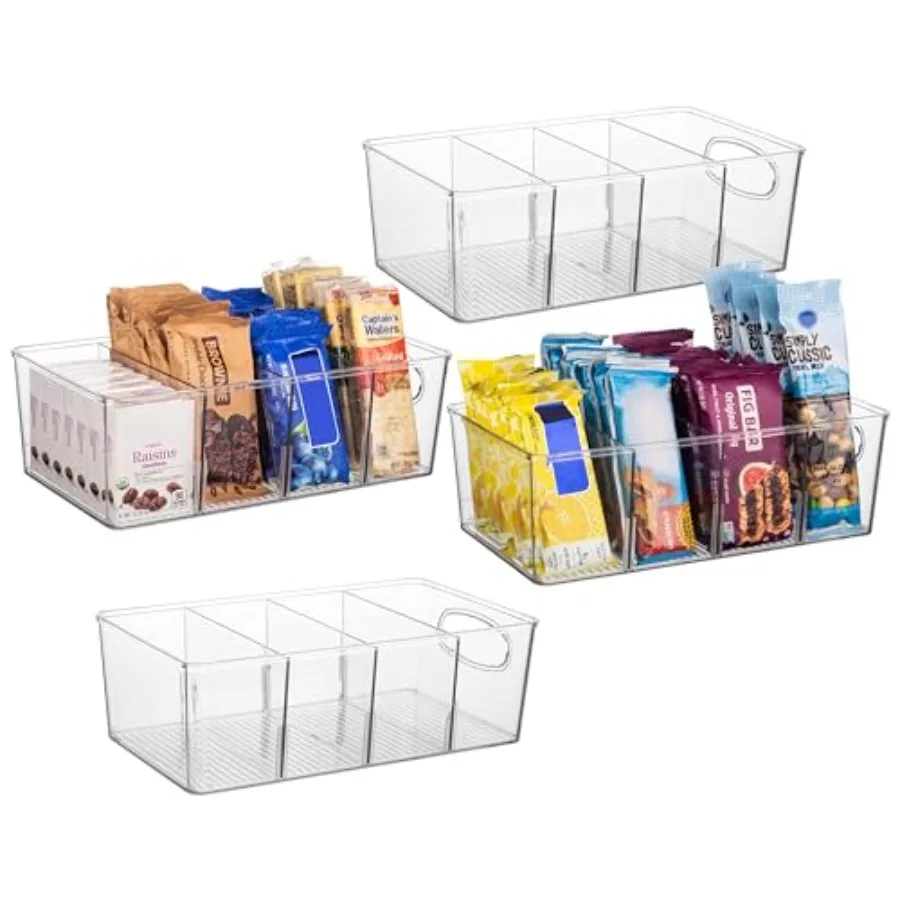
Pay attention to functional details: handles for easy pulling from high shelves, lids with silicone seals for airtightness, and drainage grates for draining condensation. If you plan to store fruits and vegetables, choose models with adjustable ventilation. For door shelves, lightweight containers without lids are suitable, as they do not overload the mounting.
Refrigerator organizers: review of popular solutions
Based on an analysis of characteristics, ComfortShop recommends considering several types of organizers that have proven their effectiveness in real use. The first is multi-tier stands for canned goods and drinks. They allow you to place up to 12 cans in the space usually occupied by 4–5. This is especially convenient for lovers of carbonated drinks, beer, and home canning.
The second type is pull-out drawers with transparent walls. They are ideal for lower shelves, where vegetables, fruits, and dairy products are usually stored. The pull-out mechanism allows you to reach what you need without pulling out the entire contents of the shelf. Models with internal dividers help keep, for example, different types of cheese or deli meats separate.
The third is silicone mats and non-slip liners. They solve the problem of bottles and containers tipping over when the door is opened. Mats with raised edges additionally protect shelves from spilled liquids, which significantly simplifies cleaning. This is the cheapest but very effective way to improve space organization.
Specialized holders deserve a separate mention: for eggs, bottles, and bags of herbs. They take up minimal space but make storage much more convenient. For example, an egg container with a lid prevents the spread of odor and protects the shells from damage, while a bottle holder on the door frees up the main shelves for food.
Mistakes that negate the benefits of organizers
The most common mistake is buying organizers without prior space planning. People bring home a set of containers and then discover that half of them do not fit or do not match the existing shelves. Before purchasing, be sure to draw a diagram of your refrigerator: what zones you need, which products you store most often, and what container size is optimal.
The second mistake is overloading. Too many organizers create a "nesting doll" effect, where the products themselves are hidden behind the containers. This complicates access and reduces useful volume. The optimal strategy is to start with 2–3 basic elements, evaluate their convenience in daily use, and only then buy additional ones.
The third mistake is ignoring material compatibility. Some cheap plastic containers release harmful substances when in contact with fatty foods or during temperature fluctuations. Kitchen gadgets for the refrigerator must be marked "food-grade plastic" and withstand temperatures from -20°C to +80°C if you plan to heat food in the microwave.

Organizer for food in the refrigerator: how to set up a storage system
Zoning is the foundation of effective storage.
Divide the refrigerator into logical zones: the top shelf — prepared meals and dairy products, the middle — meat, fish, eggs, the bottom — vegetables and fruits. The door is intended for products that do not require too low a temperature: sauces, drinks, butter. For each zone, choose the appropriate type of organizer, taking into account the frequency of use and package sizes.
Use the "first in, first out" principle. Place products with a shorter shelf life at the front, and new purchases at the back. Transparent containers with labels or date markers will help you navigate quickly. This is especially important for open packages, cut vegetables, and homemade preserves that spoil quickly.
Do not forget about vertical space. Multi-tier stands, hanging baskets, and racks allow you to use the height of shelves that usually remains empty. This is especially relevant for refrigerators with adjustable shelves, where you can create additional storage levels without losing ease of access.
Висновок:
A refrigerator organizer is not a luxury but a practical tool that helps save food, maintain hygiene, and simplify daily meal preparation. The main thing is to approach the choice consciously: measure the space, choose quality food-grade materials, and do not overload the compartment with unnecessary accessories. After analyzing open sources, the ComfortShop editorial team notes that the most effective solutions are multi-tier stands, pull-out drawers, and non-slip mats, which solve specific storage problems. Start small, evaluate the convenience in daily use, and gradually expand the system — and your refrigerator will turn into an orderly space where every product has its place.
Frequently Asked Questions
Which refrigerator organizers actually help rather than take up space?
The most useful ones are containers for vegetables and fruits with ventilation, stands for cans and bottles, as well as egg trays that fit on the door or a shelf.
How to properly choose a refrigerator organizer so that it fits my model?
Before purchasing, measure the depth, width, and height of the shelves, as well as the distance between them, and choose organizers made of transparent plastic or glass that can be washed in the dishwasher.
Does an organizer for food help keep freshness longer?
Yes, airtight containers and trays with lids slow down drying out and odor absorption, while special baskets with holes improve air circulation for vegetables.
Which kitchen gadgets for the refrigerator should I buy first?
Start with a stand for canned goods, an organizer for lids, and vertical containers for food leftovers — they immediately free up shelves and make supplies visible.