
The modern home textile market offers many materials, among which Tencel and microfiber stand out in particular. These fabrics are often compared with each other, as both claim the title of comfortable and practical solutions for sleep. Understanding their properties, advantages, and disadvantages helps make an informed choice of bedding that will meet individual needs. Following the recommendation of the ComfortShop editorial team, before purchasing, it is worth paying attention not only to the price but also to the production technology and tactile characteristics of the material. These criteria determine how comfortable sleep will be in different seasons.
Article contents
What is Tencel: an innovative fabric made from wood
Tencel is a material made from eucalyptus wood cellulose. Production takes place in a closed loop, where solvents and water are reused, which makes the process environmentally safe. Tencel fabric for bedding is valued for its softness, which resembles natural silk, but at the same time has a significantly more affordable cost and simpler care.
Based on an analysis of characteristics, ComfortShop recommends paying attention to the weave density of Tencel. High-quality material has a smooth surface that does not irritate even sensitive skin, and a natural sheen. Thanks to its high hygroscopicity, Tencel quickly absorbs moisture and evaporates it just as quickly. This is especially important for people who sweat during sleep or live in regions with a humid climate.
Hypoallergenic properties deserve special mention. Smooth fibers do not retain dust and do not create an environment for dust mites to multiply. Therefore, Tencel bedding often becomes the choice for allergy sufferers and people with asthma. In addition, the material holds its shape well and does not pill after numerous washes if the manufacturer's recommendations are followed.
Microfiber: practicality and affordability
Microfiber is a synthetic material made from ultra-thin polyester or polyamide fibers. Their thickness is tens of times smaller than a human hair, which ensures special softness and density of the fabric. Microfiber for bedding has become popular due to its durability, lightness, and ability to dry quickly after washing.
This material is well suited for daily use. It hardly wrinkles, does not require ironing, and retains color brightness even after many washing cycles. After analyzing open sources, the ComfortShop editorial team notes that microfiber is especially practical in the cold season, as it retains heat well. However, on hot summer nights it can create a greenhouse effect due to lower breathability compared to natural analogues.
Another important nuance is electrostaticity. Synthetic fibers are capable of accumulating static electricity, which can attract dust. However, modern manufacturers often add an antistatic treatment that neutralizes this drawback. It is also worth paying attention to fabric density: the higher it is, the longer the set will last.
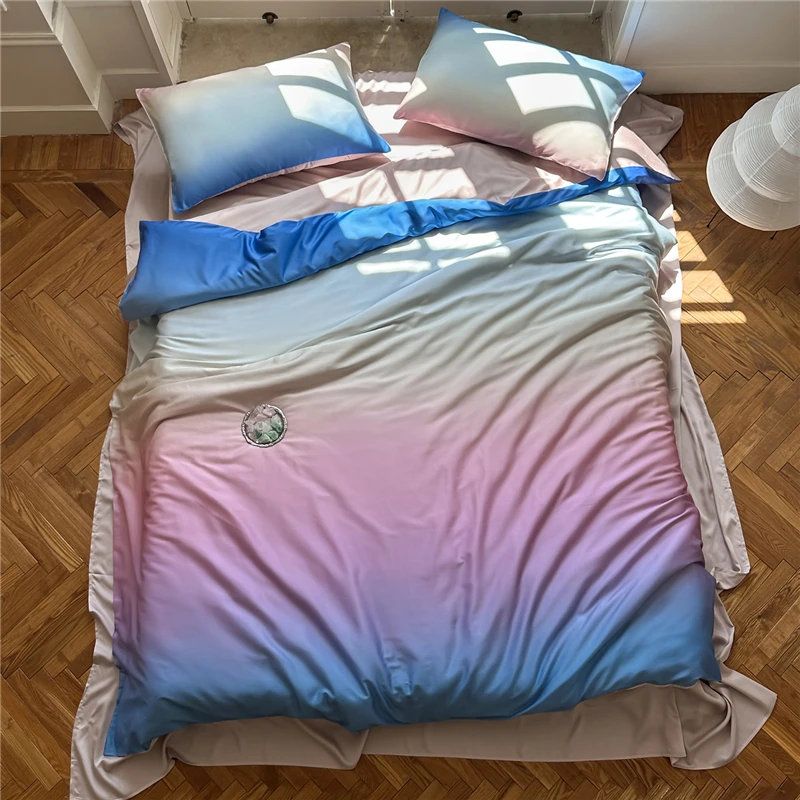
Tencel or microfiber: comparison of key characteristics
The choice between these materials depends on the buyer's priorities. To simplify the decision, it is worth comparing the main parameters:
- Origin: Tencel is natural cellulose, microfiber is synthetic fibers.
- Tactile feel: Tencel is smooth and cool, microfiber is soft and warm.
- Hygroscopicity: Tencel absorbs moisture significantly better.
- Durability: microfiber is less prone to mechanical damage.
- Care: both materials are low-maintenance, but microfiber dries faster.
- Price: high-quality Tencel is usually more expensive than microfiber.
If the main criterion is naturalness and maximum comfort in the warm season, Tencel will be the better choice. If you need a budget-friendly, durable, and low-maintenance option for daily use, it is worth taking a closer look at microfiber. Both materials have a right to exist in the bedroom, but they solve different tasks.
It is also important to take into account individual characteristics of the body. People with sensitive skin or a tendency to allergies are better off choosing Tencel. Those looking for the simplest possible care set for a guest room or country house will find microfiber suitable. Before purchasing, be sure to check the fabric composition on the label, as some manufacturers may pass off blended materials as pure Tencel.
Caring for Tencel and microfiber bedding
Proper care significantly extends the service life of any fabric. Tencel bedding requires delicate washing at a temperature not exceeding 30–40 degrees. Use liquid detergents without aggressive bleaches. Spin should be minimal, and it is better to dry the items laid out flat, away from direct sunlight.
Microfiber is less demanding. It can be washed at temperatures up to 60 degrees, which allows for effective removal of dust mites and bacteria. However, it is worth avoiding fabric softeners, as they clog the micropores of the fibers and worsen breathability. It is also not recommended to iron microfiber with a hot iron — high temperatures can damage the structure of synthetic threads.
Both materials should not be dried on radiators or heaters. This leads to overdrying of the fibers and loss of elasticity. The optimal option is natural drying in a well-ventilated room.
How to make the right choice of bedding
Buying bedding is an investment in sleep quality, so it is worth approaching the choice responsibly. Pay attention to fabric density, seam quality, and the manufacturer's reputation. Cheap analogues may quickly lose their shape, fade, or become covered with pills after just a few washes.
Check the price on the seller's website and compare offers from several stores before ordering. Pay attention to reviews from real customers, especially those concerning how the fabric behaves after washing. This will give a more objective idea than marketing descriptions. Also take seasonality into account: for summer, it is better to choose Tencel or blended fabrics containing it; for winter, microfiber or flannel.
The size of the set should match the parameters of your pillows and blanket. Standard European sizes differ from Ukrainian ones, so read the product description carefully. If you are buying bedding as a gift, a universal option would be a double set in neutral shades.
Висновок:
Tencel and microfiber are two fundamentally different materials, each of which has its own strengths. Tencel provides natural coolness, excellent hygroscopicity, and is suitable for allergy sufferers, while microfiber impresses with durability, affordable price, and ease of care. After analyzing open sources, the ComfortShop editorial team advises choosing Tencel for those who value naturalness and maximum comfort, and microfiber for those looking for a practical solution for daily use. The final choice of bedding always remains with the buyer, but now it will be much more informed.
Frequently asked questions
What is Tencel and what is it made from?
Tencel is a type of viscose obtained from eucalyptus cellulose through a closed technological cycle. The fabric turns out soft, breathable, and pleasant to the body, which is why it is often chosen for bedding.
Tencel or microfiber — which is better for bedding?
Tencel lets air through better, absorbs moisture well, and is suitable for sensitive skin, while microfiber is stronger, dries faster, and is cheaper. The choice depends on what is more important to you — naturalness and breathability or practicality and price.
Is microfiber suitable for bedding in summer?
Microfiber lets air through less well and may feel warm, so in summer it is less comfortable for those who sweat heavily. For the hot season, breathable fabrics are usually recommended, in particular Tencel or cotton.
How to care for Tencel and microfiber bedding?
Tencel is recommended to be washed delicately at low temperatures and not dried in a hot dryer, while microfiber should be washed without conditioner or softeners to preserve its moisture-repellent properties. Exact washing recommendations are usually indicated by the manufacturer or seller on the label and product page.