Temperature measurement is a basic diagnostic method that allows timely detection of inflammation, infection, or overheating in a pet. The normal temperature in dogs ranges from 37.5–39.2 °C, and in cats — 38.0–39.5 °C, so any deviation requires attention. The pet products market offers two main types of devices: the classic rectal thermometer for animals and the modern infrared thermometer for animals. The ComfortShop editorial team analyzed the characteristics of both types to help owners choose the most convenient and accurate option for home use.
Table of Contents
- Why it is important to monitor temperature in animals
- Rectal thermometer for animals: accuracy and classic reliability
- Infrared thermometer for animals: speed and comfort
- Comparison of methods: what to choose for home use
- How to properly measure temperature in animals
- What to look for when choosing a thermometer
- Conclusion:
Why it is important to monitor temperature in animals
An increase in body temperature is a universal reaction of the body to pathogenic factors, which often occurs earlier than visible symptoms appear. In dogs and cats, fever may indicate viral infections, bacterial complications, inflammation of internal organs, or even heat stroke. Timely measurement of temperature in animals allows a quick response and a visit to the veterinarian before the condition worsens.
Regular monitoring is especially important for puppies, kittens, older animals, and pets with chronic diseases. In such groups, the immune system may be weakened, and the course of diseases may be rapid. Having a quality thermometer for dogs and cats at home gives the owner the ability to track the dynamics of the animal's condition and provide the veterinarian with objective data.
Low temperature is also an alarming signal that may indicate hypothermia, a shock state, or metabolic disorders. Therefore, a thermometer for animals is not just an accessory, but a necessary element of a home veterinary kit that every responsible owner should have.
Rectal thermometer for animals: accuracy and classic reliability
The rectal measurement method is considered the gold standard in veterinary practice because it provides the most accurate body temperature readings. A rectal thermometer for animals is inserted directly into the rectum, where the temperature is as close as possible to the body's internal temperature. Modern electronic models are equipped with a flexible tip, which reduces the risk of injuring the mucous membrane.
Among the advantages of rectal thermometers, it is worth noting the high measurement accuracy, stability of readings, and independence from external conditions. They do not react to air temperature, humidity, or the condition of the animal's coat, which makes them a reliable tool even in difficult conditions. The measurement time for modern electronic models is usually from 10 to 60 seconds.
However, the procedure requires some preparation and caution. The animal must be securely restrained, the tip should be lubricated with petroleum jelly or a special gel, and after use, the device must be thoroughly disinfected. For aggressive or overly sensitive animals, this method can be stressful, so owners should act calmly and confidently, and if necessary, enlist an assistant.
Infrared thermometer for animals: speed and comfort
An infrared thermometer for animals works on the principle of contactless reading of thermal radiation from the body surface. Most often, measurements are taken in the ear canal or on the gum area, where blood vessels are located close to the surface. This approach allows obtaining a result in just seconds without causing any discomfort to the animal.
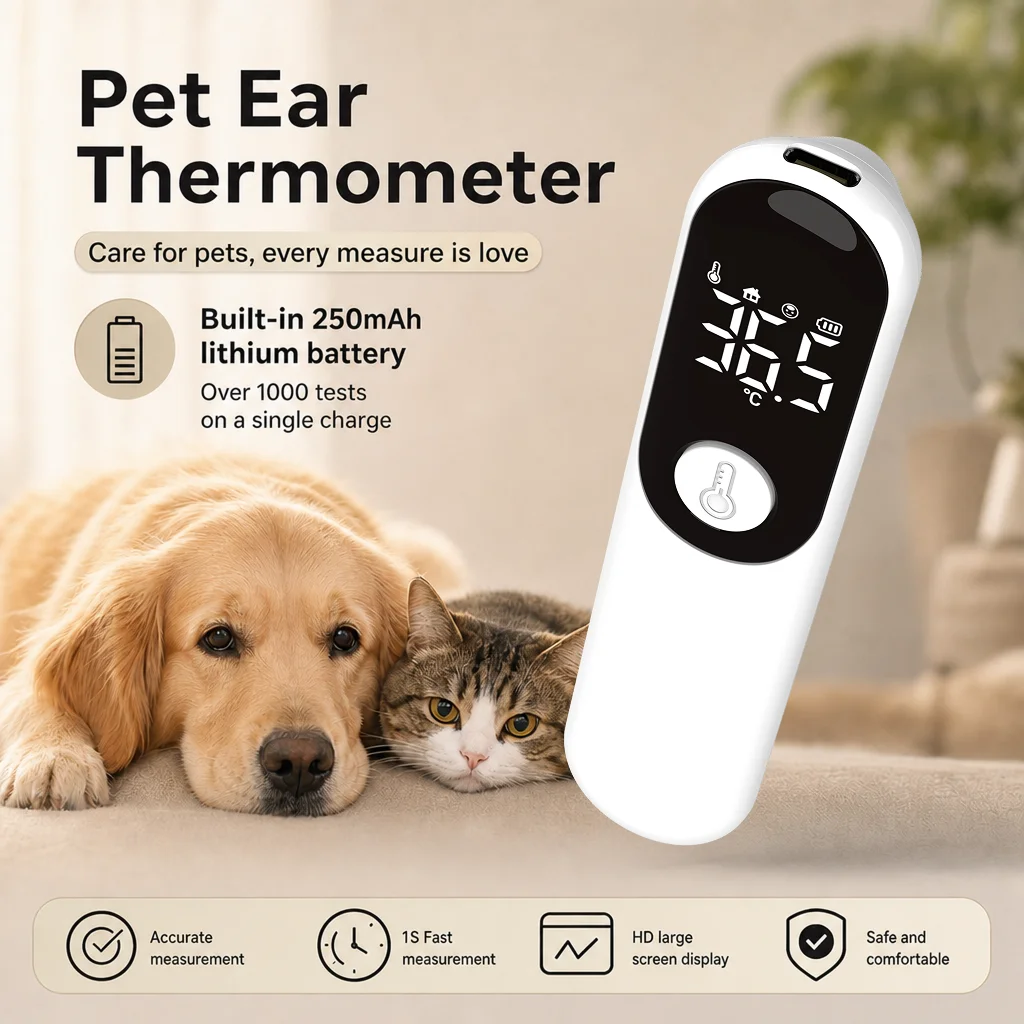
The main advantage of infrared models is minimal stress for the pet. Measurement is quick, without the need to restrain the animal and insert the device into the body. This is especially relevant for cats, which usually react negatively to rectal manipulations, as well as for large dogs that are difficult to keep still. According to the recommendation of the ComfortShop editorial team, infrared thermometers should be considered by owners of anxious or aggressive animals.
However, it should be taken into account that the accuracy of infrared devices may depend on correct positioning, the presence of fur, contamination in the ear, or the animal's movement during measurement. To obtain reliable data, it is recommended to perform several consecutive measurements and rely on the average value. Some models require regular calibration.
Comparison of methods: what to choose for home use
The choice between a rectal and an infrared thermometer depends on the animal's temperament, the frequency of measurements, and the owner's personal preferences. Rectal models provide maximum accuracy, which is critically important when monitoring the condition of a sick animal or after surgical interventions. Infrared models win in speed and comfort but may be inferior in accuracy.
Key comparison criteria:
- Accuracy: the rectal method gives an error of up to 0.1 °C, infrared — up to 0.3–0.5 °C depending on the model and conditions.
- Speed: infrared thermometers measure in 1–3 seconds, rectal electronic ones — in 10–60 seconds.
- Comfort for the animal: the contactless method is significantly less stressful, while the rectal method requires restraint.
- Hygiene: infrared models do not require contact with mucous membranes, which is more convenient in everyday use.
- Cost: quality rectal thermometers are usually cheaper than infrared equivalents.
Based on the analysis of characteristics, ComfortShop recommends having both types of devices at home: a rectal one as a reference for accurate monitoring, and an infrared one for quick screening and daily monitoring. This approach allows combining accuracy with comfort, which is especially important when caring for several animals.
How to properly measure temperature in animals
Proper measurement technique is the key to reliable results. For the rectal method, it is necessary to prepare the thermometer, lubricate the tip, carefully insert it to a depth of 1–2 cm for small animals and 2–3 cm for large dogs, pressing it slightly against the rectal wall. The animal should be calmed, spoken to in a gentle tone, and after the procedure, rewarded with treats.
When using an infrared thermometer, it is important to follow the manufacturer's instructions regarding distance and angle of the device. For ear models, it is necessary to make sure that the ear canal is clean, without excess wax or inflammation. Contactless models should be aimed at areas with the least hair coverage: the inner surface of the ear, gums, or groin area.
Regardless of the chosen method, measurements should be taken in a calm environment when the animal is in a relaxed state. Physical activity, stress, or being in the sun can distort the results by 0.5–1 °C. It is recommended to perform 2–3 consecutive measurements and record the average value.
What to look for when choosing a thermometer
When choosing a thermometer for animals, it is worth paying attention to several important characteristics. First, this is the measurement speed: modern electronic models signal the completion of the process with a sound, which is convenient when working with active animals. Second, the presence of a flexible tip in rectal models significantly reduces the risk of injury.
Also important are the waterproof housing, the possibility of disinfection, the presence of a memory function for the last measurements, and battery-powered operation. For infrared models, the measurement temperature range is critical, and it should cover at least 32–43 °C, as well as the presence of a calibration mode. Before buying a thermometer for animals, it is worth reading reviews from other owners and checking whether the device has certification.
Pet thermometer products are available in a wide range: from budget electronic models to professional veterinary devices. Check the price on the seller's website, because the cost can differ significantly depending on the brand, functionality, and configuration. A quality thermometer is an investment in your pet's health that pays off with the owner's peace of mind.
Conclusion:
The rectal thermometer for animals remains the most accurate tool for temperature monitoring, while the infrared one is the most comfortable for the animal and the owner. After analyzing open sources, the ComfortShop editorial team notes that the optimal solution is a combination of both types of devices, which allows combining diagnostic accuracy with minimal stress for the pet. Choose a thermometer according to the animal's temperament, frequency of use, and budget, and before purchasing, be sure to check the seller's terms.
Frequently asked questions
Which thermometer for animals is more accurate — rectal or infrared?
A rectal thermometer for animals gives the most accurate result because it measures the internal body temperature, while an infrared one determines only the surface temperature of the skin or ear canal. For dogs and cats, veterinarians usually recommend the rectal method as the main one, and the infrared one as a quick approximate option.
Can you measure temperature in animals with a regular human thermometer?
Yes, a digital human thermometer is suitable for rectal temperature measurement in dogs and cats if it is labeled and used only for animals. A separate thermometer for animals is more convenient only because it has a flexible tip and a faster measurement time.
What is the normal body temperature in dogs and cats?
In adult dogs, the normal temperature is approximately 37.5–39.0 °C, in cats — 38.0–39.2 °C, and these values may differ slightly depending on breed, age, and activity. If temperature measurement in animals shows a value outside this range, you should consult a veterinarian.
Where to buy a thermometer for animals and what to look for?
A thermometer for animals is sold in pet stores, veterinary pharmacies, and marketplaces, in particular in the pet products section. The ComfortShop editorial team advises checking the characteristics, reviews, and current price directly on the seller's website before purchasing.