Choosing the right gas canister for a hike is not just a technical detail, but the key to a hearty meal, hot tea in bad weather, and overall comfort at the campsite. Beginners often get lost in the assortment, picking containers that are too large or too small, and sometimes the canister simply doesn't fit the stove. This material will help you figure out which camping gas canisters are worth your attention and how to calculate the necessary fuel supply. According to the recommendation of the ComfortShop editorial team, it is important to consider not only the price but also the type of gas mixture and operating conditions.
📋 Article Contents
Types of Gas Mixtures: Which Gas to Choose

The basis of any canister is the gas mixture, which determines whether the stove will work in freezing temperatures. The most common option is a propane-butane mixture. The more propane it contains, the better the stove performs at low temperatures. Butane, on the other hand, only evaporates at above-zero temperatures, making it unsuitable for winter hikes.
There are several standard types of mixtures. Isobutane is a more efficient analogue of butane, providing stable combustion down to -10°C. Mixtures with a higher propane content (up to 30-40%) work down to -20°C. Pay attention to the labeling: if the canister says "Winter" or "Cold," it means it is adapted for cold weather.
For summer hikes, regular summer mixtures with a predominance of butane will suffice. They are cheaper but completely useless at sub-zero temperatures. If you are planning a hike in the off-season or in the mountains, choose exclusively winter or all-season options. Specialists at ComfortShop advise always having a canister rated for temperatures 5-10 degrees lower than expected, just in case.
Clamp-On, Threaded, or Valve: Which Connection Type
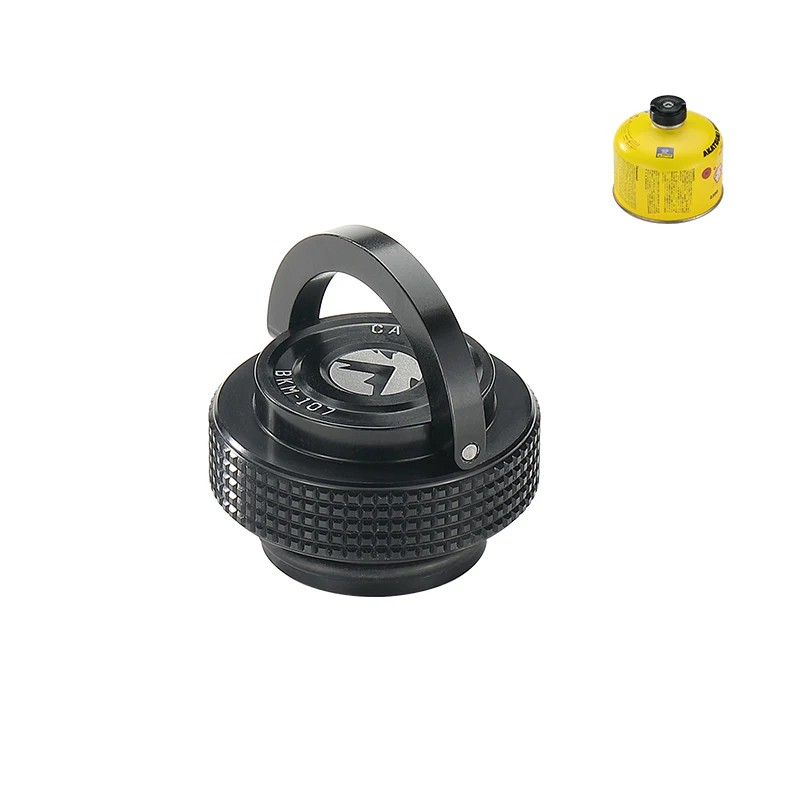
This is a critical point because the canister must physically fit your stove. The most popular standard worldwide is the threaded type (CV-270 or Lindal). It is universal and fits most modern stoves from well-known brands. A threaded canister can be disconnected from the stove even if it is not empty.

Clamp-on canisters are an older type that simply presses onto the stove and is secured with a clamp. They are still common in Ukraine but are less convenient: once connected, they cannot be disconnected until the gas is fully used. Valve canisters are disposable containers with a valve used in some lantern models or older stoves.
Before buying, be sure to check which type of canister your stove supports. A universal solution is an adapter, but it is better to buy equipment of the same standard right away. As ComfortShop reviewers note, threaded canisters are a modern and safe choice for most tourists.
Canister Volume: How Much Gas to Take on a Hike
The most common volumes are 220 ml (230 g), 450 ml (450 g), and 1000 ml (1 kg). The answer to the question "how much gas to take on a hike" depends on the trip duration, the number of people, and the menu. On average, one person consumes 20-30 grams of gas per day for preparing breakfast and dinner.

For the calculation, use a simple formula: multiply the number of days by the number of people, then by 25 grams. For example, a group of 3 people for 4 days will need 300 grams of gas (3*4*25). One 450 g canister covers approximately 15-18 meals for one person or 5-6 days for a group of two.
Don't forget that in cold weather, consumption increases by 30-50% because gas evaporates less efficiently and water takes longer to heat. Also, consider whether you plan to simply boil water or cook complex meals. It's better to take a slightly larger canister than to risk being left without hot tea.
What to Look for When Choosing a Canister
The quality of the canister determines the safety of your hike. First of all, check the integrity of the packaging and the presence of a protective cap on the valve. The canister should not have dents, rust, or signs of deformation. It is important that the label clearly states the composition of the gas mixture and the country of manufacture.
Here are a few key criteria for choosing a gas canister:
- Mixture type (summer / winter / all-season) — determines the operating temperature.
- Connection type (threaded / clamp-on) — compatibility with your stove.
- Weight and volume — the ratio between the weight of the gas and the weight of the metal shell.
- Availability of certifications — a guarantee of safety during transport and use.
- Brand — trusted manufacturers (Kovea, Primus, Jetboil) have better valve quality.
Don't skimp on safety — cheap canisters from unknown brands may have leaky valves or an unstable gas composition. Buy equipment from verified camping gear stores that guarantee product quality.
How to Properly Store and Transport a Canister
Gas canisters are explosive items and require careful handling. They should be stored in a cool place, away from direct sunlight and heat sources. It is strictly forbidden to leave a canister in a closed car in the summer — the internal temperature could cause an explosion.
For transportation, use special cases or containers that protect the valve from damage. Never throw a canister into a backpack with sharp objects. Before the hike, check for leaks — apply soapy water to the valve and make sure there are no bubbles.
If you haven't used the canister completely, remove it from the stove (threaded type only), close it with the protective cap, and store it until the next hike. Empty canisters can be taken for recycling or disposed of in special containers for hazardous waste.
Conclusion:
The right choice of a gas canister depends on the season, the type of stove, and the duration of the hike. For summer trips, cheaper summer mixtures are suitable, while for winter or high-altitude trips, be sure to choose winter canisters with a higher propane content. Calculate your gas supply with a 30% margin, especially if you are going into the cold. Don't forget about safety: buy quality equipment from trusted stores like ComfortShop, where they will help you choose the best option for your needs.
Frequently Asked Questions
Which gas canister should I take on a hike for universal use?
For most hikes, canisters with a standard threaded valve and a propane-butane mixture are best, as they are compatible with most modern camping stoves.
How much gas should I take on a hike per person per day?
On average, one person consumes 15-25 grams of gas per day for cooking and boiling water, so for a one-week hike, one 220-230 gram canister is enough for one person.
How do gas canisters for camping with different valve types differ?
The most common types are the threaded type for most modern stoves and the pierceable valve for older models, so always check compatibility with your stove before buying.
How to choose a gas canister for a hike in cold weather?
For use at sub-zero temperatures, choose canisters with a high propane (isobutane) content or special winter mixtures, as regular butane stops evaporating already at 0°C.