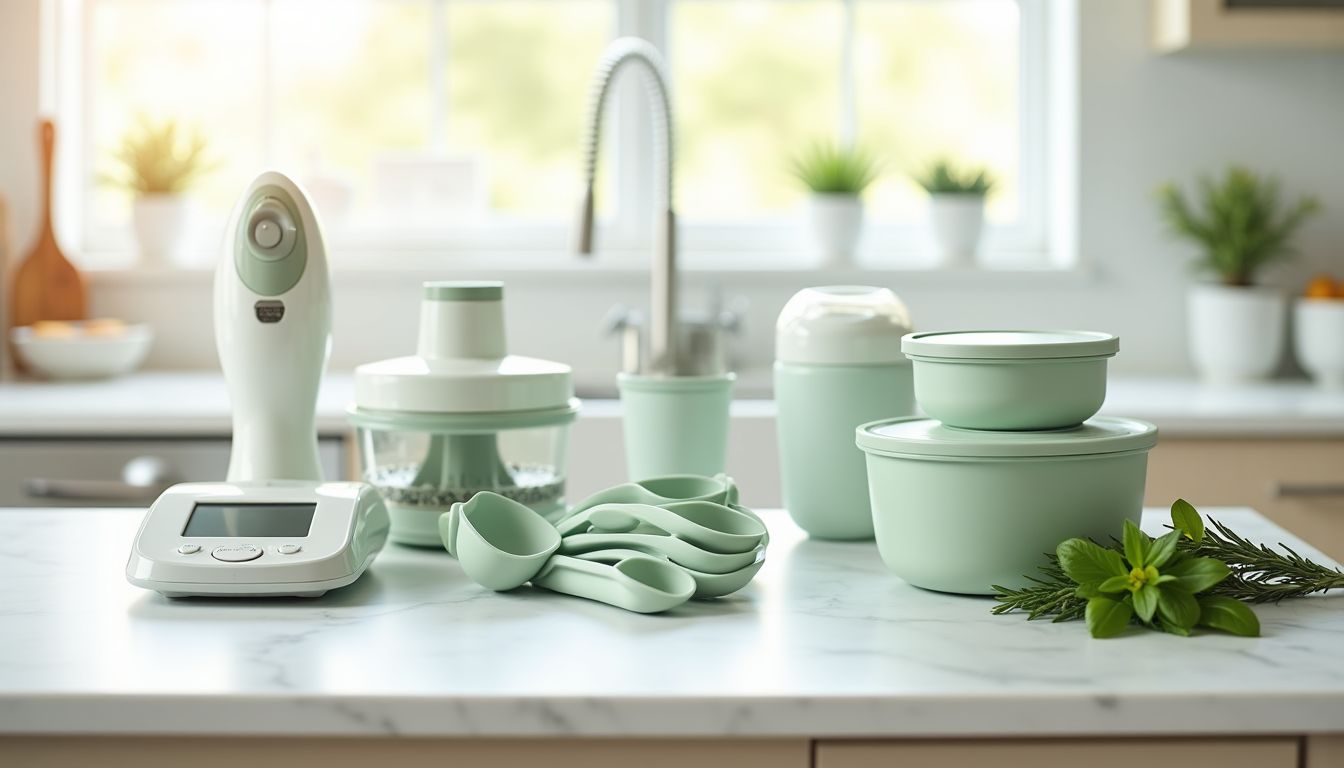
Choosing kitchen scales for the home has long ceased to be a simple matter — the modern market offers dozens of models with various functions, from basic mechanical ones to high-precision electronic scales with smartphone connectivity. For those who take cooking seriously, monitor their nutrition, or simply strive for perfect proportions in baking, the right choice of scales is the key to success. According to the recommendation of the ComfortShop editorial team, before purchasing a device, it is worth clearly defining your needs and paying attention to key technical characteristics. In this material, we will look at the main selection criteria so you can find the ideal assistant for your kitchen.
? Table of Contents
Type of Scales: Mechanical or Electronic

The first and most obvious decision to make is the type of construction. Mechanical scales operate on a spring principle, do not require batteries, and are relatively inexpensive. However, their main drawback is low accuracy; the error can reach 5-10 grams, and the mechanism wears out over time.
Electronic kitchen scales are the undisputed market leader today. They provide accuracy down to 1 gram, have a tare function (zeroing the weight of the container), and automatic shut-off. ComfortShop experts recommend choosing electronic models, as they are much more convenient for daily use and allow you to work with small ingredients.
Modern electronic devices may have touch controls or mechanical buttons. Touch panels are easier to clean, but buttons are more convenient to use with wet hands. Consider this nuance if you often cook "by feel."
Platform and Body Material
The material from which the scales are made affects not only their appearance but also their durability. The most common options are plastic, glass, and stainless steel. Plastic models are lightweight and cheap, but they can absorb odors and crack if dropped.
Glass scales look stylish and modern, are easy to clean, but are quite fragile. The most reliable option is considered to be scales with a stainless steel platform — they are hygienic, resistant to corrosion and mechanical damage. If you are buying food scales for home for many years, steel will be the optimal choice.
Pay attention to the shape of the platform. Round bowls are suitable for bulk products, while rectangular platforms are more convenient for weighing large items like dishes or whole vegetables. Some models have a removable bowl, allowing you to use the scales as a regular platform.
Maximum Load and Accuracy
These are two key parameters that determine the scope of use of the scales. For standard home needs, a maximum load of 5 kg is sufficient. If you plan to weigh large pieces of meat or whole watermelons, choose models up to 10-15 kg.


Measurement accuracy (resolution) for most culinary tasks should be 1 gram. For preparing coffee, spices, or working with yeast, it's worth looking at models with an accuracy of 0.1 grams. However, such precision scales usually have a lower maximum load (up to 500 g).
As ComfortShop reviewers note, you shouldn't chase excessive accuracy if you are not a professional pastry chef. For daily preparation of lunches and dinners, standard electronic kitchen scales with an error of 1-2 grams are quite sufficient.
Additional Functions and Useful Options
Modern models are often equipped with functions that make the weighing process as convenient as possible. The most important of these is the tare function (TARE), which allows you to zero out the weight of a bowl or other container. Without it, weighing ingredients becomes a complete inconvenience.
- Auto shut-off — saves battery life if you forget to turn off the device.
- Overload indication — warns you that you have placed too many products.
- Display backlight — a useful option when working in low light conditions.
- Liquid volume measurement — some models can show milliliters of water or milk.
Separately, it's worth mentioning moisture protection. If you often prepare dough or work with liquid products, choose models with an IPX4 protection class or higher — this will protect the electronics from accidental moisture ingress.
Many people ignore the presence of a power button on the body — in vain. Models where all functions are controlled by a single touch panel can cause inconvenience if you accidentally press the wrong area.
Power Supply and Autonomy
The vast majority of kitchen scales for home operate on AAA or CR2032 batteries. This is convenient because the device is not tied to an outlet. However, energy consumption quality can vary significantly: cheap models drain batteries in a few months, while quality ones can run on one set for over a year.
Some modern models have a built-in battery and charge via USB-C. This is more environmentally friendly but requires periodic charging. If you don't like extra wires in the kitchen, choose classic batteries — they can always be quickly replaced.
Pay attention to the location of the battery compartment. It is most convenient when it is located on the bottom and closed with a screw cap — this prevents accidental falling out of the power elements during transport.

Design, Size, and Storage
Kitchen scales are not just a tool but also part of the interior. Modern manufacturers offer models in various colors and styles: from minimalist white to bright red. However, the main thing is compactness. The scales should easily fit in a drawer or on a shelf without taking up much space.
The thickness of the device also matters. Ultra-thin models (up to 1 cm) look impressive but may be less stable on uneven surfaces. A standard thickness of 2-3 cm provides better stability. If you plan to store the scales in a visible place, choose a model with a glossy finish — it is easier to clean.
For small kitchens, foldable or transformable models that can be hung on a hook are an ideal solution. Some brands offer scales with a magnetic mount for the refrigerator — this is very convenient for saving space.
Conclusion:
Choosing kitchen scales for the home comes down to a balance between your culinary habits, budget, and desired functionality. For the average user, the optimal solution would be electronic scales with a stainless steel platform, a maximum load of 5 kg, and an accuracy of 1 gram. ComfortShop experts advise not to skimp on the quality of the load cells — they are responsible for the durability and accuracy of measurements. Choose trusted brands and models that have positive reviews in kitchen scale ratings, and your new gadget will become a reliable assistant for years to come.
Frequently Asked Questions
What maximum accuracy is needed for kitchen scales?
For most home recipes, accuracy down to 1 gram is sufficient, but for working with yeast or spices, it is better to choose models with a 0.1 gram increment.
How do electronic kitchen scales differ from mechanical ones?
Electronic scales provide higher accuracy, have a tare function, and a more compact design, while mechanical ones do not require batteries and are cheaper.
What maximum weight is important for kitchen scales?
For standard home use, a limit of 5 kg is sufficient, but if you often weigh large volumes of products, choose models up to 10 kg.
Is it worth buying scales with a Bluetooth function?
This is useful if you are counting calories or using recipe apps, but for ordinary cooking, a basic model without connectivity is sufficient.