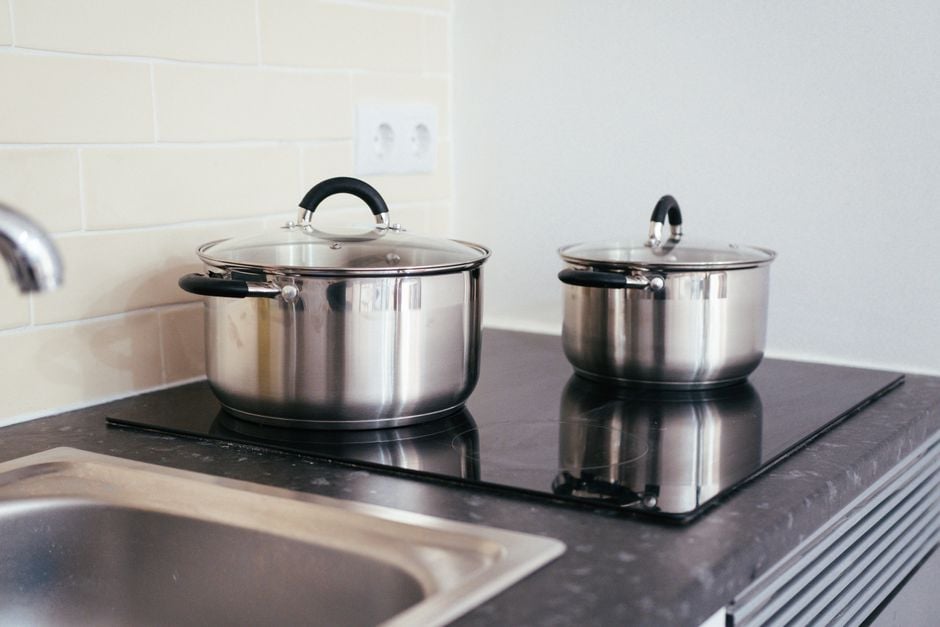
Choosing the right cookware is not just a matter of aesthetics, but a fundamental condition for the efficient operation of an induction hob. Unlike gas or electric stoves, induction heats the bottom of the cookware directly, not the burner, which places special demands on materials and construction. That is why, before you buy induction cookware, it is worth understanding the physics of the process and the key criteria. According to the recommendation of the ComfortShop editorial team, ignoring these rules leads not only to poor heating, but also to wasted money on incompatible kitchen utensils.
Article Contents
Why regular cookware doesn't work: magnetism as the foundation
The main secret of induction lies in creating an electromagnetic field that is activated only upon contact with a ferromagnetic base. If a pot or frying pan is made of a material that does not react to a magnet, the hob simply will not turn on. This is not a manufacturer's whim, but a basic operating principle that cannot be circumvented.
You can check compatibility in a matter of seconds: simply hold a regular magnet to the bottom of the product. If the magnet sticks firmly and steadily, the cookware is suitable. Weak or unstable attraction indicates that heating will be slow and uneven. Based on an analysis of characteristics, ComfortShop recommends always carrying a small magnet with you while shopping to avoid mistakes when choosing.
The modern market offers many options, but not every attractive product is ready to work with innovative technology. Cast iron, enameled steel, and stainless steel with a magnetic base are the top three. However, aluminum, copper, ceramics, and glass in their pure form without a special adapter disc will remain cold.
Critical criteria for choosing cookware for an induction hob
In addition to magnetic properties, there are a number of technical nuances that directly affect cooking speed and the durability of the appliance. The most important criteria for choosing cookware for an induction hob relate to the thickness of the base, its diameter, and its structure. Mismatches in these parameters can cause electronics to overheat or produce an unpleasant hum during operation.

Base diameter: why size matters.
Most modern induction hobs have a minimum cookware recognition threshold — usually 12 cm. If the base is smaller, the burner simply will not activate. Therefore, small coffee pots or pans with narrow bases often require the use of special adapters. Having analyzed open sources, the ComfortShop editorial team notes that the optimal choice is for the base diameter to match the size of the heating zone exactly or slightly exceed it.
Base thickness is the key to avoiding deformation. Under the influence of a powerful magnetic field, thin metal can bend, losing its perfectly flat shape. You can buy quality induction cookware based on a thickness indicator of 2 to 6 mm. Products with a multi-layer encapsulated base (sandwich structure) better accumulate heat and provide even heating without burning in the center.
Overview of materials: from cast iron to stainless steel
Although a magnetic base is mandatory, the material of the walls and coating is responsible for ease of use and the taste quality of dishes. Each type of metal has its own unique advantages that are worth considering when updating your arsenal of kitchen gadgets for induction.
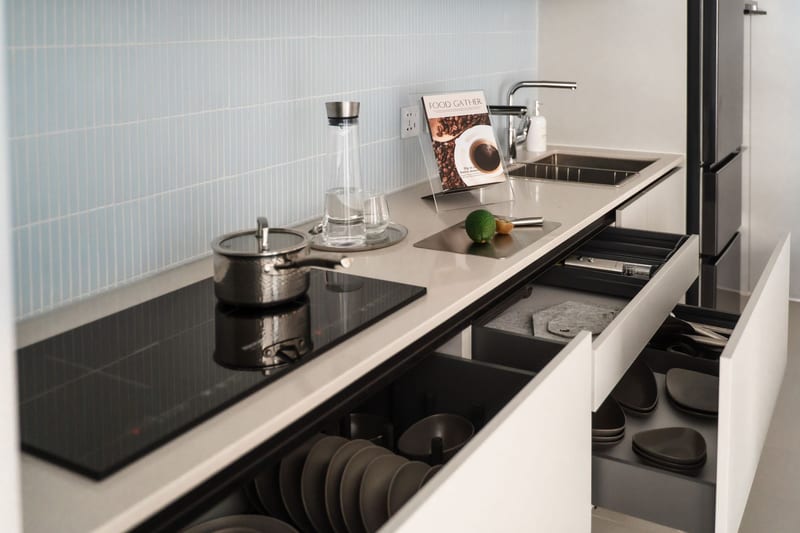
Cast iron is the heavy artillery, ideal for long simmering and frying. It has enormous heat capacity but requires careful maintenance. The main risk for the glass-ceramic surface is the abrasive effect of a rough base on older models, so it is worth choosing models with a treated, smooth base.
Stainless steel is the most popular choice for everyday use. It is lightweight, does not react with acids, and looks aesthetically pleasing. However, steel without additives has low thermal conductivity, so a quality review of cookware for induction hobs always highlights models with a built-in aluminum or copper layer in the base. This allows the contents to heat up quickly while avoiding localized overheating.
Specialized kitchen gadgets for induction hobs
In addition to standard pots and frying pans, there is a whole ecosystem of auxiliary accessories that expand the functionality of the hob. We are talking about adapter discs that allow you to use your favorite non-magnetic cookware on induction. This gadget works as an intermediary: it heats up itself and transfers the heat to a regular pot.
Also included in the category of useful kitchen gadgets for induction are special mats to protect the glass-ceramic surface from scratches and silicone layers that prevent slipping. If you decide to buy induction cookware for the first time, it is worth immediately taking care of soft spatulas made of wood or heat-resistant plastic, since metal tools can damage both the bottom of the cookware and the hob itself.
It is also worth mentioning induction pressure cookers and multi-cooker pressure cookers, which are designed specifically to work with this type of heating. They have a perfectly flat multi-layer base and are often equipped with pressure control systems, making them safe and cost-effective in terms of electricity consumption.
Labeling and marks: what to look for in the store
To avoid relying solely on a magnet, manufacturers apply special labeling to their products. A pictogram in the form of a spiral or the inscription "Induction" is a direct permission for use. This greatly simplifies the process when you plan to choose cookware for an induction hob without a consultant.
However, the presence of a symbol does not always guarantee high quality. Based on an analysis of characteristics, ComfortShop recommends paying attention to the combination of labeling and the actual structure of the base. Cheap models with a thin stamped base can quickly deform and create strong noise. Therefore, it is worth preferring cast products or models with a thick pressed disc.
It is also important to check the integrity of the coating. Any chips in the enamel or peeling of the non-stick layer appear faster on induction due to the high heating speed. To buy reliable induction cookware means choosing a product with a solid, seamless connection between the base and the walls, which guarantees a long service life.
Conclusion:
The right cookware for an induction hob is a combination of a magnetic base, sufficient thickness, and quality materials that ensure quiet and efficient operation. Following the simple criteria for choosing cookware for an induction hob will not only save your time in the kitchen, but also extend the life of expensive appliances. According to the recommendation of the ComfortShop editorial team, invest in trusted brands with clear labeling, and the cooking process will bring only pleasure.
Frequently Asked Questions
How do I check whether cookware is suitable for an induction hob?
The simplest way is to hold a magnet to the bottom of the cookware: if it is attracted, the cookware is compatible with the induction hob.
Can I use glass or aluminum cookware on an induction hob?
Regular glass and aluminum do not work on induction, but there are special models with a ferromagnetic base that are marked with the induction symbol.
What base material is best for induction cookware?
The best choice is cookware with a multi-layer base made of stainless steel or cast iron — they provide even heating and durability.
How thick should the base of induction cookware be?
The optimal base thickness is 4 to 6 mm, since a thin base can deform from high temperatures, while an overly thick one will heat up more slowly.