Article Contents
- Why a rechargeable basement flashlight is a necessity
- Key features of a blackout flashlight
- Camping and basement flashlight: versatile solutions
- Portable hiking flashlight: is it suitable for the basement
- Rechargeable flashlight for home: selection criteria
- Practical tips for use and storage
- Conclusion:
Why a rechargeable basement flashlight is a necessity
A basement is a space with special conditions: high humidity, lack of natural light, and often low temperatures. During a blackout, this is usually where food supplies, preserves, and items that need to be found quickly are stored. An ordinary candle or matches are not only inconvenient but also dangerous in an enclosed space. Therefore, a rechargeable basement flashlight becomes a basic element of emergency lighting for the basement that every household should have.
Modern models can operate from 6 to 60 hours without recharging, depending on the brightness mode. This allows you to comfortably wait out even prolonged power outages. According to the recommendation of the ComfortShop editorial team, you should choose devices with water resistance of at least IPX4, since condensation in basement spaces can quickly damage unprotected electronics.
Special attention should be paid to the battery type. Lithium-ion (Li-ion) batteries have a higher charge density and are not afraid of partial recharges, unlike nickel-metal hydride (Ni-MH) batteries, which lose capacity over time due to the "memory effect." For a basement, where the flashlight may be stored for weeks without use, it is better to choose models with low self-discharge.
Key features of a blackout flashlight
A blackout flashlight must meet several important criteria that determine its effectiveness in an emergency situation. First of all, this includes battery life and the ability to adjust brightness. An overly powerful beam will quickly drain the battery, while eco-mode allows you to stretch the charge over dozens of hours.
The second critical parameter is the charging method. The most convenient models are equipped with a USB-C or micro-USB port, which allows you to charge the flashlight from a power bank, laptop, or car adapter. This is especially relevant when the power grid is completely down. Some manufacturers also offer models with a built-in solar panel, which can be an additional energy source in the summer.
The third aspect is the durability of the housing. Emergency lighting for a basement is often used in conditions where the device may fall, hit a concrete floor, or metal shelving. An anodized aluminum housing or impact-resistant plastic with rubber pads is the optimal choice for such operating conditions.
Camping and basement flashlight: versatile solutions
The market offers many models that work equally well both in a tent during a hike and in a basement during outages. Such a camping and basement flashlight usually has several operating modes: a directed beam for spot lighting, diffused light for general illumination of the space, and a red mode for preserving night vision.
Versatile models often come with a hook for hanging, a magnetic base, or a folding stand. This allows you to attach the flashlight to a metal beam, pipe, or shelf, freeing your hands for work. After analyzing open sources, the ComfortShop editorial team notes that the most practical models for the basement are those with magnetic mounting and a 180-degree rotating head.
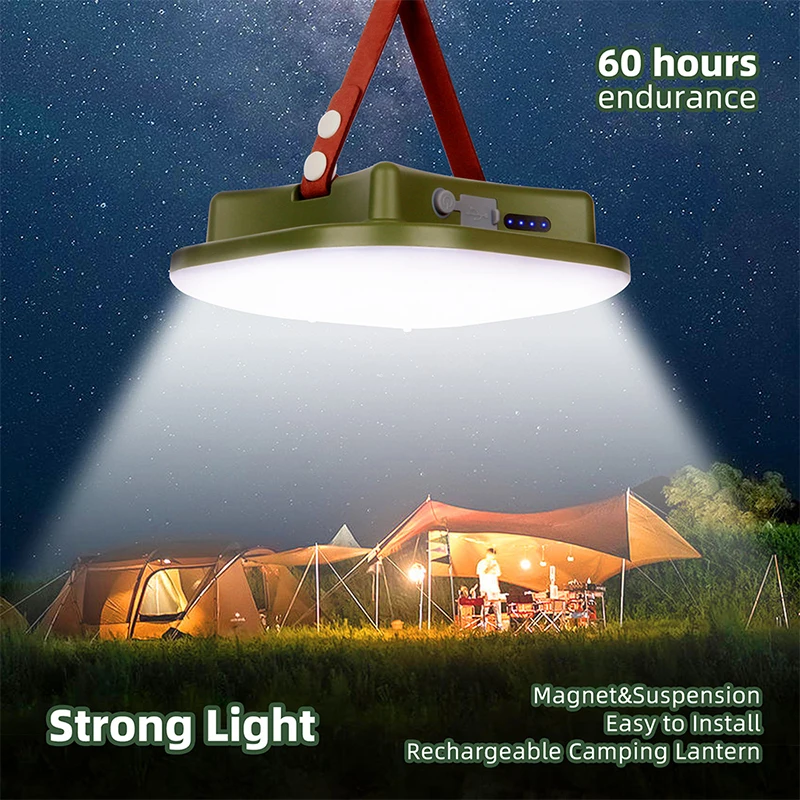
Another useful feature is the battery charge indicator. It allows you to plan recharging in advance and avoid a situation where the flashlight goes out at the most critical moment. In quality models, the indicator is made in the form of colored LEDs or a small display that shows the charge percentage in real time.
Portable hiking flashlight: is it suitable for the basement
Many users ask whether a portable hiking flashlight can be used as the main light source in the basement. The answer is yes, but with certain caveats. Hiking models are usually lighter, more compact, and have better battery life, but not all of them are designed for prolonged stationary use.
The key difference lies in the LED cooling system. Powerful hiking flashlights at maximum mode can overheat during continuous operation of more than 10–15 minutes. In the basement, however, stable light is often needed for hours. Therefore, for prolonged lighting, it is better to choose models with efficient heat dissipation or use a medium brightness mode that does not overload the electronics.
It is also worth paying attention to the operating temperature range. Some hiking models are designed for operation only from 0 °C to +40 °C, while in the basement in winter the temperature can drop below zero. Lithium-ion batteries lose up to 30–40% of their capacity at sub-zero temperatures, so for cold rooms you should consider a spare battery or store the flashlight in an inner clothing pocket.
Rechargeable flashlight for home: selection criteria
When choosing a rechargeable flashlight for home, you should focus on several basic parameters that determine the convenience of daily use. The first is battery capacity, measured in milliamp-hours (mAh). For the basement, models with a battery from 2000 to 5000 mAh are sufficient, providing 10 to 50 hours of operation in economy mode.
The second parameter is luminous flux, measured in lumens (lm). For lighting a small basement of 10–15 m², 300–600 lm is sufficient. Overly bright models at 2000–3000 lm drain the battery faster and can cause eye discomfort in an enclosed space. The optimal choice is a flashlight with adjustable brightness from 50 to 1000 lm.
The third important point is the LED type. Modern models use Cree, Nichia, or Luminus LEDs, which provide high energy efficiency and a long service life of up to 50,000 hours. A quality LED not only saves battery charge but also provides more natural light with accurate color rendering, which is important when searching for items in the dark.
Practical tips for use and storage
To ensure that a rechargeable basement flashlight lasts as long as possible, it is worth following a few simple rules. First, store the device in a dry place, preferably in a sealed container or bag with silica gel. This will protect the electronics from corrosion and extend the service life of the contacts.
Second, do not leave the battery completely discharged for a long time. The optimal charge level for storing lithium-ion batteries is 40–60%. Once every 2–3 months, perform a control recharge, even if the flashlight has not been used. This prevents deep discharge, which can irreversibly damage the power cells.
Third, always keep a spare battery or power bank near the flashlight. In the event of a prolonged blackout, this will allow you to quickly restore lighting without searching for a power source. Based on an analysis of characteristics, ComfortShop recommends models with replaceable batteries in the 18650 or 21700 format, which are easy to replace and are available for purchase separately.
Conclusion:
A rechargeable basement flashlight during a blackout is not a luxury but a basic safety element that every home should have. Choose models with water resistance, adjustable brightness, and a high-capacity battery of at least 2000 mAh to guarantee light even during prolonged power outages. The ComfortShop editorial team advises paying attention to versatile models with magnetic mounting and USB charging, which are equally effective in the basement, garage, and during outdoor trips.
Frequently Asked Questions
Which battery type is best for a basement flashlight?
It is best to choose flashlights with lithium-ion batteries (18650 or 21700) — they have high capacity, hold a charge for a long time, and withstand many recharge cycles, which is critical for emergency lighting.
How long should a blackout flashlight last on a single charge?
For a prolonged power outage, choose a model that operates for at least 8–12 hours at minimum brightness, and at maximum power — no less than 2–3 hours.
Can a hiking flashlight be used as the main light source in the basement?
Yes, but pay attention to the light dispersion angle and the presence of a "flood" mode or magnetic mounting — this will allow you to attach the flashlight to a metal beam or shelf for even illumination of the entire space.
How to quickly charge a rechargeable flashlight if there is no electricity?
Choose models that support charging from a power bank, solar panels, or a car cigarette lighter — this will allow you to restore the charge even with a complete absence of the power grid.