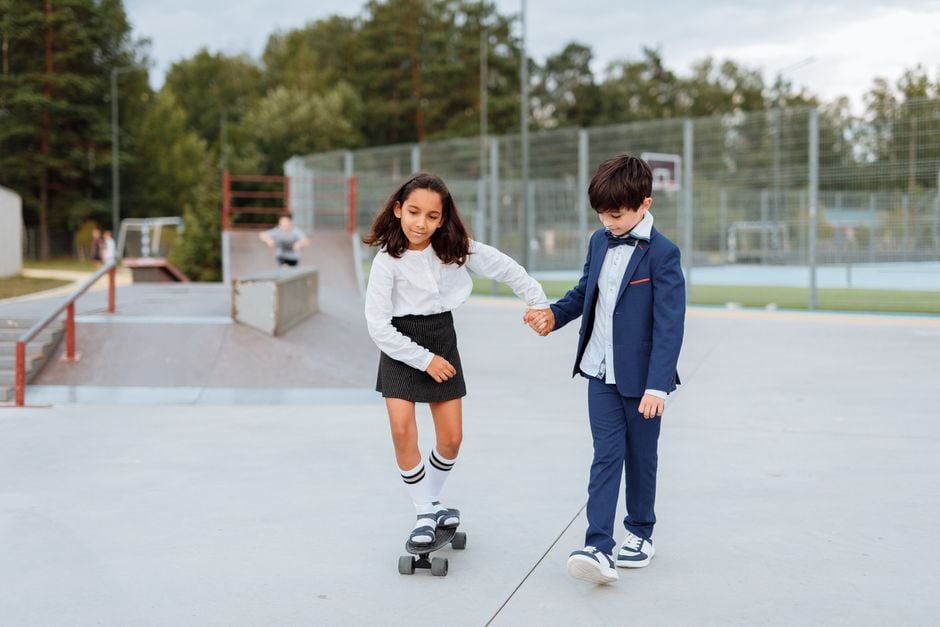
Modern children are increasingly drawn to technological entertainment, and our review of a hoverboard for a child will help parents figure out whether this toy is worth its money. It's not just a fashion statement, but a real mix of sports, tourism, and outdoor recreation. According to the recommendation of the ComfortShop editorial team, before buying, it's worth weighing all the pros and cons of this vehicle, as it can become either a favorite hobby or gather dust in the closet.
Article Contents
What is a hoverboard and why are children thrilled with it
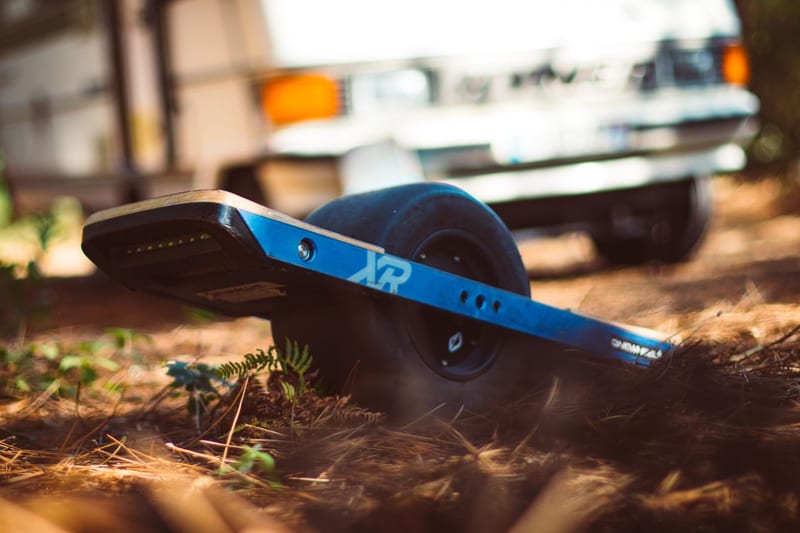
A hoverboard is a two-wheeled electric device that moves by the user balancing their body. The child doesn't need to pedal or push off with their feet — just lean forward, and the platform smoothly starts moving. It's this magic of the "feeling of flight" that causes genuine delight in young riders.
Unlike a scooter or bicycle, the children's hoverboard we are honestly reviewing requires minimal physical effort, yet it perfectly trains the vestibular system. The child learns to coordinate movements, maintain balance, and control speed, which positively impacts overall physical development.
Modern models are equipped with bright LED lighting, built-in Bluetooth speakers, and even a remote control function via smartphone. This makes a hoverboard for children, sports and tourism, not just a means of transportation, but a real gadget that impresses peers.
Key criteria for choosing a hoverboard for a child
Choosing a hoverboard for a child is a responsible task, as the safety and comfort of the little driver depend on the correctness of the decision. ComfortShop experts advise paying attention to several critically important parameters that determine whether a model is suitable for your child.
What to pay attention to first:
- Wheel diameter: for children aged 5-8, the optimal size is 4.5-6.5 inches. They provide stability on flat asphalt and good maneuverability.
- Device weight: the lighter the hoverboard, the easier it is for the child to carry. For younger schoolchildren, a weight of up to 5-6 kg is recommended.
- Maximum speed: a safe range for beginners is 5-8 km/h. Some models have a learning mode with speed limitation.
- Moisture protection: even if the child doesn't plan to ride in the rain, IP54 protection or higher will protect the electronics from accidental splashes.
Separately, it's worth mentioning battery certification. A high-quality lithium-ion battery from a well-known manufacturer (Samsung, LG) guarantees safety and no risk of fire. Cheap analogs can pose a real danger to a child's health.
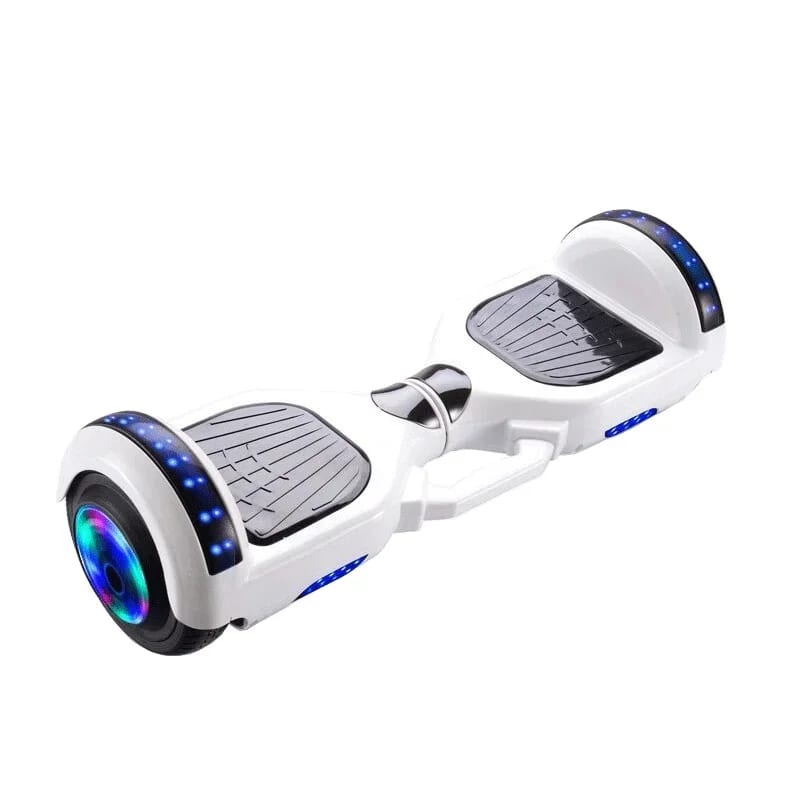
Also, pay attention to the presence of a special carrying handle and footrests that make transportation easier. This is especially relevant when the child gets tired of riding and parents have to carry the device home.
Hoverboard for a child: pros and cons
The hoverboard for a child, whose pros and cons we will examine in detail, has both obvious advantages and hidden disadvantages. To avoid disappointment in the purchase, it is important to understand the real picture, not marketing promises.
Advantages that really matter:
- Coordination development: regular riding improves balance and spatial orientation.
- Motivation for walks: the child is more willing to go outside when they have such "transport." This is especially valuable in the era of smartphones and tablets.
- Compactness: the hoverboard easily fits in the car trunk, making it convenient to take to the park or on a trip out of town.
- Ease of learning: most children ride confidently within 15-20 minutes after the first attempt.
At the same time, a review of a hoverboard for a child would be dishonest without mentioning the disadvantages. Firstly, it's the dependence on road surface quality — on cobblestones or dirt roads, comfort drops sharply. Secondly, the battery life rarely exceeds 1-1.5 hours of active riding, which can upset a child in the midst of fun. Thirdly, the price of a quality model starts from 3500-4000 hryvnias, which not every budget can handle painlessly.
As ComfortShop reviewers note, it's also important to consider that a hoverboard does not replace full physical activity. It is rather a supplement to a bicycle, scooter, or active games, not an alternative to them.
Safety above all: what parents need to know
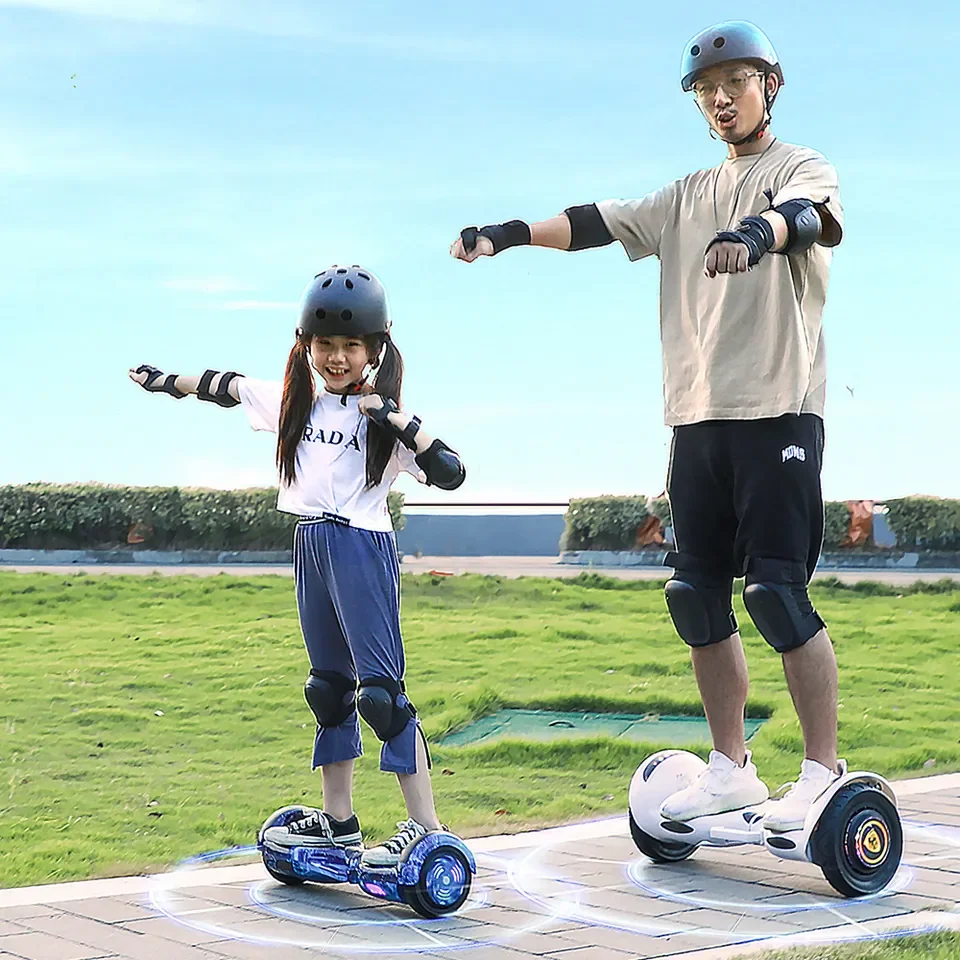
The safety of a child while riding a hoverboard is a topic that cannot be ignored. Even the highest quality model does not guarantee the absence of falls, especially during the learning phase. Therefore, the first and main rule is a mandatory protective kit.
A helmet, knee pads, elbow pads, and wrist guards should become as familiar attributes as the hoverboard itself. The child must understand: without protection, riding doesn't start. This builds a proper safety culture from an early age.
The second important rule is choosing a place for riding. Flat asphalt areas in parks, courtyards without car traffic, and special bike paths are ideal. It is strictly forbidden to ride onto the roadway, even if the child feels confident on the hoverboard.
Also, pay attention to the built-in safety systems of a specific model. Quality hoverboards have automatic speed reduction when tilting more than 15 degrees, an audible warning for low battery, and motor overheating protection. These seemingly small details can prevent serious injuries.
Comparison with alternatives: why a hoverboard
When it comes to choosing a hoverboard for a child, parents often hesitate between several options: an electric scooter, an electric bicycle, or even a unicycle. Each of these devices has its own features, but the hoverboard occupies a unique niche.
Unlike an electric scooter, a hoverboard doesn't require handlebars — the child's hands remain free, adding a sense of freedom. Compared to a unicycle, it is much more stable and easier to learn, which is critical for children of primary school age. And an electric bicycle, although it has a longer range, is significantly heavier and bulkier.
A hoverboard for children, sports and tourism, is an ideal option for family trips to nature, walks in the park or on the waterfront. It doesn't take up much space, charges quickly, and gives the child a sea of positive emotions. Moreover, it's a great way to distract a child from gadgets and get them interested in active recreation.
Conclusion:
The children's hoverboard, which we have honestly reviewed, is a worthwhile purchase only if the choice is deliberate. It is not a necessity, but it can give a child many vivid impressions and promote physical development. The main thing is to choose a quality model with a proven battery, not to skimp on protection, and strictly follow safety rules. If you are looking for a reliable hoverboard for a child, check out the ComfortShop range, which features only certified models from trusted manufacturers with a quality guarantee.
Frequently Asked Questions
At what age can a child buy a hoverboard?
Most models are recommended for children aged 5-6 and older, but it's important to consider the child's physical fitness and ability to maintain balance.
Which hoverboard is safer for a child: with large or small wheels?
Models with 6.5-8 inch wheels are better suited for smooth roads, while hoverboards with 10 inch wheels have better cross-country capability and stability on uneven surfaces, which reduces the risk of falling.
Is it worth buying a hoverboard for a child if they are afraid of falling?
Yes, but choose a model with a learning mode and speed limitation, and be sure to purchase a protective helmet and knee pads for the first training sessions.
What are the main pros and cons of a hoverboard for a child?
Pros: develops coordination and the vestibular system, the child spends more time outdoors. Cons: requires a flat surface for riding and mandatory use of protection, and cheap models can quickly break down.