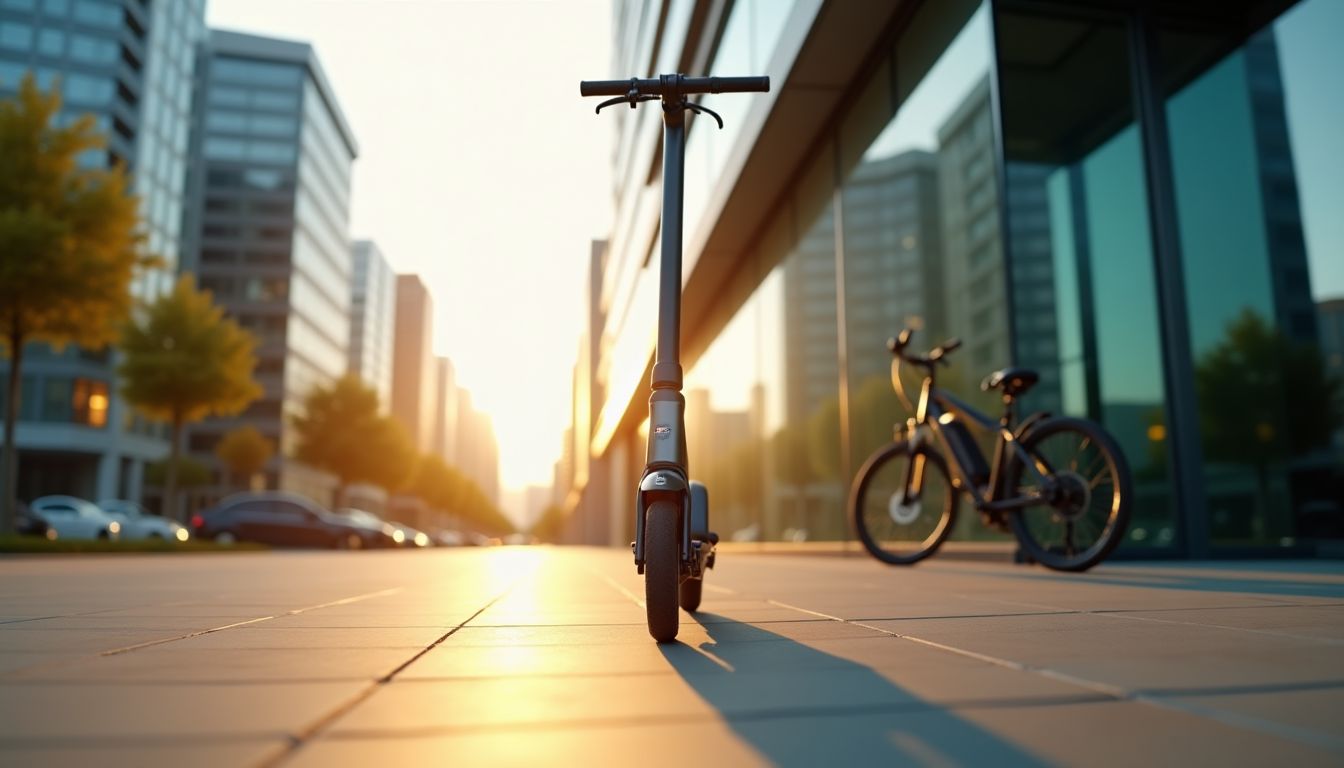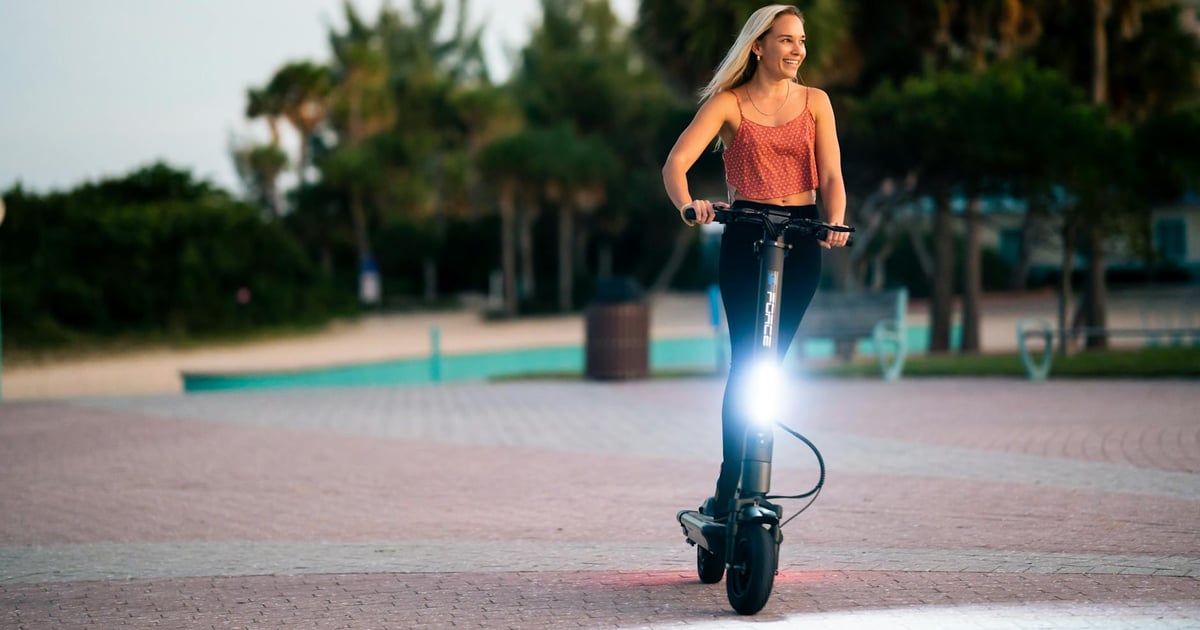
When choosing personal electric transport for the city, many face a dilemma: an electric scooter or a unicycle? Both options offer freedom of movement, avoiding traffic jams, and eco-friendliness, but they fundamentally differ in concept, technology, and riding experience. The electric scooter, familiar and intuitive, often becomes the first step into the world of micromobility. The unicycle, on the other hand, embodies high-tech and compact transport that requires a certain skill but offers unique maneuverability. This article will compare both types of transport in detail across key parameters to help you make an informed choice that perfectly matches your needs, lifestyle, and budget.
? Table of Contents
Design and Operating Principle: Two Different Philosophies

The fundamental difference between an electric scooter and a unicycle lies in the very idea of the design. The electric scooter is a logical development of a regular scooter: it has a foot platform, handlebars (steering column), and typically two wheels. Control is achieved using the brake and accelerator handles, and balancing requires no special skills — it is a stable and familiar design.
The unicycle is essentially one large wheel with pedals on the sides, inside which are a powerful electric motor, battery, and a complex gyroscopic stabilizer. The user stands on the pedals, and balancing forward-backward and speed control occur solely by shifting the body's center of gravity. This system requires training, but once mastered, it provides an incredible feeling of unity with the device.
Thus, the scooter is transport with external controls, while the unicycle is transport controlled by the body, making it intuitive, but only after overcoming the initial barrier.
Comparison of Key Features: Mobility, Speed, Range
To understand which is better suited for urban conditions, let's look at the main technical parameters in a comparison table, and then detail each point.

Main characteristics of an electric scooter and a unicycle:
| Criterion | Electric Scooter | Unicycle |
|---|---|---|
| Compactness and Weight | Mid-range models are heavier (12-15 kg), often foldable, but take up more space. | Most compact and lightest (10-13 kg for similar power). Does not fold, but has a handle for carrying. |
| Speed | Usually 25-30 km/h (limited for safety). Powerful models – up to 50-60 km/h. | Varies greatly: from 25 km/h in budget models to 50+ km/h in powerful and expensive ones. |
| Range | Depends on battery capacity: 20-40 km in the mid-range, premium – 70+ km. | Thanks to one large wheel and aerodynamics, often has a longer range with the same battery capacity (30-50 km mid-range, 100+ km – top). |
| Terrain Capability | Small wheels (8-10 inches) are sensitive to uneven surfaces. Pneumatic tires improve comfort. | Large wheels (14-18 inches) handle curbs, tram tracks, and small potholes better. |
| Learning Time | Minimal (a few minutes for those who can ride a regular scooter). | From several days to a week of regular practice for stable riding. |
As seen from the table, the unicycle often wins in terms of compactness, terrain capability, and potential range. The electric scooter, however, has an undeniable advantage in ease of learning and immediate readiness to ride.
Safety and Riding Comfort in the City
Safety is the most important aspect of choosing urban transport. The electric scooter offers a stable two-wheel platform, which significantly reduces the risk of falling at low speeds or during maneuvering. The presence of handlebars provides an additional point of support. Most models are equipped with effective braking systems (disc, drum, or electronic regenerative) as well as front and rear lights.
The safety of a unicycle is closely tied to the rider's experience. During the initial learning phase, falls are inevitable, so using a full set of protective gear is mandatory: helmet, knee pads, elbow pads, and protective gloves. Once mastered, the unicycle becomes very safe due to its wide tire and low center of gravity. However, in the event of an electronic failure or sudden loss of balance, it is physically harder to compensate than on a scooter.
Regarding comfort, the large wheel of the unicycle absorbs vibrations from cobblestones and small bumps better. On a scooter with small wheels, every crack is felt more strongly, which can be tiring on long distances if the surface is not ideal.
Transportation and Storage
For a city dweller who combines different modes of transport, how the device can be carried and stored is important. Most electric scooters have a folding mechanism. A folded scooter can be taken into the office, store, or public transport, although its weight and dimensions remain noticeable.
The unicycle is the absolute champion in this category. Even without folding, it takes up minimal space. It can be rolled alongside using its built-in handle, like a suitcase, or carried by a special strap. On public transport or in a crowded elevator, the unicycle will always be a less cumbersome companion than a scooter.
For home storage, the unicycle also wins: it can be placed in a corner, under a table, or in a niche where it is practically unnoticeable. A folded scooter often requires dedicated space near the entrance or in the hallway.
Price and Target Audience: Who is it for?
The price range for both types of transport is very wide. However, on average, a powerful unicycle with good range will cost more than a similarly specified electric scooter due to the more complex stabilization system. Budget models exist in both categories.
Who should choose an electric scooter:
- Beginners who want to start using electric transport without a long learning curve.
- Those who value simplicity and reliability of design.
- People who need a physical point of support (handlebars) due to balance issues.
- For short trips on good asphalt (to the store, metro).
Who is better suited for a unicycle:
- Tech enthusiasts willing to invest time in learning for a unique experience.
- Those for whom maximum compactness is critical for combined trips.
- City dwellers who often ride on poor roads and over obstacles (curbs, tracks).
- For longer daily routes where range and comfort on uneven surfaces are important.
Conclusion:
Both options are excellent solutions for the city, but they serve different needs. The electric scooter is the optimal, safe, and easy-to-learn choice for most people who want to travel quickly, economically, and conveniently over short and medium distances. The unicycle is transport for those willing to invest time in learning to get the most compact, maneuverable, and terrain-capable vehicle that becomes an extension of the body. If your priority is simplicity and an immediate start — choose an electric scooter. If you value high-tech, maximum mobility, and are not afraid of challenges — the unicycle will open a new level of freedom in the city for you.