When choosing the central hub for your smart home, users often face a dilemma: Google Home vs Amazon Alexa. These two leading ecosystems dominate the market, offering similar capabilities but with key differences. The choice determines not only how you control lights or music, but also which devices you can integrate in the future, how natural the interaction will be, and what additional functionality you get. In this article, we will compare Google Assistant (which "lives" in Google Home, Nest Audio speakers, etc.) and Amazon Alexa in detail to help you decide which smart home is better for your needs, even considering specific scenarios like controlling automatic chicken coop doors.
? Also recommended
View product on AliExpress →? Table of Contents
Basic Capabilities and Interaction
Both assistants can perform a standard set of commands: play music, tell the weather, set timers, and control connected smart devices. However, their "intelligence" and interaction methods differ. Amazon Alexa was a pioneer in the market and has a colossal library of "skills" — third-party applications that expand its functionality in thousands of different directions, from games to ordering pizza.
Google Assistant, as you might expect, excels at understanding context and carrying on conversations. It better recognizes natural language and can answer complex, multi-part queries without needing to say "Ok Google" each time. For example, you can say: "What's the weather this weekend, and should I take an umbrella?" — and get a logical answer. Alexa more often requires clearer, step-by-step commands.
For Ukrainian-speaking users, native language support is an important aspect. Unfortunately, a full-fledged Ukrainian version for home use is currently limited in both systems. However, both assistants understand English and Russian well enough to be used effectively.
Ecosystem and Device Compatibility
This is perhaps the most important selection criterion. Amazon Alexa has a longer history of partnerships, so on paper, it supports a larger number of smart home brands and devices. It integrates very well with Amazon services, such as voice shopping or watching videos on Prime Video.
Key principle: choose a device for the ecosystem, not the other way around.
Google Assistant, in turn, is tightly integrated with Google services: Calendar, Gmail, Search, Google Maps. This makes it indispensable for those who live within these services. In terms of compatibility, it also supports all major standards (Wi-Fi, Bluetooth, Zigbee via hub) and thousands of popular devices. It is important to check if the specific device you want to buy has a "Works with Google Assistant" or "Compatible with Alexa" logo.
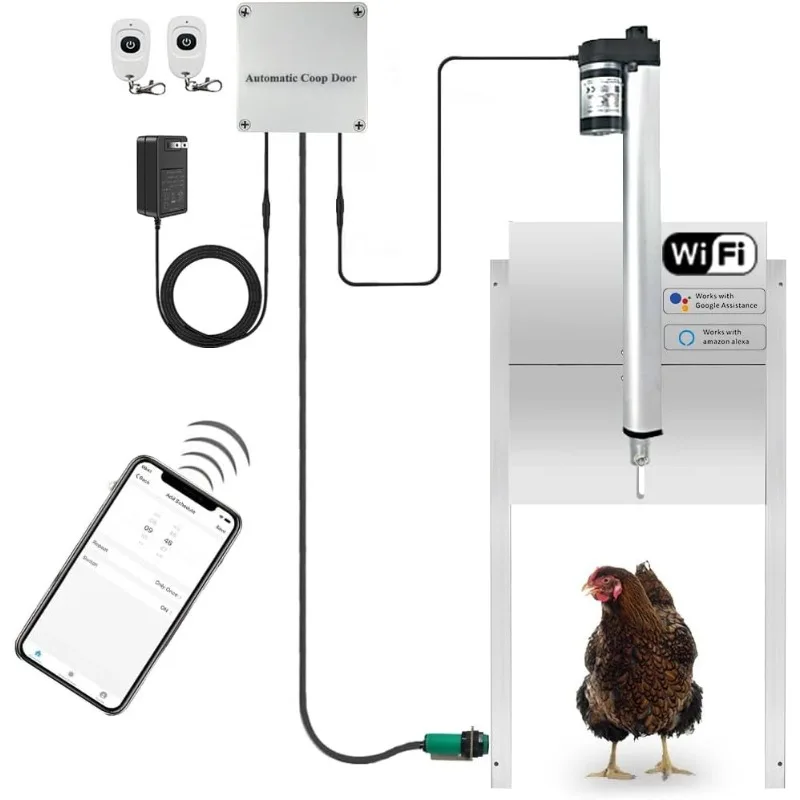
For example, the Automatic Chicken Coop Smart Door, as described, is compatible with both ecosystems (Alexa, Google Assistant), as well as with Home Assistant and Tuya. This means you can control it by voice through either assistant, opening and closing the door for your birds remotely or on a schedule, regardless of your choice.
Hardware: Speakers and Displays
Both giants offer a wide range of devices at various price points. The Amazon Echo line includes basic Echo Dot speakers, full-size Echo, Echo Studio with high-quality sound, as well as screen-equipped devices — Echo Show, which can display video from cameras, recipes, or make video calls.
Google offers Nest Mini, Nest Audio speakers, as well as Nest Hub and Nest Hub Max with screens. The latter integrate perfectly with Google Photos and YouTube services. Overall, if you primarily need a high-quality music speaker, it's worth comparing specific models. For household tasks and basic home control, the most budget-friendly models from both brands are sufficient.
It is important to remember that buying a speaker or display is your "invitation" for a specific ecosystem into your home. After that, all subsequent purchases of smart devices should be oriented towards compatibility with that ecosystem.
Comparison Table: Google Assistant vs Amazon Alexa
For clarity, let's summarize the key differences in a table. This will help you quickly assess the strengths and weaknesses of each solution.
| Criterion | Google Assistant | Amazon Alexa |
|---|---|---|
| Strengths | Context understanding, integration with Google services (Search, Calendar, Maps), convenience for everyday queries. | Vast library of skills, wide hardware lineup, integration with Amazon (shopping, Prime). |
| Weaknesses | Fewer "entertainment" skills, potentially fewer exotic devices supported. | Less intelligent dialogue, greater reliance on clear commands, emphasis on commercial functions (shopping). |
| For whom | Android and Google services users, those who value natural conversation and information retrieval. | Enthusiasts of entertainment and skill experimentation, active Amazon shoppers, owners of many diverse devices. |
| Compatibility | Practically all popular brands (Philips Hue, TP-Link, Tuya, Nest) and standards. | Broadest formal brand support, including many niche manufacturers. |
What is Better for Smart Farm Management?
If your smart home concept extends beyond the apartment and includes, for example, a shed, greenhouse, or chicken coop, it's important to understand how the ecosystem interacts with such devices. Both assistants can control devices via Wi-Fi or through intermediary hubs (if the device uses Zigbee or Z-Wave).
A device like our example, the Automatic Chicken Coop Smart Door, which supports both standards, is an ideal choice because it gives you freedom. You can create voice scenes or routines: "Alexa, goodnight" — and it will turn off the lights in the house, lock the door, and close the chicken coop door. The same can be set up in Google Home using "Routines."
For farms, operational stability and the ability to create scheduled automations (e.g., opening the door at dawn) are also important. These are provided by the Google Home and Alexa apps themselves, as well as platforms like Tuya Smart or Home Assistant, with which the device is also compatible.

Conclusion:
Both platforms — Google Home and Amazon Alexa — offer powerful capabilities for building a smart home. The choice depends on your priorities. Choose Google Assistant if you use Google services daily, value a smart assistant for answering questions and natural interaction. Opt for Amazon Alexa if you enjoy experimenting with thousands of skills, actively use Amazon, or have many diverse devices for which formal support is important. For controlling niche devices like automatic chicken coop doors, ensure they have the appropriate compatibility logo — fortunately, modern devices typically support both popular ecosystems, leaving you the freedom to choose your primary assistant.