When choosing an air conditioner for an apartment, it's easy to get confused by the variety of models, technical specifications, and marketing promises. A wrong choice can lead to insufficient cooling, excessive electricity consumption, or rapid equipment wear. This article will help you understand which parameters you should pay attention to first, so that the appliance works effectively in your specific conditions. We will break down five key selection criteria, from power to additional features, allowing you to make an informed decision and avoid common mistakes.
? Table of Contents
Criterion 1: Cooling and Heating Power
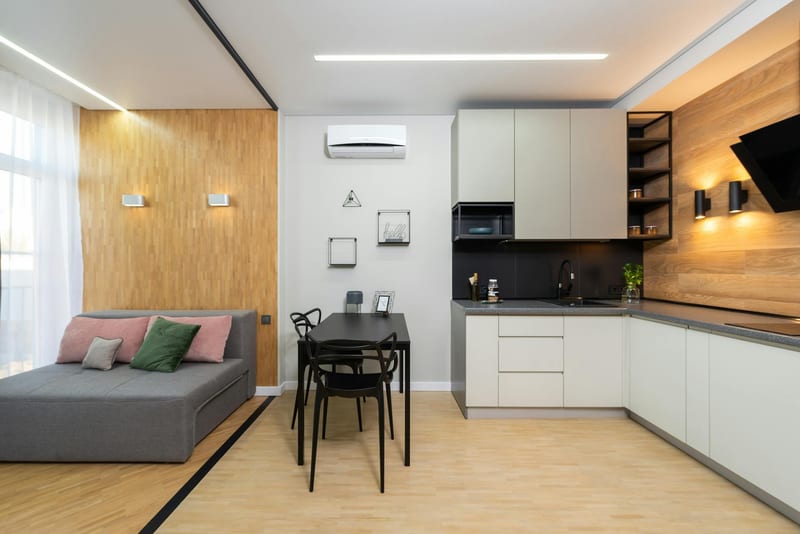
Power is the most important parameter that determines whether the air conditioner can maintain a comfortable temperature in your room. Its calculation cannot be done "by eye," as a device that is too weak will operate at its limit without achieving the desired result, while one that is too powerful will frequently turn on and off, leading to increased wear and higher electricity consumption.
For a rough calculation of cooling power, a simplified formula is used: for every 10 m² of area with a standard ceiling height (2.5-2.7 m), approximately 1 kW (1000 BTU) of cooling capacity is needed. However, this is only a baseline indicator. Coefficients accounting for other factors must be added:
- Large windows facing the sunny side: +10-20% to power.
- Number of people constantly in the room: each person "generates" about 0.1-0.15 kW of heat.
- Presence of household appliances (TV, computer): also adds heat generation.
Typical mistake: ignoring heat gains.
The most common mistake is buying an air conditioner based solely on the room area, without considering the sunny side or active household appliances. For example, a 15 m² bedroom on the north side might suffice with a 9000 BTU model, while a living room of the same size with a large panoramic window facing south would require a 12000 BTU unit. For an accurate selection, it is better to use a calculator on the store's website or get advice from a specialist.
Criterion 2: Type of Air Conditioner: Split System or Portable
The choice of air conditioner type determines not only efficiency but also operational comfort, noise level, and installation complexity. The two main options for an apartment are a stationary split system and a portable (mobile) monoblock. Each has its clear advantages and disadvantages that need to be weighed.
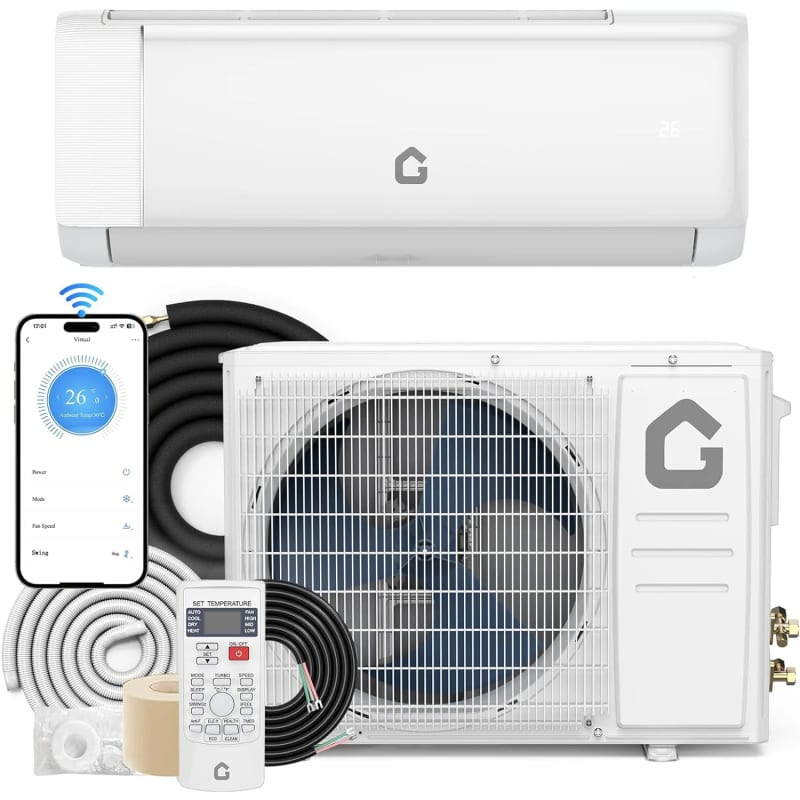
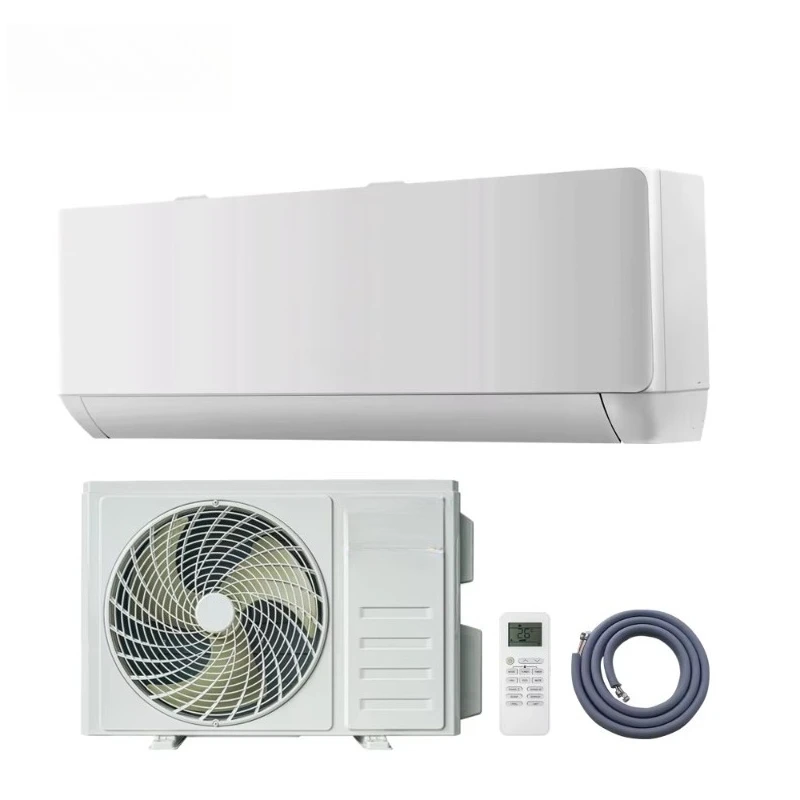
Split systems consist of two units: an indoor (evaporator) and an outdoor (compressor-condenser) unit. They are the most popular solution due to high energy efficiency, low indoor noise levels, and a wide selection of power outputs and designs. However, their installation requires professional work, including drilling a wall for communications and securely mounting the outdoor unit.
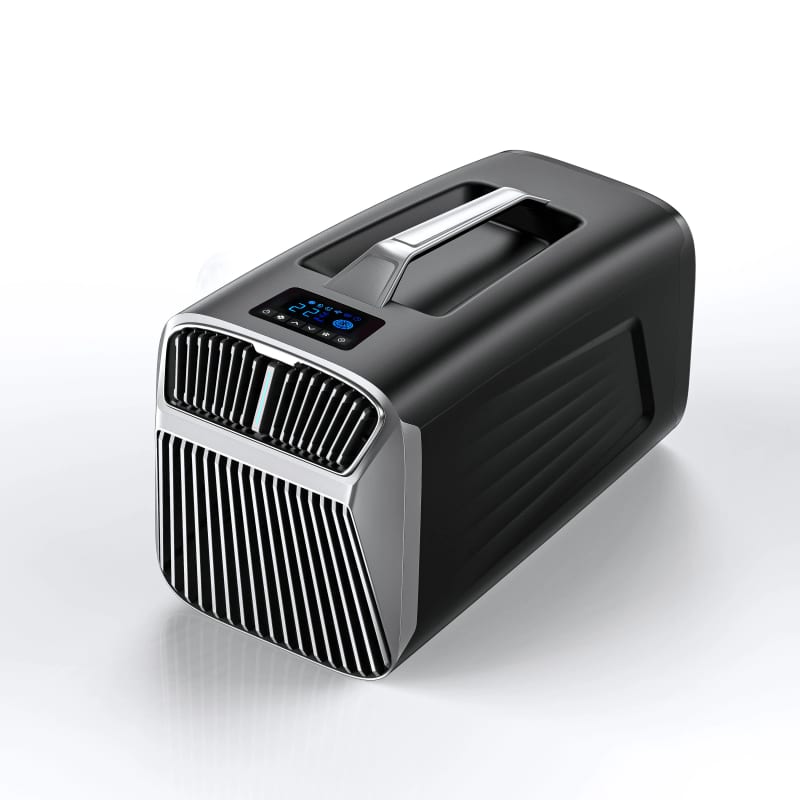
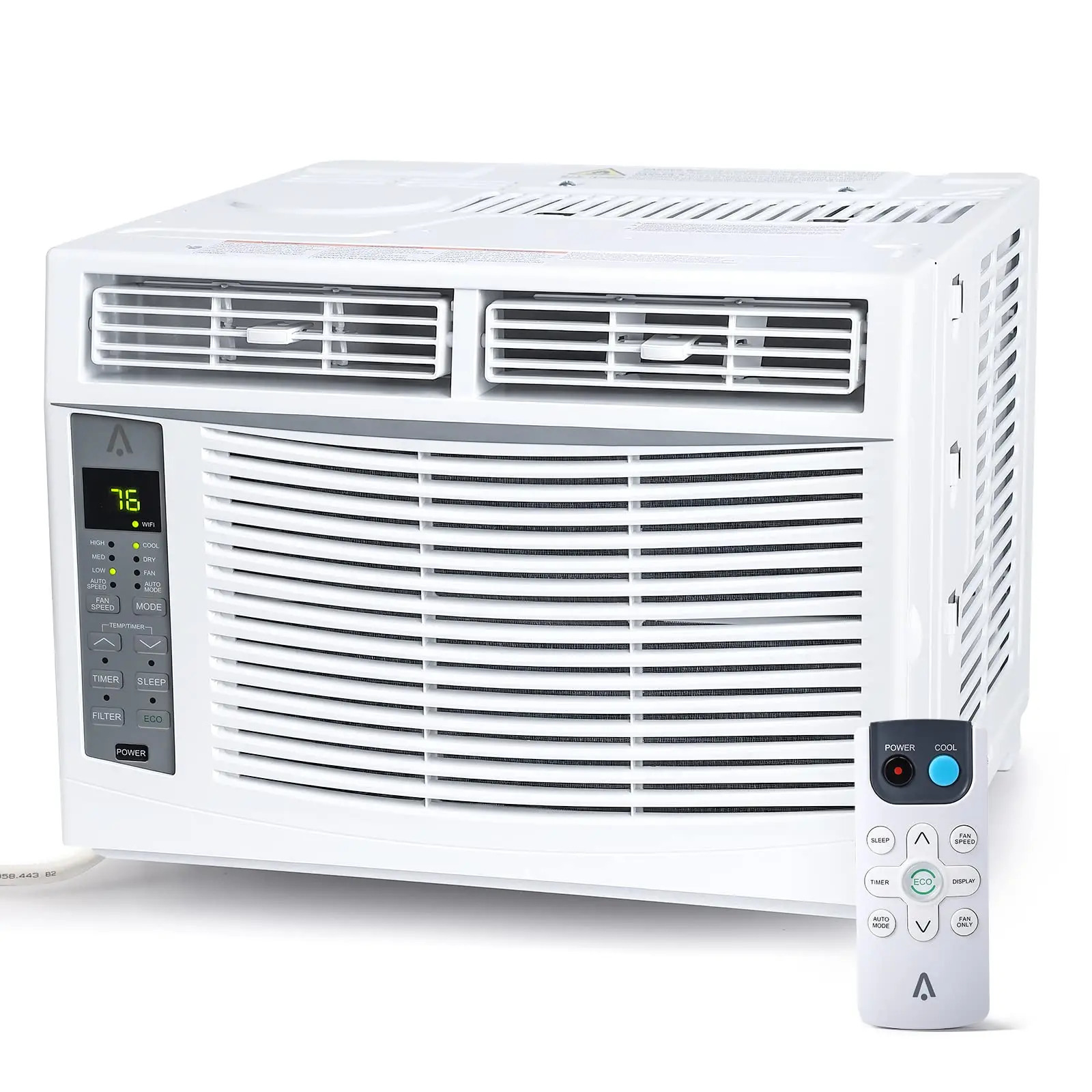
Portable air conditioners are a single unit that can be moved from room to room. They do not require stationary installation, making them ideal for rented housing. But there are significant drawbacks: higher noise levels (the compressor is inside the room), lower power and performance, and the need to vent the hot air hose out a window or through a special hatch.
How to avoid a mistake: assess installation possibilities and priorities.
It would be a mistake to buy a portable air conditioner for permanent cooling of a single room, expecting the quietness and efficiency of a split system. Conversely, it would be a mistake to order a complex split system installation if you live in a rented apartment or plan to move. Clearly determine what is more important for you: quietness, efficiency, and durability (split system) or mobility and simplicity (monoblock).
Criterion 3: Energy Efficiency (SEER/SCOP Class)
The energy efficiency of an air conditioner directly affects the amount on your electricity bills. Its level is determined by international classes, denoted by letters from A (highest) to G (lowest). For climate control equipment, two main indices are used: SEER (Seasonal Energy Efficiency Ratio for cooling mode) and SCOP (Seasonal Coefficient of Performance for heating mode). The higher these values, the more economical the device will be.
For example, an A+++ class air conditioner with a high SEER can consume 30-40% less electricity than a similarly powered device of class B. Although models with a higher energy-saving class are usually more expensive, this price difference often pays off over several seasons of active use through savings on electricity.
A typical mistake is saving on the purchase by neglecting the energy efficiency class. By choosing a cheaper model with a low class, you save once but will regularly overpay on utility bills. This is especially relevant for regions with hot summers and for those who plan to use the air conditioner for heating during the off-season as well.
Criterion 4: Indoor Unit Noise Level
Noise level is a critically important parameter for comfortable living, especially if the air conditioner is to be installed in a bedroom, children's room, or study. Noise is measured in decibels (dB). Modern split systems in quiet mode (or night mode) can produce sound at a level of 19-24 dB, comparable to rustling leaves.
It is important to understand that technical specifications usually indicate the minimum, nominal, and maximum noise levels. You should focus on the nominal value at the average fan speed. It is also worth remembering that portable air conditioners will always be significantly noisier (45-55 dB) due to the compressor being located indoors.
Mistake: ignoring noise when choosing a model for the bedroom.
Often, buyers, captivated by power and features, forget to check the noise level. Later, it turns out that the air conditioner's operation interferes with sleep. To avoid this, be sure to study this parameter in the product description and give preference to models with a declared "night mode" or "quiet operation" function, especially for rest rooms.
Criterion 5: Additional Features and Smart Climate
Modern air conditioners are not just devices for cooling the air. They are equipped with a whole set of useful options that increase comfort, convenience, and safety. However, not all of them are mandatory, and it's worth understanding what they are for, so as not to overpay for unnecessary "gimmicks."
The most useful and popular features include:
- Heating mode: allows using the air conditioner as a primary or supplementary heater during the off-season. Pay attention to the minimum outdoor operating temperature for this mode.
- Dehumidification: an effective function for humid rooms that does not lower the temperature as much as cooling mode.
- Night mode (Sleep Mode): automatically maintains a comfortable temperature during sleep, gradually reducing power and noise levels.
- Timer and Wi-Fi control: allow you to program the device to turn on/off and control it remotely via a smartphone.
- Air filtration: the presence of antibacterial, anti-allergen, and fine filters improves the air quality in the apartment.
It would be a mistake to buy the cheapest model without any additional features if you plan to use the air conditioner actively, or, conversely, to overpay for a premium model with all possible options that you will never use. Identify 2-3 most important functions for yourself (e.g., heating, timer, and low noise) and look for a model that optimally combines them within its price category.
Conclusion:
Choosing an air conditioner for an apartment is a complex task that requires considering power, system type, energy efficiency, noise level, and the set of necessary features. The key to success is a thorough analysis of your own conditions: the area and specifics of the room, budget, and personal priorities in use. Avoid the most common mistakes, such as incorrect power calculation or ignoring the noise level, and seek professional advice for the final model selection. A properly chosen air conditioner will provide many years of reliable operation and an ideal microclimate in your home.