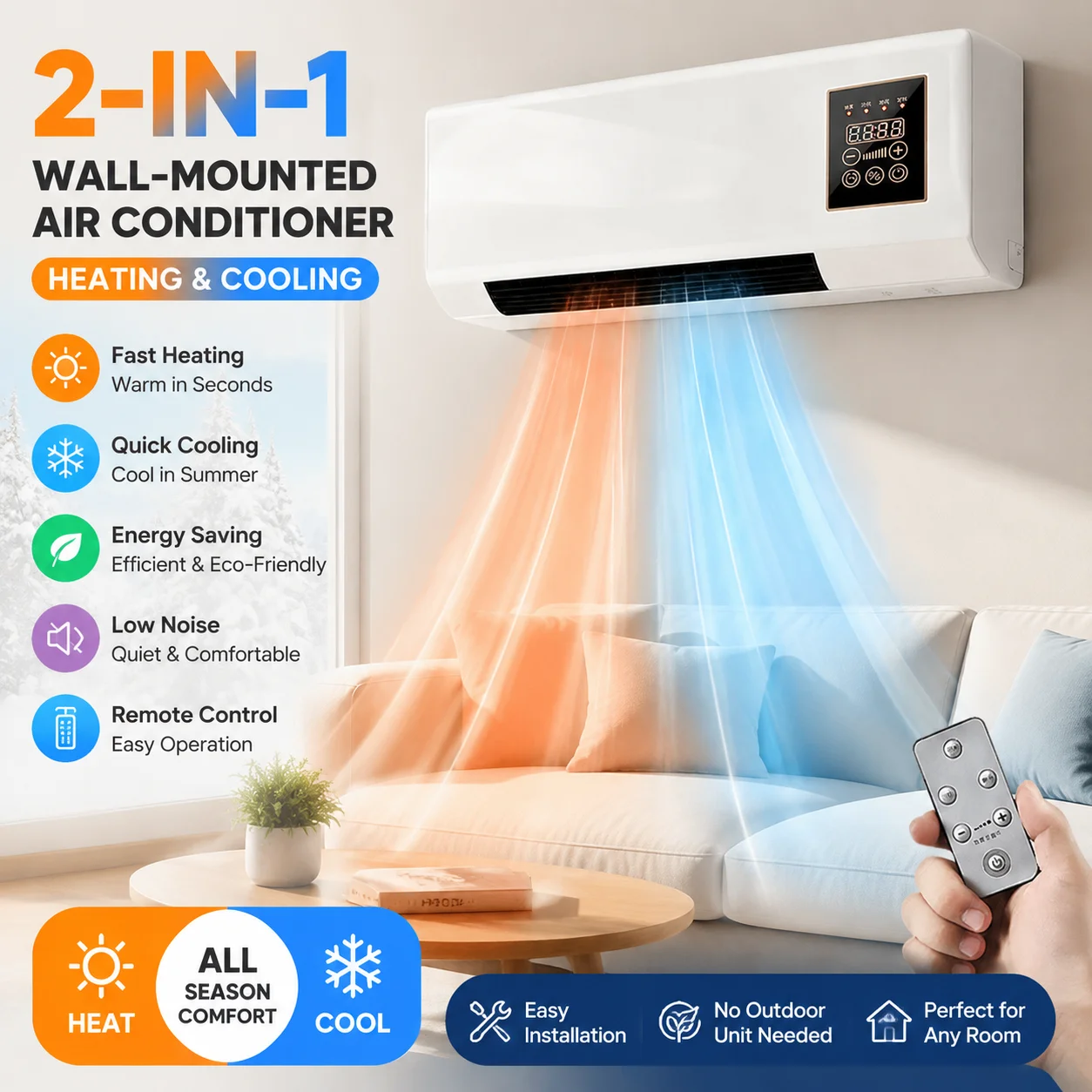
Many owners of split systems still believe that an air conditioner is a device exclusively for cooling the air in summer. In reality, modern models can operate effectively during the cold season as well, providing a comfortable indoor climate. The only question is at what temperatures this is practical and safe for the equipment. Let's take a detailed look at how heating with an air conditioner in winter actually works and what to pay attention to before turning it on.
Article Contents
- How an air conditioner works in heating mode
- Can you turn on the air conditioner for heating in winter: temperature limits
- Features of air conditioner operation at low temperatures
- Advantages and disadvantages of heating with an air conditioner
- How to properly use an air conditioner for heating
- Choosing an air conditioner for winter heating
- Conclusion:
How an air conditioner works in heating mode

Most modern split systems operate on the heat pump principle. They do not generate heat directly using heating elements but rather transfer it from outside to inside the room. This allows them to consume significantly less electricity compared to traditional heaters.
When you turn on the heating mode, the refrigerant in the system changes its direction of flow. The outdoor unit absorbs heat from the surrounding air, even if it seems cold, and transfers it through the compressor to the indoor unit. Thus, the air conditioner heat pump in winter operates with high energy efficiency, converting 1 kW of consumed electricity into 3-4 kW of heat.
According to the recommendation of the ComfortShop editorial team, before purchasing, you should pay attention to the COP (Coefficient of Performance) indicator, which specifically indicates the efficiency of energy conversion in heating mode. The higher it is, the more economical the device's operation will be during the cold season.
Can you turn on the air conditioner for heating in winter: temperature limits
The main question that concerns users is whether you can turn on the air conditioner for heating in winter without risk to the equipment. The answer depends on the type of compressor and the device model. Classic non-inverter systems are typically designed to operate down to -5°C or -7°C. At lower temperatures, their efficiency drops sharply, and the compressor experiences increased load.

Inverter models have a much wider operating range. Many of them operate stably at -15°C, and specialized series with drain pan and compressor heating can operate even at -25°C or -30°C. Therefore, before turning it on, be sure to check the technical documentation of your device.
After analyzing open sources, the ComfortShop editorial team notes that attempting to start a regular air conditioner in severe frost can lead to freezing of condensate in the outdoor unit, compressor damage, or failure of the entire system. Therefore, temperature limits are not a recommendation but a critically important operating condition.
Features of air conditioner operation at low temperatures
Even if your model is designed to operate in frost, it is worth understanding the physical processes that occur in the system. As the outdoor air temperature drops, the amount of heat that the outdoor unit can absorb decreases. Accordingly, heating performance drops.