Choosing high-quality kitchen utensils is an investment in comfort and speed of cooking. This is especially true for cutting tools, as they determine how easily you can chop vegetables, break down meat, or prepare fish. Many believe that one universal knife is enough, but practice shows that a properly selected set of kitchen knives significantly simplifies the work. As ComfortShop reviewers note, the key to success is understanding your own cooking habits and the basic characteristics of the blade.
? Table of Contents
Why You Should Buy a Set Rather Than Individual Knives

Purchasing a ready-made set has several clear advantages over collecting a collection piece by piece. Firstly, manufacturers carefully design the set's composition to cover 90% of typical kitchen tasks. Secondly, knives from the same series have a unified design and balance, which looks aesthetic and allows you to quickly get used to the weight of the tools.
Additionally, a set of kitchen knives often comes with a special stand or magnetic holder. This not only provides convenient storage but also safety: the blades do not come into contact with other metal objects, staying sharp longer. Savings also play a role — the cost of a set is almost always lower than the sum of prices for individual knives from the same series.
How to Choose Kitchen Knives: Key Criteria
Before paying attention to the design or the number of items in a set, it is worth evaluating the materials. The best kitchen knives are made from stainless steel with a high carbon content (e.g., X50CrMoV15 or AUS-8). Such steel provides an optimal balance between hardness, flexibility, and corrosion resistance.

Equally important is the hardening technology. Japanese knives often have a hardness of 60-62 HRC, which allows them to hold an edge for a long time but makes the blade more brittle. German steels are usually softer (55-58 HRC), making them easier to hone, but they will need sharpening more often. Choose based on whether you are willing to periodically use a honing steel to maintain the edge.
Handle shape and balance are key to safety.
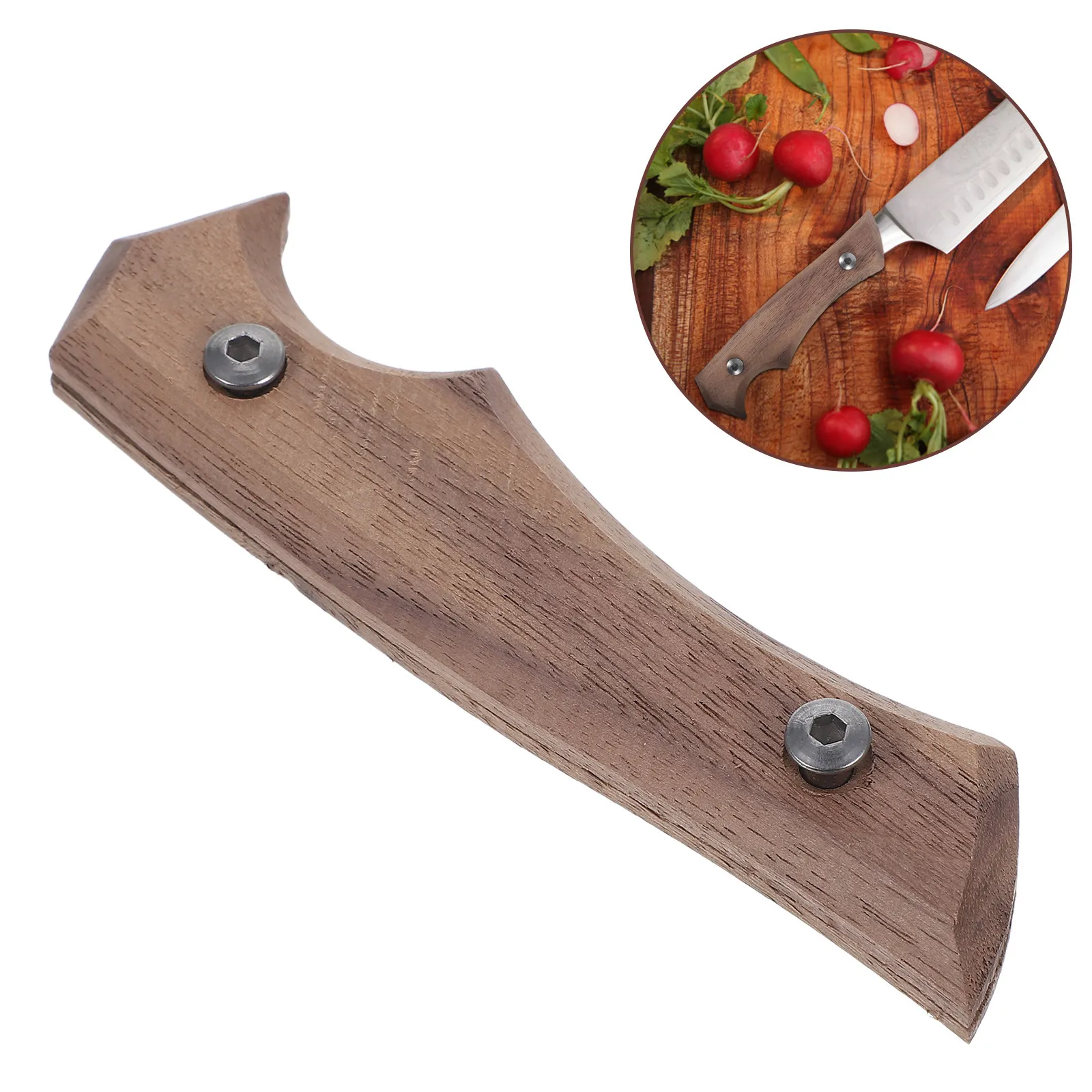
The handle should fit snugly in the hand and not slip when in contact with water or grease. The most reliable options are full tang constructions, where the tang runs through the entire handle. Such knives are better balanced and do not loosen over time. Handle materials (wood, plastic, G10) affect weight and tactile feel but not cutting performance.
Basic Set of Kitchen Knives: What Should Be Included
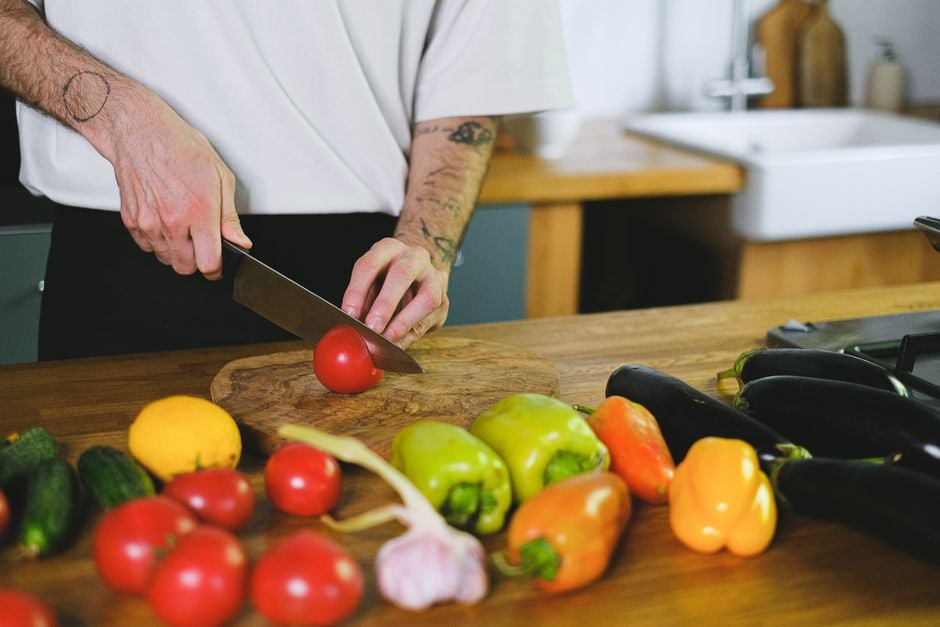
An optimal set for a home kitchen consists of 4-5 key tools. The first and most important is the Chef's knife with an 18-20 cm blade. This is a universal tool for cutting vegetables, herbs, meat, and fish. It does the lion's share of the work in the kitchen.
The second essential element is a Paring knife with a 7-10 cm blade. It is indispensable for fine work: removing eyes, peeling skin, creating decorative elements. The third is a Utility knife, 12-15 cm long, which covers intermediate tasks.
A Bread knife with a serrated edge should be added to the basic set — it easily cuts through a crispy crust without crumbling the crumb, and is also perfect for tomatoes and pineapples. The fifth could be a boning knife or kitchen shears, depending on your habits.
Types of Sharpening and Blade Geometry
Blade geometry determines how the knife will enter the product. European knives usually have a double-sided bevel with an angle of 20-25 degrees — this is strong and versatile. Japanese knives often have a single-sided bevel with an angle of 15-17 degrees, providing incredible sharpness but requiring care.
Pay attention to the type of grind. Forged knives with a full grind have a smooth transition from the spine to the edge — they are lighter and cut better. Stamped knives are cheaper but can be heavier and have less refined geometry. For home use, a high-quality stamped knife with good heat treatment is sufficient.
How to check a knife's sharpness in the store.
Take an A4 sheet of paper and try to cut it while holding it in the air. A sharp knife should cut smoothly, without jerks or burrs. If the paper tears or the knife slides, the sharpening quality is low. Also, pay attention to the symmetry of the blade: when viewed from the tip, both sides should be identical.
Overview of Popular Brands and Series
Among European manufacturers, the German companies Wüsthof and Zwilling J.A. Henckels are considered leaders. Their Classic and Pro series are known for their reliability and durability. If your budget is limited, look at brands like Victorinox or Tramontina — they offer an excellent price-quality ratio.
Japanese knives are represented by brands like Shun, Global, and Tojiro. They are more expensive but offer a completely different level of sharpness. For beginners, series made from VG-10 stainless steel, which does not rust and holds an edge for months, are suitable. ComfortShop specialists recommend starting your acquaintance with Japanese knives with models in the mid-price segment.
When choosing a specific series, pay attention to whether a stand is included in the set. Some sets are sold in compact blocks that save counter space. Others come in wooden boxes for drawer storage. Choose the option that suits your kitchen.
How to Care for Knives So They Last for Years
Even the best kitchen knives will lose their properties with improper care. It is strictly forbidden to wash them in the dishwasher — aggressive detergents and high temperatures destroy the steel structure and damage the handle. Wash knives by hand with warm water and a soft sponge, and dry them immediately.
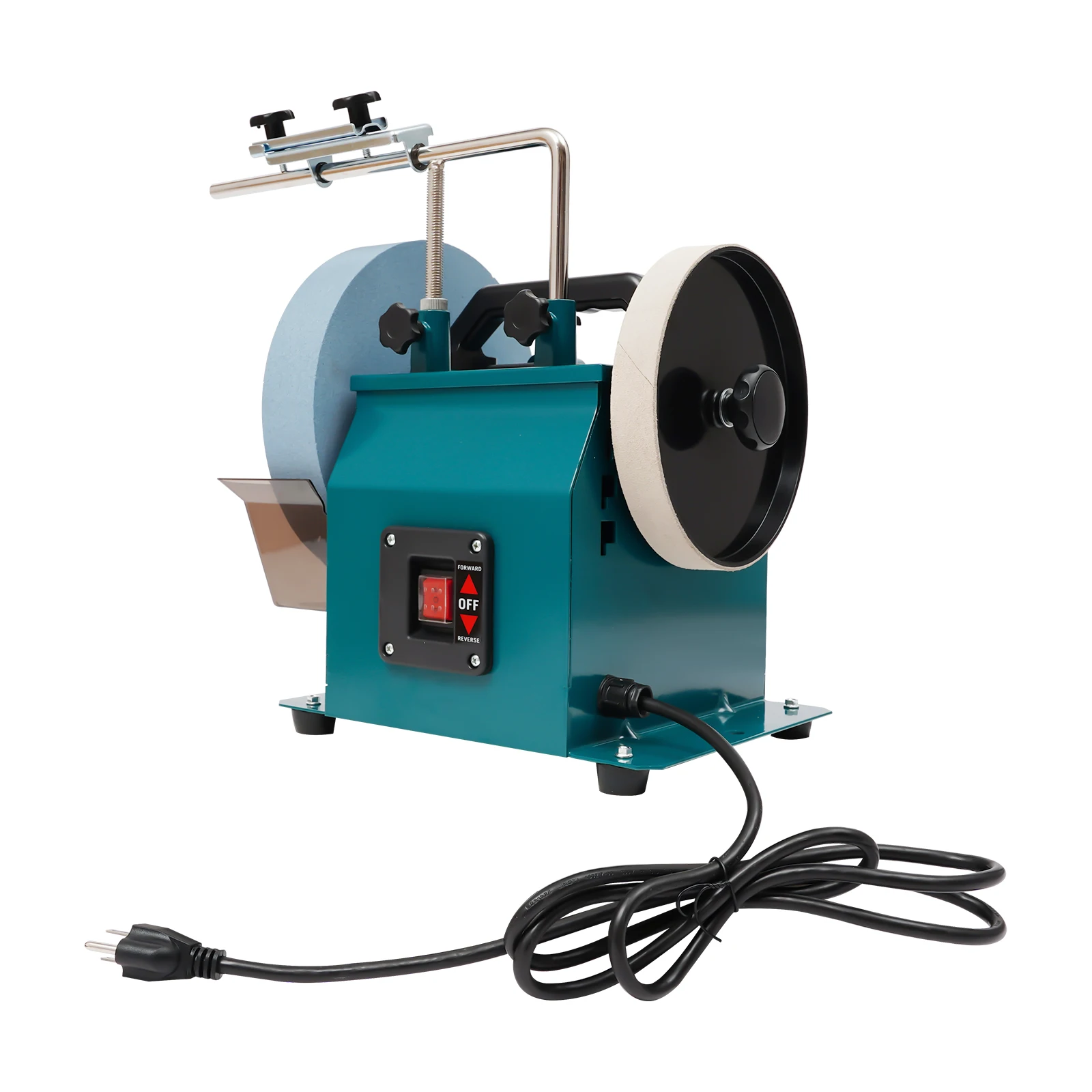
For storage, use magnetic strips, stands, or special sheaths. Do not throw knives into a drawer with other utensils — this leads to micro-chips on the blade. Every 2-3 months, perform preventive sharpening on a quality whetstone or take the knives to a professional.
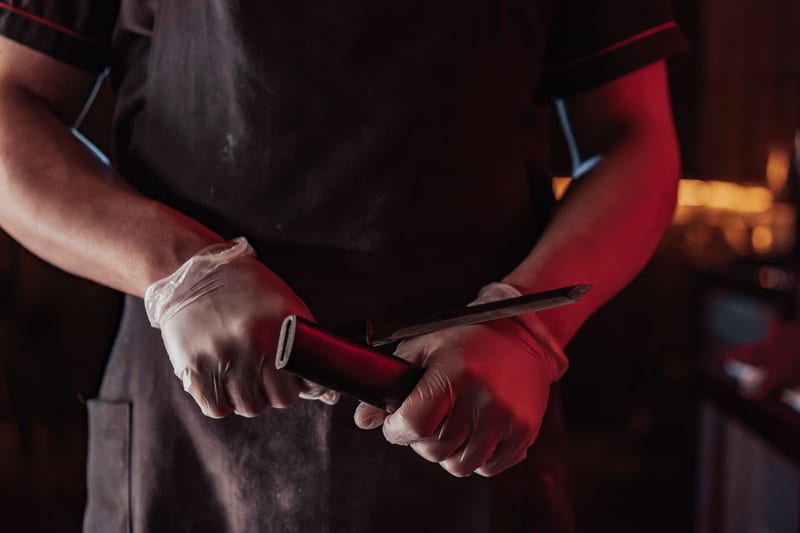
You can hone the blade with a honing steel weekly — this straightens the edge without removing metal. To do this, hold the steel vertically and draw the knife along its entire length at a 15-20 degree angle. Regular honing significantly extends the interval between full sharpenings.
Conclusion:
Choosing a set of knives is a balance between your culinary needs, budget, and willingness to care for the tool. An optimal starter set of kitchen knives includes a chef's knife, a paring knife, a utility knife, and a bread knife. As ComfortShop experts recommend, it is best to invest in a mid-range set from a trusted brand — this guarantees comfort for many years. Remember that a quality knife, with proper care, can last for decades, so you should not skimp on the main working tool of the kitchen.
Frequently Asked Questions
Which knives must be in a basic set of kitchen knives?
A basic set should include a chef's knife (universal for cutting), a bread knife (with a serrated blade), and a small paring knife for peeling vegetables and fruits.
How to choose kitchen knives so they stay sharp for a long time?
Pay attention to the steel hardness (HRC 58-60) and blade material: high-carbon stainless steel or Damascus steel provide the best edge retention.
Is it worth buying a ready-made set of kitchen knives, or is it better to assemble a set yourself?
A ready-made set of kitchen knives is convenient for beginners and often more cost-effective, but choosing individually allows you to purchase only the models you need, potentially of higher quality.
What are the best kitchen knives in terms of price and quality?
The best are considered to be knives made from X50CrMoV15 or AUS-8 stainless steel from trusted brands (e.g., Victorinox, Wüsthof, or Tramontina) — they combine an affordable price, durability, and good sharpness.