Article Contents
- Why a regular bag is dangerous for a cat in the car
- How to choose a safe cat carrier: key criteria
- Plastic or fabric: which is more reliable for the car
- How to properly secure the carrier in the car
- Preparing your cat for the trip: reducing stress
- Additional accessories for a comfortable journey
- Conclusion:
Why a regular bag is dangerous for a cat in the car
Why a regular bag is dangerous for a cat in the car
Transporting a cat in a car is always stressful for the animal and a responsibility for the owner. Many people mistakenly believe that a cat can calmly sit on a passenger's lap or move freely around the cabin. In reality, this approach creates a deadly danger: during sudden braking, the animal turns into an uncontrolled projectile that can injure both itself and people.
According to the recommendation of the ComfortShop editorial team, the only correct way to transport a cat is a specialized carrier for a cat in the car. It keeps the animal fixed in one position, prevents chaotic movement around the cabin, and reduces the cat's anxiety level. A cat in an enclosed space feels more protected than on an open seat, where it is exposed to many unfamiliar stimuli.
It is worth emphasizing separately: even the most expensive and softest hand luggage bag cannot replace a safe cat carrier. It has no rigid frame, is not secured with seat belts, and can easily open from the animal's movement. Therefore, choosing the right accessory is not a matter of comfort but of your pet's survival on the road.
How to choose a safe cat carrier: key criteria
How to choose a safe cat carrier: key criteria
Before buying a cat carrier for the car, it is worth understanding which features really matter. Not all models are equally suitable for long-distance trips or frequent visits to the vet. Pay attention to the following parameters:
- Rigid frame — protects the cat from being crushed if a bag or other object falls on the carrier.
- Reliable locks — the cat should not be able to open the door with its paw or head from the inside.
- Ventilation openings — on all sides to ensure air circulation even in hot weather.
- Ability to secure with a seat belt — critically important for the car so the carrier does not slide on the seat.
- Appropriate size — the cat should be able to stand at full height and turn around, but should not have excess space where it will be "tossed around" during movement.
After analyzing open sources, the ComfortShop editorial team notes that plastic carriers with metal doors and additional side latches are best suited for the car. Fabric models are convenient for walking, but in the car they are less stable and provide worse protection for the animal in emergency situations.
Also pay attention to the material of the bottom. It should be non-slip or have a special mat so the cat's paws do not slide during braking. Some manufacturers include absorbent pads in the package — this is a plus for long trips.
Plastic or fabric: which is more reliable for the car
Plastic or fabric: which is more reliable for the car
A plastic cat carrier for the car is considered the gold standard for regular trips. Its main advantages are the rigidity of the structure, ease of washing, and the ability to securely fasten it with a seat belt. If sudden braking occurs, the plastic will absorb the main load, and the cat will remain inside without serious injuries.

Fabric carriers have their advantages: they are lighter, fold more compactly, and are often equipped with additional pockets for documents or treats. However, for the car, this is not the best choice when it comes to the cat's safety on the road. Fabric does not hold its shape, the carrier is harder to secure, and protection in a side impact is minimal.
A compromise option is hybrid models with a rigid bottom and fabric top. They are suitable for short trips around the city, but for highways or long journeys, it is still better to choose a fully plastic construction. Pet products for transporting cats are available today in a wide range, so finding the optimal option for your budget is quite realistic.
How to properly secure the carrier in the car
How to properly secure the carrier in the car
Even the best cat carrier for the car will not ensure safety if it is simply placed on the rear seat without securing. Proper placement is half the success. The safest place for the carrier is the rear seat behind the driver or in the middle if there is a three-point seat belt there.
Thread the seat belt through the special slots on the carrier body or around it if the manufacturer has not provided separate fastenings. The belt should be pulled tight but should not deform the body. Check that the carrier does not shift more than a few centimeters when you try to push it with your hand.
Never place the carrier on the front seat, especially if the airbag is activated there. When deployed, the airbag can shatter the plastic body and seriously injure the cat. Also avoid placing it in the trunk of a station wagon without a special net or fastenings — there the animal remains unattended and suffers from overheating in summer.
Preparing your cat for the trip: reducing stress
Preparing your cat for the trip: reducing stress
The cat's safety on the road begins long before you start the engine. The animal needs to be gradually accustomed to the carrier at home. Leave it open in the room, put the cat's favorite bedding, toys, or treats inside. Let the cat perceive the carrier as a safe little house, not as a "box of fear" that is taken out only before a trip to the vet.
Do not feed the cat 3-4 hours before the trip to avoid vomiting and motion sickness. Water can be given in small portions. If the animal is too nervous, consult a veterinarian about mild natural-based calming remedies — but never give medications without a doctor's prescription.
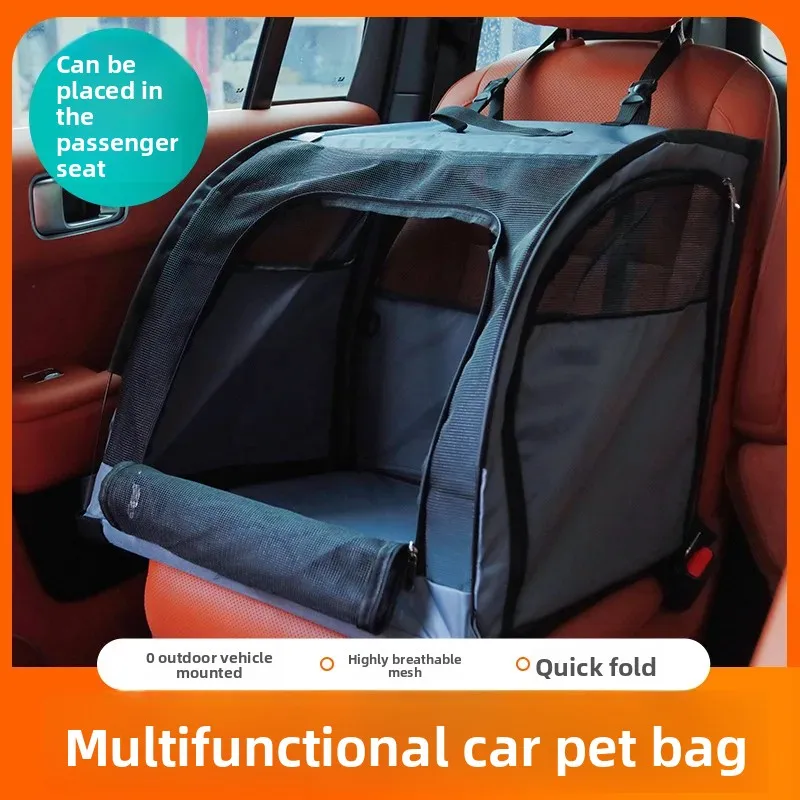
While driving, do not open the carrier, even if the cat meows pitifully. Stop in a safe place, turn off the engine, and only then check the animal's condition. Suddenly opening the door while moving can lead to the cat escaping into the cabin and creating an emergency situation.
Additional accessories for a comfortable journey
Additional accessories for a comfortable journey
To make the trip as safe and comfortable as possible, it is worth supplementing the cat carrier for the car with several useful accessories. They will not only increase the level of convenience but also help avoid unpleasant situations on the road.
- Absorbent pad — will absorb moisture if the cat gets scared and cannot hold out until the stop.
- Travel water bottle — a special bottle with a ball mechanism that makes it convenient to water the cat at stops.
- Seat cover — will protect the upholstery from fur, claws, and possible dirt.
- Reflective stickers — will increase the visibility of the carrier in the dark if you have to stop on the roadside.
- Identification tag — with the cat's name and your phone number in case of unforeseen situations.
A review of cat carriers presented in pet product catalogs shows that many manufacturers already equip their models with some of these accessories. Pay attention to this when choosing — a ready-made set is often more economical than buying everything separately.
Висновок:
Safe transportation of a cat in a car is a combination of the right carrier, reliable securing, and calm preparation of the animal. Choose a rigid plastic model, secure it with a seat belt on the rear seat, and accustom the cat to the carrier in advance. Based on the analysis of characteristics, ComfortShop recommends not skimping on your pet's safety, because a quality carrier is an investment in the health and peace of mind of your cat on every trip.
Frequently Asked Questions
Which cat carrier for the car is considered the safest?
The safest is considered to be a rigid carrier made of durable plastic with metal doors, secured with a seat belt on the rear seat or in the trunk.
Can a cat be transported in a car without a carrier?
No, this is dangerous for the animal and the driver, as the cat can distract from driving or get injured during sudden braking.
How to properly secure a cat carrier in a car?
Place the carrier on the rear seat and thread the standard seat belt through the handle or special fastenings so that it does not shift while driving.
What pet products for transporting cats additionally increase safety on the road?
Use special hammocks for the cabin, carrier holders, and spill-proof water bottles that attach to the cage door.