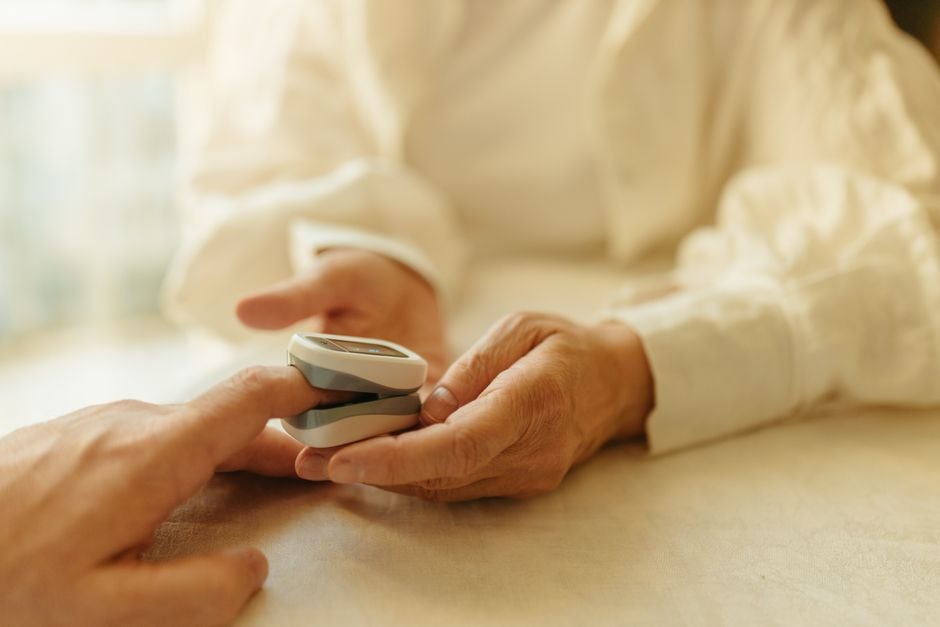
A pulse oximeter is a compact medical device that determines the level of oxygen saturation in the blood (SpO2) and pulse rate within seconds. Just a few years ago, this device was perceived as purely hospital equipment, but today a pulse oximeter for home is becoming as common as a blood pressure monitor or thermometer. The reason is simple: the ability to quickly assess the state of the respiratory system without visiting a clinic provides a sense of control and safety. According to the recommendation of the ComfortShop editorial team, before purchasing, it is worth clearly understanding in which situations this device is truly necessary, and when it may only be an additional monitoring tool.
Article Contents
What is a pulse oximeter and how does it work
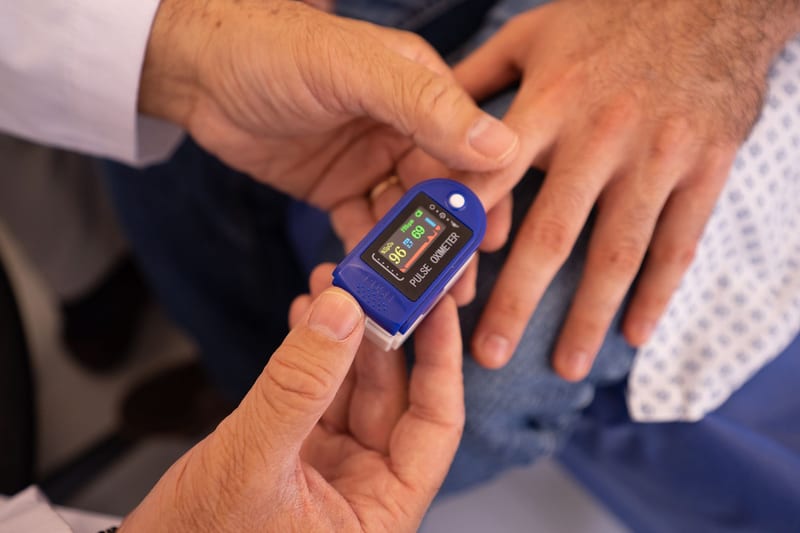
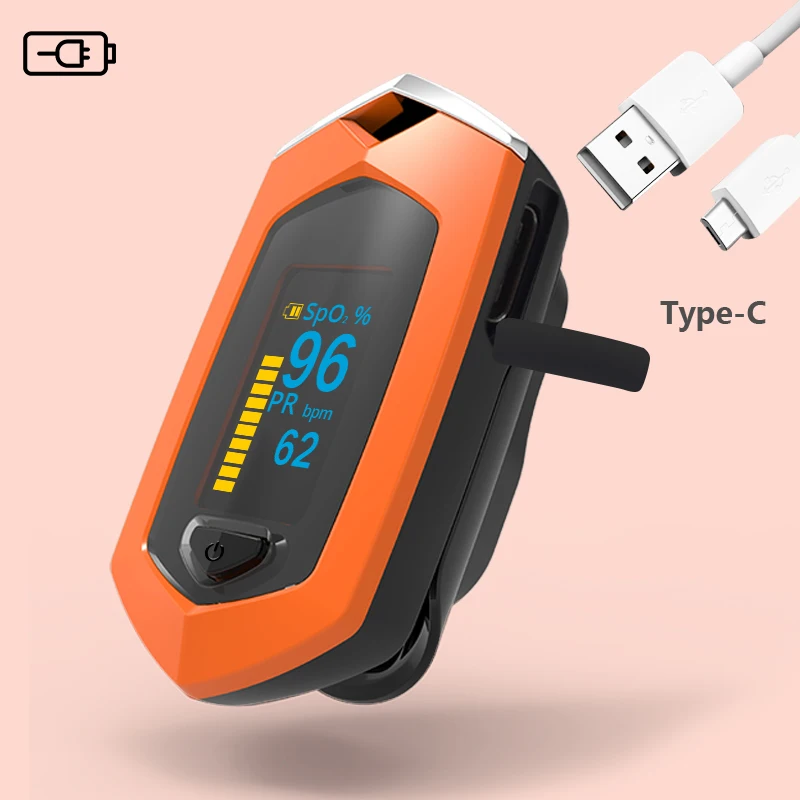
The operating principle of a pulse oximeter is based on shining light waves of different wavelengths through the tissues of the finger. Hemoglobin saturated with oxygen and hemoglobin without oxygen absorb infrared and red light differently. The sensor detects this difference, and the microprocessor calculates the SpO₂ percentage. The entire procedure takes from 5 to 15 seconds — you simply put the device on your finger and wait for the numbers on the display to stabilize.
Modern models available in the ComfortShop assortment are equipped with bright LED screens, brightness adjustment, and automatic shutdown to save battery life. Most devices operate on standard AAA batteries, making them fully autonomous. It is important to understand: a pulse oximeter does not make a diagnosis; it only provides objective data that can be passed on to a doctor for further interpretation.
Separately, it is worth mentioning models for the youngest — pediatric pulse oximeters with soft silicone attachments that account for the anatomical features of a child's finger. They provide equally accurate measurement but with greater comfort for the child.
When is a pulse oximeter needed: main indications
Before deciding whether to buy this device, it is important to objectively assess the needs of your family. When is a pulse oximeter needed in the first place? There are actually quite a few situations where it becomes an indispensable assistant. Let's consider the key scenarios where having it at home is justified and desirable.
The first and most obvious is chronic diseases of the respiratory or cardiovascular system. Bronchial asthma, chronic obstructive pulmonary disease (COPD), and heart failure require constant monitoring of oxygen status. In such cases, a pulse oximeter for health monitoring allows you to notice deterioration in time and adjust therapy before a critical condition develops. For example, a drop in saturation below 92% in a patient with COPD is a signal to seek medical attention immediately.
The second common situation is acute respiratory infections, especially during flu season and COVID-19. It was during the coronavirus pandemic that pulse oximeters entered the list of mandatory home devices, since viral pneumonia often develops almost asymptomatically, and the only sign may be a decrease in SpO₂. Based on an analysis of characteristics, ComfortShop recommends paying attention to models with high measurement accuracy in the 70–99% range, since critical values fall within this range.

Who else should have the device on hand:
- Pregnant women — to monitor their condition during toxicosis, anemia, or as recommended by an obstetrician-gynecologist.
- Athletes and people practicing high-altitude training — to assess adaptation to hypoxia and prevent overexertion.
- People with snoring or suspected sleep apnea — nighttime monitoring helps detect episodes of breathing pauses.
How to measure saturation at home correctly
The accuracy of the result depends not only on the quality of the device but also on following simple yet critically important rules. How to measure saturation at home so that the numbers on the screen reflect the real picture? First, the hand should be relaxed, warm, and preferably positioned at heart level. Cold fingers with constricted blood vessels are the most common cause of falsely low readings. If you have just come in from outside during the cold season, it is worth waiting 5–10 minutes for blood circulation to recover.
Second, for half an hour before the measurement, you should not smoke, drink coffee, or strong tea — this can distort the pulse rate and affect peripheral blood flow. Also, remove nail polish or gel coating: dense pigment can block the sensor's light beam. During the measurement, sit still, do not move your finger, and do not talk — any movement creates artifacts that prevent the device from reading a correct signal.
Record the result 10–15 seconds after the numbers stabilize. For an objective picture, it is advisable to take measurements three times a day at the same time and keep an observation diary — this will help the doctor see the dynamics. After analyzing open sources, the ComfortShop editorial team notes that a systematic approach to measurements provides much more information than one-off spontaneous checks.
Normal oxygen saturation: which numbers to focus on
Understanding reference values is the foundation for correctly interpreting data. Normal oxygen saturation for a healthy adult at rest is 95–99%. A reading of 94% is a borderline value that may still be an individual norm but already requires attention. Anything below 93%, especially if accompanied by shortness of breath, weakness, or dizziness, is a reason for an urgent consultation with a doctor.
In children, normal values are the same as in adults. In elderly people over 70, a physiological decrease to 94–95% is acceptable, but this does not mean such numbers do not require monitoring. Long-term smokers typically have chronically reduced saturation at 92–95% due to the constant exposure to carbon monoxide, which binds to hemoglobin more strongly than oxygen. This is not normal but a sign of chronic hypoxia, which over time leads to serious complications.
Critical values that cannot be ignored:
- SpO₂ 90–93% — mild oxygen deficiency, a doctor's examination is needed.
- SpO₂ 85–89% — pronounced hypoxia, often requires oxygen therapy.
- SpO₂ below 85% — critical condition, call an ambulance immediately.
It is worth remembering that during sleep, saturation naturally decreases by 2–3%, and this is normal. But if the drop is more significant or is accompanied by awakenings with a feeling of air shortage, this may indicate sleep apnea.

Pulse oximeter for the family: which model to choose
When it comes to family use, the device should be universal and understandable for everyone — from a teenager to a grandmother. A pulse oximeter for the family should have a large display with clear numbers, simple one-button control, and automatic activation when placed on the finger. Such models require no settings and are ready to work immediately after installing the batteries.
For families with small children, it is worth considering models with replaceable attachments or universal devices with an adjustable internal chamber size. Some manufacturers offer pulse oximeters with a backlight function in different colors depending on the saturation level: green — normal, yellow — borderline value, red — danger. This is intuitively understandable even for those who have not memorized the exact numerical boundaries.
After analyzing the characteristics of popular models, ComfortShop recommends paying attention to devices with CE and FDA certification — this is a guarantee of clinically confirmed accuracy. A useful bonus for family use would also be built-in memory for several measurements or the ability to sync with a smartphone via Bluetooth for maintaining an electronic health diary.
Conclusion:
A pulse oximeter for home is not just a gadget but an early warning tool that in many cases helps to recognize a threatening condition in time and seek medical help. It is worth having in the family medicine cabinet if among your loved ones there are people with chronic lung or heart diseases, elderly relatives, pregnant women, or children prone to frequent respiratory infections. When choosing a device, focus on measurement accuracy, display convenience, and the presence of quality certificates — these criteria are decisive for obtaining reliable data you can rely on when caring for the health of the entire family.
Frequently Asked Questions
What is the normal oxygen saturation level for a healthy person?
The normal saturation level (SpO2) for a healthy adult is 95–99%. A reading below 94% is a reason to consult a doctor.
How to correctly measure saturation at home to get an accurate result?
Before measuring, your hands should be warm, free of nail polish, and the hand itself should be still at heart level. Wait 10–15 seconds for the device to stabilize the reading, and take 2–3 measurements to confirm.
Who in the family needs a pulse oximeter for home in the first place?
The device is especially necessary for people with chronic lung or heart diseases, elderly people, and those recovering from respiratory infections. It is also useful for athletes monitoring recovery after workouts.
Can a pulse oximeter for health monitoring replace a visit to the doctor?
No, a pulse oximeter is only an auxiliary monitoring tool, not a diagnostic device. It helps to notice deviations in time, but the final diagnosis and treatment are always determined by a doctor.