Amateur and professional athletes are increasingly adding compact percussion therapy devices to their recovery arsenal. This is no longer just a trendy gadget, but a real tool for combating muscle soreness and stiffness. Following a recommendation from the ComfortShop editorial team, we decided to find out whether a massage gun after workouts can truly replace a masseur's hands and speed up regeneration. This article provides an honest experience of using a massage gun in various conditions and tips on how to get the most benefit without harming your health.
? Table of Contents
- Why the massage gun has become a must-have for muscle recovery
- First impressions: what you feel during a session
- How to properly use a massage gun after workouts
- Real results: what changed after a month of use
- What to look for when choosing a model for sports
- Myofascial release: does the gun replace professional massage
- Conclusion:
Why the massage gun has become a must-have for muscle recovery
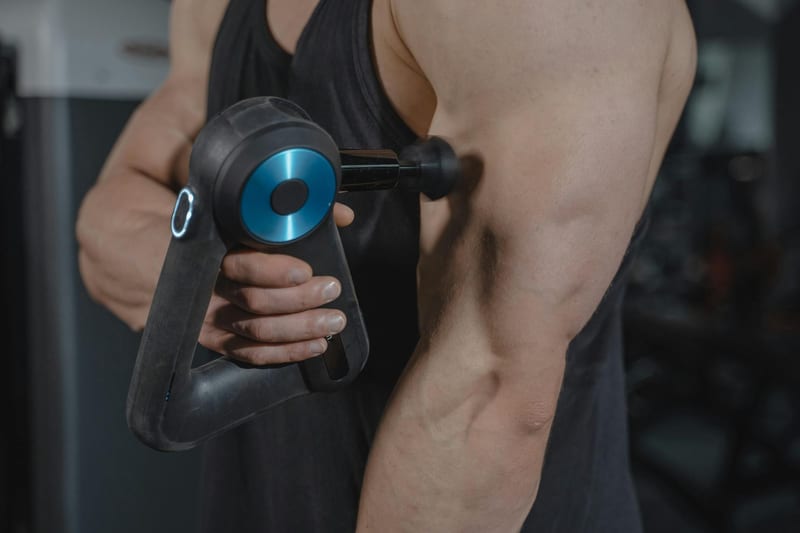
After intense exertion, lactic acid accumulates in the muscles, causing micro-tears in fibers and spasms. Traditional stretching helps, but it is often insufficient. A percussion massager works on the principle of a shock wave: it penetrates deep into the tissues, breaking up tension "knots" and stimulating blood circulation.
That is why muscle recovery with a massager is considered one of the most effective methods for quickly returning to training. The device helps reduce pain by 30-50% within just 10-15 minutes of a session. Experienced users note that the gun allows you to "knead" even hard-to-reach areas: the back, glutes, and hamstrings.
First impressions: what you feel during a session
The first time you turn on a massage gun can evoke mixed feelings. The intense vibration and rhythmic pulses may seem aggressive at first. But after just 30 seconds, the muscle adapts, and you feel deep relaxation. It is important to start at the lowest speed, especially on sensitive areas.
Experience using a massage gun shows that the best effect is achieved by working not "on the bone," but along the muscle fibers. You should not linger on one spot for longer than 10-15 seconds — this can lead to bruising. The optimal scheme: 2-3 passes over each muscle group with a 30-second pause.
How to properly use a massage gun after workouts
To make recovery as effective as possible, it is worth following a simple sequence. First — a light cardio warm-up (5 minutes). Then — work on large muscle groups: quadriceps, hamstrings, calves. And only after that — move to the back and shoulder girdle.
Here are the main recommendations for safe use:
- Do not massage the sides or front of the neck — important blood vessels and nerves pass through there.
- Avoid direct action on joints and bony prominences.
- Do not use the gun on injured areas (bruises, sprains) without consulting a doctor.
- Drink water after a session — this helps flush out metabolic waste from the muscles.
ComfortShop specialists advise starting with 5-7 minutes per muscle group, gradually increasing the time to 15 minutes. The main thing is to listen to your body: the pain should be pleasant, not sharp.
Real results: what changed after a month of use
After 4 weeks of regular use of a massage gun for athletes, a steady reduction in muscle soreness is observed. Whereas before, leg pain lasted 2-3 days after a hard workout, now it subsides within 12-24 hours. Flexibility also noticeably improves: the range of motion in joints increases by 15-20%.
Furthermore, many note a decrease in chronic tension in the neck and lower back. This is especially relevant for those who combine strength training with sedentary work. A review of the massage gun from real users confirms: the device helps not only after the gym but also for preventing muscle tightness in everyday life.
What to look for when choosing a model for sports
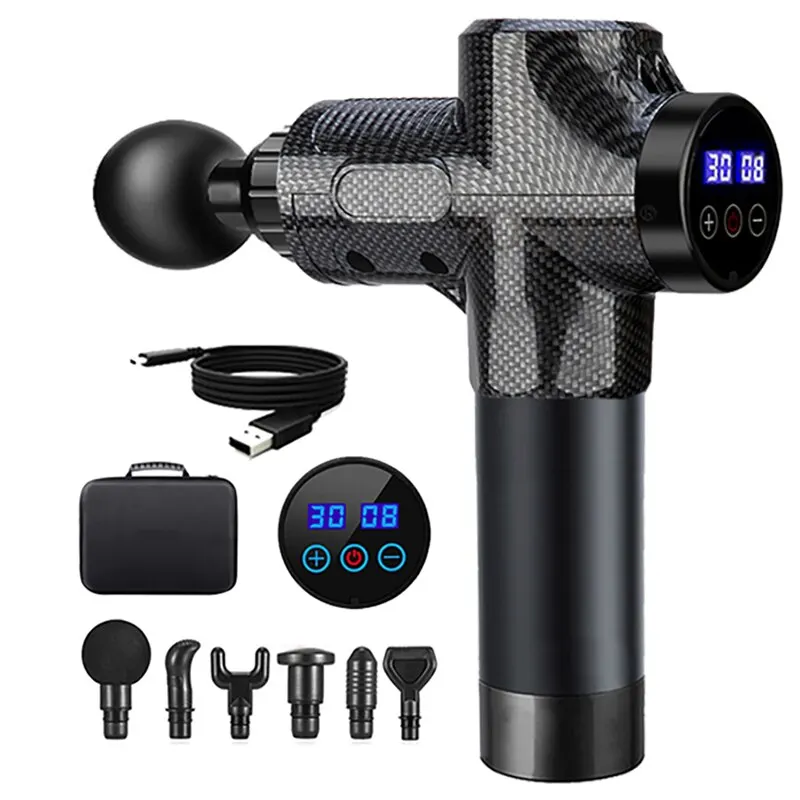
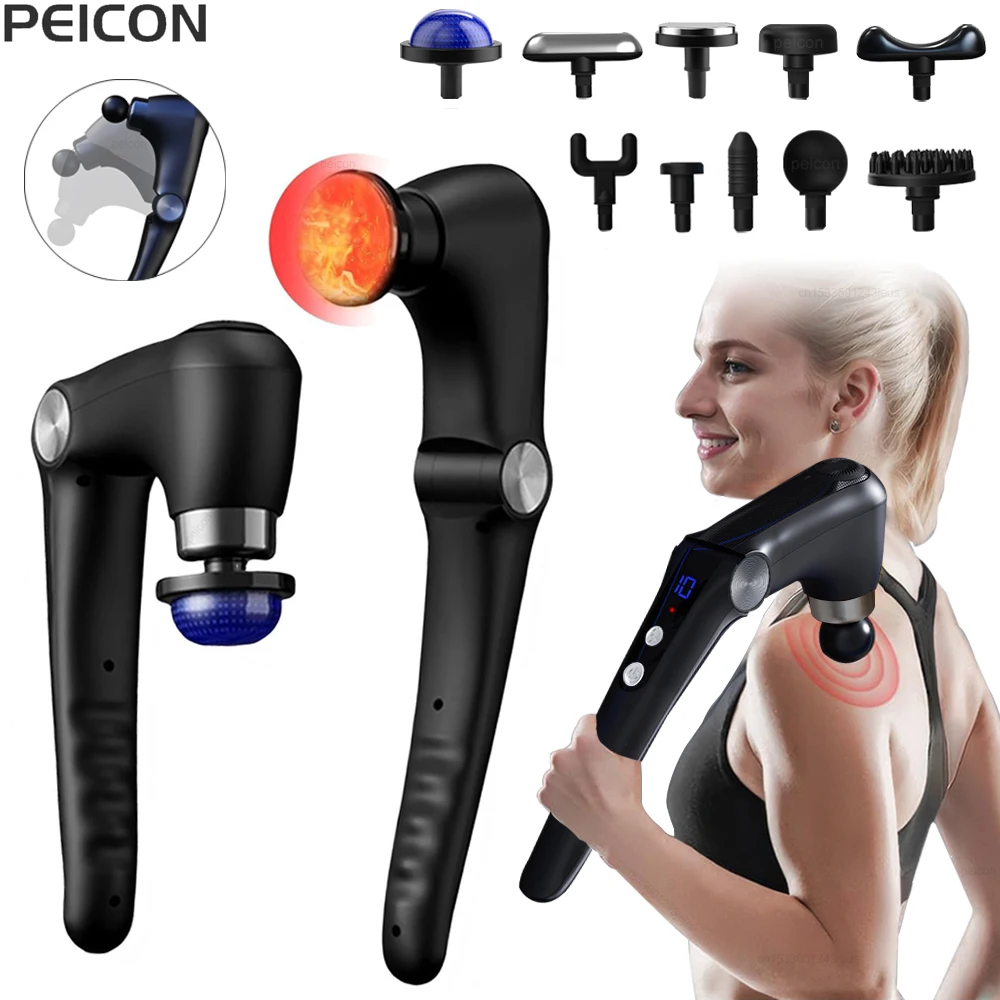
Not all massage guns are equally useful for deep muscle work. For athletes, the key parameters are impact force (at least 12-15 kg) and frequency (from 2000 to 3200 percussions per minute). Also important is the availability of interchangeable heads: a cone-shaped one for point treatment, a spherical one for large muscles, and a fork-shaped one for the spine.
Noise level should also be considered. Cheap models are loud, which can be annoying during evening sessions. Quality devices have a noise level of up to 45-55 dB — roughly the volume of a quiet conversation. Also, pay attention to battery life: for active training 3-4 times a week, a battery lasting 4-6 hours is sufficient.
Myofascial release: does the gun replace professional massage
Myofascial release is a technique for relaxing the fascia (connective tissue sheaths of muscles). A massage gun handles this task excellently but has its limitations. It cannot fully imitate a masseur's hands, which sense tension and react to it in real time.
However, for daily self-care, the gun is indispensable. It allows you to perform myofascial release regularly, without booking an appointment with a specialist. This is especially useful for runners, CrossFitters, and functional training enthusiasts. As ComfortShop reviewers note, combining percussion massage with a foam roller gives the best effect: first rolling, then point treatment with the gun.
Conclusion:
A massage gun after workouts is indeed an effective tool for speeding up recovery and relieving muscle tension. It will not replace a full massage for serious injuries, but for prevention and daily care, it is an indispensable assistant. The main thing is to follow safety techniques and not overdo the intensity. If you are looking for a reliable device for sports recovery, pay attention to models that match your needs in terms of impact force and set of attachments.
Frequently Asked Questions
Does a massage gun after workouts help reduce muscle soreness?
Yes, in my experience, a massage gun after workouts significantly reduces the intensity of muscle soreness if used for 15-20 minutes immediately after the session.
How often can you use a massage gun for muscle recovery?
For muscle recovery with a massager, one session per day after training is sufficient, but you should not treat one area for longer than 2 minutes to avoid bruising.
Is a massage gun suitable for beginner athletes?
Yes, a massage gun is safe for athletes of any level if you start at the lowest speed and avoid bones and joints, focusing on muscle groups.
How is a myofascial massage gun different from a regular massager?
A myofascial massage gun has greater amplitude and impact force, allowing it to work deeper into the fascia and trigger points, whereas regular massagers only superficially relax the muscles.