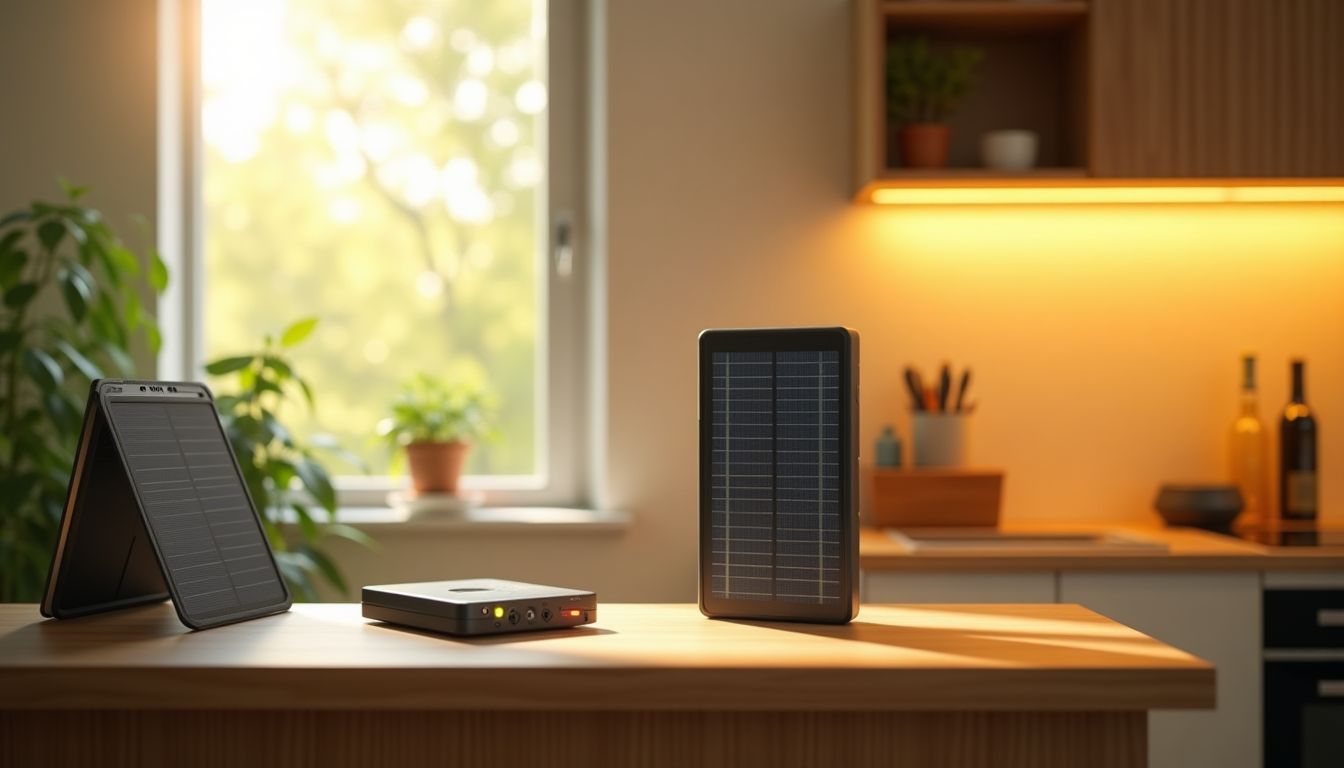
Choosing a charging station for home or office has ceased to be just a purchase of equipment — it is a strategic decision to ensure energy independence. The main question that arises before purchasing: how to calculate the required capacity of a charging station so that it covers your real needs, but does not turn out to be too expensive or insufficiently powerful. According to the recommendation of the ComfortShop editorial team, the correct calculation of the charging station's capacity allows you to avoid unnecessary expenses and guarantees stable operation of critical appliances during outages. In this article, we will step by step analyze how to independently determine the optimal amount of autonomous power supply.
? Table of Contents
- What is the capacity of a charging station and why is it important
- How to choose a charging station: key criteria
- Calculating the power of a charging station: step-by-step instructions
- Charging station capacity for home: typical scenarios
- Charging stations for energy saving: how to optimize costs
- Conclusion:
What is the capacity of a charging station and why is it important

The capacity of a charging station is measured in watt-hours (Wh) or kilowatt-hours (kWh) and shows how much energy the device can store and deliver. This parameter directly determines how long you can power your appliances without recharging the station itself.
For example, a 1000 Wh station can theoretically power a refrigerator with a power of 150 W for approximately 6-7 hours, but in practice, energy losses during conversion should be considered. That is why an accurate calculation of the charging station's capacity is the first step towards efficient use of your backup power source.
How to choose a charging station: key criteria
Before diving into the numbers, it is worth deciding which appliances you plan to connect. ComfortShop experts advise dividing all loads into three categories: critical (refrigerator, pump, router), comfort (lighting, TV, laptop), and secondary (electric kettle, iron, microwave).

For a home where you need to ensure minimal comfort during prolonged outages, you should aim for a charging station capacity for home in the range of 1000 to 3000 Wh. For short-term interruptions, compact models of 500-800 Wh will suffice.
Determining power priorities.
Make a list of appliances that must operate without interruption. This could include a gas boiler (100-200 W), a refrigerator (150-300 W), a video surveillance system (20-50 W), and several LED lamps (10-20 W). Record their power in watts and the approximate operating time per day.

Calculating the power of a charging station: step-by-step instructions
To understand how to calculate the power of a charging station, follow three simple steps. First, determine the total power of all appliances that will operate simultaneously. Second, multiply this number by the number of hours of operation per day. Third, add 20-30% reserve for unforeseen situations and losses.

For example, if you plan to simultaneously power a refrigerator (200 W, operating 8 hours per day), a router (10 W, 24 hours), and three lamps (10 W each, 5 hours), the daily consumption would be: (200×8) + (10×24) + (30×5) = 1600 + 240 + 150 = 1990 Wh. Considering a 30% reserve, you will need a station with a capacity of about 2600 Wh.
Don't forget about starting currents.
Some appliances, especially those with electric motors (refrigerators, pumps), consume 3-5 times more energy at startup than in operating mode. Therefore, when calculating the capacity of a charging station, it is important to consider the peak load that the station's inverter must withstand.
Charging station capacity for home: typical scenarios
For an apartment with a basic set of appliances (refrigerator, lighting, laptop, router), the optimal choice would be a station of 1500-2000 Wh. This will allow you to comfortably survive a 4-6 hour outage without significant restrictions.
If you plan autonomous power supply for a private house with a pump, boiler, and security system, you should consider models of 3000-5000 Wh. Such stations can ensure the operation of critical equipment for 8-12 hours.

Charging stations for energy saving: how to optimize costs
Modern charging stations for energy saving often have a solar charging function, which allows you to reduce electricity bills and make the system completely autonomous. If you plan to use solar panels, keep in mind that the station's capacity must be matched with the power of the panels.
For example, for a 2000 Wh station, panels with a total power of 400-600 W are sufficient to fully charge it in 4-5 sunny hours. This is especially relevant for those who want to minimize dependence on the centralized grid.
Conclusion:
Correctly calculating the capacity of a charging station is the key to ensuring your equipment operates without interruption and your budget does not suffer from excess power. ComfortShop reviewers remind: always add 20-30% reserve to the obtained figures for future expansion of the appliance list. Start by analyzing your real needs, and then the choice will become simple and effective.
Frequently Asked Questions
How to calculate the capacity of a charging station for home?
To calculate, add up the power of all appliances you plan to power (in watts), multiply by their operating time (in hours), and add a 20-30% reserve. For example, for a refrigerator (150 W) and lighting (100 W) for 5 hours, a capacity of about 1250 Wh is needed.
How to choose a charging station by power?
Focus on the peak power of the appliances: the station must withstand the simultaneous startup of the most powerful consumers (e.g., a 2000 W kettle). For a home with a basic set of appliances, choose a model with a nominal power of 1500-3000 W.
Can a charging station be used for autonomous power supply of the entire house?
Yes, but only for critical appliances (lighting, refrigerator, pump), since full house power supply requires a large-capacity station (from 5 kWh) and an inverter with a power of over 3 kW. For energy saving, it is worth adding solar panels.
How to account for energy losses when calculating the capacity of a charging station?
Add 15-20% to the calculation for losses through the inverter and battery heating. For example, if appliances consume 1000 Wh, choose a station with a capacity of at least 1200 Wh to avoid discharging to zero.