Article Contents
Why a home needs a digital barometer: more than just weather
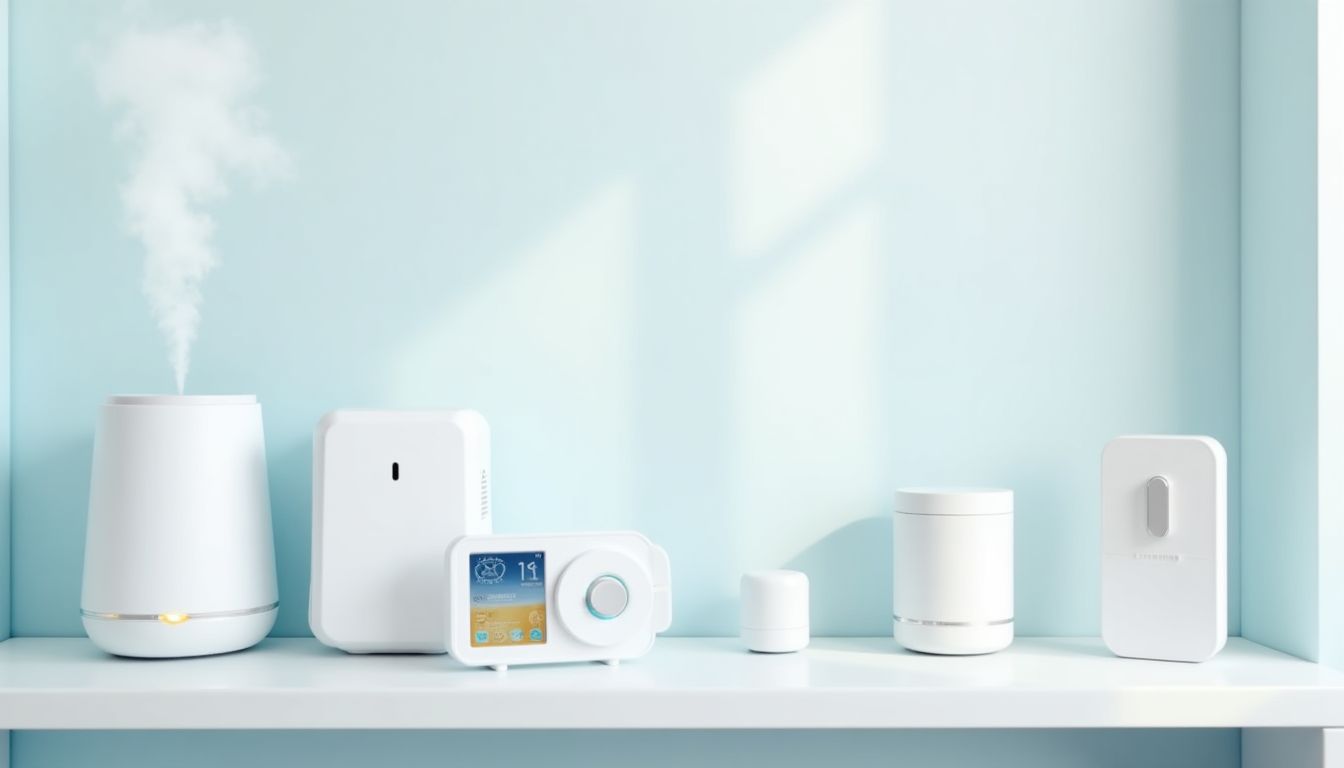
A modern smart weather station for the home has long ceased to be a toy for amateur meteorologists. It is a comprehensive environmental monitoring tool that directly affects well-being, furniture preservation, and the energy efficiency of your home. Excessively dry air ruins parquet flooring and causes mucous membrane irritation, while high humidity is a direct path to mold and allergens.
According to the recommendation of the ComfortShop editorial team, choosing a device should start not with design but with an analysis of sensor compatibility. After all, the main value of a weather station for microclimate monitoring is the accuracy of its sensors and the ability to integrate into a smart home ecosystem. Wireless protocols allow the station not just to record data but also to control humidifiers, air conditioners, or ventilation valves.
The key difference from a regular thermometer is the measurement history. You see not a momentary snapshot but the dynamics: how the temperature changed at night, whether there was a critical humidity drop while you were at work. This is especially critical for children's rooms and home greenhouses.
Key sensors: what hides under the casing
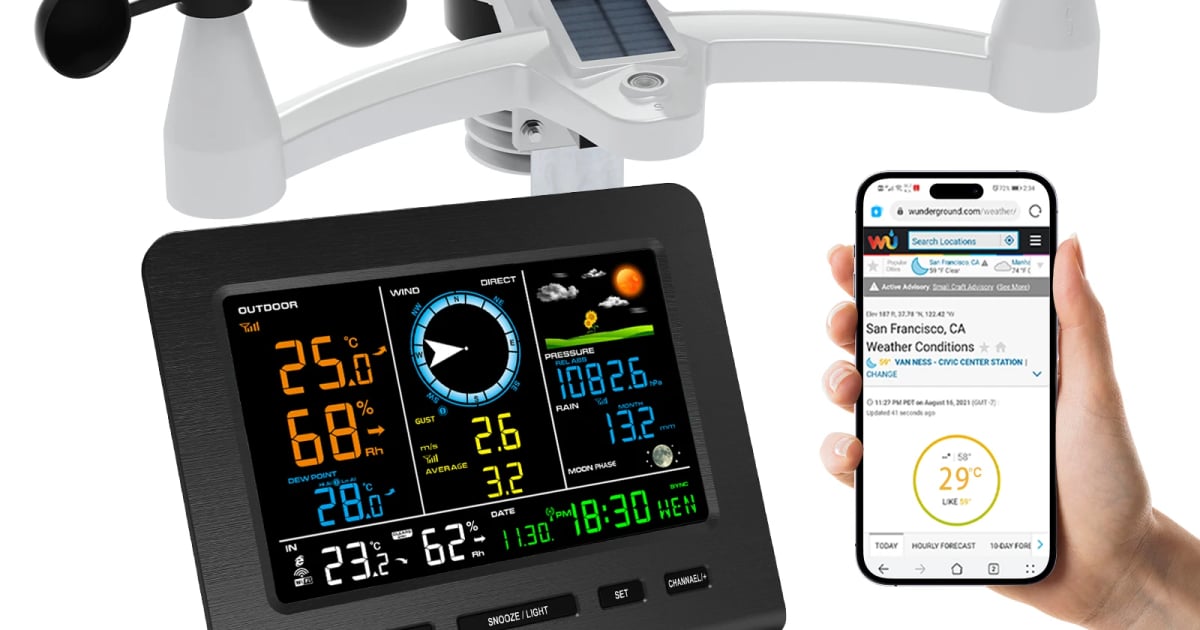
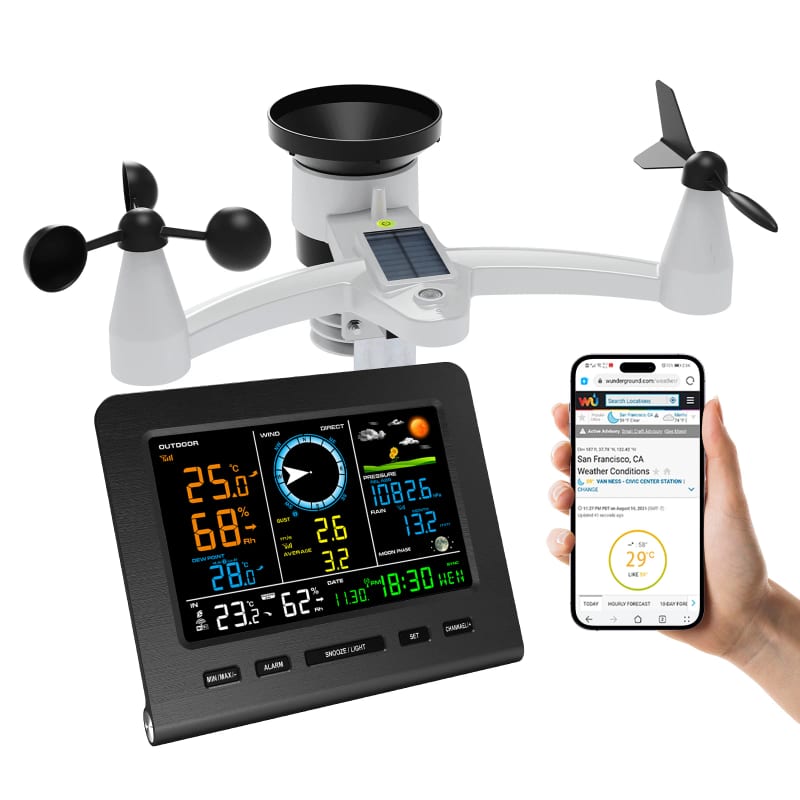
The standard set — thermometer, hygrometer, and barometer — is just the base. A smart weather station with a temperature and humidity sensor can be equipped with CO2 sensors, air quality sensors (PM2.5), noise level meters, and even lightning detectors. It is the concentration of carbon dioxide that is often the cause of headaches and reduced productivity in enclosed spaces.
Sensor accuracy determines the usefulness of the entire device.
When choosing, pay attention to measurement error. If the hygrometer is off by 10%, you won't be able to properly configure your humidifier. After analyzing open sources, the ComfortShop editorial team notes that models with remote sensors on the 433/868 MHz radio channel provide a more stable signal through walls than devices operating exclusively over Wi-Fi in a congested spectrum.
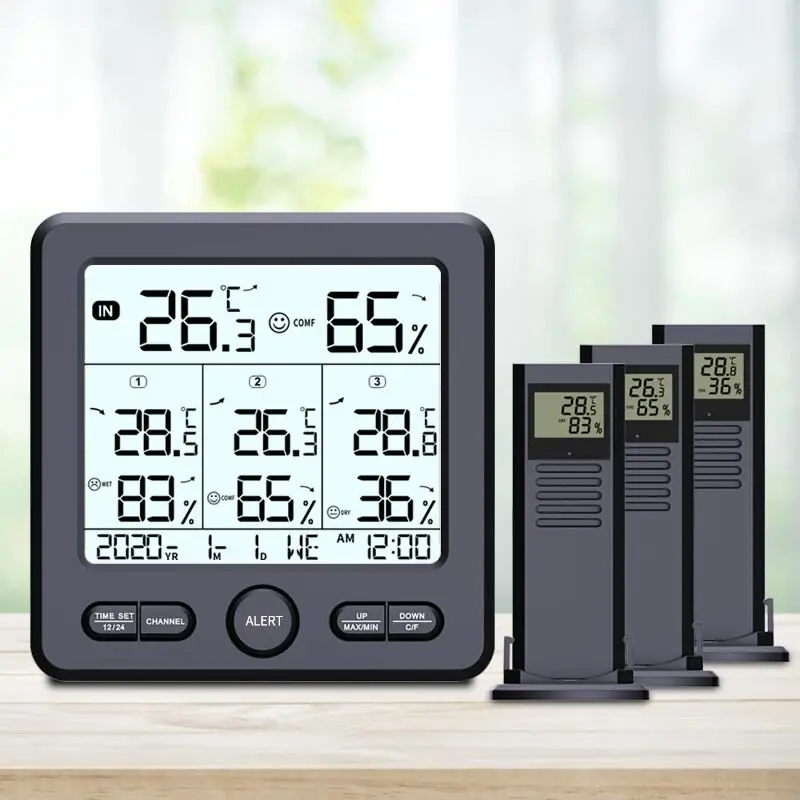
Sensor response time is also important. Cheap modules can have an inertia of several minutes during sudden humidity changes, making automation useless. Professional models update readings every 10-30 seconds, reacting almost instantly to a draft or a turned-on steam generator.
Smart integration: from observation to control
The true purpose of buying a smart weather station klimat tehnika is revealed in combination with actuator devices. The sensor detects a humidity drop below 30% — the system automatically turns on the humidifier. CO2 threshold exceeded — the supply ventilation valve opens. This is not magic but scenario logic that can be configured in the proprietary app.
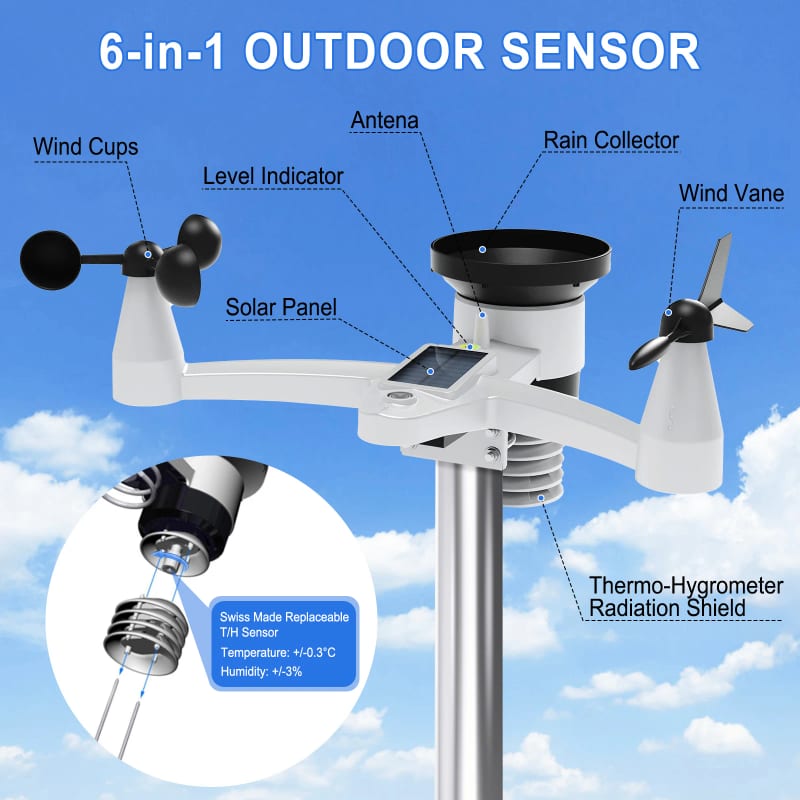
Support for voice assistants like Alexa or Google Home allows you to ask about the microclimate out loud without pulling out your smartphone. And local protocols like Zigbee make the system independent of the internet: even if your provider goes down, the connection between the sensor and the hub inside your apartment remains intact.
A review of a smart weather station would be incomplete without mentioning the API. Advanced users can export data to Home Assistant or their own scripts for building charts. This allows you to find correlations: for example, why you wake up at night — perhaps it is precisely at 3 a.m. that the heating turns on and humidity drops to a critical 20%.
Display and ergonomics: data must be visible
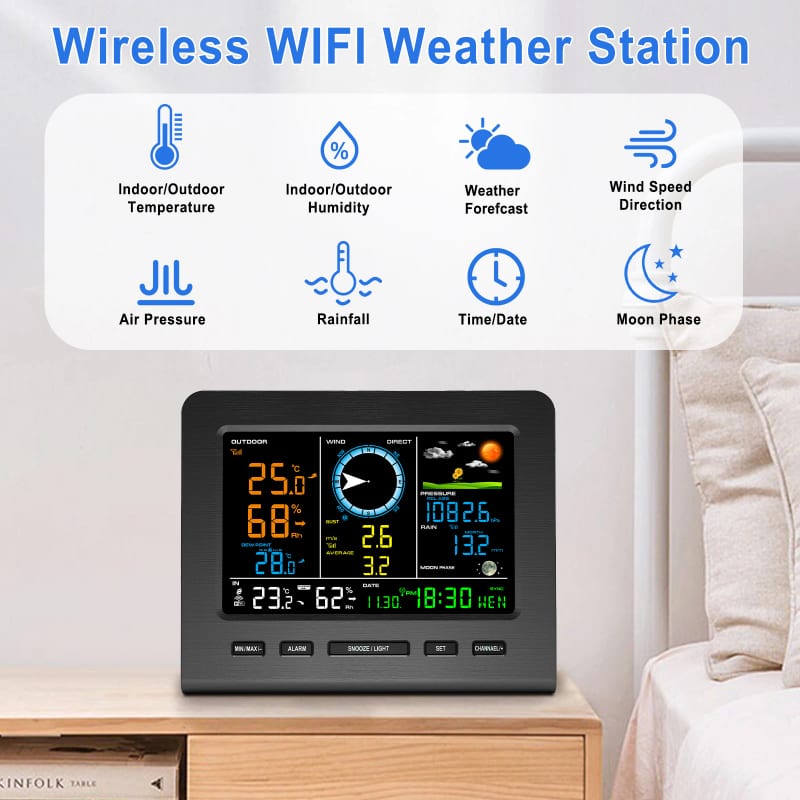
Even the most accurate weather station for microclimate monitoring loses out if its display cannot be read from across the room. E-Ink matrices (electronic ink) consume a tiny amount of energy and are perfectly visible from any angle, but they are black-and-white. Color TFT screens are more informative but require more frequent recharging or a constant power cable.
Perception comfort depends on the interface.
Klimat Tehnika manufacturers often use segmented LCD displays with backlighting — a compromise between battery life and readability. It is important that all key indicators are shown on the main screen without scrolling: temperature, humidity, forecast, and the battery level of remote sensors. Excessive interface animation distracts and drains the battery.
Wall mounting or a tabletop stand is not just a matter of taste. For accurate temperature measurement, the station should not hang on a cold exterior wall or be exposed to direct sunlight. Good models always include both mounting options in the package.
Conclusion:
A smart weather station for the home is an investment in the quality of the air you breathe every minute. Choose a model not by the number of icons on the screen but by sensor accuracy and the ability to integrate with climate control equipment. Based on feature analysis, ComfortShop recommends paying attention to devices with remote sensors and support for local protocols that ensure stable automation without dependence on cloud servers.
Frequently Asked Questions
How does a smart weather station for the home differ from a regular thermometer?
A smart weather station for microclimate monitoring collects data from multiple sensors (temperature, humidity, pressure) in different rooms and transmits it to your smartphone in real time, allowing you to analyze the dynamics of changes.
Is internet required for a weather station with a temperature and humidity sensor to work?
Internet is not needed for local viewing of data on the device's display, but remote access through a mobile app, push notifications, and smart home integration require a stable Wi-Fi connection.
How often do the sensors of a smart weather station klimat tehnika need calibration?
Most modern models have automatic calibration, but to maintain maximum measurement accuracy, it is recommended to manually calibrate the humidity and temperature sensors approximately every 6-12 months.
How accurate is the data from an external weather sensor?
Accuracy depends on the installation location: the sensor must be placed in the shade, away from direct sunlight, ventilation openings, and metal surfaces; otherwise, the error can reach 2-3 degrees.