? Table of Contents
- What is a Smart Socket with USB and How Does It Work?
- Energy Saving Mechanisms with Smart Sockets
- Feature Overview: Universal Black USB Type-C 18W Smart Fast Charging Socket
- Practical Usage Scenarios for Saving
- Is Such Savings Worth the Investment? Payback Calculation
- What to Look for When Choosing a Smart Socket with USB?
What is a Smart Socket with USB and How Does It Work?
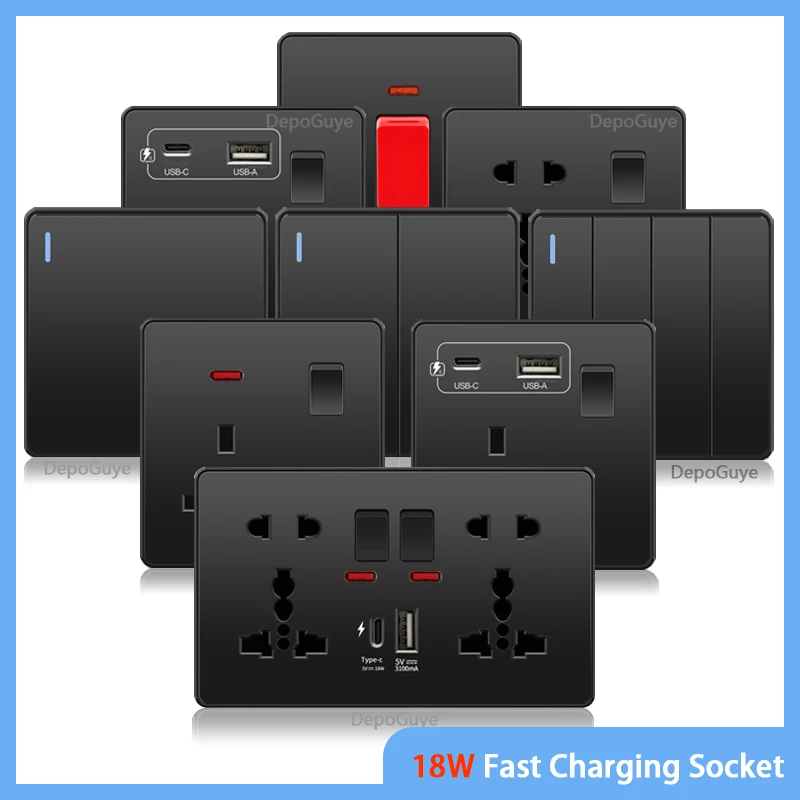
A smart socket with USB is a modern device that combines a standard electrical outlet with one or more built-in USB ports for charging gadgets, and crucially, features "smart" functionality. This means it can be controlled remotely via a smartphone app using Wi-Fi or Bluetooth, allowing you to set timers, create automations, and monitor energy consumption. For example, the Universal Black USB Type-C 18W Smart Fast Charging Socket not only provides fast charging thanks to its 18W Type-C port but also integrates into a smart home system.
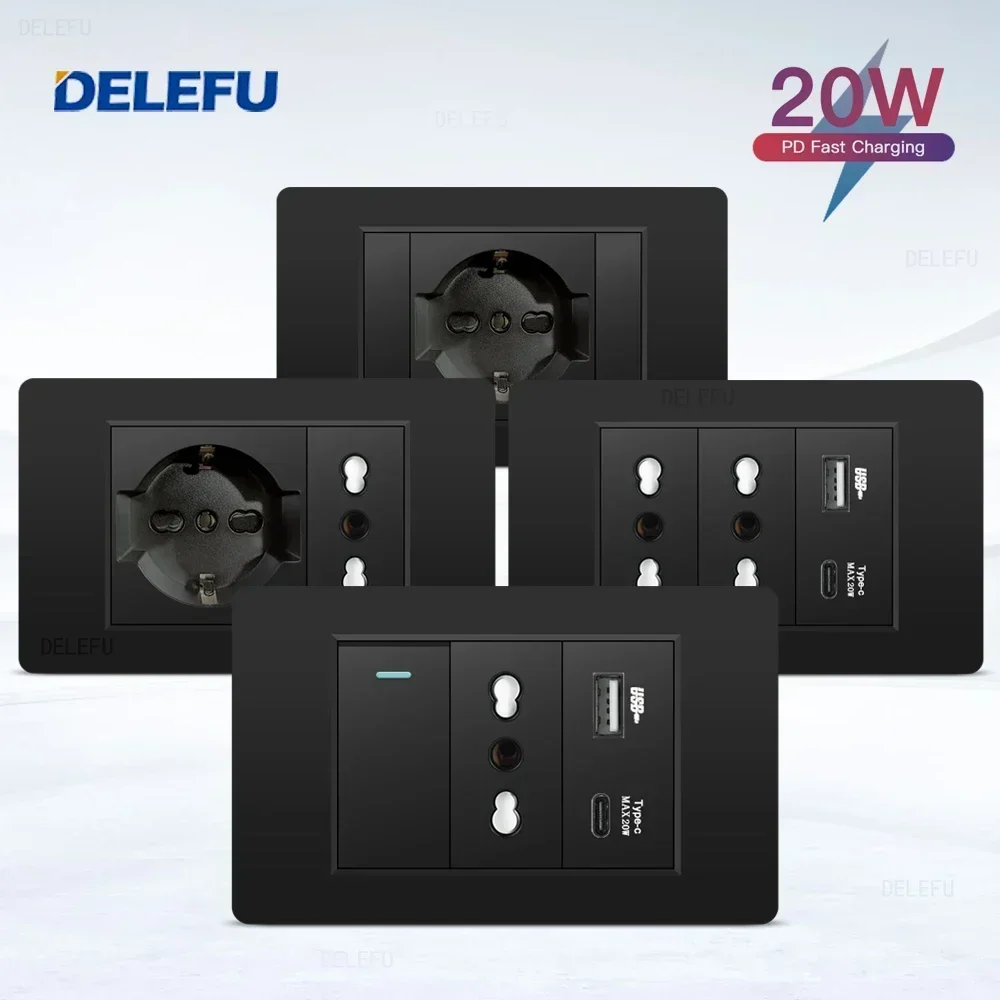
The operating principle of such a socket is based on the ability to remotely turn the power on and off. You can connect any household appliance to it, from a desk lamp to a kettle. The USB ports are constantly ready to charge your smartphone, tablet, or headphones without needing a separate power adapter. The key difference from a regular socket is control. Even when you are far from home, you can ensure that unnecessary appliances are turned off, which is already the first step towards saving energy.
Energy Saving Mechanisms with Smart Sockets
Energy savings with smart sockets are achieved not through magic, but through logic and control. The main cause of waste is appliances in standby mode, which can account for up to 10% of a home's total consumption. A smart socket allows you to completely cut power to such devices, eliminating phantom energy consumption.
Main tools for saving energy:
Timers and Schedules: Set the socket to automatically turn off at night or during periods when no one is home. For example, routers, TVs, media players, and chargers can all be switched off according to a schedule.
Remote Control: Forgot to turn off the iron or heater? Simply open the app and do it with one tap. This not only saves energy but also enhances home safety.
Consumption Monitoring: Some models, especially those with an additional monitoring feature, show how much electricity a connected device consumes. This provides a clear understanding of which of your "energy hogs" are the most costly.
Built-in USB ports also contribute to efficiency. By using a built-in port, such as the 18W USB Type-C, you eliminate the need for a separate charger, which, when plugged into a regular socket, continues to consume energy even without a phone connected. A smart socket with USB allows you to cut power to these ports on a schedule as well.
Feature Overview: Universal Black USB Type-C 18W Smart Fast Charging Socket
Let's look at a specific example — the Universal Black USB Type-C 18W Smart Fast Charging Socket. This is a versatile device suitable for various types of electrical networks (it meets international standards, including the UK plug), making it convenient for use in Ukraine with an adapter. Its architecture allows you to charge gadgets and power one powerful household appliance simultaneously.
Key advantages of this model for energy saving:
Fast 18W Charging via Type-C: Efficient energy transfer minimizes losses and charging time, which is already an indirect saving. You charge your device faster and can then turn it off.
Dual Functionality: Having two standard sockets and USB ports allows you to centralize the power supply for several devices at one point and manage them as a single unit through the app.
Ecosystem Integration: Such sockets typically work with popular smart home apps (like Smart Life or Tuya), where you can create complex scenarios related to energy savings.
A significant advantage is the presence of a modern Type-C port with support for powerful charging. This means you don't need to buy separate fast chargers for laptops, tablets, or modern smartphones, each of which would otherwise remain plugged into a socket and consume energy idly.
Practical Usage Scenarios for Saving
To understand the real benefit, let's see how a smart socket with USB works in everyday life. Here are a few specific examples that demonstrate its economic potential.
Home Office: Connect your monitor, speakers, printer, and charging station to the socket. Set a timer to turn off this entire group at 7:00 PM and turn it on at 8:00 AM. On weekends, you can activate a separate schedule. This eliminates nighttime and weekend consumption of office equipment.
Children's Room: Connect a desk lamp, nightlight, and tablet charger to the socket. Create an automation: turn off all devices after 10:00 PM. This not only saves energy but also instills good habits in children.
Scenarios for the kitchen and living room are also obvious. Electric kettles, coffee makers, multicookers, and TVs should not be under voltage 24/7. A smart socket allows you to turn them on only during use. And the USB ports on such a socket, installed near the sofa, allow you to charge your phone in the evening and automatically cut power to the port after charging is complete or at night.
Is Such Savings Worth the Investment? Payback Calculation
The most logical question: will the savings on electricity bills offset the cost of the smart socket itself? Let's do some simple calculations. Suppose the average standby power of devices in a home is 50W (a conservative estimate). Over a day, this is 50W * 24h = 1200 Wh or 1.2 kWh.
If the smart socket allows you to turn off these devices for 12 nighttime hours, the savings would be 50W * 12h = 0.6 kWh per day. In a month, that's 18 kWh. At a tariff of, say, 2.5 UAH per kWh, the monthly savings would be about 45 UAH. The cost of a quality smart socket with USB, like the model presented, is approximately 700-1000 UAH. Thus, the payback period could be between 1 and 2 years.
But this is only the direct saving from eliminating standby.
Added to this are savings from controlling powerful consumers (heaters, air conditioners), the convenience of fast charging without additional costs for charging blocks, and the safety aspect. Furthermore, by purchasing such a socket, you are investing in modernizing your home, taking the first step towards a full-fledged smart home system, which will yield even greater benefits over time.
What to Look for When Choosing a Smart Socket with USB?
To ensure your investment is effective and safe, several technical aspects should be considered when choosing a device.
Maximum Load: This is the most important parameter. It is usually 10A or 16A (2300–3680W). Make sure