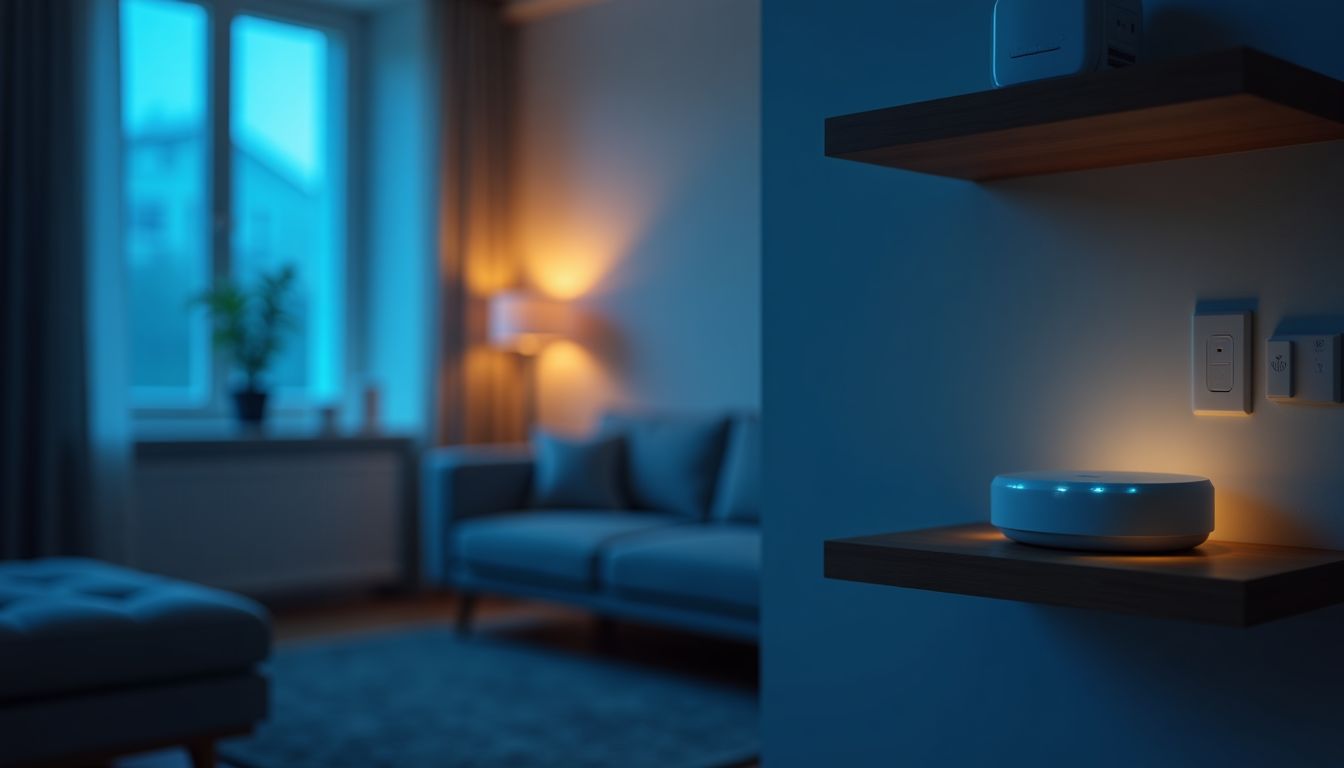
The concept of a smart home is often associated with high technology and significant investment. However, its core value actually lies in practical help with everyday life, especially when it comes to saving resources. When a smart home saves electricity, it does so not through complex algorithms, but through simple automation of routine actions that we often forget to perform. This can include scenarios like turning off lights in an empty room, adjusting the heater temperature, or even controlling the standby mode of household appliances. In this article, we will look at specific examples of how smart home setups help reduce utility bills, starting from core systems and ending with small but very useful gadgets for the home office.

? Table of Contents
Lighting Automation: Turning Off Forgotten Lights
One of the simplest and most effective starting points for energy saving is lighting. How many times have you left a room, forgetting to turn off the light? Or left it on the porch all night for safety? Smart bulbs and switches solve these problems automatically.
For example, you can set up a scenario where the light in the hallway or bathroom turns on only when motion is detected and turns off 2 minutes after you leave. This is ideal for places where you spend a short time. For the street or entrance, you can program operation on a schedule: turning on at dusk and turning off at dawn or midnight. This way, the light works only when it is truly needed, rather than burning electricity for hours in empty rooms.
A more advanced level is integration with door or window opening sensors. The light can automatically turn off when you leave home and turn on when you return in the evening. Such simple automations require no attention from you but bring tangible monthly electricity savings in a smart home.
Climate Control: Smart Heating and Cooling
Heating and cooling are the most energy-intensive systems in any home. This is where energy-saving automation can show the most impressive results. Smart thermostats and climate controllers allow you to precisely manage the temperature based on your daily schedule and actual needs.
The main principle: do not heat or cool an empty home.
Imagine you leave for work at 8 AM and return at 6 PM. A regular heater would run at full power for a full 10 hours in an empty apartment. A smart system can lower the temperature to an economical mode (+17°C) 30 minutes after you leave, and an hour before your return, warm the room back up to a comfortable +22°C. The air conditioner works similarly in summer. This approach saves up to 30% of energy on climate control.
An additional effect comes from integration with open window sensors. If the system detects ventilation, it automatically turns off the heater or air conditioner, preventing you from heating the outdoors. This is practical energy saving, where technology works for your wallet without constant monitoring.
Fighting Vampire Power: Turning Off Standby Devices
Many devices continue to consume electricity even when turned off, but in standby mode. These include TVs, game consoles, chargers, computer equipment, and household electronics. The total power of such "vampires" in an average home can reach 50-100 W, which translates into several kilowatt-hours per month.
Smart plugs allow you to completely cut power to these devices on a schedule or remotely. For example, you can set up the entertainment system in the living room to turn off after midnight and stay off until 6 PM the next day. Or, using a presence sensor, cut power to your desk setup when you step away for more than an hour. This is not only about saving money but also about improving fire safety.
This is especially relevant for a home office. A printer, scanner, speakers, and a second monitor can all be powered through one smart plug, which turns off along with the main computer at your command from your smartphone. This way, you are guaranteed not to leave equipment in standby mode over the weekend.
Energy Efficiency of Small Appliances: The Example of a Smart Mug Warmer
Saving often lies in the details. Let's look at a specific gadget example that illustrates how a smart home saves electricity at the micro-level. This is the Portable Heating Mug Mat — a smart heated coaster for your cup.
A regular electric kettle or coffee maker heats a large volume of water, consuming significant power (1500-2200 W), even if you only need one cup. Then that cup quickly cools down. To reheat it, you either have to reheat the whole kettle or use the microwave, which is also energy-intensive.
The smart alternative: maintain the temperature, don't reheat.
The smart mug warmer works on a different principle. It maintains the set temperature of your drink (e.g., coffee or tea) for a long time, consuming minimal energy (usually 15-25 W). You heat the water once, pour it into a cup, and place it on the warmer. It prevents the drink from cooling down while you work at your computer or watch a movie. This is not only convenient but also significantly more economical than repeatedly boiling the kettle to "warm up" your coffee. Such a gadget is a vivid example of practical energy saving in the small things.
Scenarios and Modes: One Click for Maximum Savings
The true power of a smart home is unleashed when individual devices work together in specific scenarios. You can create special modes that optimize energy consumption for different situations.
For example, the "I've left home" scenario. With one press of a button in the app or a voice command, you activate a sequence: all lights turn off, the air conditioner or heater temperature switches to economy mode, and smart plugs powering unnecessary devices are turned off. Nothing is forgotten, nothing runs needlessly.
Another useful scenario is "Night." In this mode, lights are turned off in all rooms except for night lighting in the hallway, the TV and stereo are turned off, the heating temperature is lowered in the living room and kitchen, but a comfortable temperature is maintained in the bedroom. Such automated actions ensure systematic electricity savings in a smart home without daily effort on your part.

Conclusion:
As we can see, a smart home saves electricity not through magic, but through logical automation and control over those small expenses that we often ignore. From automatically turning off lights to precise climate regulation and fighting hidden consumption, every element works to reduce bills. You can start small, for example, with a smart plug or a useful little item like a mug warmer, which illustrates the principle of energy efficiency in everyday life. By gradually implementing such solutions, you gain not only technological comfort but also real, practical resource savings every day.