Choosing the right sleeping bag for winter hikes or camping is the key to a comfortable and safe rest.
When the mercury drops to -5°C, a regular summer sleeping bag can no longer handle the task. That is why a -5°C sleeping bag must be not just warm, but also technologically well-thought-out, capable of retaining your body heat in frosty and windy conditions. According to the recommendation of the ComfortShop editorial team, the choice of such equipment should be approached with particular care, as your rest and even your health depend on it. In this article, we will look at the key aspects that will help you make the right choice and not freeze at night.
Table of Contents
Types of Fillers: Down vs Synthetic

The first thing you need to decide is the type of insulation. It determines how effective your -5°C winter sleeping bag will be. There are two main options: natural down and synthetic fibers. Each has its strengths, so the choice depends on the conditions of use.
Down models are considered the benchmark for warmth and lightness. They compress well, taking up minimal space in a backpack, and have the best weight-to-thermal protection ratio. However, down is afraid of moisture — if it gets wet, it loses almost all its insulating properties. For a dry winter, this is an ideal choice.
Synthetic fillers (holofiber, thermolite, polartec) are a more practical solution for extreme conditions. They provide warmth even when wet, dry quickly, and are significantly cheaper. The main downside is greater weight and packed volume. For trips with high humidity or a risk of getting wet, synthetics are the right choice.
Temperature Rating: Comfort and Extreme
When buying a sleeping bag for tourism, it is important to understand the difference between the temperature indicators provided by the manufacturer. Any quality sleeping bag has three values: comfort temperature, comfort limit temperature, and extreme temperature. These are the ones you should focus on when choosing a sleeping bag for winter.
The comfort temperature is the minimum temperature at which an average person can sleep without feeling cold. If you plan to camp at -5°C, an ideal sleeping bag would have a comfort temperature of -8°C or -10°C. This will give you a safety margin and guarantee warmth.
The extreme temperature is the survival limit, where you can last a few hours without the risk of frostbite, but comfortable sleep is out of the question. Specialists at ComfortShop advise never to rely on this indicator as a working temperature. It is better to choose a model with a margin of 5-10 degrees, especially if you sleep in a tent rather than under the open sky.

Sleeping Bag Shape and Construction
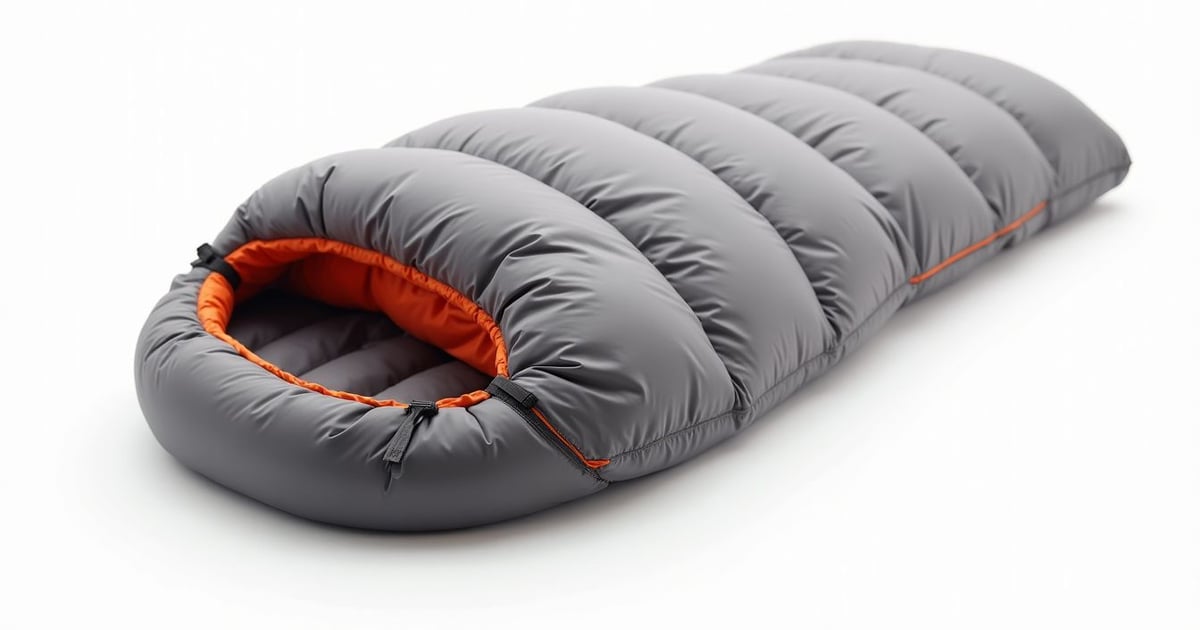
The shape of the sleeping bag directly affects its ability to retain heat. The most common options are "blanket" and "mummy." For winter conditions, the clear leader is the mummy shape, which tapers towards the feet and has a drawstring hood.
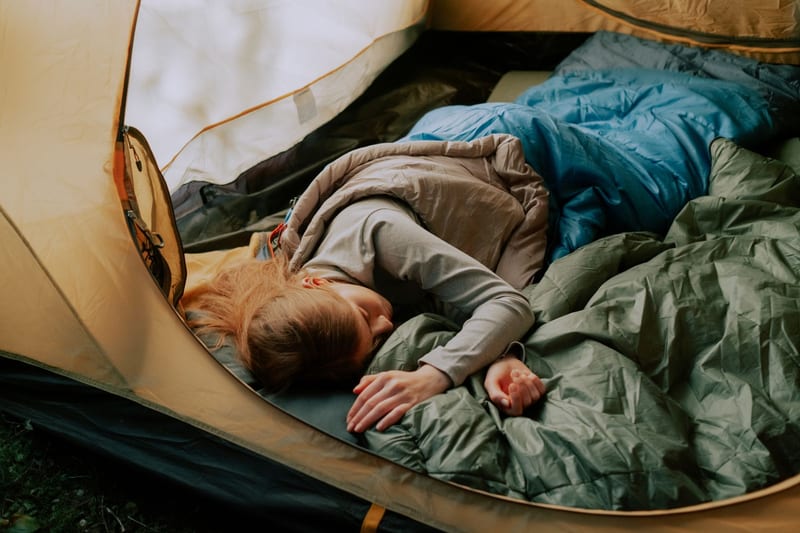
The mummy shape minimizes the internal space that your body needs to heat and prevents warm air from escaping. The hood allows you to insulate your head, through which up to 30% of heat loss occurs. A sleeping bag for low temperatures must have this design.
Also, pay attention to the presence of "draft collars" — special baffles around the neck and shoulders. They additionally block cold air from entering. As ComfortShop reviewers note, this detail is often decisive for a comfortable sleep at sub-zero temperatures.
Additional Features: Zipper and Materials
At first glance, small details like the zipper or inner material may seem unimportant. However, in winter gear, every detail matters. A quality sleeping bag for hiking should have a two-way zipper with a thermal insulation draft tube that prevents cold from entering through the closure.
The inner material should be pleasant to the touch and quickly wick away moisture. Fleece or special soft-touch fabric creates a feeling of coziness and prevents the body from cooling down, even if you sweat during sleep. The outer fabric should be water-repellent (DWR coating) and wind-resistant.
Don't forget about weight. If you plan a hiking trip, every extra gram matters. Modern technologies allow the creation of lightweight models that, weighing up to 1.5 kg, provide excellent insulation down to -10°C. For car camping, weight is less critical, so you can choose bulkier and more budget-friendly options.
How to Properly Care for a Winter Sleeping Bag
To ensure your winter sleeping bag serves you for a long time and does not lose its properties, it needs proper care. The most important rule is to store the sleeping bag in a loose, uncompressed state, not in a compression sack. Constant storage in a compressed state destroys the filler fibers.