Household Thermometer-Hygrometer: Your Assistant for a Healthy Microclimate
Creating a comfortable and healthy environment at home or in the office is not just about coziness, but also about caring for your own well-being and health. Often, we only pay attention to the air temperature, forgetting another critically important parameter – humidity. This is where an indispensable device comes to the rescue – a household thermometer-hygrometer. It is a compact but very useful gadget that simultaneously monitors two key microclimate indicators. Understanding their values helps prevent many problems: from dry skin and mucous membranes to the development of dangerous mold due to excessive humidity.
Why Do You Need a Home Hygrometer? Key Reasons
Many people mistakenly believe that feeling "dry" or "damp" air is enough for assessment. However, our subjective sensations are often deceptive. Only a household thermometer-hygrometer can provide accurate data. Here is why it is important:
- Preserving Health: Optimal relative humidity (40-60%) supports the body's natural defenses. Dry air dries out the mucous membranes of the nose and throat, making them vulnerable to viruses and bacteria. Excessive humidity, on the other hand, promotes the growth of dust mites, fungi, and mold, which are powerful allergens.
- Protecting Property and Interior: Wooden furniture, musical instruments, books, and parquet flooring are very sensitive to moisture levels. With constant dryness, wood dries out and cracks, while with high humidity, it swells and mold can form.
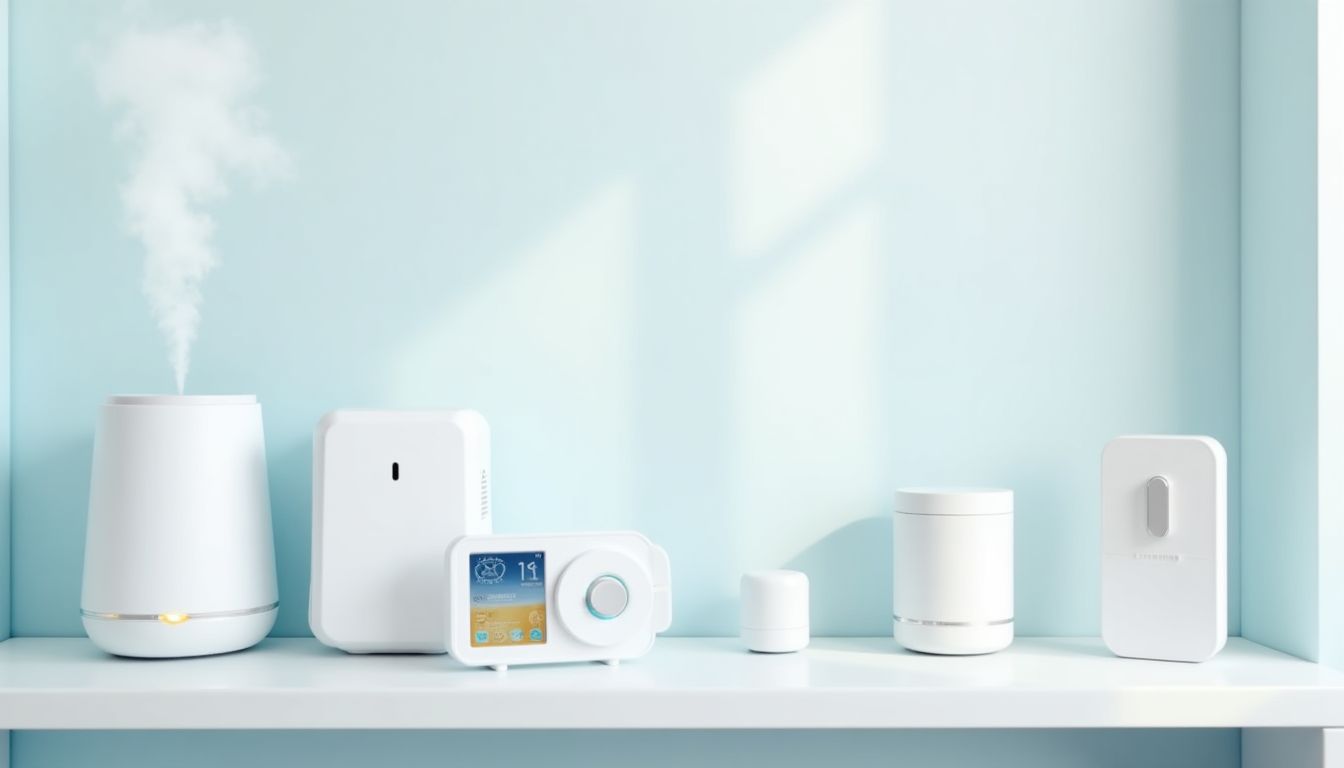
- Controlling Climate Equipment: Do you use a humidifier, dehumidifier, or air conditioner? An electronic thermo-hygrometer will allow you to accurately assess their effectiveness and set the optimal operating mode.
- Creating Comfort: Even at an ideal temperature, incorrect humidity can cause feelings of stuffiness, chilliness, or staleness.
Types of Household Thermo-Hygrometers and Their Construction
Today, the market offers several main types of devices that differ in operating principle, accuracy, and functionality. Let's examine them in more detail.
Classic devices that operate without power.
1. Mechanical (Analog) Thermo-Hygrometers
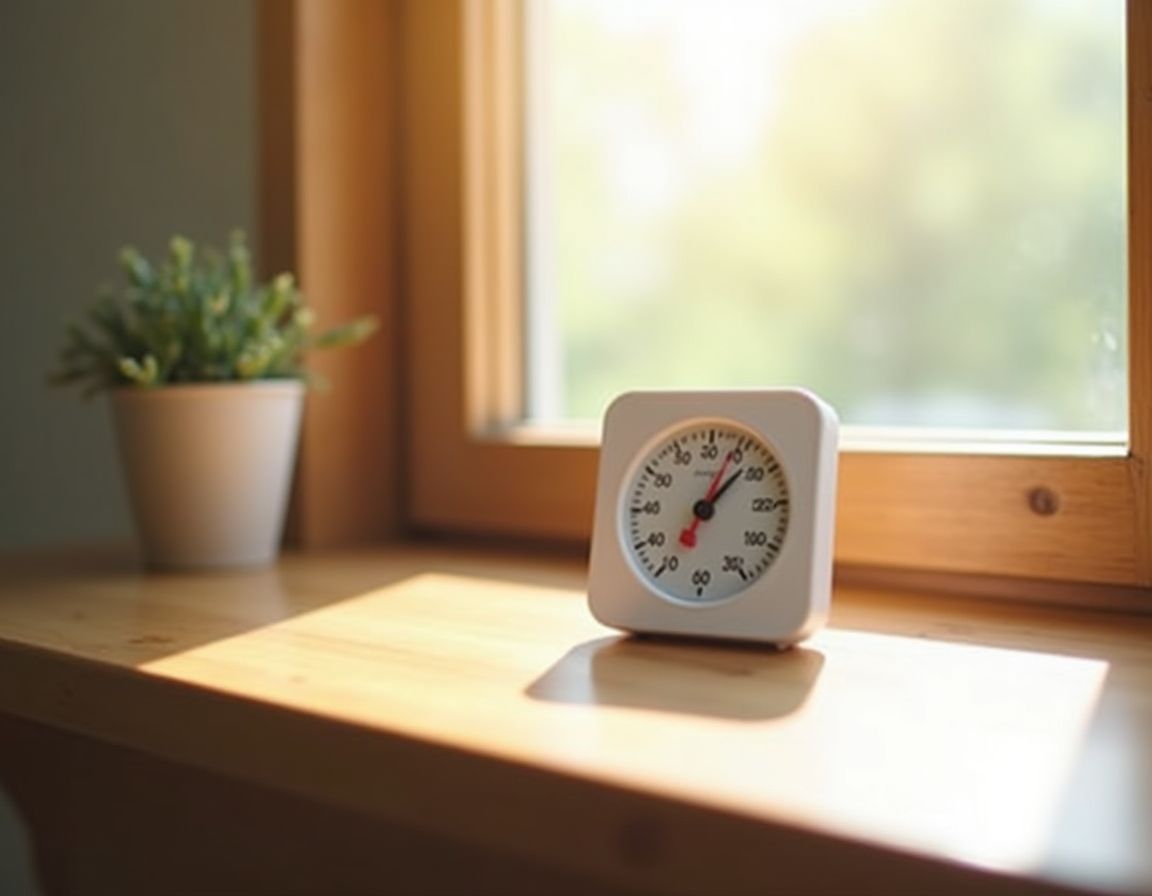
These are classic devices whose construction is based on the properties of materials to change their size or state under the influence of humidity and temperature.
Construction and Operating Principle:

- For measuring humidity, organic material (e.g., degreased hair, a special tape, or animal intestine) is often used, which stretches or contracts depending on the humidity. This change is transmitted through a system of levers to a needle that moves along a scale.
- For measuring temperature, a bimetallic spiral or strip is used. It consists of two metals with different coefficients of thermal expansion. When heated or cooled, the spiral bends and turns the needle.
Advantages: Do not require power, often have an aesthetic appearance suitable for classic interiors.
Disadvantages: Lower accuracy compared to electronic models, sensitivity to mechanical impacts (shocks), require periodic calibration.
Modern devices with high accuracy and additional functions.
2. Electronic (Digital) Thermo-Hygrometers
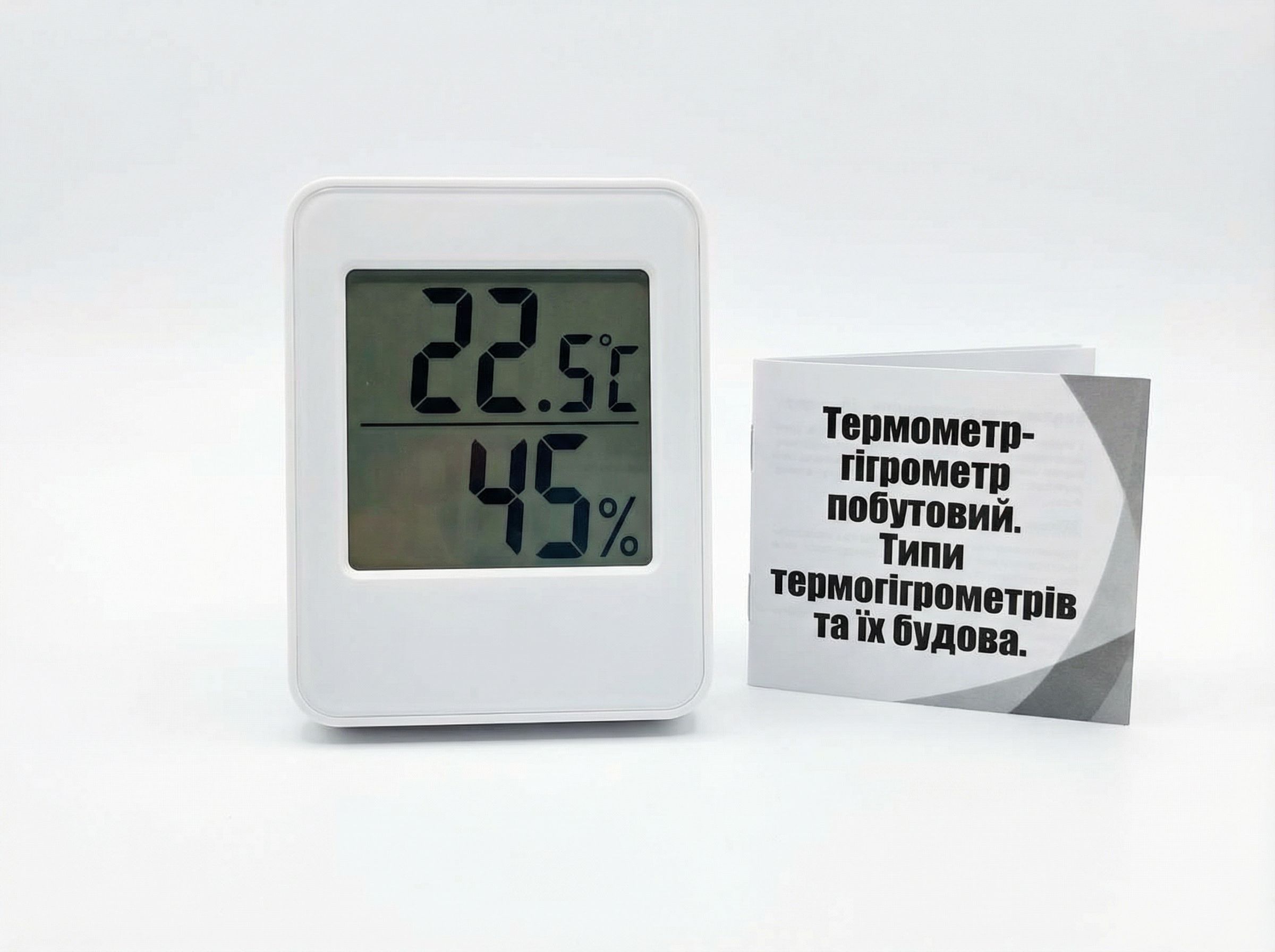
The most common and popular type of household thermo-hygrometer today. Their construction is based on modern sensors and microprocessor technology.
Construction and Operating Principle:
- Humidity sensor (hygrometric sensor): Capacitive or resistive sensors are most often used. A capacitive sensor has a thin layer of polymer or metal oxide that changes its dielectric constant depending on the amount of moisture absorbed from the air, which affects the electrical capacitance. Resistive sensors change electrical resistance.
- Temperature sensor: Usually a thermistor or semiconductor sensor, whose resistance linearly depends on the ambient temperature.
- Microprocessor: Processes signals from the sensors, converts them into digital form, and displays them on the screen.
- Display: Liquid crystal (LCD) or light-emitting diode (LED), which clearly shows the current temperature and humidity values, often accurate to tenths.
- Housing and Power: Powered by AAA batteries or coin cells. The housing can be plastic or metal.
Advantages: High accuracy, clear readings, additional functions (e.g., min/max memory, comfort indicator, clock, alarm).
Disadvantages: Require battery replacement.
Devices for monitoring parameters at a specific point.

3. Thermo-Hygrometers with Remote Sensor
This is a type of electronic device whose construction involves the separate placement of the main unit with the display and the sensor itself.
Construction and Operating Principle: The sensor (often protected from direct influences) is connected to the main unit via a wire or through wireless communication (radio channel, Bluetooth). This allows measuring parameters at a specific point where it matters (e.g., in a baby crib, near a workspace, in a refrigerator or greenhouse), while placing the device itself in a convenient viewing location.
Advantages: Ability to monitor in an inaccessible location, high measurement accuracy precisely in the desired zone.
Disadvantages: Higher cost, especially for wireless models.
How to Choose the Ideal Thermometer-Hygrometer for Your Home?
When choosing a household hygrometer, pay attention to the following criteria:
- Accuracy: For humidity, a good indicator is an error of ±3-5%. For temperature – ±0.5-1°C.
- Measurement Range: Make sure the device covers the values you need (usually for a home, this is 0..+50°C and 20..90% humidity).
- Functionality: Useful features may include: comfort level indicator (smileys, scale), extreme value memory, display backlight, wall or table mounting.
- Design and Size: The device should fit harmoniously into the interior.
- Manufacturer and Warranty: Give preference to trusted brands that provide a warranty on their products.
In summary, a household thermometer-hygrometer is not a trivial item, but an important tool for managing air quality in your home. Whether you choose a stylish mechanical device or a functional electronic model, you will get a reliable assistant for maintaining a healthy and comfortable microclimate for yourself and your family. Investing in such a device is an investment in your health, the good condition of your belongings, and the coziness of your home.