Choosing a video surveillance system for home or business protection often comes down to one main question: wired or wireless? Both options have their strengths and limitations, which determine their suitability for specific conditions. A wired system is traditionally associated with reliability and stability, while a wireless one offers ease of installation and flexibility. Understanding the key differences in data transmission, power supply, image quality, and scalability will help you make an informed decision. In this article, we will compare both types of systems in detail so you can understand which video surveillance system is better for your needs.
? Also recommended
View product on AliExpress →? Table of Contents
Wired video surveillance system: the classic of reliability
Wired video surveillance systems are based on a physical cable connection between cameras and a recorder (NVR or DVR). Typically, a single combined cable is used for video signal and power transmission, such as CAT5e/6 for IP cameras or coaxial for analog HD cameras. This ensures autonomous operation of the entire system without dependence on the home Wi-Fi network.
The main advantage of wired solutions is maximum communication stability. The absence of a radio channel means the signal is not affected by interference from other devices, thick walls, or distance from the router. The video stream quality remains high and constant, which is critically important for 24/7 monitoring. Additionally, such systems usually provide uninterrupted power to cameras through the same cable (PoE technology), simplifying the electrical network.
However, installing wired systems requires professional skills and time. Cables must be run through walls, floors, or attics, making installation a complex project, especially in finished spaces. This also complicates subsequent camera relocation, making the system less flexible.
Wireless video surveillance system: freedom and simplicity
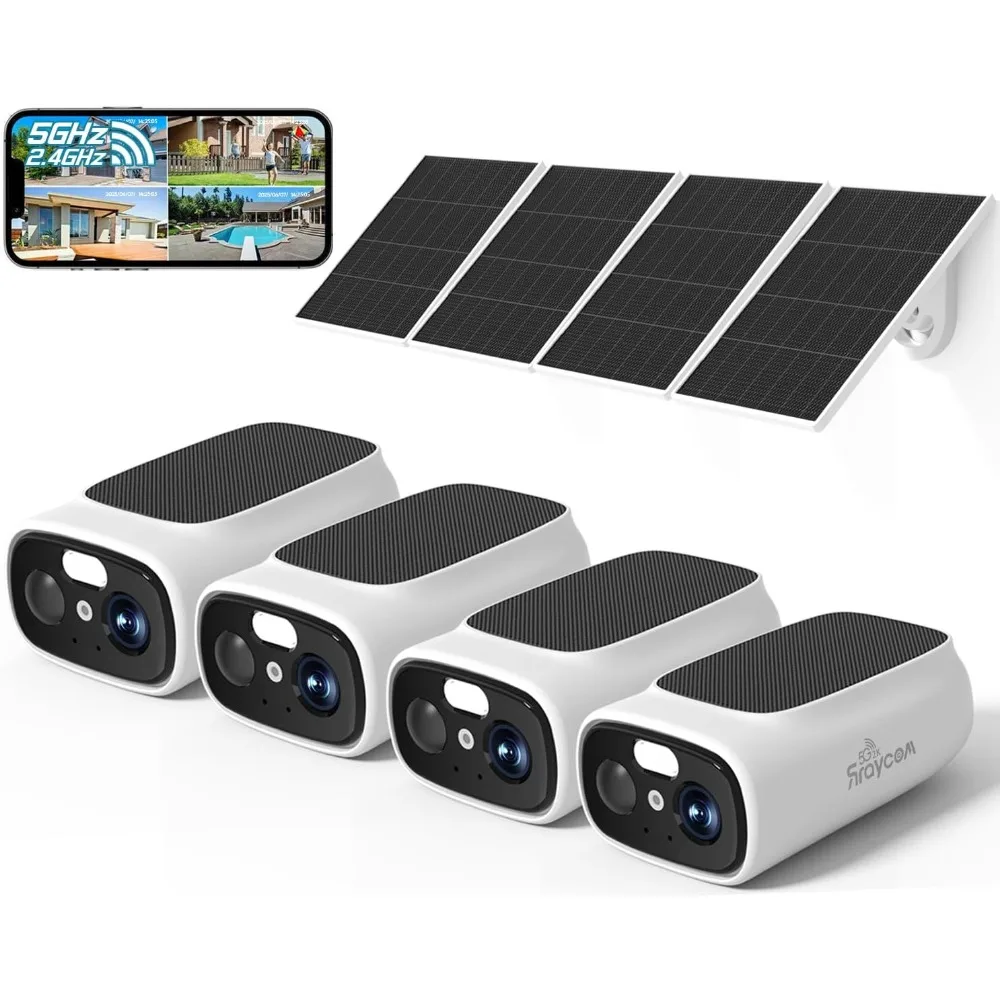
Wireless systems transmit video data via Wi-Fi or other radio protocols. Modern models, such as solar security cameras wireless outdoor, often combine grid independence with solar panels for power, realizing the concept of fully wireless surveillance. Their main advantage is 2mins diy installation, since mounting only requires attaching the camera to a surface and configuring it through an app.
Such a system is ideal for rented housing, temporary surveillance, or quick deployment. It is easily scalable: adding a new camera takes just minutes. Modern wireless cameras offer Full HD or 4K image quality, matching wired counterparts. An important advantage for many users is the ability for local storage on memory cards or network attached storage (NAS), making them no subscription cameras for home security system.
The main drawback remains dependence on Wi-Fi signal quality. At a distance, through obstacles, or when the network is overloaded, communication interruptions or reduced picture quality may occur. Also, cameras require periodic battery charging (if not solar-powered), which demands additional monitoring.
Comparison table: wired vs wireless system
For clarity, let's summarize the key characteristics of both system types in a table. This will help quickly assess their capabilities.
Criteria for choosing between wired and Wi-Fi:
Communication stability:
Wired: High, independent of interference.
Wireless: Depends on Wi-Fi quality, possible interruptions.
Installation complexity:
Wired: High, requires cable routing.
Wireless: Very low, DIY installation.
Flexibility and scalability:
Wired: Low, camera relocation is difficult.
Wireless: High, cameras are easy to add or move.
Power supply:
Wired: Often via cable (PoE), stable.
Wireless: From batteries/accumulators, requires charging.
Installation cost:
Wired: Higher (labor + materials).
Wireless: Lower (often zero).
Protection against jamming:
Wired: High, physical cable is hard to jam.
Wireless: May be vulnerable to hacking or signal jamming.
Who is a wired video surveillance system suitable for?
Choosing wired solutions is obvious in cases where reliability and stability are an absolute priority. This is an ideal option for new construction or major renovations, when cables can be concealed during the finishing stage.
Such a system is well-suited for large facilities: private cottages with a perimeter, warehouses, offices, or stores where many cameras need to be installed in fixed positions. If the premises have Wi-Fi coverage issues or many reinforced concrete obstacles, a wired system will be the only guarantee of quality communication.
It is worth noting that modern wired systems also support a high level of data encryption and can operate in an isolated local network, enhancing protection against external threats.
Who should choose a wireless video surveillance system?
A wireless video surveillance system is the best choice for most apartments, rented homes, and those who value simplicity and speed. If you need to quickly set up home video surveillance without renovations and drilling, wireless cameras are indispensable.
The model with solar panels for outdoor use is especially advantageous. Solar security cameras wireless outdoor provide complete independence from the electrical grid, making them ideal for monitoring dachas, garages, parking lots, or backyards. The ability for local storage without monthly fees makes such solutions economically beneficial in the long term.
This technology is also suitable for temporary needs: for example, monitoring renovations, during vacations, or for temporarily monitoring a specific area. Placement flexibility allows easy adjustment of viewing angles, optimizing coverage.
Conclusion:
There is no universal answer to the question of which video surveillance system is better — it all depends on your specific conditions and priorities. For permanent, maximally reliable protection of a facility where complex installation is possible, a wired system is the optimal choice. For most home users looking for a simple, flexible, and modern solution without extra costs and complications, a wireless system is better suited. Modern wireless cameras for security systems, especially those with solar panels and local storage, combine autonomy, high image quality, and true ease of installation, making protection accessible to everyone.