The choice between dry and wet food for a cat is one of the most important decisions for a caring owner. This question sparks much debate among feline specialists, breeders, and even veterinarians. Each type of food has its own significant advantages, potential drawbacks, and affects different aspects of a whiskered pet's health: from dental and kidney health to energy balance and weight control. In this article, we will compare dry and wet cat food in detail, examine their characteristics, and provide clear recommendations to help you make the optimal decision for your pet, considering its age, health status, and habits.

? Table of Contents
Dry Cat Food: Convenience, Dental Hygiene, and Economy
Dry food, or kibble, is the most common feeding option due to its availability, long shelf life, and ease of portioning. Its main advantage is its positive effect on oral hygiene. The hard granules mechanically scrape off dental plaque during chewing, slowing down the formation of tartar, which helps prevent gum and dental diseases.
Additionally, dry food is very convenient for owners. It can be left in the bowl for a long time without the risk of spoilage, making it ideal for cats that eat frequently in small portions. In terms of energy density, kibble usually contains less moisture and more calories per gram than wet food, which is important for active animals or when weight gain is needed.
However, the main disadvantage of dry food is its low moisture content. Cats that eat exclusively dry food often drink too little water, which can put additional strain on the kidneys and contribute to the development of urinary tract disease, especially in predisposed breeds.
Wet Cat Food: Natural Hydration and Taste Appeal
Wet food in pouches, cans, or portioned packs is as close as possible in structure and composition to a cat's natural diet – meat. Its main advantage is its high moisture content (up to 80%), which helps maintain healthy hydration, reduces the load on the urinary system, and prevents kidney diseases.
This type of food often has a higher percentage of meat and animal proteins in its composition, meeting the biological needs of cats as obligate carnivores. Wet food is very tasty and aromatic, making it an ideal option for picky eaters, older cats with a diminished sense of smell, or animals recovering from illness that need an extra appetite stimulus.
Disadvantages include the relatively high cost, the need to store opened packaging in the refrigerator, and a limited shelf life after opening. Furthermore, it does little to clean teeth and, with frequent consumption, can lead to faster plaque formation.
Comparison table: dry vs wet cat food.
| Characteristic | Dry Food | Wet Food |
|---|---|---|
| Moisture Content | ~6-10% | ~75-85% |
| Caloric Density | High (per gram of product) | Lower (due to water) |
| Effect on Teeth | Mechanical cleaning, plaque prevention | Minimal, may contribute to plaque |
| Effect on Kidneys | Requires careful monitoring of water intake | Promotes hydration, reduces strain |
| Convenience | Can be left in the bowl, long shelf life | Spoils quickly, needs refrigeration |
| Cost | Usually more economical | Usually higher |
| Taste Appeal | Medium/Low | High |
Combined Diet: The Golden Mean for Health
Many experts agree that the best option for most healthy adult cats is a combined diet (mixing). This allows you to get the benefits of both types of food and minimize their drawbacks. For example, you can give wet food for breakfast and dinner, and leave dry food accessible throughout the day for snacking.
This approach provides the cat's body with enough moisture from wet food, supports dental health through hard kibble, and satisfies the natural need for variety in taste and texture. It is important to correctly calculate the total daily caloric intake to avoid overfeeding your pet and to choose foods of the same quality class (e.g., super-premium or holistic) for a balanced diet.
How to Choose the Best Food for Your Cat?
The answer to the question "which food is better for a cat?" is always individual. The choice depends on several key factors. For kittens, pregnant or nursing cats, foods with higher protein and energy content are often recommended. For senior cats or animals with chronic kidney disease, urinary tract issues, or diabetes, wet food may be a priority due to its high moisture content.
For cats prone to obesity, it is important to control caloric intake: here, specialized dietary dry foods or low-fat wet foods can be used. Active and young cats, on the other hand, may need energy-dense dry food. Consulting with a veterinarian is the best way to determine the optimal type of nutrition considering individual needs.
Automated Feeding: The Ideal Solution for a Combined Diet
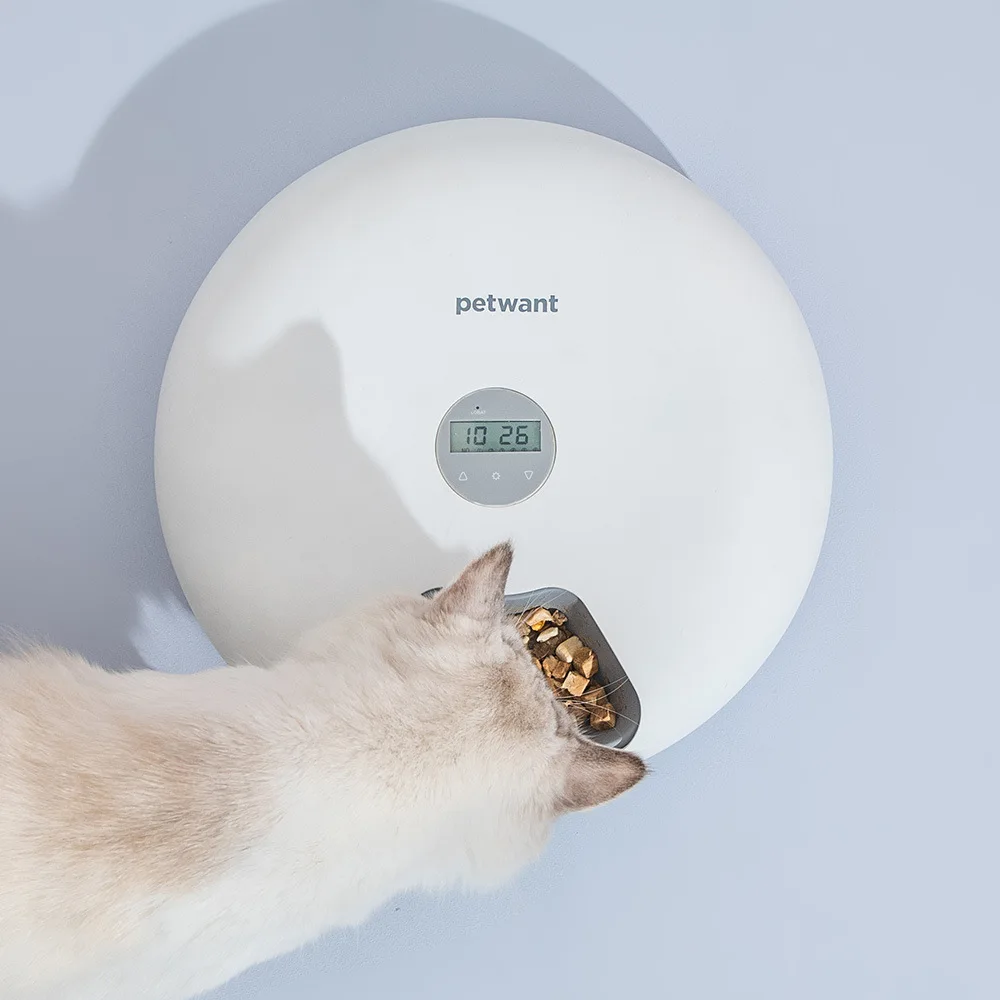
Organizing a balanced combined feeding schedule, especially with a busy schedule, is made easier by automatic feeders. For example, the Automatic Pet Feeder for Cats And Dogs Electric round Timer Food Dispenser is a modern device that simplifies pet care. It allows you to program up to 6 feedings per day with precise portioning for both dry and wet food, which is critical for weight control.
Its advantages are obvious: maintaining a stable feeding schedule, the ability to feed your cat even in your absence, and a voice recording feature that calls your pet to the bowl. This is an ideal solution for those who want to combine dry and wet food, automatically dispensing dry food portions throughout the day and reserving wet feedings for themselves in the morning and evening.

Conclusion:
The best food for your cat is the one that best meets its age, physiological needs, and health status. Dry food is convenient, economical, and good for teeth, but requires careful monitoring of water intake. Wet food is natural in composition, ideal for hydration, but less convenient to store. The optimal solution for a healthy adult cat is often a combined diet, which combines the advantages of both types. Automatic feeders, such as the Electric round Timer Food Dispenser, become indispensable helpers in this regard, ensuring precision, regularity, and convenience in caring for your whiskered friend.