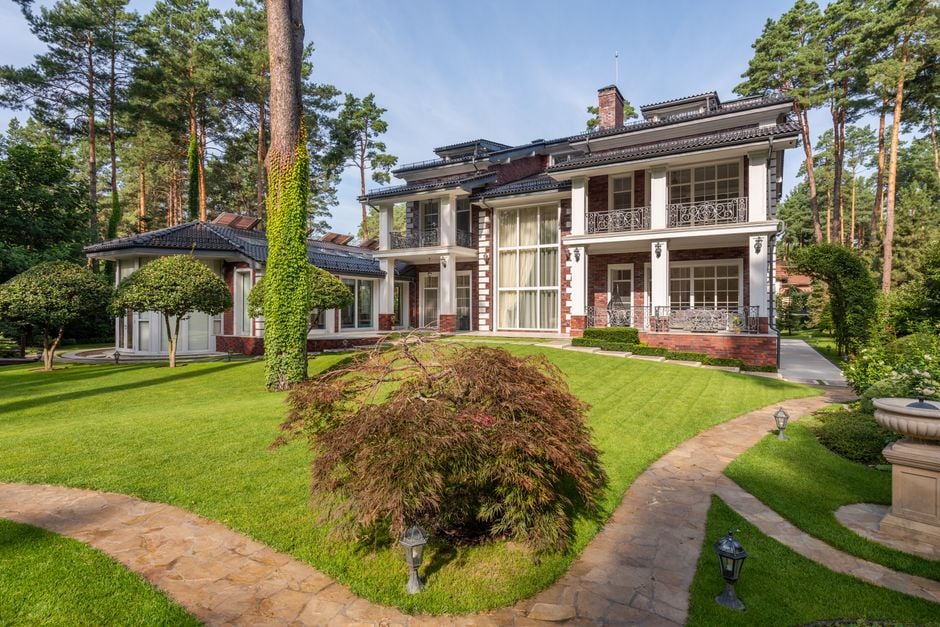
Creating a cozy and functional space around your home is impossible to imagine without quality lighting. Solar lights for the yard are becoming an increasingly popular solution, as they combine energy efficiency, autonomy, and modern design. Using free solar energy, such lamps allow you to significantly save on electricity and do not require complex installation. As noted by ComfortShop reviewers, a properly chosen model can not only illuminate paths and the facade but also create a unique atmosphere in the garden. In this article, we will look at the key selection criteria and help you navigate the variety of modern models.
Article Contents
Advantages of Autonomous Yard Lighting
The main advantage of outdoor solar lights is their complete energy independence. You don't need to lay cables, dig trenches, or connect to the grid. The lights automatically turn on in the evening thanks to a dusk sensor and operate until morning, accumulating a charge during the day.
In addition to savings, such lamps are completely safe because they operate on low voltage. They are not afraid of moisture, dust, or temperature fluctuations, making them ideal for outdoor use. Modern LED solar lights have a long service life — up to 50,000 hours of continuous operation, which significantly exceeds the lifespan of conventional incandescent lamps.
It is also worth noting the ease of installation: most models simply stick into the ground or are mounted on a wall using screws. This makes lighting for the dacha accessible even to those who have no experience in electrical work.
Main Types of Solar-Powered Garden Lights
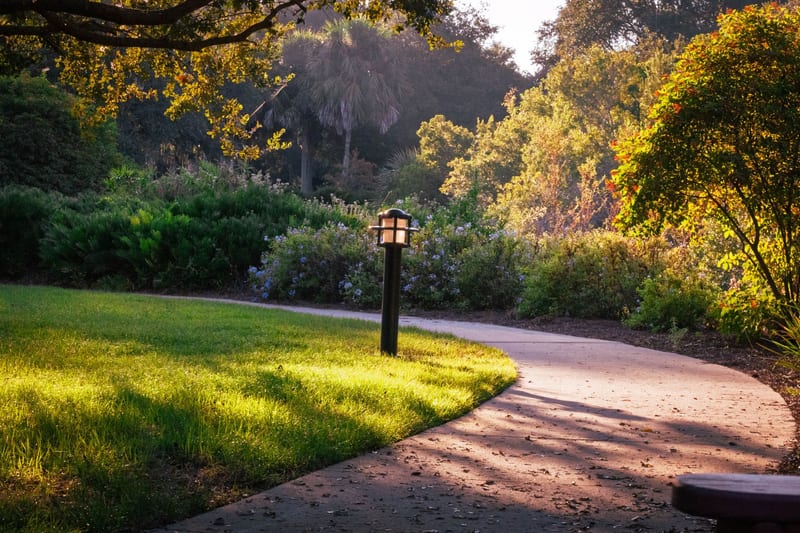
The market offers several main types of autonomous lamps, each with its own purpose. The most common are ground lights on stakes, which simply stick into the lawn or flower bed. They are ideal for illuminating paths, borders, or plants.
Wall-mounted models are installed on the facade, fence, or posts. They provide directional light and are often equipped with motion sensors to save charge. For a decorative effect, hanging garlands or balls are used, which can be placed on the terrace, in the gazebo, or along the fence.
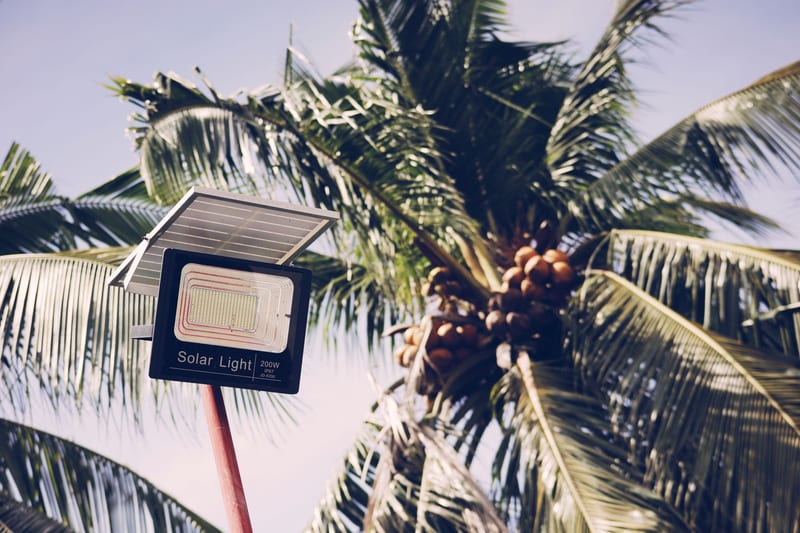
A separate segment is high-power floodlights. They are designed for lighting large areas such as parking lots, sports fields, or entrance zones. Solar lights for the yard in the form of floodlights usually have a separate solar panel installed at a distance from the lamp itself for maximum sunlight capture.
How to choose power and battery type.
The power of the lamp is measured in lumens (lm) and determines the brightness of the light. For decorative lighting of flowers, 10-30 lumens are sufficient; for illuminating paths, 50-100 lumens; and for functional yard lighting, 200 lumens or more are needed. It is important to pay attention to the battery capacity: the larger it is (measured in mAh), the longer the lamp will work in cloudy weather.
Manufacturing Materials and Weather Protection
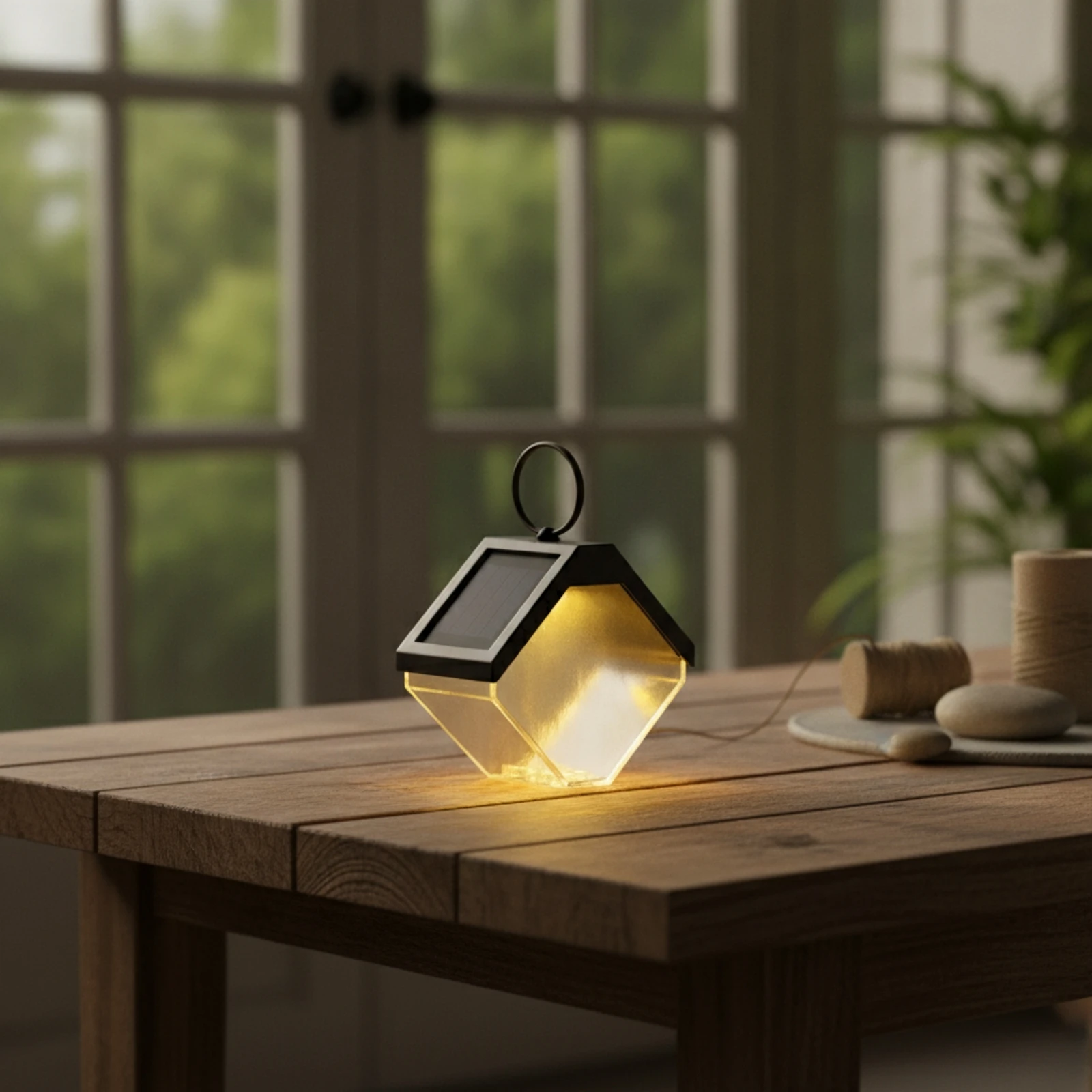
Since outdoor solar lights are constantly exposed to rain, snow, and ultraviolet radiation, the housing material is crucial. The most reliable models are considered to be those made of stainless steel or aluminum — they do not rust and withstand mechanical loads.
Plastic housings are lighter and cheaper but less durable. When choosing plastic, give preference to impact-resistant ABS plastic, which does not crack in frost. The IP (Ingress Protection) rating is critically important. For outdoor use, the minimum standard is IP44 (protection against splashes), while the optimal is IP65 or IP67 (complete protection against dust and water jets).
The lamp glass should also be strong — tempered or polycarbonate. Polycarbonate is lighter and more impact-resistant, but it may yellow over time in the sun. Tempered glass retains transparency longer but is more fragile under point impacts. ComfortShop experts recommend paying attention to the presence of rubber seals at connection points — this guarantees the device's tightness.
LEDs and Color Temperature
LED solar lights use light-emitting diodes that provide high light output with minimal energy consumption. The color temperature of the light is measured in Kelvin (K) and affects the perception of space. Warm white light (2700-3000 K) creates a cozy, relaxing atmosphere and is ideal for recreation areas and gazebos.
Neutral white light (4000-4500 K) is as close as possible to natural daylight. It provides good visibility and is suitable for lighting paths, stairs, and work areas. Cool white light (5000-6500 K) is used for security lighting — it is bright, contrasting, and helps to better distinguish details at a distance.
Many modern models offer the ability to change the light color or even RGB backlighting. This allows you to create a festive atmosphere or adapt the lighting to your mood. However, remember that color modes usually consume more energy, which reduces battery life.
Additional Features and Smart Control
Modern autonomous lamps are equipped with various sensors that increase ease of use. The most common is a dusk sensor (photorelay), which automatically turns on the light when darkness falls. Some models have a motion sensor (PIR sensor) that activates the backlight only when someone passes by — this significantly saves battery charge.
More advanced models support remote control via a remote or mobile app. You can set timers, change brightness, or operating modes directly from your smartphone. This is especially convenient if the lights are installed in hard-to-reach places or at great heights.

Pay attention to the presence of a "Memory" function — it remembers your settings even after the battery is completely discharged. Also useful is the "Dimming" mode (gradual fading), which slowly reduces brightness at night to avoid blinding and save energy until dawn.
Placement and Installation of Solar Lights
Even the best solar-powered garden lights will not work effectively if installed incorrectly. The main rule is that the solar panel must receive direct sunlight for at least 6-8 hours a day. Avoid shade from trees, buildings, or tall fences.
The tilt angle of the panel is also important: in summer, an angle of 30-45 degrees relative to the horizon is optimal. For wall-mounted models, try to place them on the south or southwest side of the building. If the lamp has a remote panel, it can be installed separately in a sunny spot, while the lamp itself can be placed in a shaded area.
Do not install lamps too low to the ground — in winter, they may be covered with snow. The optimal height for ground models is 40-60 cm above the lawn level. For wall-mounted lamps, the recommended installation height is 2-2.5 meters so that the light is evenly distributed across the area. Before final installation, test the lamp's operation in different positions for 2-3 days.
Conclusion:
The choice of solar lights for the yard depends on your specific tasks: decorative lighting of flower beds, functional lighting of paths, or security lighting of the perimeter. The main criteria are battery capacity, IP protection rating, housing material, and type of LEDs. According to the recommendation of the ComfortShop editorial team, for universal use, you should choose models with a power of at least 100 lumens, an IP65 protection rating, and a 2000 mAh battery. Invest in quality lamps from trusted brands — this guarantees long-lasting and uninterrupted operation of your autonomous lighting for many years.
Frequently Asked Questions
How long do solar yard lights work at night?
Typically, autonomous yard lighting on a full charge shines from 6 to 12 hours, depending on the battery capacity and the brightness of the LED solar lights.
Do I need to clean the solar panels on outdoor lights?
Yes, for efficient operation of solar-powered garden lights, it is recommended to wipe the panel from dust and dirt once a month, especially after rain.
Which solar lights are best to choose for lighting a dacha in winter?
For winter, choose models with a separate solar panel and a lithium battery — they work better at sub-zero temperatures and provide more energy savings.
Can outdoor solar lights be installed in the shade?
Yes, but the operating time will be reduced: for stable yard lighting, solar lights need direct sunlight for at least 4-6 hours a day.