Planning a hike always starts with packing a backpack, and it is at this stage that most beginner tourists make a critical mistake by taking too many things. Excess weight turns a pleasant walk into an exhausting ordeal, draining your energy and enjoyment of nature. Instead, experienced travelers know: the success of a trekking trip depends not on the quantity of items, but on how thoughtfully they are chosen. To help you pack correctly, the ComfortShop editorial team has prepared a detailed list that will allow you to take everything necessary on a hike without extra weight. We will tell you which lightweight hiking gear will become your best friend, and what you should categorically refuse to avoid carrying extra kilograms.
Article Contents
- The Main Principle: The Weight of Every Item Matters
- The Most Important: Tent, Sleeping Bag, and Sleeping Pad
- Clothing: Minimum Items, Maximum Functionality
- Footwear: The Main Element of Gear
- Kitchen and Food: Lightness Above All
- First Aid Kit, Hygiene, and Small Items: What You Really Need
- Conclusion:
The Main Principle: The Weight of Every Item Matters
The first thing you need to learn when packing a minimal trekking kit is the "three-point" rule. Every item in your backpack must perform at least two functions. For example, a raincoat can serve as wind protection and an extra layer of warmth at night, while a trekking pole can be a support and a frame for the tent. It is this multifunctionality that allows you to significantly reduce the list of things for a hike.
Before putting an item in your backpack, ask yourself: "Can I do without it?" or "Can this item be replaced with something lighter?". As ComfortShop reviewers note, a typical mistake of beginners is taking spare clothes, a huge set of dishes, or heavy canned food "just in case." Instead, you should focus on lightweight hiking gear made from modern materials.
How to determine the ideal backpack weight.
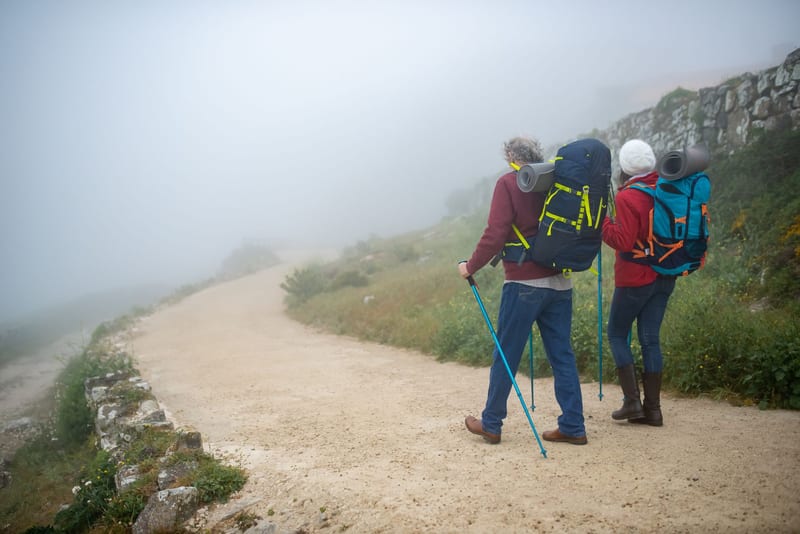
Experts advise following a simple calculation: the weight of your gear should not exceed 20-25% of your body weight. That is, if you weigh 70 kg, your backpack with all its contents should weigh no more than 14-17 kg. This is a guideline to help you critically assess what to take on a hike without extra weight and what to leave at home.
The Most Important: Tent, Sleeping Bag, and Sleeping Pad
These are the three pillars on which your rest depends. This is where the greatest potential for weight savings lies. Instead of a heavy three-layer tent, choose modern trekking models weighing up to 2 kg. A mummy-style sleeping bag with synthetic or down filling is what you should choose based on the principle "lighter is better." A sleeping pad (foam mat) should have a foil coating for better thermal insulation.
If you are planning a hike in the warm season, you can do without a heavy winter sleeping bag, replacing it with a lightweight summer version. Remember: sleeping is a key moment, so you shouldn't skimp on quality here, but you need to choose the lightest hiking gear available on the market.
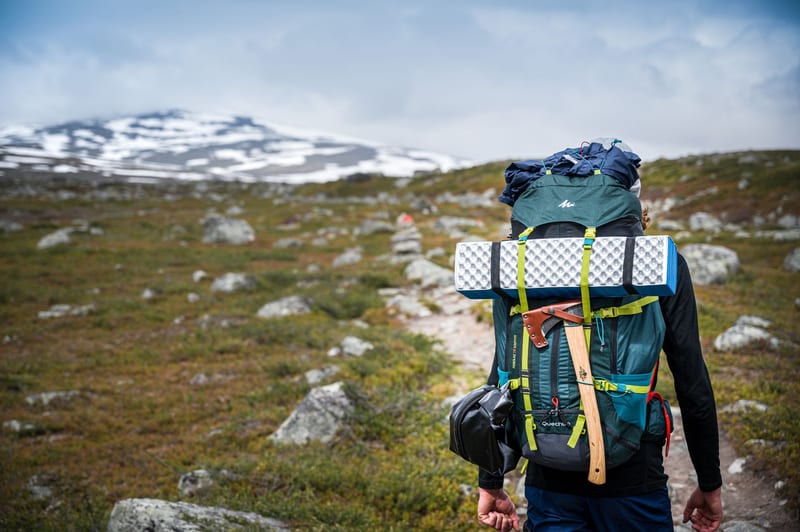
Is it worth taking a tent for two?
Yes, if you are going with a group. Distributing weight among participants is the best way to reduce the load. One carries the tent, another the sleeping bags, a third the food. This allows you to significantly reduce the list of things for a hike per person and make backpacks lighter for everyone.
Clothing: Minimum Items, Maximum Functionality
Proper clothing is the key to comfort, but you shouldn't take a wardrobe for all occasions. Three layers are enough: thermal underwear (wicks away moisture), fleece or a light jacket (retains heat), and a windbreaker/raincoat (protection from bad weather). Choose pants made of lightweight synthetic material that dries quickly. Jeans are something you should categorically not take on a hike, as they are heavy, get wet, and take a long time to dry.
ComfortShop experts advise having one set of clothes for moving and one dry set for sleeping. More is not needed. A spare t-shirt and socks are the mandatory minimum, but they should be made of lightweight material. Don't forget a head covering: a light Panama hat or cap will protect from the sun, and a buff from the wind.
Footwear: The Main Element of Gear
Footwear is something you cannot skimp on, but you can reduce its weight. Choose lightweight trekking shoes instead of heavy boots if your route does not involve difficult rocky sections. Modern models with a membrane weigh 400-500 grams per pair, which is significantly lighter than classic leather boots.
By the way, many tourists take spare shoes for the evening — this is extra weight. Instead, it's enough to have lightweight flip-flops or Crocs, which weigh 150-200 grams. Remember: what to take on a hike without extra weight is a question of choosing between comfort and necessity.
Kitchen and Food: Lightness Above All
Food is the heaviest category of gear, so its planning needs to be approached especially carefully. Forget about glass jars and heavy canned food. Choose freeze-dried products (dry soup mixes, instant porridge), nuts, dried fruits, energy bars. Water is a separate topic: plan your route so you have access to sources, rather than carrying 5 liters on your back.
For cooking, use a lightweight gas burner (weighing up to 100 grams) and titanium cookware. Titanium bowls and cups weigh half as much as aluminum ones and three times less than plastic ones. This is an ideal option for a minimal trekking kit.
How to calculate the amount of food per day.
Experienced tourists advise taking 500-700 grams of dry food per person per day. This is enough to maintain energy without overloading the backpack. Distribute the products by day into different pockets so you don't have to move the entire supply unnecessarily.
First Aid Kit, Hygiene, and Small Items: What You Really Need
A first aid kit is another area where you can save weight. Don't take a whole pharmacy, only what might be needed in an emergency: a plaster, bandage, antiseptic, painkiller, allergy and stomach medication. All this can be packed into a small dry bag weighing up to 200 grams. For hygiene, a small tube of toothpaste, a compact brush, and biodegradable soap are enough.
Among the small items worth taking are a folding knife, a lighter, a flashlight (preferably a headlamp, it's lighter), and a power bank. All of this should weigh a minimum. ComfortShop reviewers emphasize: don't take books, heavy cameras, or a set of cosmetics. Instead, use your smartphone for photos and reading.
Conclusion:
The secret of a light backpack is not to give up comfort, but to choose multifunctional and modern items. By following the hiking checklist described above, you will be able to take everything necessary on a hike without overloading your back. Remember: every extra gram is your energy, which is better spent on enjoying the scenery rather than fighting with weight. ComfortShop experts recommend checking your backpack on a scale before leaving and critically assessing once again what to take on a hike without extra weight, because the right choice of gear is the key to an unforgettable adventure.
Frequently Asked Questions
How to reduce backpack weight without sacrificing comfort?
Choose multifunctional items, for example, thermal underwear that keeps you warm both day and night, and a lightweight gas burner instead of a heavy campfire setup.
What is the lightest hiking gear to take instead of a tent?
Use a trekking tarp shelter or a hammock with a mosquito net and tarp — this is significantly lighter than a classic two-person tent.
What should you not take on a hike to avoid carrying extra weight?
Avoid heavy glass bottles, extra dishes (one bowl and spoon are enough), and hardcover books.
What is the minimal trekking kit for 2-3 days?
It is enough to take a lightweight sleeping bag, a sleeping pad, a change of underwear, a raincoat, a first aid kit, a flashlight, a water filter, and food at the rate of 600-800 grams per day.