In the modern world, a stable power supply is not just a matter of comfort, but often a necessity for the safety and functioning of a household. Power outages can occur due to grid accidents, weather disasters, or scheduled maintenance. In such moments, a portable power station comes to the rescue, serving as a reliable source of backup power for the home. This is a compact device that stores electrical energy and delivers it through various outputs, ensuring the operation of household appliances, lighting, and gadget charging.
Choosing a powerful and high-capacity power bank for the home is a responsible task, as the characteristics determine how many devices you can keep running and for how long. Many models are available on the market, and it is important to know which parameters to pay attention to first. In this article, we will take a detailed look at which power station to choose for providing autonomous power at home, so you can make an informed decision and always be prepared for any situation.
? Table of Contents
What is a portable power station and how does it work?
A portable power station is, essentially, a large high-capacity battery equipped with an inverter, charge controller, and a set of outlets. Unlike fuel-powered generators, it does not produce energy but only stores it for later use. This makes it completely silent, emission-free, and safe for indoor operation.
The basic operating principle is the "charge-discharge" cycle. First, the station is charged from a standard home outlet, a car cigarette lighter, or, which is especially convenient for autonomy, from solar panels. The stored energy (measured in watt-hours, Wh) is then available to power connected devices through standard 220V outlets, USB ports, and other outputs. Thus, you create your own miniature uninterruptible power supply for the home.
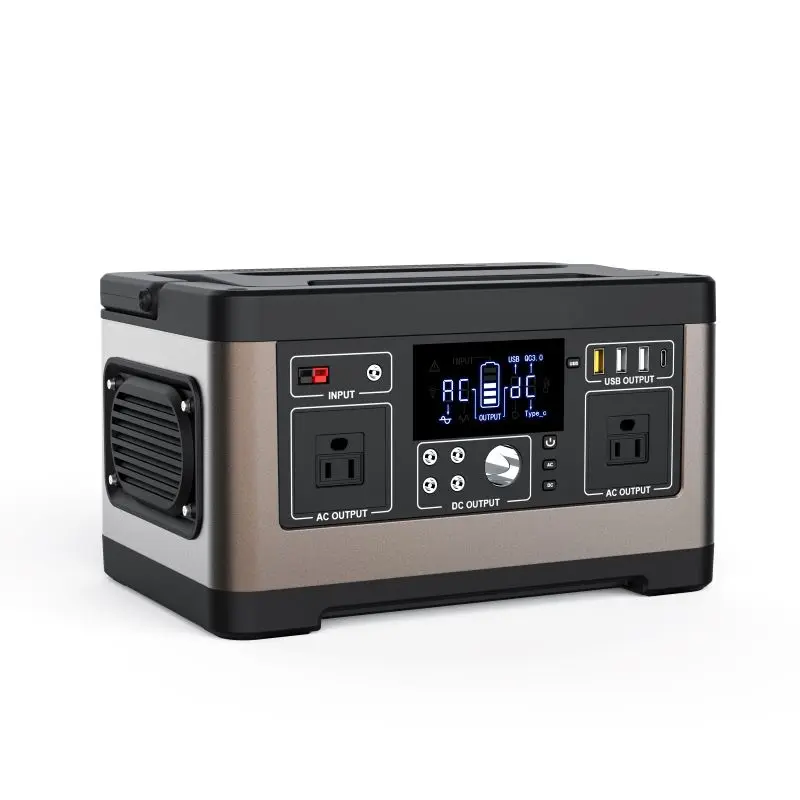
Modern models, such as the Portable Solar Energy Power Station AC 220V 500W 499Wh, often combine several functions: a direct backup power source, an LED flashlight for emergency lighting, and a powerful power bank for charging even laptops. This makes them versatile helpers not only at home but also at the dacha, during camping, or while traveling.
Key selection parameters: power, capacity, and outputs
Before deciding which power station to choose, it is necessary to clearly understand the two most important technical parameters: the inverter's rated power (in watts, W) and the battery capacity (in watt-hours, Wh). They directly determine the device's capabilities.
Power (W) determines which devices you can connect.
For example, a station with 500W power can ensure the operation of the following devices: a laptop (50-100W), smartphone charging (10-20W), an LED TV (50-100W), a small refrigerator (100-200W), or a desk lamp. It is important to sum up the power of all simultaneously connected devices — it should not exceed the station's rated power. For devices with high starting currents (e.g., refrigerators, pumps), a power reserve is needed.
Capacity (Wh) shows how long the station can power your devices. A capacity of 499Wh means that theoretically it can power a 100W device for about 5 hours (499Wh / 100W ≈ 5 hours). In practice, the time is slightly less due to inverter losses. For backup power for the home for a few hours, this capacity is sufficient to support the operation of basic communication systems and lighting.
Additional features and capabilities for home use
In addition to basic characteristics, when choosing a portable power station for autonomous power at home, it is worth paying attention to additional options that enhance convenience and safety.
- Battery type: Lithium iron phosphate (LiFePO4) batteries are considered the most modern and safest. They have a longer lifespan (over 3000 cycles), are resistant to overheating, and have virtually no memory effect. This is important for a device that will be used and stored regularly.
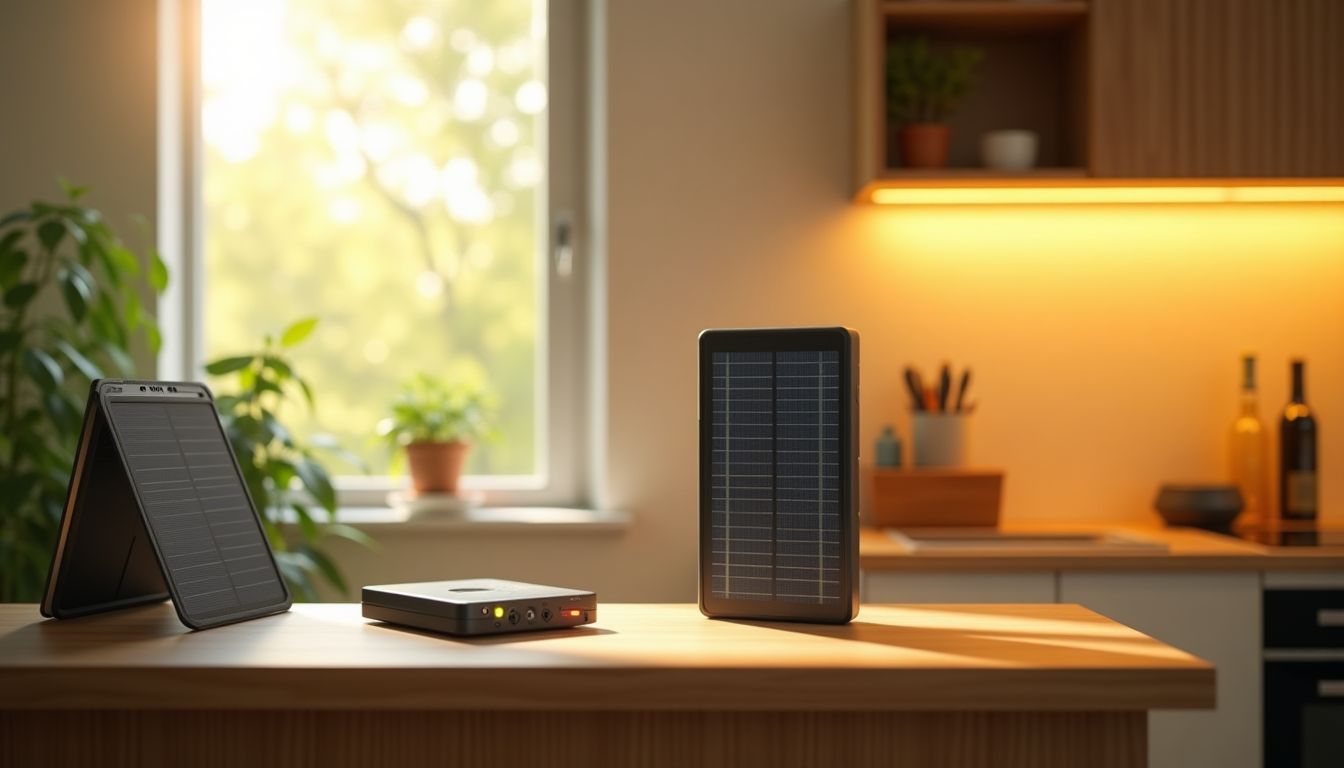
- Charging methods: An ideal station supports several methods: from a 220V grid (fastest), from a 12V car cigarette lighter (for travel), and from solar panels (for full autonomy). The presence of an input for solar panels makes the device a truly independent energy source.
- Set of outputs: For home use, standard 220V outlets (~2 pcs.), several USB ports (including fast USB-C PD for laptops), and possibly a DC output are essential. A built-in LED flashlight, like in the Emergency LED Flashlight model, is a very useful additional function during dark hours or during a complete blackout.
Portable station as the foundation of uninterruptible power supply for the home
To create an effective backup power system, it is not enough to simply buy a powerful power bank for the home. It is important to integrate it correctly into the home infrastructure. First, make a list of the most critical devices that must work during an outage: lighting, communication tools (router, phone), refrigerator (to preserve food), possibly a water supply pump.
Calculate the required total power and autonomous runtime. For short outages (2-4 hours), a medium-capacity station like the 499Wh will suffice. For longer periods, you need to either choose a model with a larger capacity or have the ability to quickly recharge the station from solar panels. Place the station in an easily accessible, dry location, and run extension cords from it to key consumption points.
Regular inspection and maintenance of the station is the key to its readiness.
Even if there have been no outages for a long time, it is recommended to fully discharge and then fully charge the station's battery every 3-6 months. This maintains its "health." Also, monitor the charge indicators and do not allow a complete long-term discharge to zero.
Comparison with other backup power sources
A portable power station is not the only option for ensuring autonomy. It is often compared to fuel generators and UPS (uninterruptible power supplies). Each solution has its advantages.
Fuel generators (gasoline, gas) can provide very long runtime and high power, but they are noisy, require fuel and ventilation, and cannot be used indoors. Classic UPS for computers have very small capacity (designed for minutes of operation) and are not suitable for powering household appliances for hours.
A portable power station occupies the sweet spot. It provides quiet, environmentally friendly, and safe backup power for the home for several hours, enough to ride out most emergency situations. It can be easily moved, used outdoors or in a room, and thanks to solar panels, its charge can be replenished even without the central grid. This is the optimal choice for an urban apartment building, a dacha, or a country cottage.
Conclusion:
Choosing a portable power station for backup power is an investment in the peace of mind and safety of your family. Focus on power (at least 500W for basic needs) and capacity (from 500Wh for several hours of autonomy), the availability of necessary outputs, and the ability to charge from solar panels for maximum independence.
Models like the Portable Solar Energy Power Station AC 220V 500W 499Wh, which combine sufficient characteristics, a flashlight function, and an affordable price, are an excellent start for creating your own uninterruptible power supply system for the home. They give you control over the situation and guarantee that your home will remain a haven of comfort even during external power supply disruptions.