Choosing between a balance board and a gyroscooter for a teenager often becomes a real challenge for parents. Both devices belong to the category of children's electric transport, but they have fundamentally different movement mechanics, safety levels, and usage scenarios. The ComfortShop editorial team analyzed the key characteristics of both gadgets to help you understand what is better — a balance board or a gyroscooter — specifically for your child. In this material, we will examine design differences, age restrictions, practicality, and operational nuances.
Article contents
What a balance board is and how it works
A balance board for a teenager is a two-wheeled electric device consisting of two platforms connected by a central hinge mechanism. Control is achieved by shifting body weight and tilting the feet: each leg controls a separate wheel independently. This design allows for sharp turns, spinning in place, and maneuvering in a fairly limited space.
Unlike a classic gyroscooter with a solid platform and a steering column, a balance board has no additional elements. This makes it more compact and lighter, but at the same time it requires better movement coordination. Based on an analysis of characteristics, ComfortShop recommends considering a balance board for children aged 10-12 who already have basic experience riding a skateboard, rollerblades, or scooter.
It is important to understand that a balance board is primarily a device for active leisure and entertainment. It develops the vestibular system, improves reaction, and teaches how to maintain balance in dynamic conditions. However, for long rides around the city it is less suitable than a gyroscooter due to lower stability on uneven surfaces.
Gyroscooter for a teenager: stability and predictability
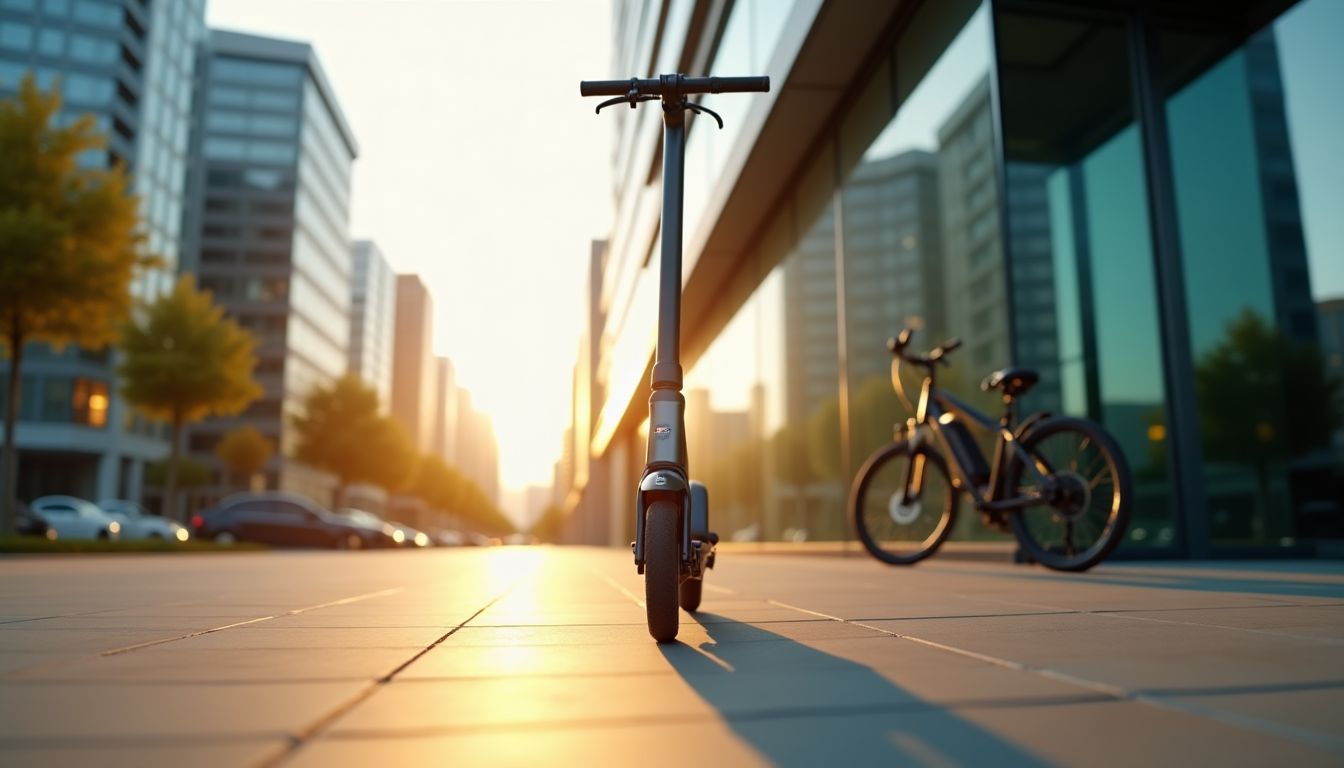
A gyroscooter for a teenager is a more traditional format of personal electric transport with two wheels, a foot platform, and a vertical steering column. It is the presence of the handlebar that makes it significantly easier to master: the child holds onto the steering wheel, which provides an additional point of support and psychological comfort during the first rides.
The design of a gyroscooter provides smoother and more predictable control. Tilting the body forward or backward combined with turning the steering column allows maneuvers without sharp leg movements. This is especially relevant for teenagers who are just getting acquainted with electric transport and do not yet have sufficient confidence in their own abilities.
After analyzing open sources, the ComfortShop editorial team notes that gyroscooters are more often equipped with wider wheels and more powerful motors. This allows them to be used not only on smooth asphalt but also on dirt paths or sidewalk tiles with minor unevenness. For a teenager who plans to ride to school or training, this option may prove more practical.

Key differences in control and safety
When the question arises of what is better — a balance board or a gyroscooter — first of all it is worth assessing the child's level of physical fitness. A balance board requires constant concentration and active work of the leg and core muscles. The slightest shift in the center of gravity changes the trajectory of movement, so a beginner may need several weeks of regular training for confident riding.
A gyroscooter is significantly more forgiving in this regard. The steering column allows you to maintain balance even at low speed or while stopping. The risk of falling during learning is significantly lower, which makes a gyroscooter a better choice for children without prior experience riding similar devices.
However, the reverse side should also be considered: a balance board, thanks to its maneuverability, allows for faster reaction to obstacles. A teenager can instantly change direction or jump off the device, whereas a gyroscooter with a steering column requires more space to maneuver. For riding in a courtyard or park with a large number of people, a balance board may be more convenient.
Practicality, weight, and transportation
A balance board for a teenager usually weighs from 7 to 10 kilograms, which allows it to be carried by hand or placed in a backpack without much effort. Its compact dimensions make it possible to take the device on public transport, bring it to school or a cafe without unnecessary inconvenience. This is an important argument for urban teenagers who actively move between different locations.
A gyroscooter is heavier — from 10 to 14 kilograms depending on the model and battery capacity. It is more difficult to transport, especially if you have to climb stairs or use the subway. At the same time, greater weight often means a more powerful motor and better off-road capability, which can be a decisive factor for teenagers living in a private sector or planning to ride outside the city.
As for maintenance, both types of devices require regular tire inflation, battery checks, and cleaning from dirt. However, due to the more complex mechanics of the central hinge, a balance board may require more frequent technical inspection. Before buying a gyroscooter for a teenager or a balance board, it is worth checking the availability of service centers in your city.
Age restrictions and selection recommendations
Manufacturers usually recommend a gyroscooter for children aged 7-8 and older, while a balance board — from 10-12 years old. This is related not only to the child's physical capabilities but also to the level of development of coordination and sense of balance. Younger teenagers who have no experience riding similar devices are better off starting with a gyroscooter.
For older teenagers who already feel confident on a skateboard, rollerblades, or scooter, a balance board can become a more interesting challenge. It allows performing tricks, sharp turns, and developing higher maneuverability. However, it is worth remembering that falls from a balance board occur more often, so a protective helmet and elbow and knee pads are mandatory.
According to the recommendation of the ComfortShop editorial team, when choosing, one should focus not only on age but also on the child's temperament. Active teenagers who love speed and maneuvers will be better suited by a balance board. Calmer children for whom stability and comfort are important should better opt for a gyroscooter. Both options have a right to exist, and the final decision depends on individual preferences.
Conclusion:
A gyroscooter for a teenager is stability, ease of mastering, and predictability, while a balance board is maneuverability, compactness, and a challenge for those who already have riding experience. When choosing between these two types of children's electric transport, consider age, physical fitness, and usage scenarios. Before purchasing, be sure to check the current price and delivery terms on the seller's website, since the ComfortShop editorial team does not control the pricing policy of third-party stores. A properly selected device will give a teenager many positive emotions and become a great way to enjoy active recreation.
Frequently asked questions
Which is safer for a teenager — a balance board or a gyroscooter?
A gyroscooter is usually more stable thanks to two wheels and a platform, while a balance board requires better coordination and balance. Choose based on the teenager's age and riding experience, and be sure to provide a helmet and protection.
From what age can a teenager ride a balance board?
Most manufacturers target balance boards at children aged 6–8 and older, but specific restrictions are indicated in the seller's instructions. Check the maximum load and recommended age in the product listing on the seller's website.
What is better to buy for a teenager for the city — a balance board or a gyroscooter?
For short rides on smooth asphalt, a gyroscooter is more convenient and faster, while a balance board is more compact and more interesting for active riding. The ComfortShop editorial team advises considering road quality, device weight, and local legislation rules.
How much does a gyroscooter for a teenager cost and what does the price depend on?
The price depends on power, wheel diameter, battery capacity, and brand, so check the current cost on the seller's or marketplace website. Delivery and warranty terms are also determined by the seller.