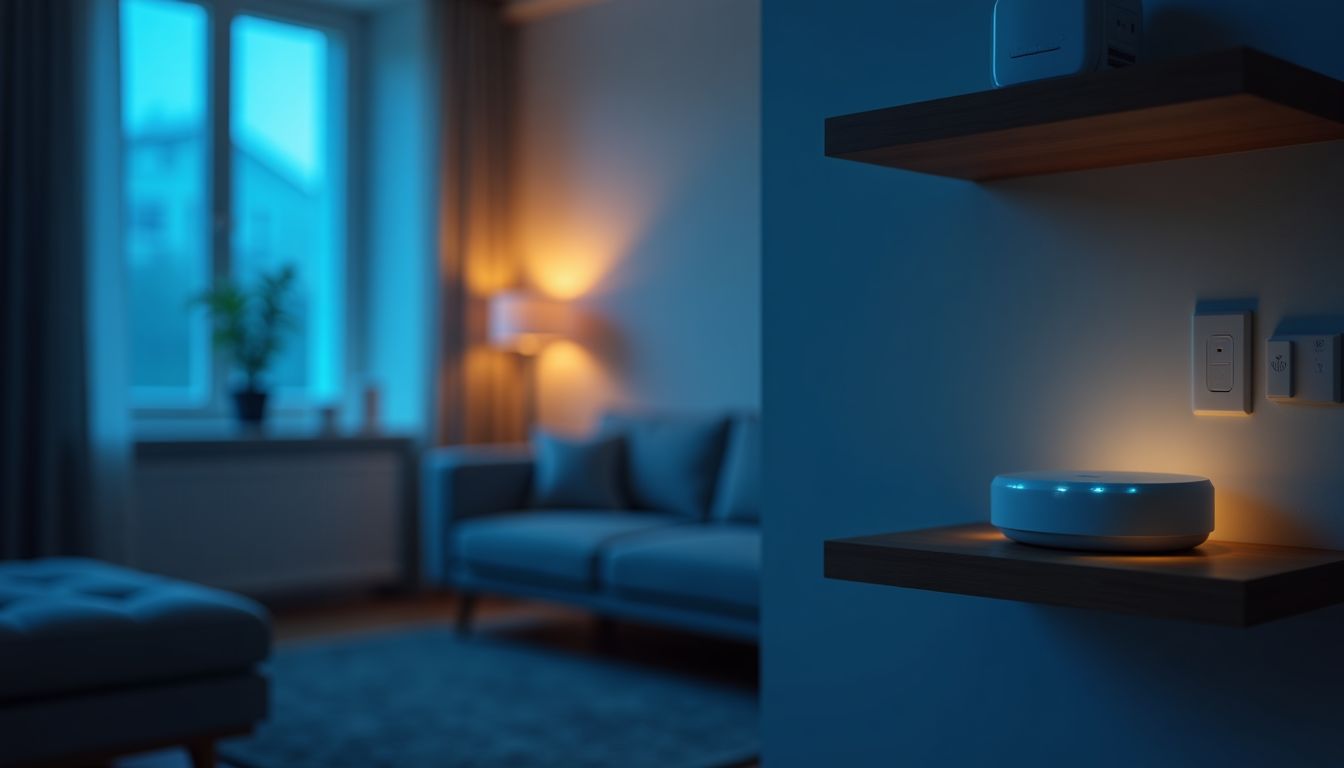
What a smart plug is and how it works
A smart plug with voice control has long ceased to be a novelty and has become one of the simplest ways to take the first step toward home automation. That is why the ComfortShop editorial team decided to analyze in detail how justified the purchase of such a device is, which functions are truly useful, and which are merely marketing promises. In this smart plug review, we rely on an analysis of open specifications, user reviews, and a comparison of popular models available on marketplaces. No hidden advertising claims — only facts that will help you make a balanced decision.
Table of Contents
What a smart plug is and how it works
A smart plug is a compact adapter that plugs into a regular household electrical outlet and allows you to remotely control connected appliances via a smartphone or voice assistant. The operation of most models is based on a Wi-Fi module, thanks to which the device synchronizes with the home network and receives commands from the proprietary app. The user can turn the power on or off, set timers, scenarios, and track energy consumption if the model supports monitoring.
Voice control of the plug is implemented through integration with Amazon Alexa, Google Assistant, Apple Siri, or local assistants, depending on the manufacturer. This means that for a basic scenario like "turn on the light" or "turn off the heater," you don't even need to pick up your phone. After analyzing open sources, the ComfortShop editorial team notes that it is the stability of the Wi-Fi connection and compatibility with a specific smart home ecosystem that are the decisive factors for the convenience of daily use.
Key specifications to pay attention to
Before buying a smart plug, you should determine exactly what tasks it needs to perform. For controlling lighting, a basic model with Wi-Fi and voice assistant support is sufficient. For heaters, air conditioners, or boilers, the maximum load power becomes critically important, usually 10 A or 16 A. Exceeding this value can lead to overheating and device failure.
Special attention should be paid to the presence of an energy consumption monitoring function. It allows you not only to remotely turn off appliances but also to analyze how much electricity they consume in different modes. This is especially useful for those seeking to optimize utility costs. Support for the 2.4 GHz Wi-Fi standard is also important, since most budget smart plugs do not work on 5 GHz networks.
Voice control of the plug: what actually works.

Practical user experience shows that the most convenient voice control is implemented in models that support multiple ecosystems simultaneously. For example, a Wi-Fi smart plug with voice control compatible with both Google Home and Alexa gives more freedom in choosing control devices. The speed of response to a voice command depends on the quality of the internet connection and the distance to the manufacturer's servers, so before buying, you should check reviews for the specific model.
Popular use cases in a smart home
A smart home plug is most often used for automating lighting, especially when it comes to floor lamps, string lights, or fixtures without their own smart module. By setting a schedule, you can simulate the presence of people in the home during vacation, which improves security. Another popular scenario is controlling heaters and humidifiers, which consume a significant amount of electricity.
Using a smart plug for charging gadgets is no less useful. Many users set a timer to turn off the charger after a certain time to avoid overheating the battery. Smart plugs are also often used to control coffee makers, kettles, and other appliances that can be prepared for operation in advance. According to the recommendation of the ComfortShop editorial team, it is best to start getting acquainted with automation with just one or two such devices to evaluate the real convenience without significant expense.
Advantages and limitations of smart plugs
The main advantage of a smart plug is the simplicity of installation and setup. Unlike built-in smart switches, there is no need to interfere with the wiring or call an electrician. It is enough to plug the device into an outlet, download the app, and complete a few synchronization steps. This makes the smart plug we are reviewing accessible even to users without technical experience.
At the same time, limitations should also be taken into account. Most budget models do not support operation with appliances that have high inrush currents, such as powerful pumps or compressors. Smart plugs also depend on a stable Wi-Fi signal, so in rooms with weak coverage, delays in executing commands are possible. In addition, some manufacturers require creating an account and transmitting data to their own servers, which may be undesirable for users who care about privacy.
What to pay attention to before buying
When buying a smart plug, you should check compatibility with your smart home ecosystem. If you already use Apple HomeKit devices, choose models with the appropriate certification. For Android users, the most universal option will be support for Google Assistant and Amazon Alexa. Also pay attention to the physical size of the device: some models are so wide that they block neighboring outlets in a power strip.
Price and quality: how to find a balance.
The cost of smart plugs varies from a few hundred to a few thousand hryvnias depending on the brand, functionality, and build quality. The most expensive models usually offer advanced monitoring capabilities, support for Zigbee or Z-Wave protocols, and better overload protection. However, for most household tasks, the mid-price segment is sufficient. Check the price on the seller's website to compare current offers and choose the optimal option.
Висновок:
A smart plug with voice control is a practical and inexpensive way to automate household processes without complex installation. It is suitable for controlling lighting, heaters, chargers, and other appliances, while voice assistants make interaction as convenient as possible. Based on the analysis of specifications, ComfortShop recommends choosing models with support for multiple ecosystems, an energy consumption monitoring function, and sufficient power reserve. Before purchasing, carefully compare the specifications and go to the seller to check the current terms.
Frequently Asked Questions
Do I need a separate hub for a smart plug with voice control?
In most cases, no — most models connect directly to 2.4 GHz Wi-Fi and work through the seller's proprietary app. A hub may only be needed for compatibility with certain ecosystems, so check this in the description of the specific model.
Which voice assistants is such a plug compatible with?
Most often these are Amazon Alexa and Google Assistant, less often Apple HomeKit and Siri. Before buying, you should verify the list of supported assistants in the product listing on the seller's website, as it differs even within the same product line.
Can a smart plug handle a heater or another high-power appliance?
This depends on the maximum load of the specific model — usually 10 A or 16 A, which corresponds to approximately 2.2 kW or 3.5 kW. The ComfortShop editorial team advises checking this parameter against the appliance's power in the seller's specifications to avoid overloading.
Where to buy a smart plug with voice control and how much does it cost?
ComfortShop does not sell products — we only publish reviews with affiliate links to marketplaces and sellers. For the current price, availability, delivery terms, and warranty, please check directly on the seller's page by following the link from the article.