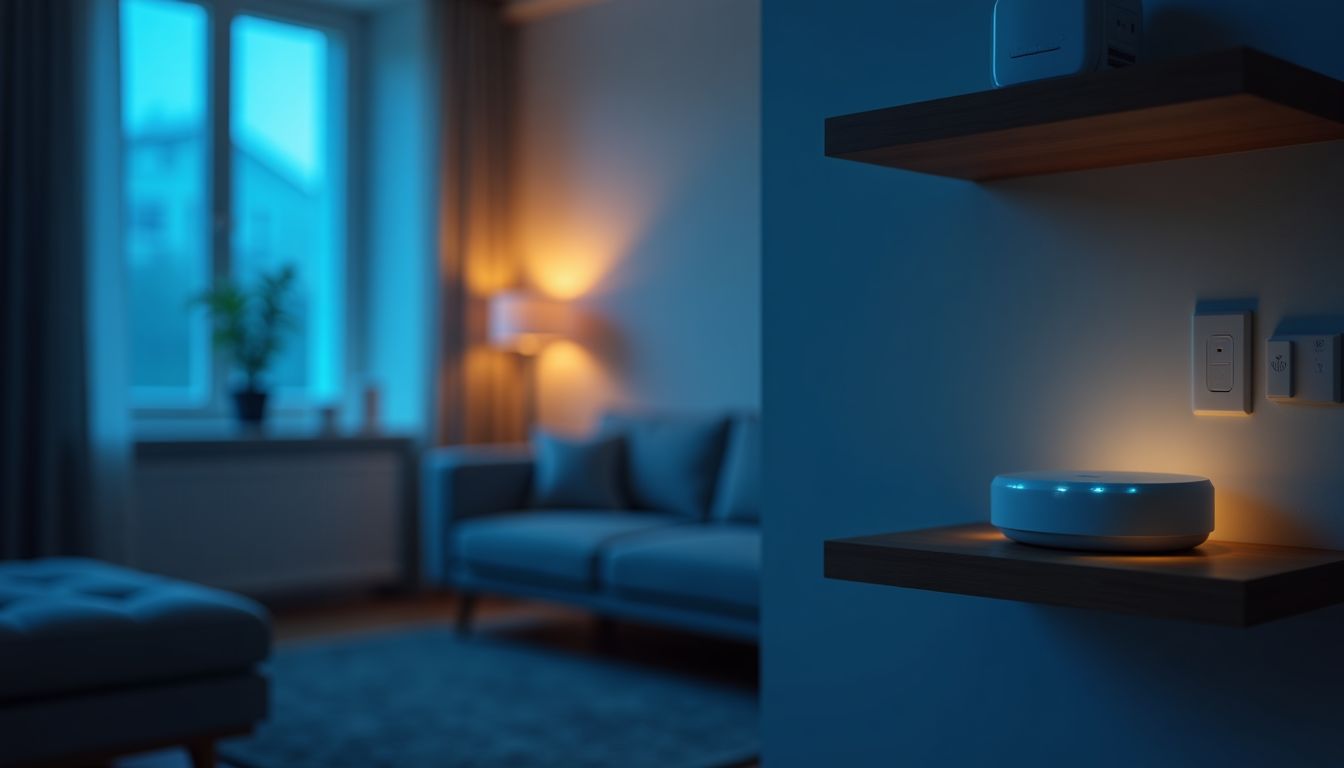
Why home air monitoring is needed
Indoor air quality directly affects well-being, concentration, and sleep quality. Excessive amounts of carbon dioxide, dust, or volatile organic compounds often go unnoticed, because human senses are unable to detect them. That is why home air quality sensors are becoming an increasingly popular element of modern housing. The ComfortShop editorial team analyzed the open specifications of the most common models to help you choose the optimal device for monitoring.
Table of Contents
A person spends up to 90% of their time indoors, so the concentration of pollutants in a room is often higher than outside. Sources of problems include particleboard furniture, carpeting, household chemicals, gas stoves, and even the ordinary breathing of residents. Without objective measurements, it is impossible to understand when exactly a room needs to be ventilated or an air purifier turned on.
A modern smart home air sensor is regarded as a basic element of a microclimate control system. The device not only records current readings but also helps identify patterns: for example, how CO2 levels change at night with windows closed. Such information allows you to build a proper ventilation schedule without unnecessary heat loss during the cold season.
According to the recommendation of the ComfortShop editorial team, you should start by identifying the main problem of your home. If the apartment is stuffy in the morning, a CO2 sensor for the home will be the priority. If residents suffer from allergies, monitoring fine particulate matter PM2.5 and PM10 will be more important.
What parameters modern sensors measure
Before moving on to a comparison of air quality sensors, it is worth understanding exactly which indicators these devices can record. The most common parameter is the concentration of carbon dioxide, measured in parts per million. A CO2 level above 1000 ppm usually indicates insufficient ventilation and can cause headaches and reduced performance.
The second important parameter is solid particles PM1.0, PM2.5, and PM10. They enter the air from street dust, during cooking, from candles, or from a printer operating. Fine particles are able to penetrate deep into the respiratory tract, so monitoring them is especially relevant for allergy sufferers and people with chronic lung diseases.
Additionally, sensors can measure volatile organic compounds, temperature, relative humidity, and atmospheric pressure. Having several sensors at once in a single housing makes the device a universal tool for assessing the overall state of the microclimate.
Types of sensors by CO2 measurement principle
The key criterion when choosing is the technology on which the carbon dioxide sensor operates. The most accurate are considered to be home air quality sensors with an optical measurement principle known as NDIR. They use infrared radiation to determine CO2 concentration and are capable of operating continuously for many years without significant loss of accuracy.
Budget models are often equipped with electrochemical or semiconductor sensors. They are cheaper to manufacture, but have a shorter service life and may produce errors under the influence of temperature or humidity. For household use, such accuracy is sometimes sufficient, but for continuous monitoring it is better to choose NDIR models.
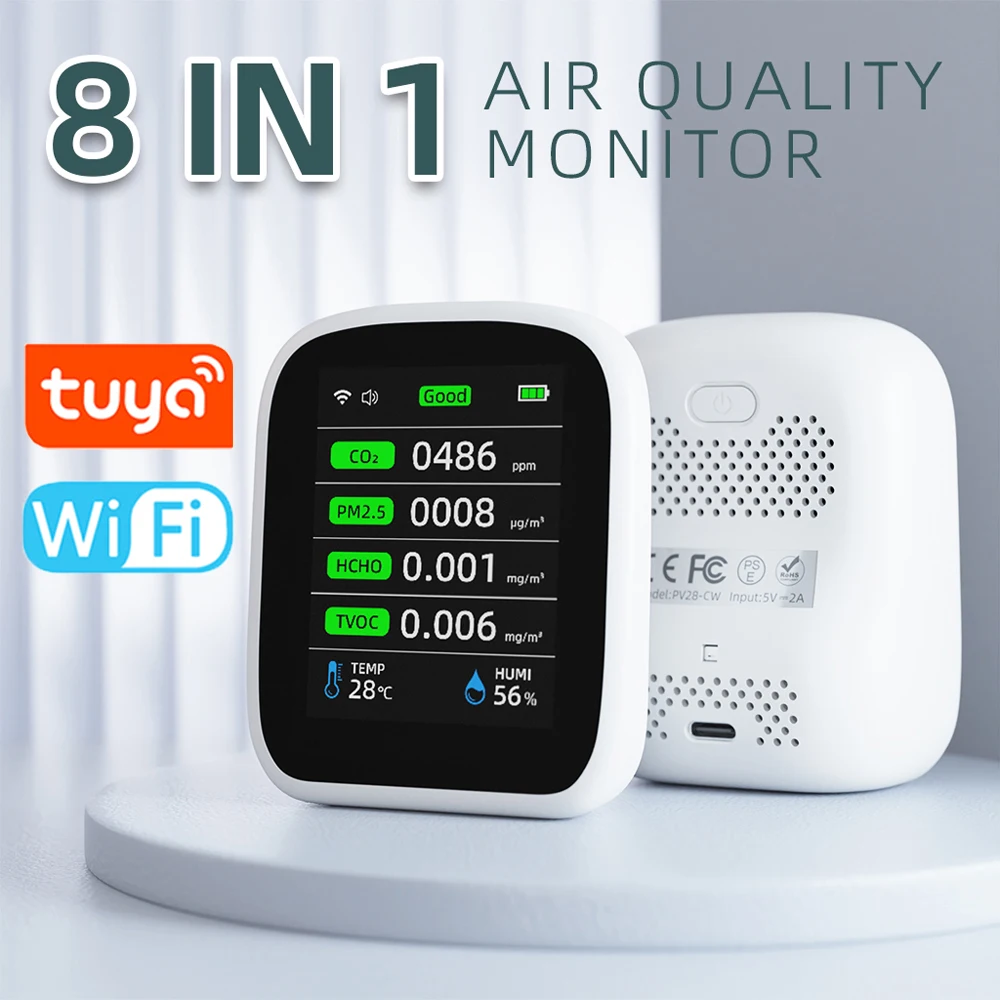
After analyzing open sources, the ComfortShop editorial team notes that even among affordable devices there are models with optical sensors. Therefore, you should not focus on price alone — it is important to check the type of installed sensor in the specifications on the seller's website.
Comparison of popular models
The market offers dozens of solutions — from minimalist devices with a single sensor to multifunctional stations. Conventionally, all devices can be divided into three categories: standalone indicators, models with a display, and smart devices with integration into home automation systems.
Standalone indicators usually do not have a screen, but signal deteriorating air quality with a light or sound signal. They are compact, consume minimal energy, and require no setup. However, this format is not suitable for detailed analysis of the dynamics of readings.
Models with a display allow you to see current values without a smartphone. They are convenient for older people or those who do not want to depend on a mobile app. At the same time, smart devices with Wi-Fi or Bluetooth open up much broader possibilities: measurement history, graphs, phone notifications, and even automatic ventilation control.
What to consider before buying
When comparing air quality sensors, pay attention to the following characteristics:
- Type of CO2 sensor — preference should be given to NDIR technology.
- Set of measured parameters — whether you need PM2.5, volatile organic compounds, or only CO2.
- Power method — batteries, rechargeable battery, or permanently from the mains.
- Presence of a display — for quickly viewing readings without a smartphone.
- Smart home integration — support for Wi-Fi, Bluetooth, Apple HomeKit, Google Home.
- Accuracy and measurement range — as specified in the manufacturer's technical documentation.
Separately, it is worth checking whether the device requires regular calibration. Some models require periodic exposure to fresh air to correct readings, which can be inconvenient in everyday use.
CO2 sensor for the home: practical scenarios
The most common use scenario is monitoring carbon dioxide in the bedroom and children's room. At night with windows closed, CO2 levels can rise to 2000–3000 ppm, which leads to difficulty waking up and a feeling of fatigue in the morning. A CO2 sensor for the home will promptly tell you when the room needs to be ventilated.
Another practical scenario is monitoring air during cooking. Gas stoves and ovens emit combustion products, and frying in oil adds fine particulate matter. A sensor with a PM2.5 detector will help determine when to turn on the extractor hood at maximum power or open a window.

Owners of ventilation systems with heat recovery can integrate the sensor into the overall smart home system. In this case, the device will automatically increase fan speed when a set CO2 threshold is exceeded, ensuring comfort without manual intervention.
What to look for when choosing
First of all, determine which pollutants are the priority for your home. If you live near a busy road, the emphasis should be on solid particle sensors. If the apartment has modern sealed windows, the accuracy of CO2 measurement will become the main criterion.
Pay attention to the convenience of the mobile app if you are choosing a smart model. The interface should be intuitive, with the ability to set threshold values and view measurement history over a long period. Some manufacturers offer a web version for viewing data from a computer, which is sometimes more convenient than a mobile app.
Based on the analysis of characteristics, ComfortShop recommends paying attention to user reviews about the stability of sensor operation in the long term. You can check the current price and availability of the chosen model on the seller's website via the affiliate link.
Conclusion:
The choice of a home air quality sensor depends on the specific needs of the residents and the characteristics of the premises. For most users, the optimal solution will be a model with an NDIR CO2 sensor, additional PM2.5 measurement, and Wi-Fi support for remote monitoring. Before buying, it is worth checking the specifications, measurement accuracy, and compatibility with your smart home system on the seller's website. The ComfortShop editorial team advises choosing devices with software update capability, as manufacturers often add new functions and improve data processing algorithms.
Frequently asked questions
Which home air quality sensors should be compared first?
Most often, models measuring CO2, PM2.5, volatile organic compounds (TVOC), temperature, and humidity are compared, since these indicators have the greatest impact on well-being. For basic monitoring, a device with CO2 and PM2.5 is sufficient, while for comprehensive control — one with a full set of sensors.
How do home CO2 sensors differ by sensor type?
The most accurate models use NDIR sensors, while cheaper devices often use eCO2 — a calculated indicator based on TVOC, which is less accurate. If you need reliable figures for ventilation, choose a device specifically with an NDIR sensor.
Can an air sensor be connected to a smart home?
Yes, many modern models support Wi-Fi, Zigbee, Matter, or integration with apps such as Home Assistant, Apple Home, or Google Home. This allows you to automate ventilation, turning on a purifier or humidifier based on sensor readings.
Where can I check the price and delivery terms for a specific air sensor?
The ComfortShop editorial team compares characteristics and provides approximate prices, but the current cost, availability, delivery, and warranty are determined by the seller or marketplace. Check these terms directly on the seller's page before purchasing.