Solar Panel Charge Controller: The "Brain" of an Off-Grid System
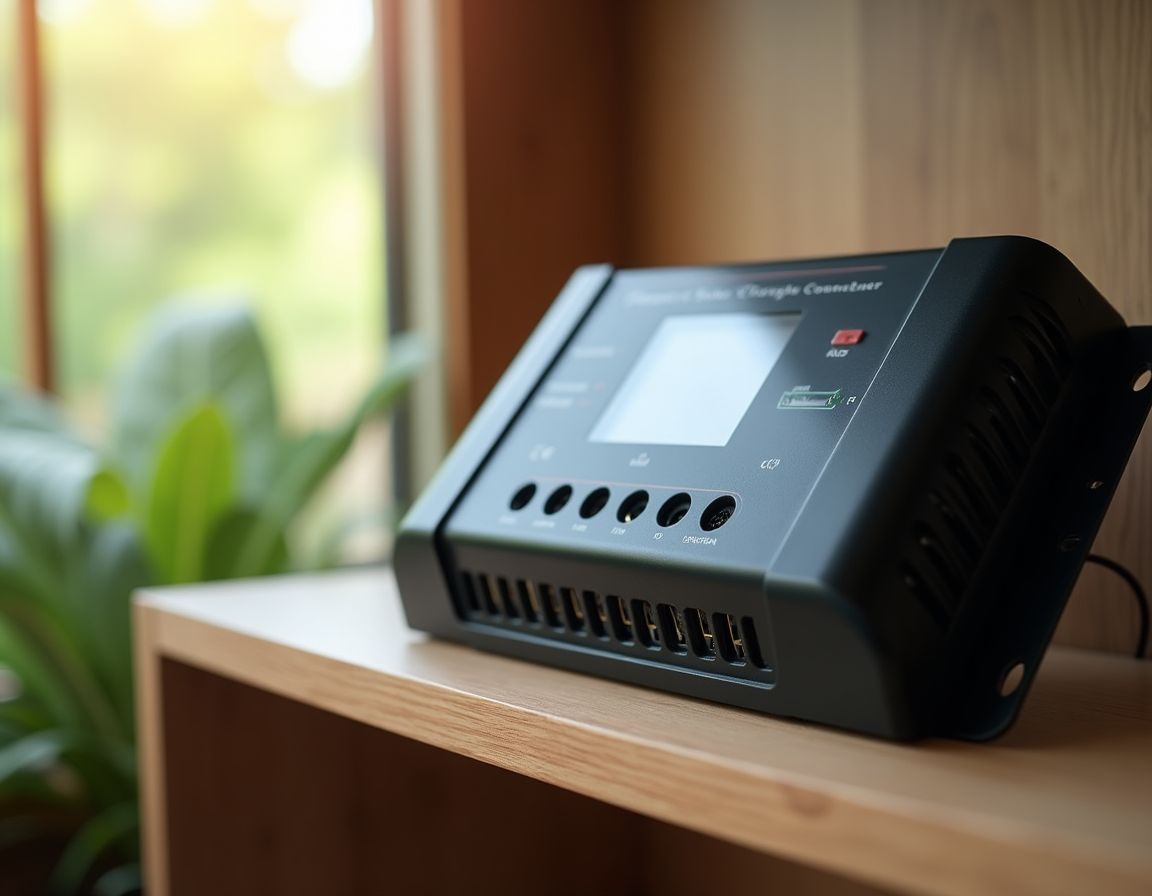
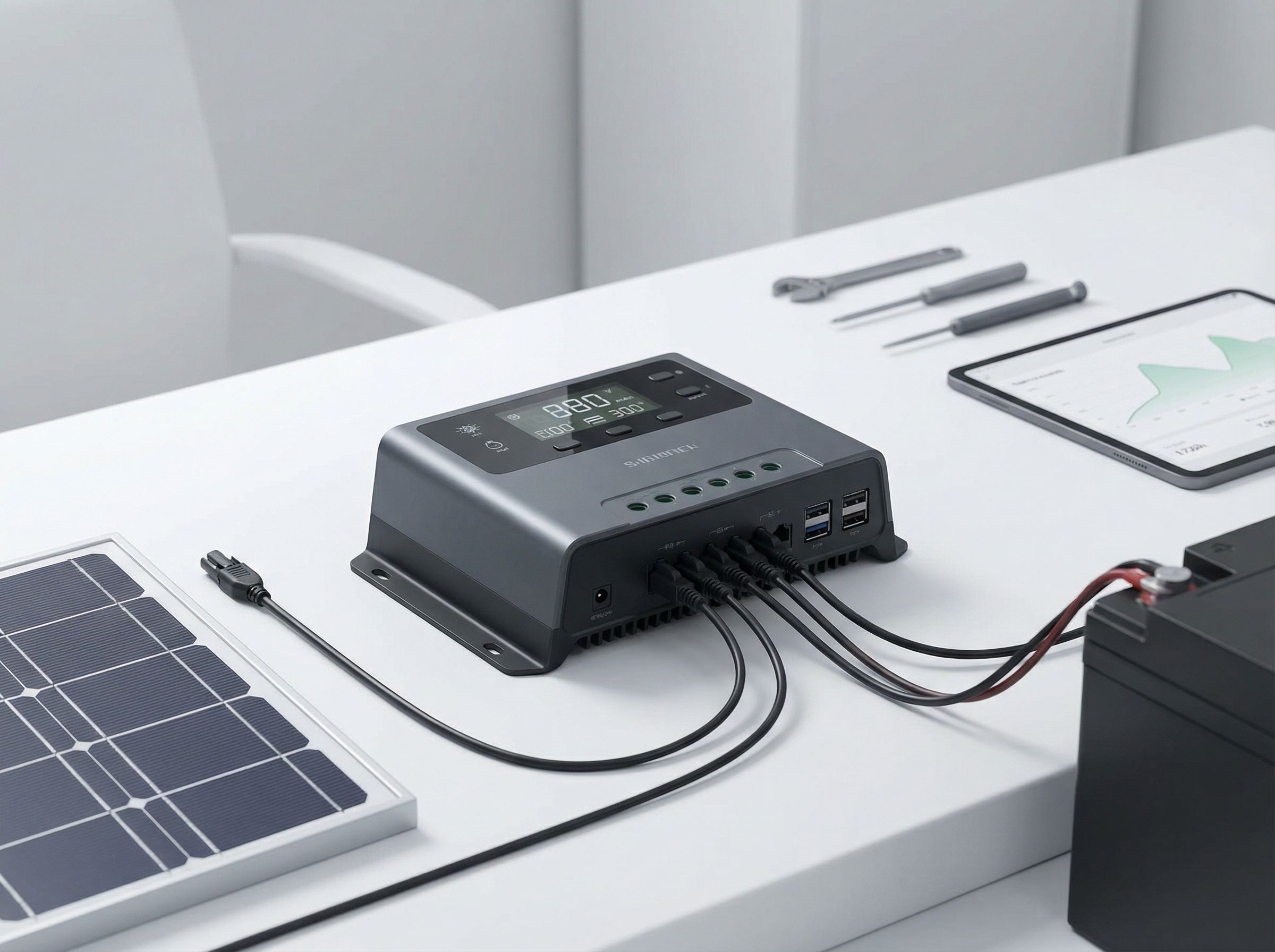
Building a backup or off-grid solar power system is not just about buying panels and batteries. It's about assembling a harmonious tandem where each element performs a vital function. And if solar panels are the "heart" of the system, generating energy, and batteries are its "storage," then the solar panel charge controller is undoubtedly the "brain." It is this small device that guards the efficiency, safety, and longevity of your entire investment. This is especially critical for backup power systems, which must operate flawlessly when needed most.
Why Do You Need a Controller? More Than Just a Regulator
Many mistakenly believe that the main task of a controller is only to prevent battery overcharging. That's just the tip of the iceberg. A quality solar battery controller performs a whole range of functions:
- Charging Current Optimization: Converts the voltage from the panel (which is often much higher than what the battery requires) into the optimal voltage for a specific charging stage.
- Deep Discharge Protection: Disconnects the load when the battery voltage drops to a critical level, preventing irreversible battery damage.
- Multi-Stage Charging: Uses intelligent algorithms (bulk charge, absorption, equalization, float) that significantly extend battery life.
- Reverse Current Protection at Night: Blocks battery discharge through the solar panels when the sun isn't shining.
- Monitoring and Indication: Provides information on voltage, charging current, charge level, and system errors.
For backup power, which often relies on expensive lead-acid or lithium iron phosphate (LiFePO4) batteries, these functions are not just useful but essential.
Types of Charge Controllers: From Simple to Intelligent
The choice of controller type directly affects the overall system efficiency and battery charging speed, which is critical when panel space is limited.
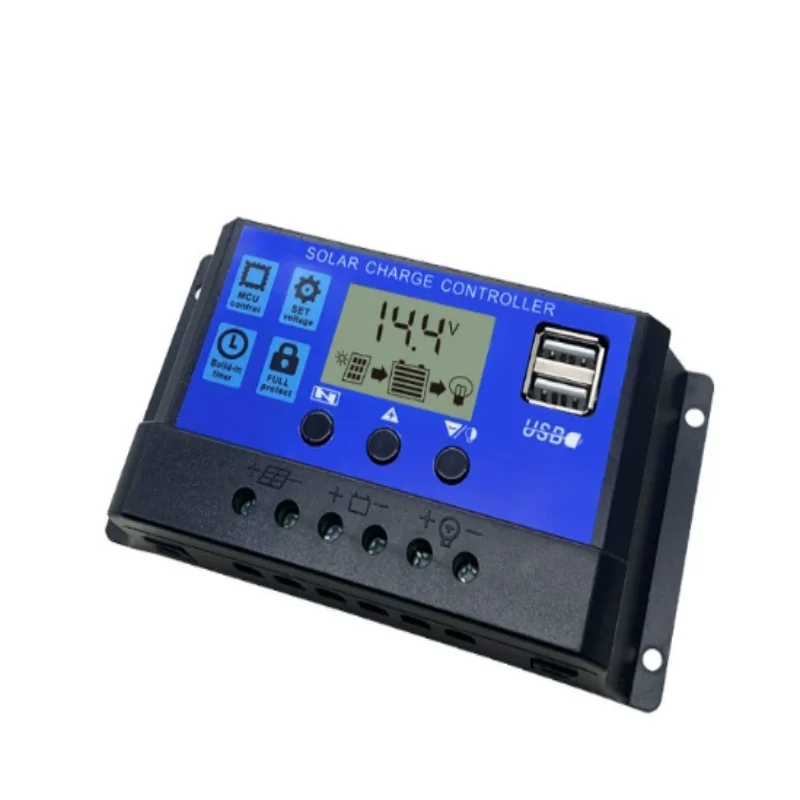
PWM Controllers: Affordability and Simplicity.
PWM Controllers
These are classic and affordable devices. They operate on the principle of pulse-width modulation, essentially connecting and disconnecting the panel from the battery at a high frequency, thereby regulating the average charging current. Their advantages are low cost and reliability. However, there is a significant drawback: they do not optimize the solar panel's operation at maximum power. A PWM controller "pulls" the panel voltage down to the battery voltage, causing a portion of the potential power to be simply lost. This is an acceptable choice for small systems (up to 200-300W) with undemanding lead-acid batteries.
MPPT Controllers: Maximum Efficiency in Any Conditions.
MPPT Controllers
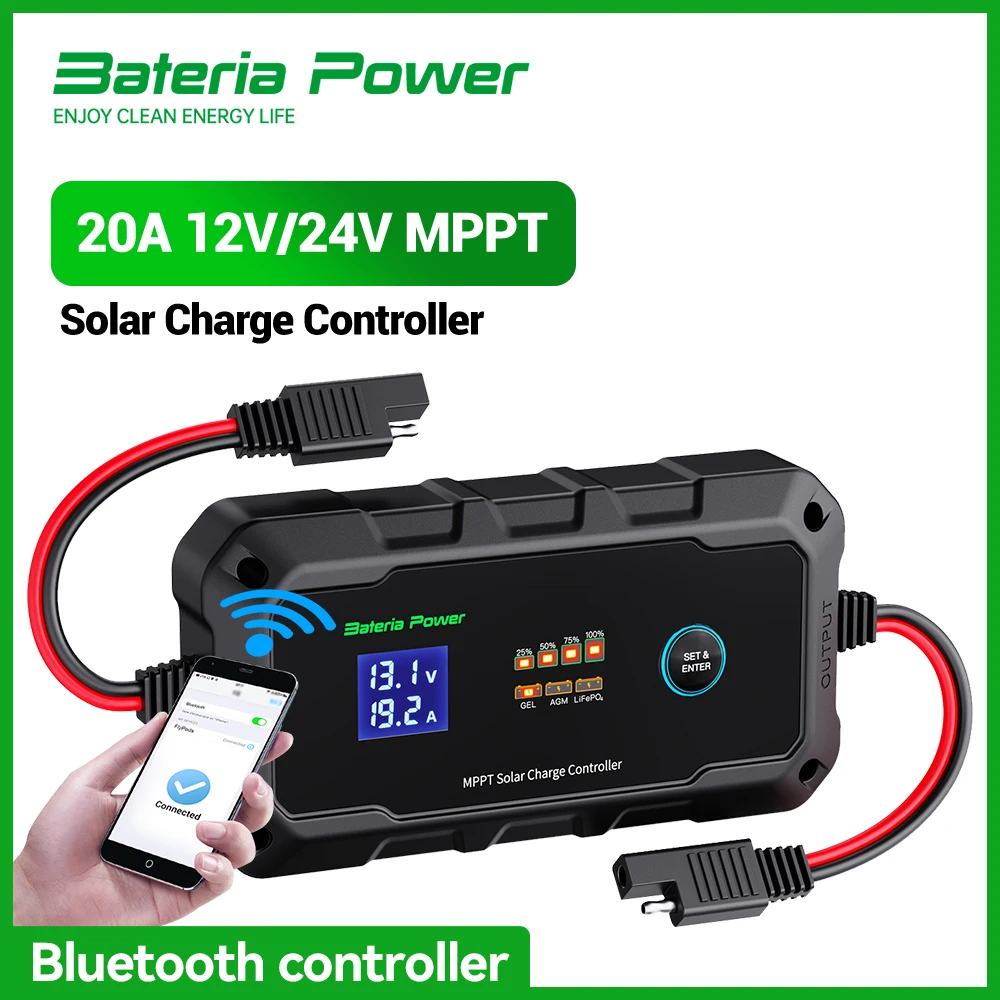
This is the next step in evolution. An MPPT charge controller (Maximum Power Point Tracking) is a true efficiency seeker. It constantly scans the solar panel's voltage-current characteristic, finding the combination of voltage and current that yields maximum power output. It then converts this power, lowering the voltage and increasing the output charging current to perfectly match the battery's needs.
The key advantage of MPPT is a 15-30% increase in system efficiency compared to PWM, especially in low light conditions, cloud cover, or low temperatures. For backup power systems, where you need to restore battery charge as quickly as possible after a grid outage or during a limited solar day, MPPT technology is the best choice, despite its higher cost.
Features of Choosing a Controller for a Backup Power System
A system designed for critical loads (lighting, security alarms, circulation pumps, communications, refrigerator) requires a particularly careful approach to controller selection.
1. Voltage and Current Compatibility
The controller voltage must match the nominal voltage of your battery bank (usually 12V, 24V, or 48V). The most important parameter is the maximum input current. It must exceed the short-circuit current (Isc) of your solar panel by at least 25%. Also, pay attention to the nominal charging current — it determines the maximum panel power you can connect.
2. Battery Type Support
Modern controllers must support charging profiles for different battery types: GEL, AGM, flooded lead-acid, and, increasingly, lithium batteries (LiFePO4). Each type has its own specific absorption and float voltage algorithms. An incorrect profile will shorten the lifespan of an expensive battery.
3. Telemetry and Communication Capabilities
For backup power, it is very important to be able to remotely monitor the system status. Look for controllers with built-in Wi-Fi, Bluetooth, or the ability to connect to a common bus (CAN, RS485). This allows you to check the charge level, energy production, and receive fault notifications via a phone app.
4. Environmental Protection and Reliability
The controller must have protection against moisture and dust (splash-proof housing), resistance to temperature fluctuations, and a quality cooling system (heatsink or active fan). Component reliability and manufacturer reputation are paramount here.
5. Additional Features for Backup Systems
- External Load Management: Availability of separate outputs for critical and non-critical loads with configurable disconnect thresholds.
- Hybrid Capabilities: Some models can integrate with a grid-tie inverter or have an additional input for connecting a wind turbine or other source.
- Data Logging: Recording operational parameters over an extended period for system efficiency analysis.
The solar panel charge controller is not an element to skimp on, especially when it comes to creating a reliable backup power system. Investing in a quality MPPT controller with the necessary set of functions will pay off significantly through increased efficiency, faster battery charge recovery, and, most importantly, a substantial extension of their service life. A properly selected "brain" for your system will give you peace of mind and confidence that, in a critical moment, your backup power will perform exactly as needed.