Modern life is hard to imagine without the constant operation of gadgets, household appliances, and lighting. But what to do when the power suddenly goes out due to a line accident, you are heading into nature, or simply need an autonomous energy source for work? Regular power banks won't help here – their capacity is only enough for smartphones. A modern solution comes to the rescue – a portable power station. This is a compact yet powerful device that can become a real lifesaver in many situations, providing electricity for both small electronics and some household appliances.
Portable power stations, sometimes called "power stations," are energy storage devices with a built-in inverter, outlets, USB ports, and often a solar panel for charging. They differ significantly from generators: they operate completely silently, require no fuel, and produce no exhaust fumes. Such a device becomes your universal second battery for the home, travel, camping, or outdoor work. In this article, we will take a detailed look at what a portable power station is, what to pay attention to when choosing one, and how to use it effectively.
? Table of Contents
What is a portable power station and how does it work
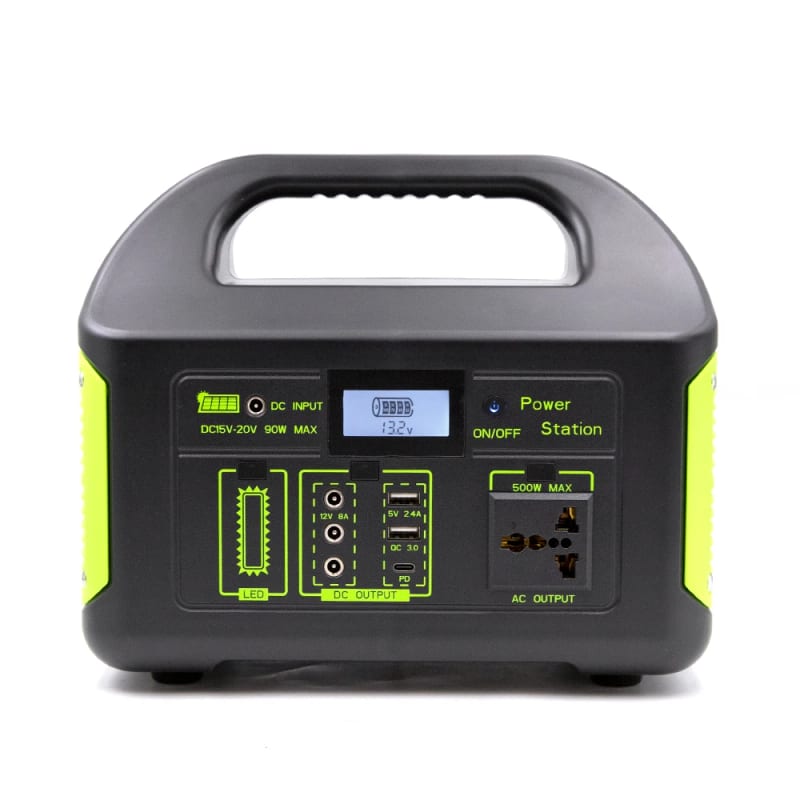
This is a high-capacity mobile battery with an inverter, providing independence from external grids.
A portable power station (Power Station) is essentially a huge high-capacity battery packed into a mobile casing with all the necessary outputs for connecting devices. Its heart is lithium-ion or, in more powerful models, LiFePO4 (lithium iron phosphate) batteries, which are known for their durability and safety. The built-in inverter converts the battery's direct current (DC) into alternating current (AC), which powers standard household appliances through 220V outlets.
You can charge the station itself in several ways: from a regular home outlet (the fastest method), from a car's cigarette lighter (12V), or using solar panels, which makes the system completely autonomous and eco-friendly. Thus, you store energy in advance and then use it where and when needed. This provides independence from external grids and gives confidence in critical situations.
Key characteristics when choosing: power, capacity, outputs
The choice is based on two main parameters: power for connecting appliances and capacity for runtime.
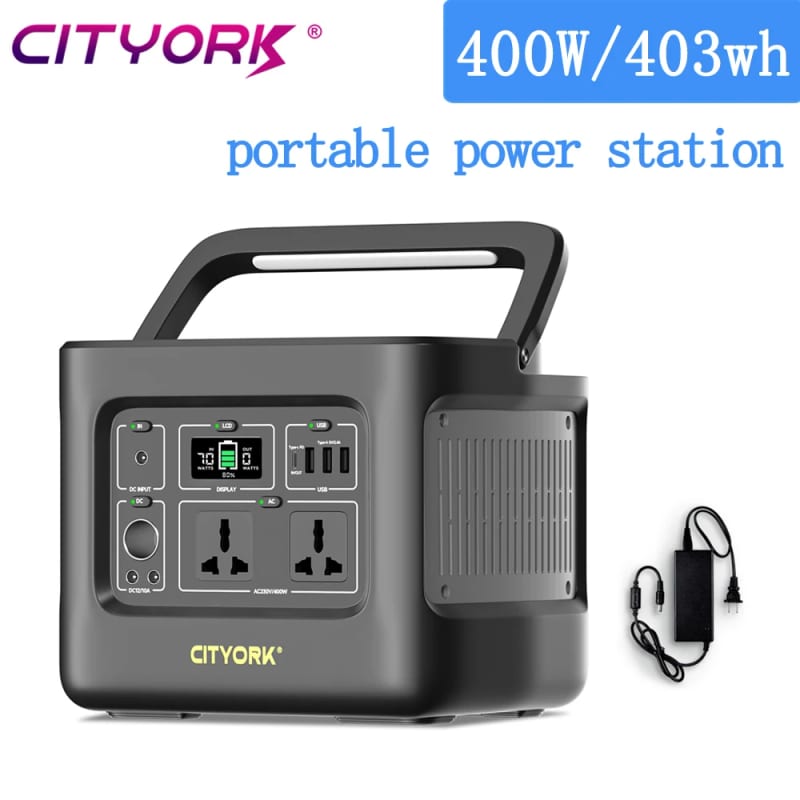
Choosing the right model starts with the two most important parameters: rated power (W) and battery capacity (Wh). Power determines which devices you can connect simultaneously. For example, for charging a laptop (50-100W) and an LED lamp (10W), a 300-500W station will suffice. But for running a refrigerator (starting power can reach 1000-1500W), you will need a model of 1500W or higher.
Capacity indicates how long the station can power your devices. For instance, a 500 Wh battery can theoretically support a 50W device for 10 hours. It's important to understand that the actual runtime is always shorter due to energy conversion losses. Also, pay attention to the number and type of outputs:
- 220V AC outlets: for household appliances – kettles, small vacuum cleaners, TVs.
- USB-A and USB-C with Power Delivery: for fast charging of smartphones, tablets, laptops.
- 12V output (cigarette lighter socket): for car refrigerators, pumps.
- DC ports: for specialized equipment.
Usage scenarios: from home backup to travel
The station is a universal solution for backup power at home and ensuring comfort during leisure or work.
The scope of application for portable power stations is extremely wide. The first and most obvious is backup power for the home during power outages. By connecting a router, lighting, a phone charger, and a small TV, you can comfortably wait out a few hours without power, staying connected and informed.
The second popular scenario is outdoor recreation. While camping, fishing, or on a picnic, the station will power an electric grill, a small refrigerator, lighting, and, of course, all gadgets. For creative people and freelancers working on the go, this is an indispensable power source for a laptop, camera, and other equipment. Some models even allow you to charge power tools on a construction site without access to the grid.
Advantages and disadvantages of portable power stations
Main advantages: silence, simplicity, and safety. Main disadvantage: limited capacity.
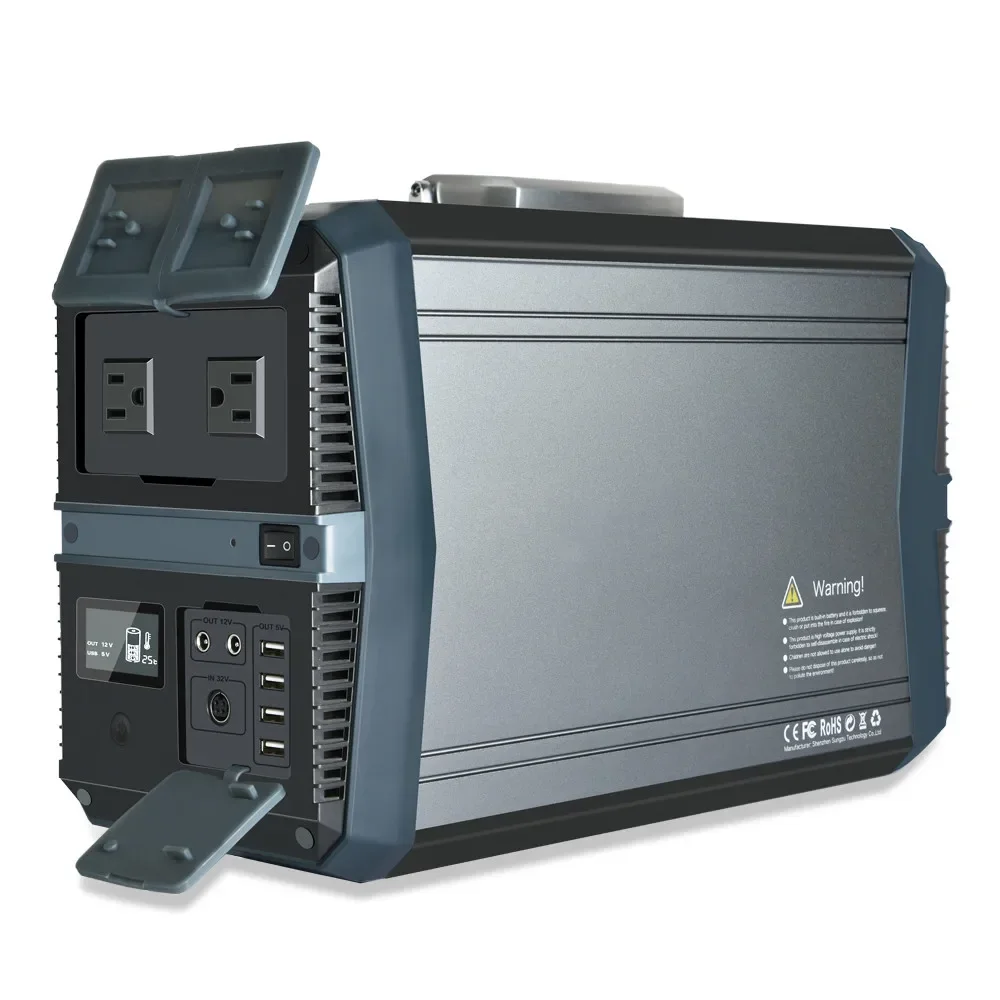
Compared to traditional gasoline generators, portable power stations have a number of significant advantages:
- Complete silence and no exhaust fumes: can be used indoors and outdoors without harming yourself or the environment.
- Ease of maintenance: no need to refuel, change oil – just charge and use.
- Instant startup: press one button and you have a ready-to-use power source.
- Compactness and portability: most models have convenient handles for carrying.
However, there are limitations. The main disadvantage is limited capacity. When the battery is depleted, the station needs to be charged, which can take several hours. Also, the cost of powerful models with large capacity is quite high. For long-term autonomous home power exceeding 2-3 kW, it is better to consider stationary systems with solar panels.
What else to consider before buying a power station
It is important to evaluate the battery type, charging speed, and the presence of protection systems.
In addition to technical specifications, it is important to assess build quality and additional features. Pay attention to the battery type: LiFePO4 batteries last longer (3000-5000 charge-discharge cycles) and are safer than standard lithium-ion ones, although they are more expensive. Useful options include fast charging capability (from 0 to 80% in 1-2 hours) and an informative display showing charge level, input/output power, and runtime.
Safety and Warranty
Make sure the device has a full set of protections: against overload, overheating, short circuit, and deep discharge. This is critically important for long-lasting and safe operation. Also, be sure to clarify the warranty service terms – reputable manufacturers offer a 2-3 year warranty, which indicates product reliability.
Conclusion:
A portable power station is a modern, eco-friendly, and extremely convenient tool for ensuring energy independence in a mini-format. It is ideally suited both for emergency backup of home devices during power outages and for creating comfort during travel and outdoor work. When choosing a device, clearly define your needs: which devices and for how long need to be powered. For most users, universal models with medium power of 500-1000W will be the optimal choice. Buying a portable power station means investing in your peace of mind, safety, and mobility, gaining a universal energy source that should always be at hand.