A modern driver can hardly imagine a trip without a smartphone. Navigation, music, quick calls, or checking messengers — all of this requires safe access to the screen without being distracted from the road. That is why a high-quality car phone mount turns from an accessory into a necessity. However, among the variety of designs, types of fastenings, and materials, it is easy to get confused. As experts at ComfortShop note, the right choice of a phone holder depends not only on the phone model but also on the driver's habits and the car's interior design. Let's look at the main types of modern car mounts and the criteria for choosing them.
Article Contents
Main Types of Car Mounts
The market offers several basic designs, each with its own advantages and disadvantages.
The most common are mounts for air vents, suction cups for the windshield or dashboard, and models that fit into the cup holder. Each of these types solves specific tasks: from compactness to reliable fixation on rough roads.
Vent mounts are considered the most versatile and easiest to install. They attach using a special hook to the air vent slats. This option is ideal for short city trips, as it leaves no marks on the glass and is easy to remove. However, it should be noted that in winter, hot air can overheat the smartphone, and bulky phones can sometimes rotate the plastic vent slats.
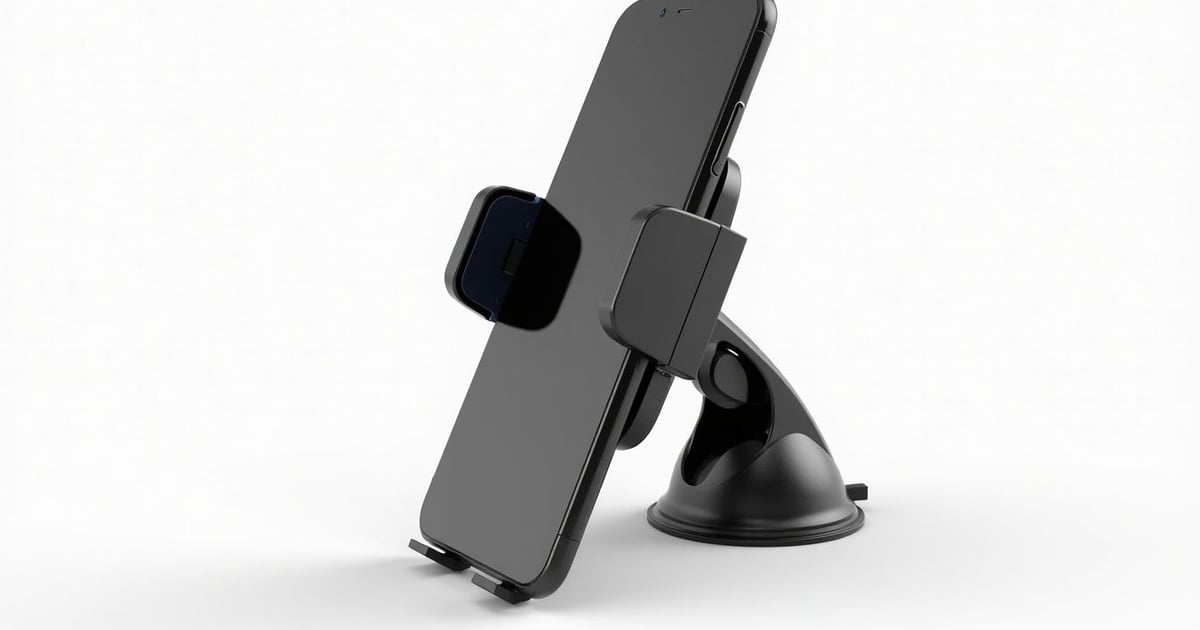
Suction cups for the glass or dashboard are a classic choice for those who use their smartphone as a navigator. They provide eye-level viewing and do not block visibility. Modern models have gel or vacuum suction cups that hold even on textured surfaces. However, in hot weather or prolonged sunlight, the adhesive base may lose its properties.
Cup Holder Mounts and Magnetic Systems
A separate niche is occupied by mounts installed in the cup holder.
They have a telescopic arm that secures inside the opening, with a head at the top featuring clamps or a magnet. Such a car phone mount does not block the vents and leaves no marks on the glass. The only downside is that it takes up useful space intended for cups or bottles.
Magnetic systems are gaining popularity due to their minimalist design. They consist of a metal plate attached to the smartphone or case and a magnetic base on a hinge. You can secure the phone with one hand, which is very convenient while driving. Experts at ComfortShop recommend paying attention to the magnet's strength: large phones require more powerful neodymium magnets, otherwise the device may fall during sharp turns.
It is also worth mentioning mounts with wireless charging. This is a hybrid solution that simultaneously holds and charges the phone. Such models often have automatic clamps that react when the smartphone approaches. They are more expensive but eliminate the need to run wires in the cabin.
How to Choose a Phone Fixation Method
The method of holding the smartphone is a key criterion that affects ease of use.
The most common options are side clamps (arms), magnetic retention, and gravity mechanisms. Side clamps are considered the most reliable, as they tightly grip the phone body from four sides. They are suitable for heavy smartphones with protective bumpers.
Gravity mounts work on the principle of weight: under the force of gravity, the arms automatically close, securing the device. This is convenient, but in some models, the mechanism may jam during strong vibrations. Magnetic systems, as mentioned, win in speed but require an additional element on the phone body.
When choosing, consider the size of the smartphone. If you use a "phablet" with a diagonal of over 6.5 inches, make sure the clamp width is adjustable. For compact phones, any model will do, but overly large arms may look bulky.
Materials and Build Quality
Cheap plastic, play in the hinges, and weak springs are the main enemies of durability.
A high-quality car phone mount should be made of impact-resistant ABS plastic or aluminum. Silicone pads on the clamps prevent slipping and scratches on the phone body. Hinges should have smooth movement and lock in any position without additional screw tightening.
Pay attention to the quality of the rubber or gel in the suction cups. Cheap suction cups quickly harden in the cold or, conversely, soften in the sun. If you plan to use the mount year-round, choose models with a heat-resistant silicone base. The length and flexibility of the arm are also important: a short arm limits visibility, while an overly long one may vibrate while driving.
Don't forget about certification and warranty. Well-known brands usually offer a warranty on the assembly mechanism, indicating confidence in quality. Choosing a phone holder from a trusted manufacturer ensures the accessory won't let you down at the most crucial moment.
Installation and Safety Tips
Proper placement of the mount in the cabin is no less important than its type.
The best place is in the driver's direct line of sight, but without blocking road signs or traffic lights. Ideally, the smartphone should be at eye level or slightly lower, allowing quick shifts in gaze from the road to the screen. Do not install the mount in front of an airbag or in its deployment path.
Equally important is ensuring the reliability of the fastening. Before each trip, check whether the clamps or suction cup have loosened. In hot weather, plastic can deform, so do not leave the mount in direct sunlight for long. If you frequently remove and install the mount, choose models with quick-release mechanisms to avoid damaging the fastening.
And lastly: do not overload the mount. If you use a bulky case or additional accessories, make sure the stated load capacity of the mount matches the weight of your smartphone. This is especially relevant for magnetic models and vent mounts.
Modern Car Gadgets: Additional Features
Modern mounts often come with additional features that make them true gadgets.
For example, a built-in Bluetooth speaker allows you to take calls without connecting to the car's audio system. Some models have an automatic screen rotation function or a built-in cooler to prevent smartphone overheating during navigation.
Mounts with fast charging (QC 3.0 or Power Delivery) deserve special attention. They allow not only maintaining the battery charge but also quickly replenishing it during a trip. However, you should ensure your smartphone supports the corresponding fast charging standard, otherwise the useful feature will be useless.
According to the recommendation of the ComfortShop editorial team, when choosing such a hybrid device, pay attention to the charging power and the presence of short-circuit protection. A high-quality car phone mount with additional features must be certified according to safety standards, as it is constantly connected to the vehicle's onboard network.
Висновок:
Choosing the ideal car phone mount depends on your personal needs, phone model, and interior features. The most versatile solution remains suction cup models with side clamps, suitable for most cars and smartphones. If you value minimalism and quick fixation, consider magnetic systems or mounts with wireless charging. The main thing is not to skimp on material quality and fastening reliability, as your safety on the road depends on it. Choose trusted brands and consider operating conditions to ensure the accessory serves long and without fail.
Frequently Asked Questions
Which type of car phone mount is the most reliable?
The most reliable are considered mounts with CD-slot or windshield suction cup fastening, as they provide rigid fixation and do not block the heating vents.
Is a magnetic car phone mount suitable for large phones?
Yes, but it is important to choose a magnetic mount with a powerful neodymium magnet and an additional metal plate on the body or case to prevent the heavy smartphone from slipping during sharp maneuvers.
How to choose a phone mount for a car if the vehicle has weak ventilation?
Avoid vent mounts that block the airflow; instead, choose a suction cup or CD-slot model to avoid impairing the climate control system.
Does the type of car phone mount affect driving safety?
Yes, a properly selected car phone mount allows you to position the screen at eye level without distracting the driver from the road, significantly reducing the risk of accidents.
```