Fast charging has become an indispensable feature for all modern gadgets. Users no longer want to wait hours for their battery to fill up, and manufacturers are actively working on new standards. Several key technologies have emerged on the market: Qualcomm Quick Charge, the universal USB Power Delivery, and MediaTek Pump Express. Each has its own operating principles, advantages, and limitations. In this article, we will compare these standards in detail to help you understand which fast charging solution is right for your devices and needs.
? Table of Contents
Qualcomm Quick Charge: The Standard for Flagships
Qualcomm's Quick Charge technology is one of the most widespread fast charging standards, especially among smartphones based on Snapdragon processors. It works by increasing voltage while maintaining a relatively low current, allowing higher power to be transmitted through standard cables.
The standard's evolution has progressed from Quick Charge 2.0 to the modern versions 4+ and 5. The latest iterations support the bidirectional USB Power Delivery protocol, making them more versatile. A key advantage of QC is its broad support among premium devices and the availability of a large number of certified power adapters and accessories.
However, this technology also has drawbacks. It remains partially proprietary, and it demonstrates the best compatibility and speed specifically when paired with Qualcomm processors. Additionally, the voltage increase can lead to greater device heating during charging compared to some alternatives.
USB Power Delivery (USB-PD): The Universal Future Standard
USB Power Delivery is an open protocol developed by the USB-IF consortium, which has become the standard for charging via the USB Type-C port. Unlike branded technologies, USB-PD aims to be a single universal standard for all devices – from smartphones to laptops.
The main advantage of USB-PD is maximum versatility.
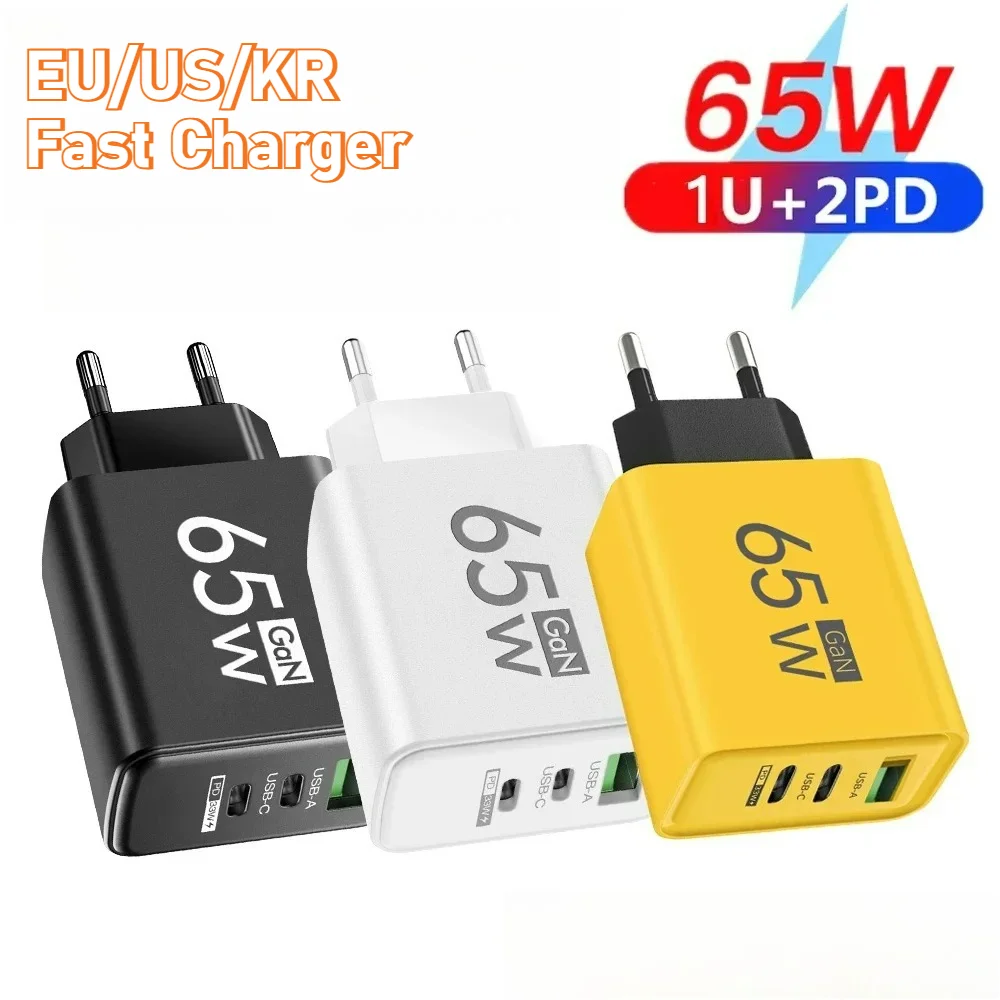
The standard uses a communication protocol between the charger and the gadget to negotiate the power needed at any given moment. It supports a wide range of power levels – from 10W to 240W in the latest USB PD 3.1 specification. This means that with a single power adapter, such as a 65W GaN charger, you can safely charge both an iPhone and a powerful laptop.
Most modern smartphones, including models from Apple, Google, and Samsung, already support USB-PD. This makes it the most promising option, especially if you use different brands of electronics. Investing in a quality USB-PD power adapter is an investment in the future.
MediaTek Pump Express: A Competitive Alternative
MediaTek's Pump Express technology was developed as a direct alternative to Qualcomm Quick Charge for devices using MediaTek chipsets. It is also based on the principle of variable voltage, but with some technical differences in the negotiation protocol between the charger and the phone.
The standard evolved from Pump Express to Pump Express 4.0, which integrated support for USB Power Delivery Programmable Power Supply (PPS). PPS allows for very precise voltage regulation in small steps, minimizing energy loss due to heat and increasing charging efficiency, especially during the "top-up" phase from 80% to 100%.
The main limitation of Pump Express remains its lower prevalence compared to QC and USB-PD. It is found mainly in mid-range smartphones from certain brands that use MediaTek processors. Therefore, the selection of chargers that specifically support Pump Express at maximum power may be somewhat narrower.
Technical Comparison: Speed, Compatibility, Safety
To understand what is best for charging your gadgets, it's important to compare the technologies by key parameters. Charging speed depends not only on the maximum supported power but also on the efficiency of its distribution throughout the entire cycle.
Compatibility is the most important criterion for the average user.
USB-PD is the undisputed leader here, as it is becoming mandatory for USB-C devices. Qualcomm Quick Charge, especially version 4+, also demonstrates good compatibility thanks to its integration with PD. MediaTek Pump Express is more niche. Regarding safety, all modern standards have built-in protections against overheating, overvoltage, and short circuits, but the quality of implementation depends on the specific charger manufacturer.
It's important to remember that the actual charging speed is determined by the "weakest link" in the chain: the power adapter, the cable, and the device itself with its controller. Using high-quality certified accessories, like a GaN charger supporting multiple protocols, is critically important for safety and efficiency.
How to Choose a Charger: Practical Tips
When choosing a charger for modern gadgets, you should follow a few simple rules. First, determine which fast charging standards your primary devices (smartphone, tablet, laptop) support. This information can be found in the technical specifications on the manufacturer's website.
The ideal choice today is a universal charger with support for USB Power Delivery and one of the compatible technologies, such as Quick Charge. For example, a modern 65W GaN charger with three ports allows you to charge multiple devices simultaneously at their maximum speed. GaN (gallium nitride) technology makes the adapter more compact and efficient compared to traditional silicon solutions.
Pay attention to the maximum total power and the output power per port. For most smartphones, 18-30W is sufficient, while laptops may require 45-65W. Also, be sure to use sturdy cables with the appropriate certification, capable of transmitting the required power without loss.

Conclusion:
Each fast charging standard has its strengths: Qualcomm Quick Charge offers broad support in powerful smartphones, USB Power Delivery provides versatility and is the future, while MediaTek Pump Express is an efficient technology for a specific segment of devices. For most users, the smartest choice today is to invest in a quality charger with USB-PD support that is also compatible with other popular protocols. This approach guarantees fast charging for almost any gadget in your home and ensures operational safety.