? Article Contents
- What is a USB Microscope and Why Do You Need One at Home?
- Criteria for Choosing the Best USB Microscope for Soldering and Home Use
- Overview of Popular Types of USB Microscopes for Different Tasks
- Advantages of the USB Digital Microscope 500X/1000X/1600X 3 in 1 Model
- Comparison with Alternatives: What Do Other Manufacturers Offer?
- Conclusion:
What is a USB Microscope and Why Do You Need One at Home?
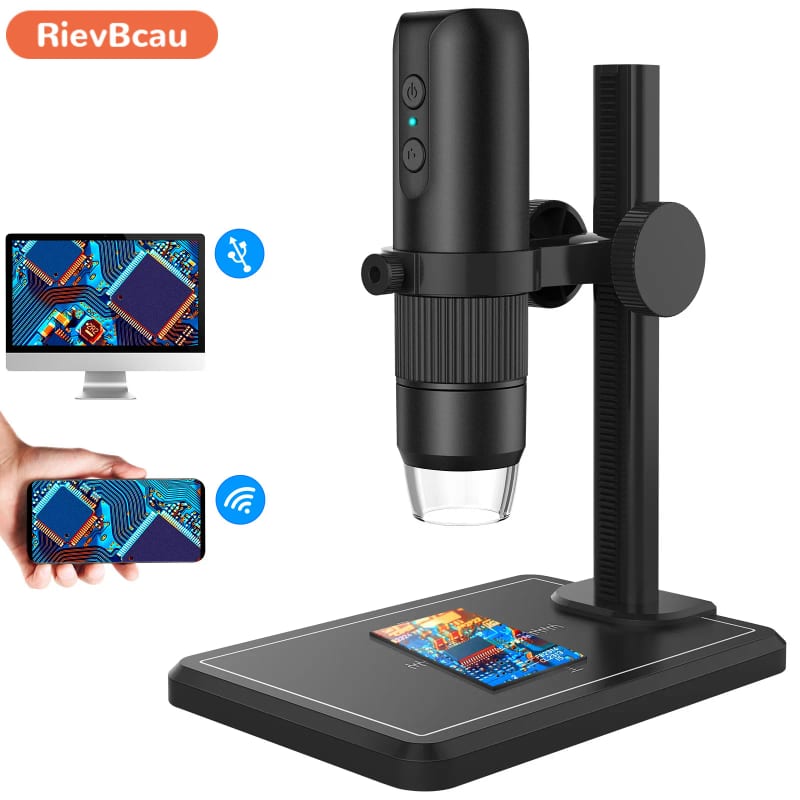
A modern digital USB microscope is not just a toy for examining coins or insects. It is a powerful tool that opens up new possibilities for hobbies, learning, and professional tasks. By connecting the device to a computer or laptop, you get a magnified image on the screen that can be photographed, recorded on video, and studied in detail. This makes the technology indispensable for micro-soldering, electronics repair, inspecting printed circuit boards, as well as for creative and educational purposes.
Unlike bulky optical microscopes, USB models are compact, portable, and often feature a flexible design on a stand or bracket. They are ideal for a home workshop, modeling studio, or a student's learning corner. The key advantage is the ability to display the image on a large screen, which reduces eye strain and allows for comfortable, extended work sessions.
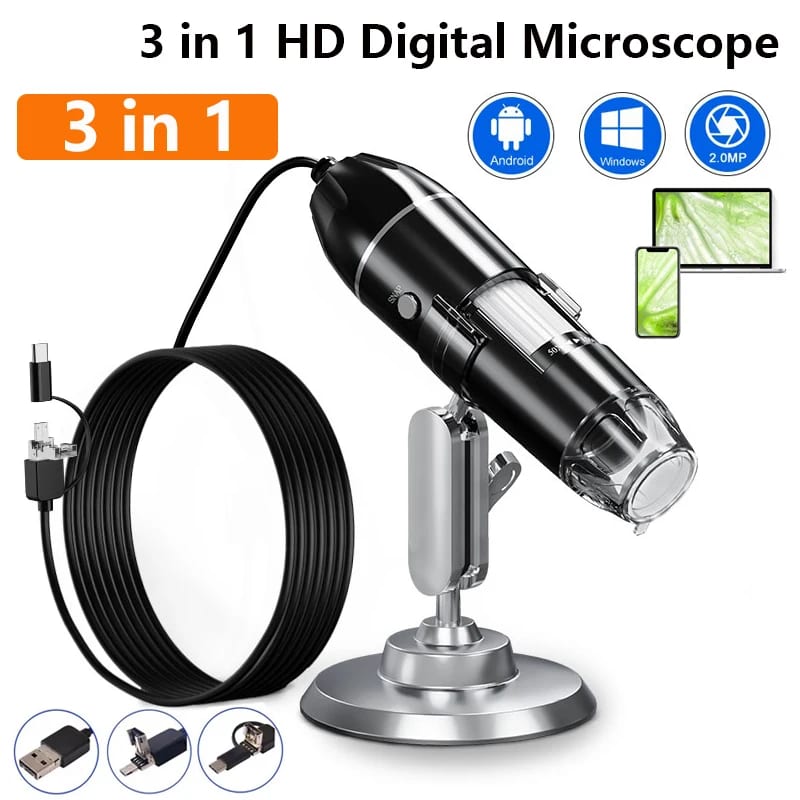
When choosing a microscope for home use, it is worth paying attention to several key parameters: magnification level, sensor quality and resolution, type of illumination, presence of an adjustable stand, and user-friendly software. The right choice will turn a complex task, such as soldering microchips, into a clear and controlled process.
Criteria for Choosing the Best USB Microscope for Soldering and Home Use
To choose the optimal model that will meet your specific needs, you must clearly understand which technical characteristics to prioritize. The rating of USB microscopes is formed precisely based on these parameters.
Magnification and Actual Resolution.
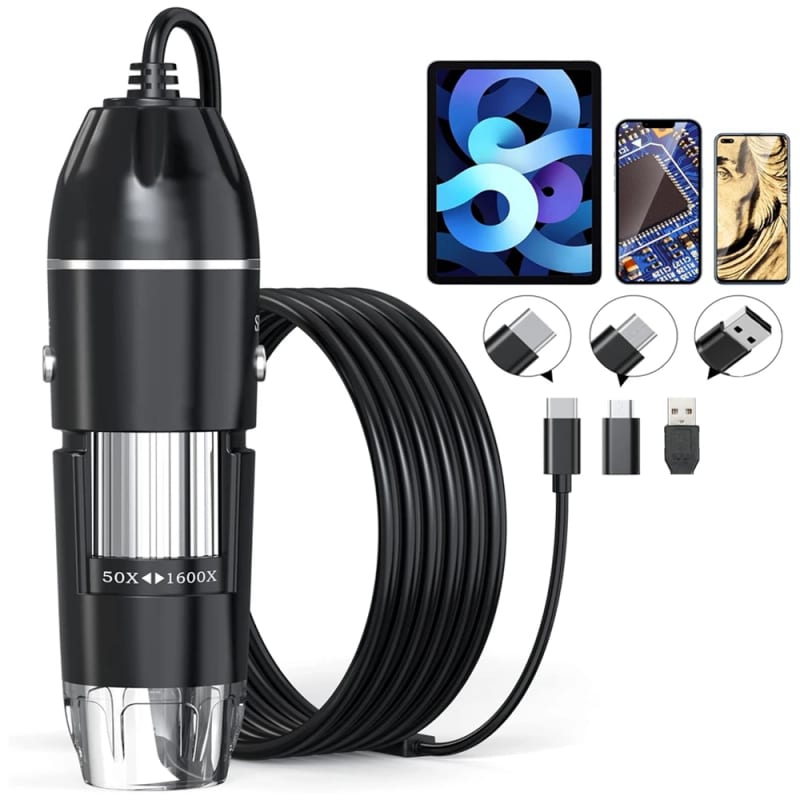
Manufacturers often indicate the maximum digital magnification (e.g., 1600X), but more important is the optical magnification and the actual resolution of the sensor. For most home tasks, including soldering SMD components, a magnification range of 50X–500X is sufficient. High digital magnification may be needed for very detailed inspection, but it is crucial that the camera has a good sensor (e.g., 2 MP or higher) for clarity.
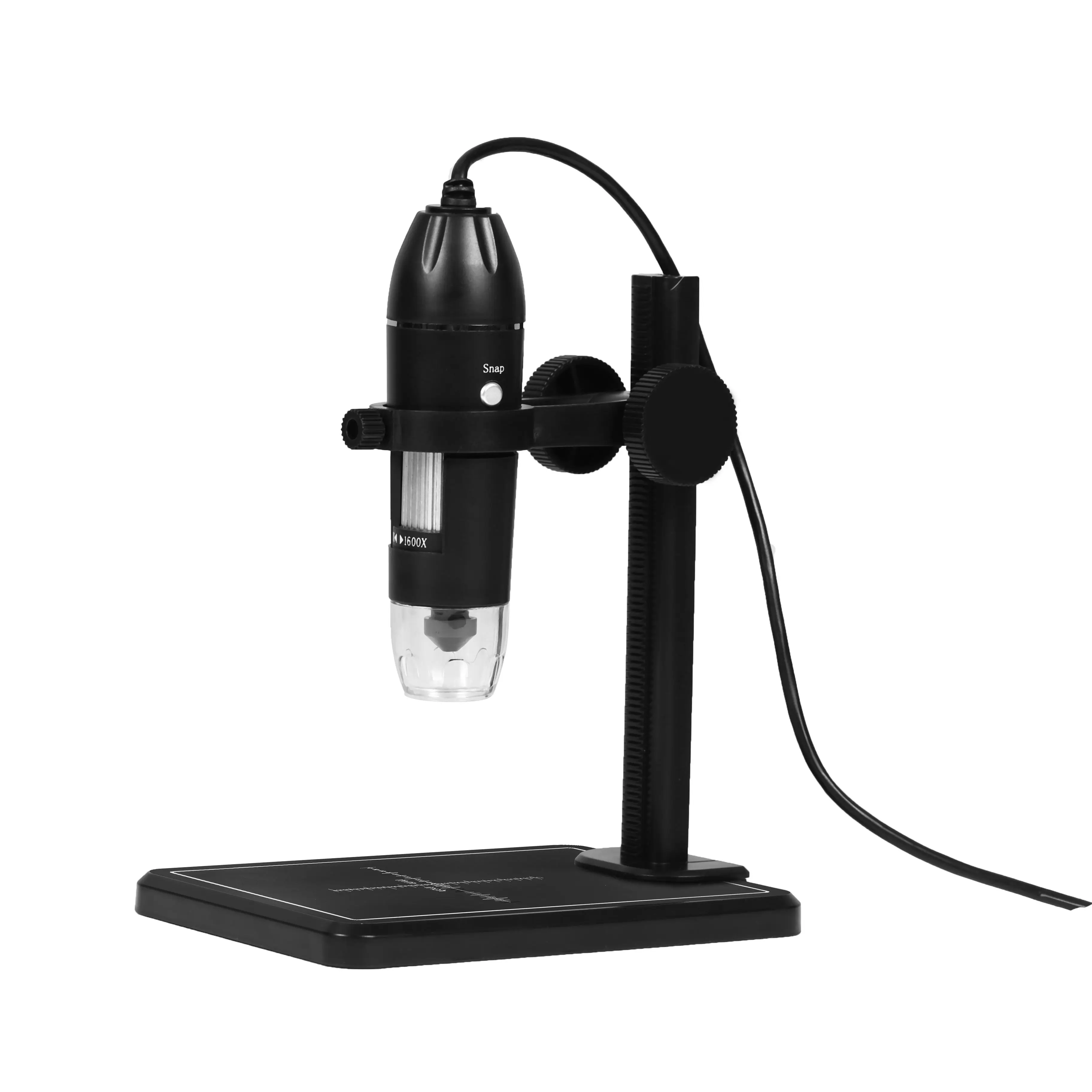
Equally important is the working distance — the distance from the lens to the object under study. For soldering, you need enough distance to freely work with a soldering iron under the lens. Models with an adjustable bracket or lift stand, like the USB Digital Microscope 500X/1000X/1600X, provide this capability.
Also, evaluate the quality of the illumination: the LED lights around the lens should provide uniform, adjustable lighting without glare. This is critical when working with small, shiny electronic components.

Overview of Popular Types of USB Microscopes for Different Tasks
The market offers various types of devices, each with its own strengths. Understanding these differences will help you make a targeted purchase.
Basic Models for Learning and Hobbies (up to 500X). These are affordable microscopes with low resolution, ideal for studying the structure of plants, insects, coins, and fabric textures. They are perfect for schoolchildren and enthusiasts. Their capabilities may be insufficient for serious soldering.
Universal Microscopes for Soldering and Repair (500X–1000X). This is the sweet spot. Such devices are typically equipped with a better camera, adjustable lighting, and a stable stand. They provide the necessary detail for working with small elements on boards, checking the quality of solder joints, and finding micro-cracks. Many models in ratings belong to this category.
Professional Models with High Resolution (over 1000X). They are equipped with superior sensors and often have broader software capabilities for measurements and analysis. Such microscopes are used for quality control, materials research, and jewelry making. For a home workshop, they may be excessive unless you regularly perform very fine work.
Advantages of the USB Digital Microscope 500X/1000X/1600X 3 in 1 Model
This model is a prominent representative of universal USB microscopes that optimally combine functionality for home and soldering. Its "3 in 1" architecture offers flexibility in use, setting it apart from alternatives.
Three Magnification Levels for Different Tasks.
The presence of three fixed magnification levels (500X, 1000X, 1600X) allows you to instantly switch between them depending on the task. For a general overview of a board, 500X is sufficient; for detailed soldering of a small component, 1000X; and for super-detailed analysis of a joint quality or defect, the maximum 1600X. This is more convenient than constantly adjusting smooth magnification.

A key advantage of this model is the lifting bracket. This is not just a stand, but a mechanism that allows for smooth and precise adjustment of the microscope's height and tilt angle above the work surface. This design ensures stability, eliminates shaking, and allows you to fix the optimal working distance, freeing both hands for tools.
The device also features eight adjustable LEDs for perfect illumination, is compatible with Windows and Mac OS, and comes with the necessary software for capturing photos and videos. This makes it a ready-made solution for setting up a home laboratory.
Comparison with Alternatives: What Do Other Manufacturers Offer?
To understand whether the chosen model is truly the best USB microscope for home use, it is helpful to consider market offerings in the price segment of universal devices.
Many competing models in the same price range offer only smooth magnification without fixed steps, which can sometimes be less convenient for quick work. They are often equipped with lightweight or unstable "gooseneck" stands prone to vibrations. The presence of a stable lifting bracket in this model is a significant advantage for soldering.
Some microscopes have built-in displays, but this significantly increases their cost. For home use, where a laptop or PC monitor is always at hand, having a screen is not critical. More important is the quality of image transmission to that monitor. Here, the camera resolution and USB data transfer speed are key.
It is also worth paying attention to additional software features: the ability to overlay a measurement grid, record video in various formats, and adjust white balance. The USB Digital Microscope 500X/1000X/1600X model typically includes a basic set of such tools, sufficient for most tasks.
Conclusion:
The choice of the optimal USB microscope depends on your specific goals: simpler models are suitable for teaching children, while serious work with electronics requires a device with good optics, stable mounting, and adjustable lighting. The USB Digital Microscope 500X/1000X/1600X 3 in 1 model with a lifting bracket is an excellent universal solution for a home workshop, combining necessary magnification levels, a convenient design for soldering, and an affordable price.
Before buying a USB microscope, determine your primary range of tasks and ensure the chosen model has a stable stand and sufficient working distance for comfortable operation. This investment will significantly ease the process of soldering and repair and open new horizons for creativity and learning at home.