When it comes to sound quality on a computer, many users face a dilemma: is the built-in audio card of the motherboard sufficient, or is it worth investing in a separate solution? This question arises especially often in the context of external USB sound cards, which are surrounded by a number of stereotypes. Some consider them a waste of money for the average user, while others see them as a panacea for all audio problems. In this article, we will objectively analyze whether you actually need a USB sound card, debunk popular myths, and compare different types of audio solutions so you can make an informed decision.
? Table of Contents
- What is a USB sound card and how does it work?
- Debunking the main myths about USB sound cards
- Comparison of sound cards: built-in, internal PCIe, and external USB
- When does a USB sound card for PC become a necessity?
- Battery Powered HiEnd Digital Interface: an example of a modern solution
- Conclusion:
What is a USB sound card and how does it work?
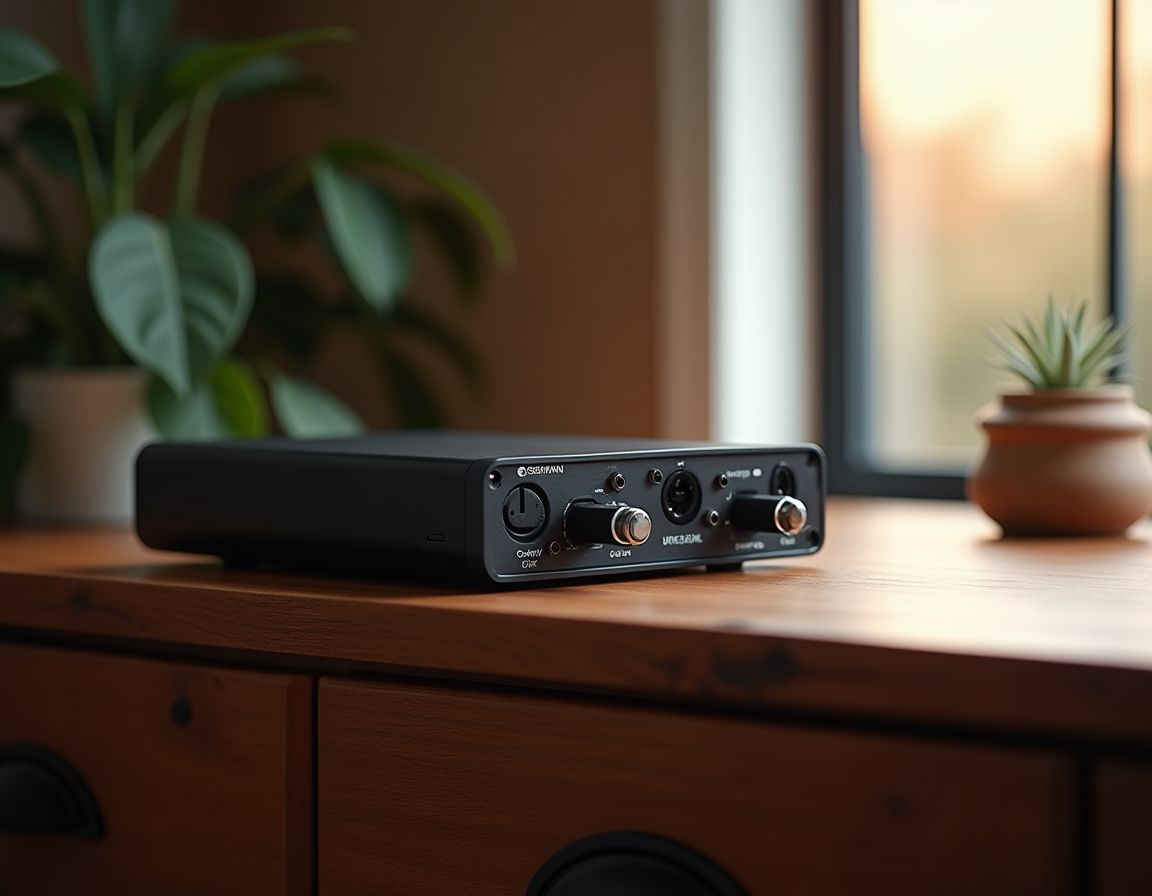
A USB sound card, or external audio interface, is a compact device that connects to a computer via a USB port and takes over all sound processing functions. It becomes the primary audio path of your system, replacing or supplementing the built-in sound card on the motherboard.
The operating principle is quite simple: digital audio data is transmitted from the PC to the card via a USB cable. Then, a specialized digital-to-analog converter (DAC) installed in the card transforms these zeros and ones into a high-quality analog signal, which is then sent to headphones or speakers. The input path works similarly: the microphone signal is digitized by an analog-to-digital converter (ADC) inside the card and transmitted in pure digital form to the computer for recording or communication.
Thus, the key difference from an integrated solution is the relocation of sensitive audio components outside the PC case, where they are not affected by electrical interference, noise from the power supply, and other components. This is the foundation for potential sound improvement.
Debunking the main myths about USB sound cards
There are many false claims surrounding external audio interfaces that can scare off potential buyers. Let's break down the most common ones.
Myth 1: They are only needed by professionals or audiophiles.
This is not true. A quality USB card can significantly improve the experience for any user. For example, it provides a clean signal for a headset during online games or conferences, eliminating echo and noise for your interlocutors. For a music lover, it offers the chance to hear new details in favorite tracks, even on inexpensive headphones, because the signal source becomes higher quality.
Myth 2: The built-in sound on modern motherboards is already good enough.
Although the quality of integrated audio has indeed improved in recent years, it has fundamental limitations. The audio codec inside the PC case is always in an environment with high levels of electromagnetic interference. This often manifests as background hum, clicks, or hissing, especially when connecting sensitive headphones. An external card completely solves this problem.
Furthermore, the output amplifier power on motherboards is often insufficient to comfortably "drive" high-impedance headphones. A USB card with a powerful chip typically does not have these issues and provides rich, detailed sound at any volume.
Comparison of sound cards: built-in, internal PCIe, and external USB
To understand the place of USB solutions in the market, let's compare them with the main alternatives.
Built-in sound card (on the motherboard): The basic option for everyone. Its main advantages are zero cost and simplicity. The disadvantages, as already discussed, are susceptibility to interference, often a weak amplifier, and limited features. This is the choice for those who just need sound to "work."
Internal discrete card (PCIe): A significant quality improvement inside the case. Such cards have their own, higher-quality DACs/ADCs and are often equipped with a shield for protection against interference. However, they are still located in the electromagnetic field of the power supply and graphics card, which can limit their potential. They are also not suitable for laptops.
External USB sound card: This is the leader in terms of the balance between sound quality, convenience, and versatility. It is completely isolated from interference inside the PC, easily connects to any computer or even a tablet, takes up minimal space, and often has additional features like a handy volume knob or separate outputs for headphones and speakers. Its main advantage is flexibility and sound purity.
When does a USB sound card for PC become a necessity?
There are several specific scenarios where buying an external audio interface is not just desirable, but 100% justified.
- Audio work: Recording voice, podcasts, instruments, or even music. You need a high-quality microphone input with a "clean" preamp and the ability to connect an XLR microphone via an additional adapter.
- Serious online gaming and streaming: Clean voice chat without noise and hardware-based real-time voice enhancement (e.g., Nvidia Broadcast technology or similar) is a major advantage.
- Using high-quality headphones: If you have headphones with an impedance over 80 ohms, the built-in motherboard card simply cannot unlock their potential. A USB card with a powerful amplifier is a must-buy.
- Sound problems: Constant background hissing, humming, clicking, or sound dropouts on the built-in card are a direct signal to switch to an external solution.
Battery Powered HiEnd Digital Interface: an example of a modern solution
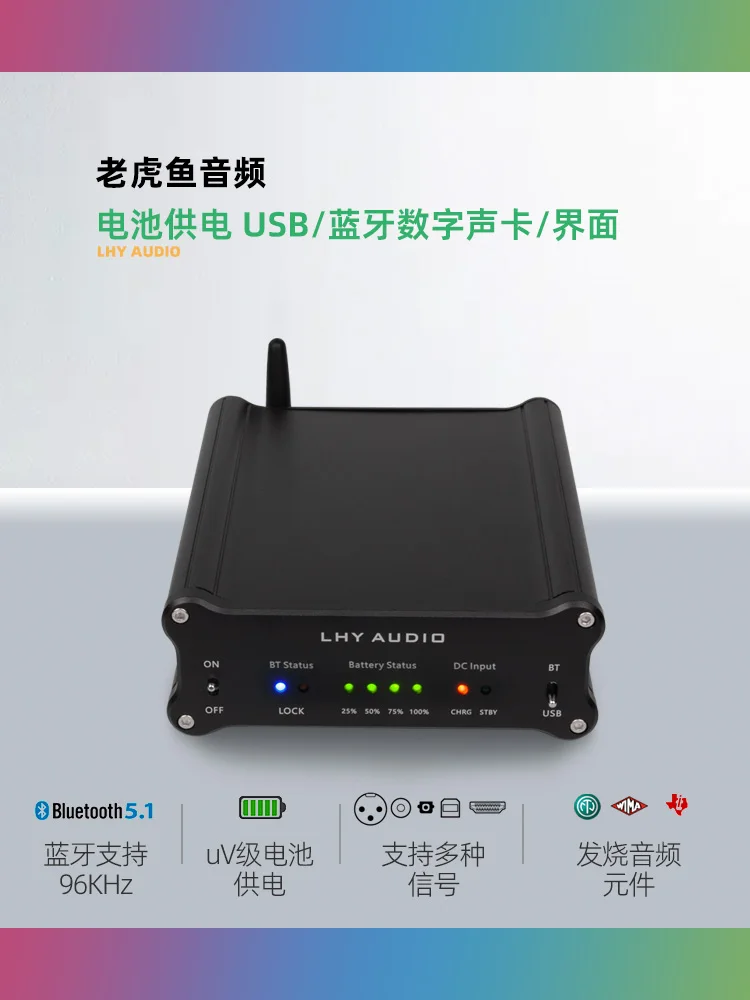
As an example of a powerful and versatile device, consider the Battery Powered HiEnd Digital Interface Sound Card model. This card not only meets the basic requirements but also offers features that dispel any remaining doubts about the advisability of the purchase.
Firstly, battery-powered autonomous operation is a radical solution to the interference problem. The device is completely isolated from the dirty power of the mains and the USB port, guaranteeing absolutely clean sound without any noise. Secondly, the presence of high-quality digital outputs, such as Optical SPDIF, AES, and even I2S, allows the card to be used as a transport for top-tier external DACs, opening the path to true Hi-End audio.
Additional features like Bluetooth support for wireless music streaming and output to analog 5.1 speakers make it a truly versatile hub. This is no longer just a "sound card," but a central audio interface for the home that meets the needs of audiophiles, movie enthusiasts, and gamers alike.

Conclusion:
So, does the average user need a USB sound card? The answer is yes, if you value clean sound without interference, have quality headphones or a microphone, actively communicate online, or simply want to get more out of your music and movies. It has long ceased to be an attribute exclusively for professionals. Modern models, such as the Battery Powered HiEnd Digital Interface, demonstrate that this is an investment in comfort and quality that pays off from the first minutes of use. Replace hissing and flat sound with detail and clarity — your ears will thank you.