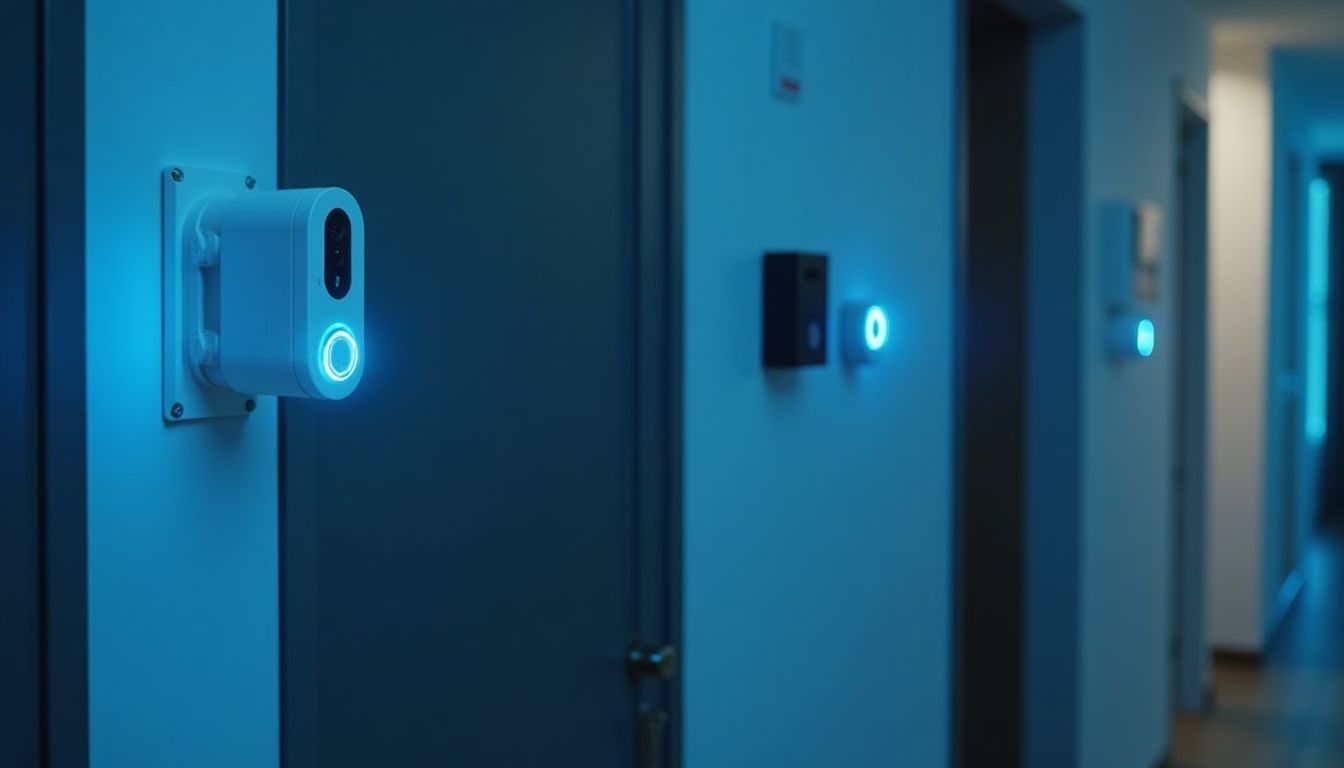
Choosing between a wireless and a wired video doorbell often becomes a real challenge when planning a security or home comfort system. The modern market offers dozens of models that differ not only in design but also in their power supply principle. This determines the ease of installation, operational stability, and the total cost of owning the device. Let's look at the key differences between the solutions so you can make an informed choice.
Article Contents
Operating principle and power source

Before diving into the details, it's worth understanding the basic difference between the two types of devices. A wired video doorbell connects directly to the home's electrical network via a cable. This ensures a constant flow of power without the need to monitor the charge level. In contrast, a wireless battery-powered video doorbell operates on a built-in rechargeable battery that requires periodic recharging.
From a technical standpoint, wired models usually win in terms of stability. They don't depend on air temperature, which can significantly affect the capacity of lithium batteries during cold seasons. However, modern battery-powered devices are equipped with energy-efficient chips, allowing them to operate on a single charge from several weeks to six months, depending on usage intensity.
The ComfortShop editorial team, based on an analysis of popular models' specifications, notes that the choice of power source directly impacts the usage scenario. If you need a device for constant monitoring with frequent video viewing, a wired solution will be more reliable.
Installation and mounting flexibility
This aspect often becomes decisive for apartment dwellers or those renting their homes. A wireless video doorbell can be installed almost anywhere: on the front door, gate, fence, or even on a wall near the entrance. The absence of cables means you won't have to drill holes for wiring or call an electrician.

On the other hand, a wired video doorbell requires careful planning during the renovation or construction phase. Running the cable can be a challenging task, especially if the walls are already finished. However, this approach guarantees an aesthetically pleasing look without external power units and the need to think about charging.
For those who value mobility and don't want to depend on the location of power outlets, the battery-powered option becomes the obvious choice. You can move the device to another location in a matter of minutes, which is impossible with a wired counterpart without repeating construction work.
Connection stability and video quality
Constant power as the key to uninterrupted operation.


When it comes to security, every second matters. Wired video doorbells provide an instant response to a button press since the device is always in an active state. The video stream is transmitted without delays, which is critical during a conversation with a visitor.
Battery-powered models often use passive infrared sensor technology to save power. This means the device may "wake up" a fraction of a second longer when it detects motion. For most household scenarios, this delay is imperceptible, but it does exist. According to the ComfortShop editorial team's recommendation, if you choose a wireless battery-powered video doorbell, pay attention to models with fast wake-up support and local recording to a memory card.
Image quality in both types of devices is practically the same today. Manufacturers install sensors with 2K or 4K resolution regardless of the power supply method. The difference lies only in the fact that wired models can afford continuous video transmission without restrictions, while battery versions sometimes reduce the frame rate to save energy.
Maintenance and operating costs
A comparison of battery vs. wired video doorbells is impossible without analyzing long-term costs. A wired version requires virtually no attention after installation. The only things that might be needed are periodic cleaning of the lens from dust and software updates through the app.
A wireless battery-powered video doorbell requires regular monitoring of the charge level. On average, with active use, the battery has to be removed and recharged every 2-3 months. This isn't difficult, but it requires discipline. If you forget to charge the device in time, it may turn off at the most inopportune moment.
It's also important to consider the temperature conditions. In regions with harsh winters, battery capacity may drop faster, shortening the interval between charges. Wired models are free from this drawback and operate stably in any weather.
Use cases: which suits whom
The choice between the two technologies depends on specific operating conditions. Let's consider typical situations to determine the optimal solution for each case.
- Rented apartment: a wireless battery-powered video doorbell is the ideal option since it doesn't require interfering with the door or wall structure.
- Private house under construction: it's better to run the cable right away and install a wired version.
- Country house or seasonal residence: a battery-powered model is more convenient because it can be removed for the winter and taken with you.
- High-traffic location: a wired device will withstand constant load without the risk of discharge.
After analyzing open sources and user reviews, the ComfortShop editorial team notes that most private homeowners choose a hybrid approach: a wired video doorbell at the main entrance and a wireless camera on the property's periphery.

Technical nuances and compatibility
Besides power, it's worth paying attention to communication protocols. Most modern video doorbells connect to the home Wi-Fi network, so router stability plays no less a role than battery charge. If the signal is weak, even a wired model may operate with interruptions.
It's also important to check compatibility with your smart home ecosystem. Some manufacturers offer exclusive features only for their own devices, so it's worth studying the technical documentation before purchasing. For example, support for local storage, cloud recording, or integration with voice assistants can significantly affect the convenience of daily use.
Another aspect is theft protection. Battery-powered models are mounted on special magnetic or mechanical bases that allow quick removal of the device for charging. This is convenient, but it also means an intruder might try to remove it just as easily. Wired versions are usually secured more rigidly and are harder to dismantle without tools.
Висновок:
Both types of video doorbells have a right to exist, and the choice depends on your priorities. If you need maximum reliability, constant readiness, and don't plan to change the installation location, choose the wired version. If you value mobility, ease of installation, and don't want to depend on wiring, a wireless battery-powered video doorbell will be an excellent companion. The main thing is to consider the operating conditions and real use cases, not just the manufacturers' marketing promises.
Frequently Asked Questions
What is the battery life of a wireless video doorbell?
On average, a wireless video doorbell battery holds a charge from 2 to 6 months, depending on usage intensity, notification frequency, and camera sensitivity settings.
Can a wired video doorbell be connected if the house doesn't have old wires?
Yes, the wired version can be connected via a standard 8-24V transformer plugged into a regular 220V outlet, but this will require the help of an electrician for careful installation.
What to do if a wireless video doorbell loses its Wi-Fi connection?
First, restart the router and the device itself, and if the problem persists, install a Wi-Fi repeater closer to the front door or switch the doorbell to the 2.4 GHz channel for a more stable signal.
Which option is better for an apartment: battery or wired version?
For an apartment, a wireless battery-powered video doorbell is more often chosen since it doesn't require drilling walls for cables, but if you already have ready-made wiring from an old intercom, the wired version will be more reliable and hassle-free in operation.