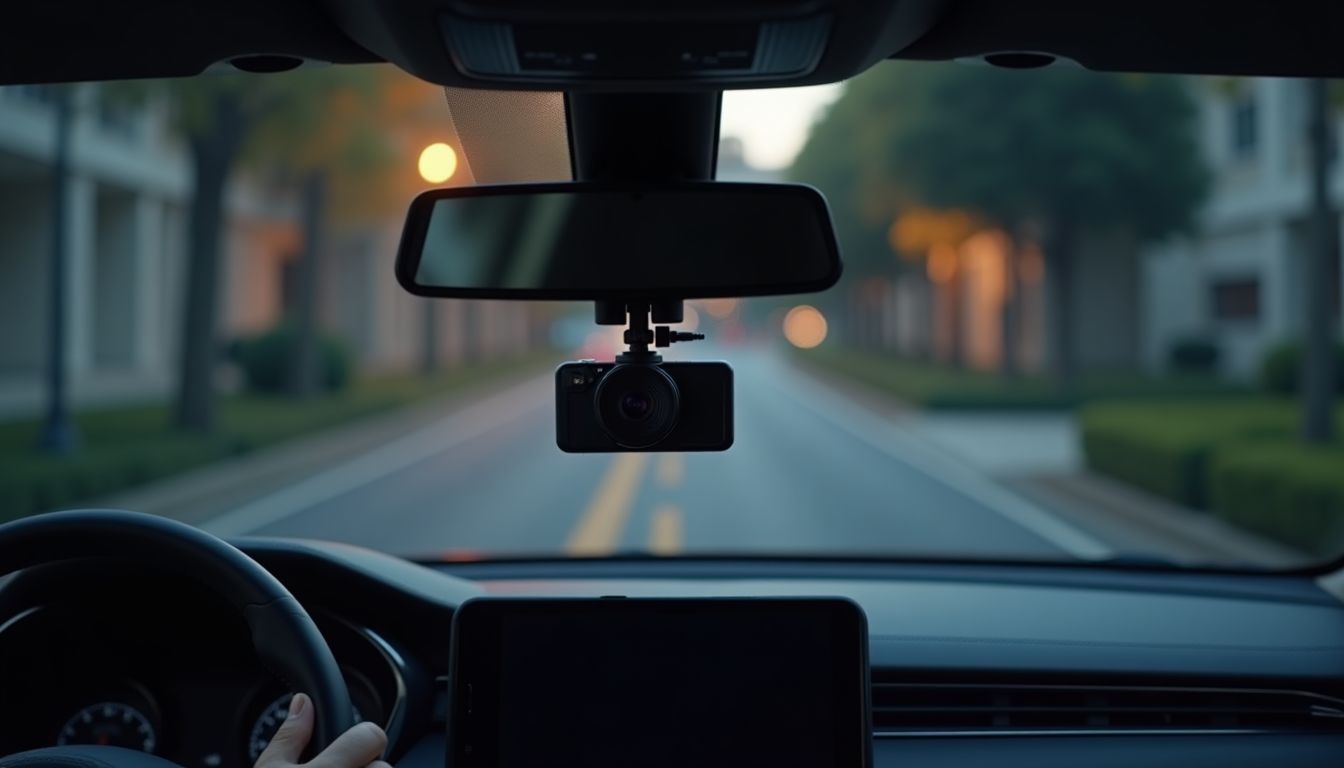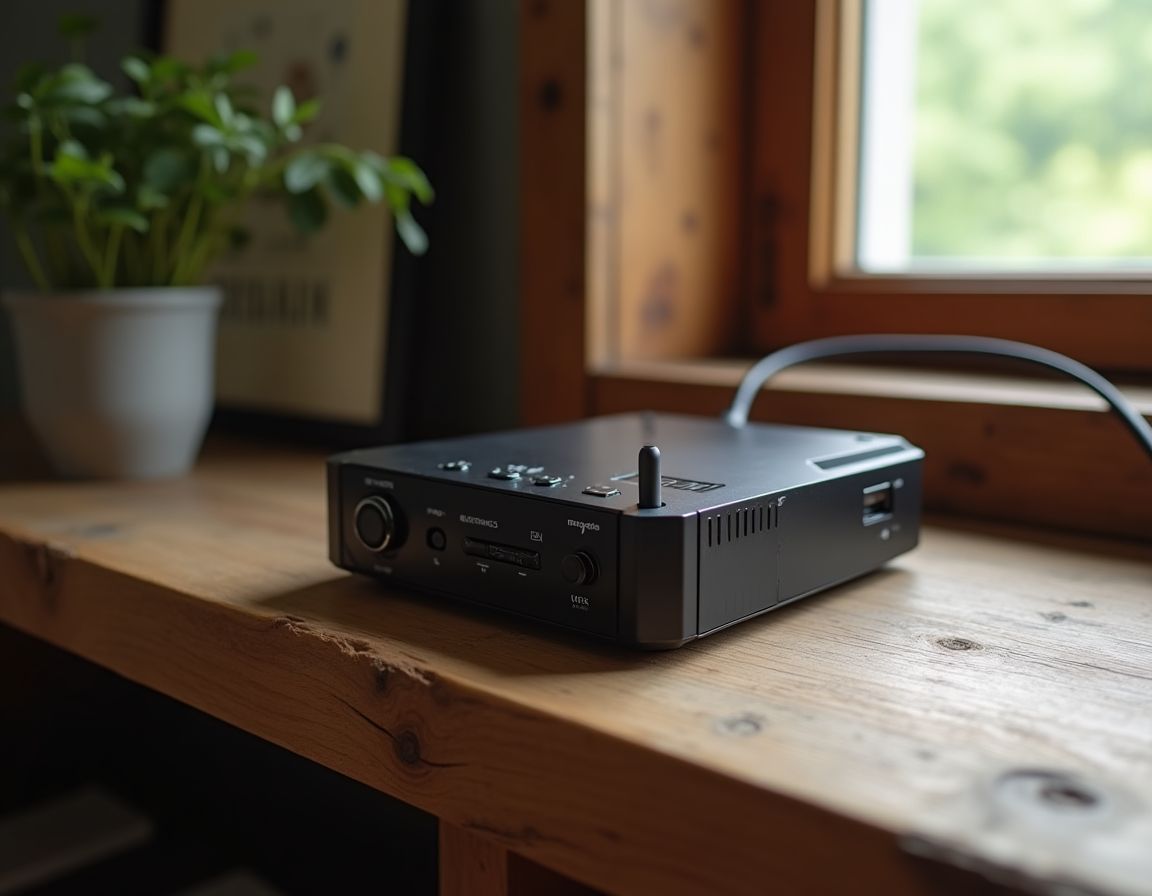
A modern car FM transmitter with USB is much more than just a device for playing music from your phone through your car stereo. It has become a universal hub that charges gadgets, provides high-quality hands-free calling, and opens access to your smartphone's media library in cars without modern multimedia systems. Choosing the right gadget significantly enhances driving comfort, but the market offers many models with different features. This guide will help you understand the key characteristics and advise on what to look for so your purchase fully meets your needs and expectations.

? Table of Contents
What is an FM Transmitter and its Main Functions
A car FM transmitter is a compact device that plugs into the 12V cigarette lighter and allows you to stream audio from your smartphone, tablet, or flash drive to your standard car stereo via a radio frequency. It creates a small radio transmitter that operates on a selected free FM frequency, and your car stereo, tuned to the same frequency, acts as the receiver.
Today, the classic modulator function is complemented by other useful capabilities. Modern transmitters are equipped with USB ports for fast device charging, built-in microphones for speakerphone conversations in hands-free mode, Bluetooth support for wireless connection, and memory card slots. Some models have displays for showing information and remote controls. Thus, one small device replaces a whole set of accessories.
The main advantage of a transmitter is the ability to upgrade your car's audio system, especially in older car models, without expensive and complex installations. It remains the most affordable way to listen to music from your phone or streaming services through your car's speakers.
Key Selection Criteria: What to Look at First
To avoid getting lost among the assortment, you should clearly define your priority functions. First of all, assess the quality of the wireless connection.
Bluetooth Version and Connection Quality.
The Bluetooth version affects connection stability, data transfer speed, and energy efficiency. Today, Bluetooth 4.2 is considered the minimum sufficient, but Bluetooth 5.0 or newer is a better choice. It provides faster and more stable connections, lower latency when playing videos and games, improved sound quality thanks to codec support like aptX, and an increased range inside the car.
The second critically important parameter is the quality of audio transmission and the microphone. Noise cancellation (DSP, Noise Cancellation) in the built-in microphone is key to clear conversations without echo and background road noise. For music, it is important that the transmitter supports high-quality audio codecs, which affects sound detail. Equally important is the operating frequency range: the wider it is (e.g., 87.5–108 MHz), the easier it is to find a free frequency not occupied by local radio stations for clean transmission without interference.
USB Charging: Power, Number of Ports, and Compatibility
The charging function has made transmitters indispensable on the road. Here, you should pay attention to three aspects: the number of ports, their power, and the availability of fast charging technologies.
Basic models have one USB port, but devices with two ports are more convenient, allowing you to charge, for example, the driver's and passenger's phones simultaneously. The power of each port determines the charging speed. A standard 5V/2.4A (12W) port handles most smartphones well. However, for fast charging of modern devices, support for protocols like Quick Charge (QC), Power Delivery (PD), or similar is necessary.
For example, a transmitter with a QC 3.0 port can charge supported phones up to 80% faster than a regular port. It is important to ensure that the transmitter's fast charging protocol is compatible with your smartphone. Some models distribute power intelligently: if one device is connected, it receives maximum power; if two are connected, the power is distributed between them.
Also, pay attention to the location of the ports — they should be convenient for connecting cables without interfering with driving controls. A quality transmitter provides stable charging without overheating the devices.
Additional Features and Ease of Use
In addition to basic functionality, manufacturers often add useful options that make use even more comfortable. One of these is voice control. Models with support for Siri and Google Assistant allow you to control music, answer calls, and navigation with voice commands without being distracted from the road.
Display, Controls, and Supported Media.
The presence of a display significantly improves interaction. It can show the song title, FM frequency, phone battery level, and call status. Control is often implemented through mechanical buttons on the body, touch keys, or a remote control. A remote control is especially convenient if the transmitter is installed far from the driver.
It is also important which storage media the device supports. Most models can play music from USB flash drives and memory cards (microSD). Check the supported audio file formats (MP3, WMA, FLAC, etc.). Some transmitters can work as a radio receiver, picking up regular FM stations, which can be an additional advantage.
Don't forget about the design and build quality. The case should be sturdy, not overheat, and the cigarette lighter plug should fit securely. A flexible goose-neck holder allows you to conveniently position the device on the dashboard.
How to Set Up and Optimally Use the Transmitter
Setting up the device is usually straightforward. After plugging it into the cigarette lighter, turn on the car stereo and find a free FM frequency in the range where there are no local radio stations. Then, set the same frequency on the transmitter itself. After that, you can connect the audio source via Bluetooth, USB, or a memory card.
To achieve the best sound quality, follow a few tips. First, choose the frequency with the clearest signal in your region — sometimes you have to experiment to find it during a trip. Second, for a Bluetooth connection, place your phone as close to the transmitter as possible to avoid signal interruptions. Third, make sure the volume level on your phone is set to 70-80%, and do the final adjustment on the car stereo — this will help avoid distortion.
For comfortable hands-free conversations, position the transmitter so that the microphone is directed towards the driver at a distance of 30-50 cm. When driving, close the windows to reduce background noise. If you actively use navigation, make sure the transmitter correctly transmits audio prompts from the maps.
Regularly update the device's firmware if the manufacturer provides such an option — this can improve stability and add new features.

Conclusion:
Choosing the ideal car FM transmitter with USB comes down to balancing your main needs: sound quality, charging power, communication convenience, and additional features. The optimal solution is often models with Bluetooth 5.0, dual USB ports with fast charging support, and a high-quality microphone with noise cancellation, such as the Car Bluetooth 5.0 Fm Transmitter. Such a device not only effectively performs its main task but also becomes a reliable assistant that enhances the safety and comfort of every kilometer of your journey.