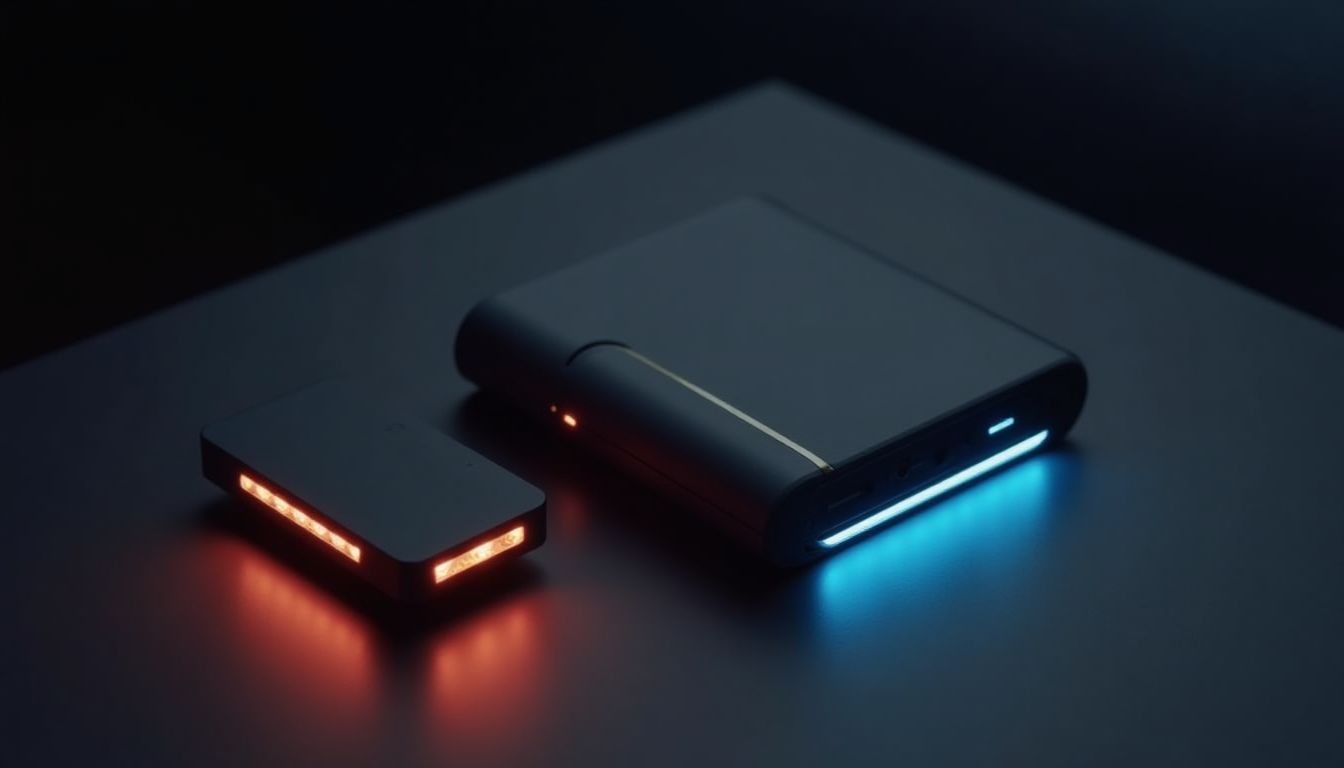
Are you planning a trip or working outside the office and need power for your laptop, power tools, or even a small refrigerator? A car inverter becomes a universal solution, converting the 12V DC power from your car battery into the familiar 220V AC power. This device opens up huge possibilities for car enthusiasts, travelers, craftsmen, and anyone who values mobility and independence from a wall outlet. However, the wrong choice can lead to a dead battery, device malfunction, or even a fire risk. This guide will help you understand the key parameters and nuances to choose the ideal inverter for your specific needs, ensuring its safe and efficient use.
? Table of Contents
What is a Car Inverter and What is it For?
A car inverter is a compact electronic device that acts as a mini power station in your vehicle. Its main function is inverting, i.e., converting low-voltage direct current (12V or 24V from the vehicle's electrical system) into high-voltage alternating current (220V or 230V), identical to what is in household outlets. This provides access to power for virtually any household appliance directly on the road or in open spaces.
The applications of inverters are extremely wide. They are indispensable for travel and camping, where they can power an electric grill, a small refrigerator, and charge drones and camera equipment. For those working on the go, it enables connecting a laptop, monitor, or printer. Construction workers use inverters to power power tools: drills, screwdrivers, small angle grinders, or saws. Even in everyday life, an inverter can save the day during a power outage, allowing you to connect lighting, charge phones, or even a TV.
It is important to understand that the inverter only converts the current; the source of energy remains the car battery. Therefore, prolonged use of powerful appliances requires monitoring the battery's condition or running the engine to recharge from the alternator.
Key Selection Parameters: Power, Waveform, Connection Type
The first and most important criterion is the nominal and peak power of the inverter, measured in watts (W). Nominal power indicates the continuous load the device can handle for an extended period. Peak (startup) power is the maximum short-term load required to start appliances with electric motors, which can be 2-3 times higher than the nominal power. To choose the power, you need to sum up the power consumption of all devices you plan to connect simultaneously and add a 20-30% margin.
The output waveform is a critically important technical parameter.
It comes in two main types: modified (square or stepped) sine wave and pure sine wave. Inverters with a pure sine wave produce a perfectly smooth signal, identical to the grid. They are suitable for all sensitive electronics: laptops, medical equipment, audio equipment, boilers, and compressor refrigerators. Inverters with a modified sine wave are cheaper but can cause humming in motors, incorrect operation, or even damage sensitive equipment. They should only be used for incandescent lamps, chargers, or tools with universal motors.
The connection type is also important. Low-power inverters (up to 150-300 W) often connect via the cigarette lighter (12V socket). For more powerful models (from 500 W and above), direct connection with terminals to the battery via a fuse is mandatory. This minimizes power loss and wiring heating.
Additional Features and Protection Systems
A quality car inverter should have a set of protections that preserve both the device itself and your car's battery. Overload protection is mandatory, automatically disconnecting the inverter when the permissible power is exceeded. Overheat protection stops operation when the internal temperature reaches a critical level. Protection against low and high input voltage is extremely important, preventing damage to the inverter during unstable alternator operation or deep battery discharge.
Among useful additional features, we can highlight active or passive cooling (fan or heatsink), which affects noise and the ability to operate in dusty conditions. An informative display showing input/output voltage, power, and temperature greatly simplifies monitoring. Additional USB ports for direct gadget charging, a remote control, or a remote switch are also convenient options.
Don't forget about physical characteristics: case quality (metal is better than plastic for heat dissipation), the length and cross-section of the included wires, and the presence of indicator LEDs. All this affects convenience, durability, and operational safety.
Practical Usage and Safety Recommendations
Even the most expensive inverter can become dangerous if operating rules are not followed. The first rule: never connect a device whose power exceeds the inverter's nominal power. Make sure your car battery is in good condition and has sufficient capacity. For prolonged use of powerful appliances (over 20-30 minutes), be sure to start the engine so the alternator maintains the battery charge.
Proper connection is the key to safety.
When connecting to the battery, always use the standard cables with a large cross-section and securely tighten the terminals. Poor contact leads to heating and possible fire. Place the inverter itself in a well-ventilated area, away from direct sunlight, moisture, and dust. Do not turn it on inside the cabin under the seat – this will cause overheating.
Also, remember about devices that are categorically not recommended to be powered by car inverters (except for very powerful stationary systems). These are, first of all, appliances with high-power heating elements: electric kettles, irons, heaters, as well as laser printers and induction cooktops. Their energy consumption usually exceeds the capabilities of a standard vehicle electrical system and alternator.
Conclusion:
Choosing a car inverter is a balance between your needs, the technical capabilities of your car, and your budget. Determine the list of devices to power, calculate the required power with a margin, and choose the sine wave type based on the sensitivity of your equipment. Don't skimp on protection features and build quality. A properly selected and operated inverter will become a reliable assistant, significantly expanding your capabilities on the road, during leisure, or at work. And remember, even the most powerful equipment needs an individual style – like the original sticker Sparkling Cross Love Dove, which you can buy at ComfortShop, to give your car a special charm and personality.