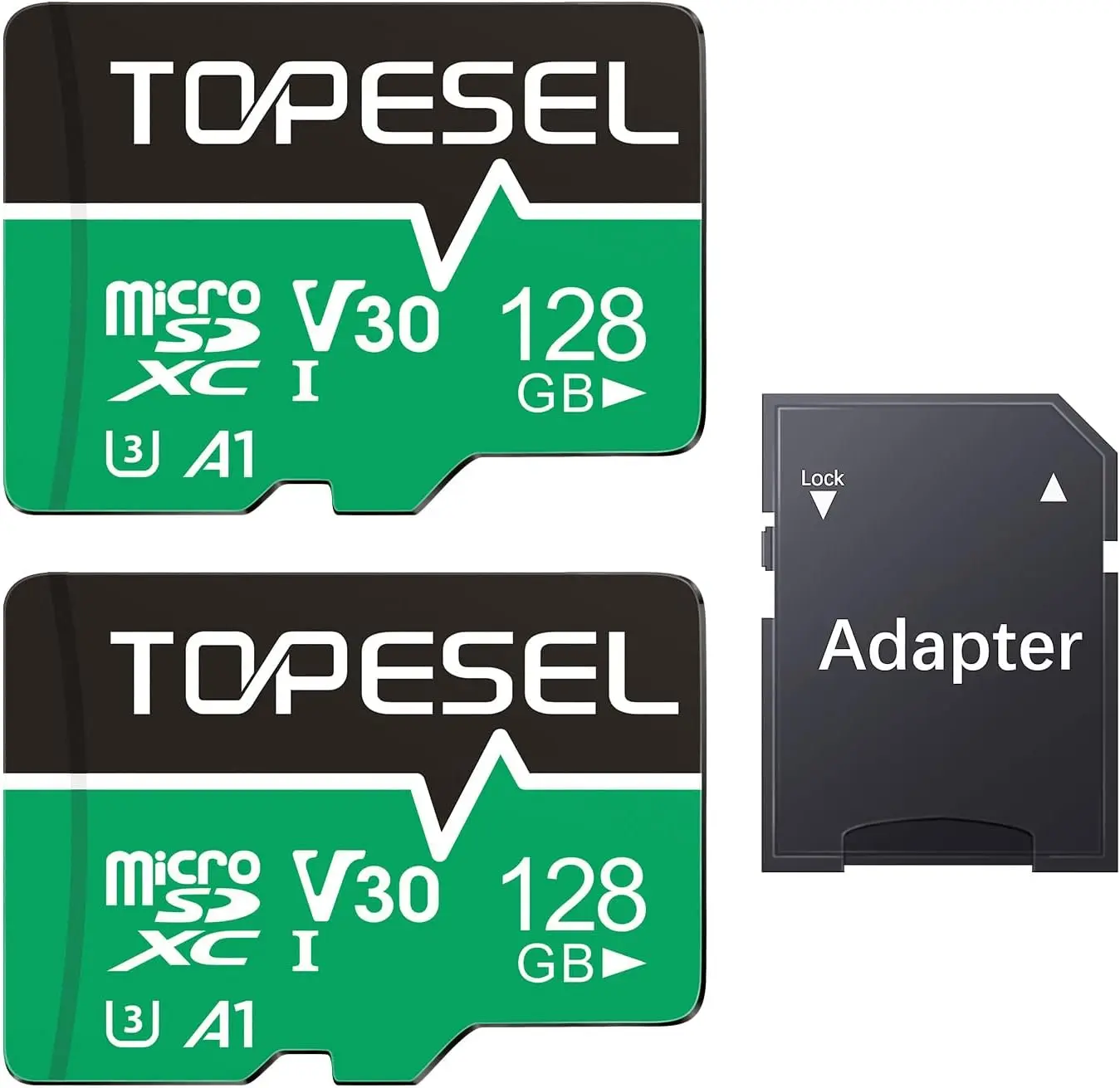
A memory card is a small but critically important component for the operation of modern devices, from smartphones to dashcams. Your choice determines not only the amount of stored data but also recording stability, file access speed, and, most importantly, the reliability of storing valuable information. This is especially true for dashcams that constantly record high-definition loop video, and for smartphones that store thousands of photos and videos. In this article, we will break down in detail which parameters to pay attention to so that your memory card serves you long and reliably, and why a set of two cards, such as the 128GB Micro SD Card 2 Pack, can be an ideal solution for various usage scenarios.
? Table of Contents
Key Characteristics: Speed Classes and Their Meaning
The first thing to look at when choosing a card is the speed class marking. This is not just marketing, but standardized designations that guarantee a minimum sequential write speed. For video recording, this parameter is crucial.
The most common classes are Class 10, U1, U3, V30, V60, and V90. The numbers after the letter "V" (Video Speed Class) directly indicate the minimum write speed in megabytes per second. For example, a card marked V30 guarantees recording at a speed of at least 30 MB/s. For modern dashcams recording in Full HD or 4K, U3 or V30 is considered the minimum required level.
For a smartphone, where the main tasks are quickly saving photos and launching apps, the speed class is also important, but the priority may shift towards read speed. Therefore, the search should begin with understanding these markings.
Memory Card for Dashcam: Reliability and Endurance
A dashcam is one of the most demanding devices for memory cards. It operates in extreme conditions: constant loop recording, high and low temperatures inside the car cabin, and vibrations. An ordinary smartphone card can quickly fail in this mode.
Critically Important Parameters for a Dashcam:
Firstly, a **high recording class (V30 or higher)** for uninterrupted high-resolution video recording. Secondly, **the presence of technologies protecting against voltage fluctuations, extreme temperatures, and wear (e.g., A2, temperature resistance)**. Thirdly, **the inclusion of an SD adapter** in the kit, allowing quick file transfer to a computer for viewing.
This is why specialized cards are often labeled "for video surveillance" or "for dashcams." They are designed for prolonged continuous use. A two-card set, like the 128GB Micro SD Card 2 Pack, provides the convenient option of having a backup medium, further enhancing system reliability.
Memory Card for Smartphone: Capacity and App Performance Speed
For a smartphone, the requirements are somewhat different. Here, not only the sequential write speed but also the random read/write speed comes to the forefront. This affects how quickly apps installed on the memory card launch or how fast games load.
For comfortable use of a modern smartphone, you should consider cards supporting the **Application Performance Class A2** (or at least A1) standard. This class guarantees minimum performance for launching applications. As for capacity, 128 GB is an excellent balance between price and the ability to store a large media library, especially when considering a two-card set.
Such a set allows you to organize your storage: use one card in your smartphone and the other in a tablet, camera, or the same dashcam. This is more cost-effective and convenient than buying two different cards separately.
Formats, Compatibility, and Additional Selection Factors
Most modern devices use the microSD format. However, it is important to ensure physical compatibility. For example, some ultra-thin laptops only have slots for the SD format, so having an adapter in the kit, as in the proposed set, is a significant advantage.
You should also pay attention to the **file system**. Large capacity cards (over 32 GB) are usually formatted in exFAT, which is compatible with Windows, Android, and modern cameras. Before using a card in a new device, it is advisable to format it directly in that device to avoid potential conflicts.
Additional factors include the manufacturer's reputation and warranty. Reliable brands use quality NAND memory and offer longer warranty periods, which is an indicator of product longevity.
Why is a Two-Card Set a Smart Solution?
Buying a dual set, such as the 128GB Micro SD Card 2 Pack, has several practical advantages. Firstly, it is more cost-effective per unit of memory. Secondly, you get a universal solution for multiple devices simultaneously, standardizing your storage media.
The main advantage is increased reliability.
Having two identical cards, you can use one actively and keep the other as a backup. This is especially important for a dashcam: if the main card fills up or fails, you can instantly replace it without losing a single minute of recording. For a smartphone, this is an opportunity to easily transfer all data to a new device or increase available space.
Thus, a dual set is not just "two instead of one," but a strategic solution for efficient and secure digital data management.

Conclusion:
Choosing a memory card should start with analyzing the needs of your device: for a dashcam, a high write speed class (V30/U3) and increased endurance are critically important, while for a smartphone, capacity and app performance speed (A2 class) are key. A set of two high-speed 128 GB memory cards, such as the 128GB Micro SD Card 2 Pack with Adapter, is an optimal and economically sound solution, providing versatility, data backup, and ease of use across various gadgets.