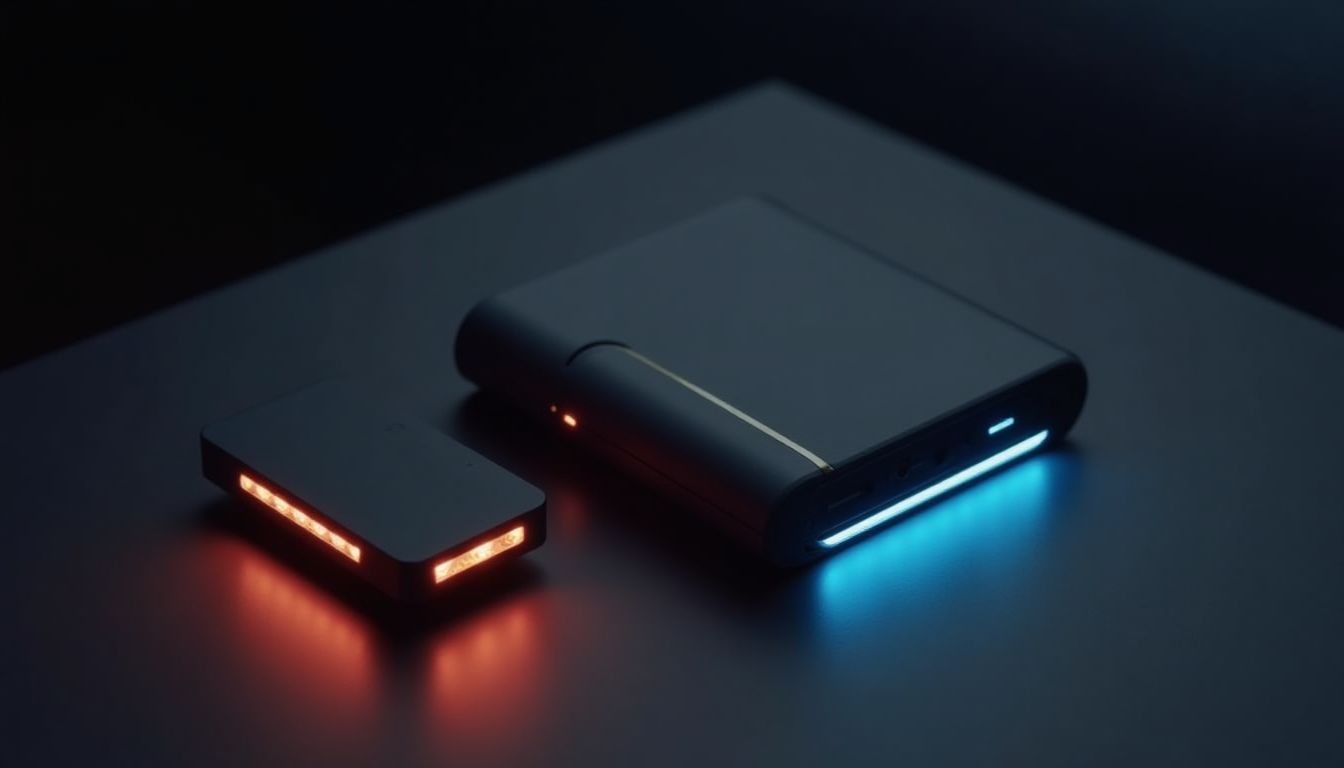
Business trips, long journeys, or just an active day in the city — a modern person rarely goes without a smartphone, navigator, or wireless headphones. And when the battery level inexorably drops, a power bank becomes a true lifesaver. However, choosing a truly reliable device that won't let you down at the most crucial moment is not so easy due to the huge assortment on the market. According to the recommendation of the ComfortShop editorial team, you should pay attention not only to the bright design but also to the technical characteristics that determine the efficiency and safety of the battery.
? Article Contents
Determining the optimal capacity for your needs
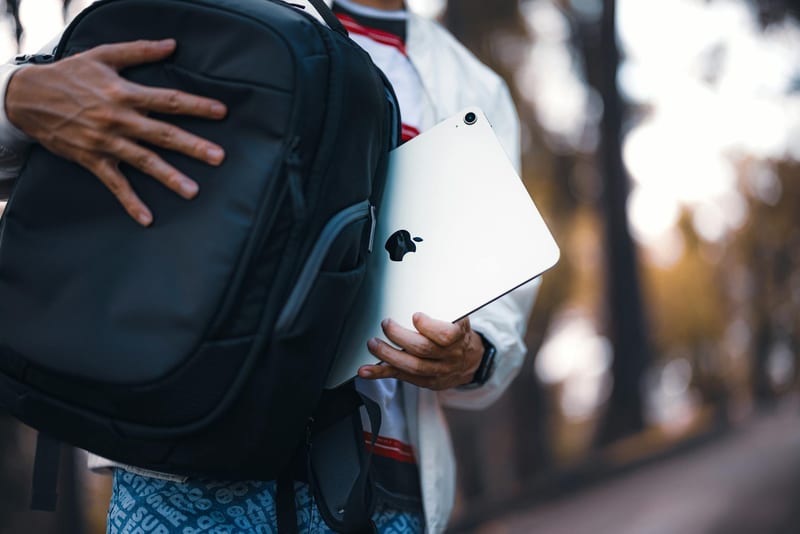
The first and most obvious parameter is capacity, measured in milliamp-hours (mAh). It determines how many times you can charge your gadgets. For daily use within the city, to top up your smartphone once or twice, a model with 5000–10000 mAh is quite sufficient.
If you are planning a long trip or have several devices, it is worth looking at power banks with a capacity of 20000 mAh or more. They can charge a modern flagship smartphone 4-5 times and also power a tablet or portable speaker. However, remember: the larger the capacity, the heavier and bulkier the device, so for hikes you need to find a compromise between autonomy and portability.
ComfortShop experts advise not to chase cheap models with 50000 mAh from unknown brands — the real capacity of such batteries is often significantly lower than stated due to the use of low-quality cells.
Charging power: speed matters
Capacity is only half the success. The second critically important characteristic is output power, measured in watts (W) or amperes (A). Modern smartphones support fast charging technologies (Power Delivery, Quick Charge), and the power bank must support them too.
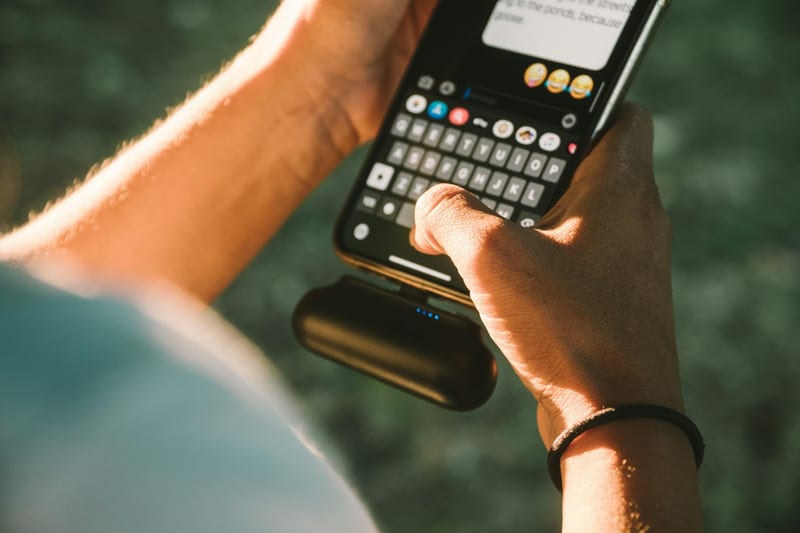
For comfortable use, choose a model with at least one USB-C port that delivers 18-20W. This will allow you to charge your phone to 50% in about 30 minutes. If you plan to charge a laptop, the power should be at least 45-65W. Pay attention to the number of ports: it is optimal to have one USB-C output, one USB-A, and possibly a microUSB for charging the power bank itself.
Don't forget about input power either. If the power bank supports fast charging on the input (e.g., 18-30W), it will restore its own charge much faster, which is very convenient when time is limited.

How to choose a power bank considering safety and durability.

Battery type and safety of use
Most modern power banks use lithium-ion (Li-ion) or lithium-polymer (Li-Pol) cells. Li-Pol are considered safer, less prone to overheating and explosion, and also allow for thinner cases. However, high-quality Li-ion batteries from well-known brands (Samsung, LG, Panasonic) are also quite reliable.
The most important thing is the presence of a protection system. A good power bank must have protection against short circuits, overvoltage, overheating, and deep discharge. Look for markings like "BMS" (Battery Management System) or "protection against 8 types of emergency situations" in the specifications. This guarantees that your device will not let you down or damage connected devices.
As ComfortShop reviewers note, you should avoid power banks without any safety certifications (CE, FCC, RoHS) — this often indicates makeshift production and potential danger.
Additional features for comfort on the road
A modern power bank for travel can be much more than just a "power bank." Useful options include support for wireless charging (Qi) — just place your smartphone on the power bank, and it will start charging without extra cables. This is very convenient in a car or cafe.
Also pay attention to the presence of an LED charge indicator (preferably a digital display) and a flashlight. Some models have a built-in cable, which is a lifesaver when you forget your cord at home. For active recreation, case protection according to the IPX standard (against splashes and dust) is important.
- Wireless charging: convenient, but slower than wired.
- Digital display: accurate display of remaining charge as a percentage.
- Built-in cables: minimize the risk of forgetting the cord.
- "Passthrough" mode: the ability to charge the power bank itself and simultaneously charge devices from it.
Case materials and dimensions: ergonomics as a priority
A power bank for travel should be not only capacious but also comfortable. An aluminum case dissipates heat better and is more durable than a plastic one, but it is heavier. High-quality matte plastic with a soft-touch coating feels nicer to the touch and is less prone to scratches.
When deciding which power bank is better, hold it in your hands. It should not be too slippery or have sharp edges. The optimal shape is a "bar" or "brick" that fits snugly in a backpack pocket. For women or people with small bags, there are compact models shaped like a lipstick or a card, but their capacity usually does not exceed 5000 mAh.
Pay attention to weight: a 10000 mAh power bank weighs about 200-250 grams, a 20000 mAh one weighs 400-500 grams. If you walk a lot, every extra gram matters.
Brand and warranty: the key to peace of mind
There are hundreds of manufacturers on the market, but not all can be trusted. Give preference to well-known brands that value their reputation: Xiaomi, Samsung, Anker, Baseus, Ugreen. They use quality components and provide a warranty (usually from 6 to 24 months).
Buying a cheap no-name power bank is a lottery. It may have a real capacity half of what is stated, fail quickly, or, worst of all, damage your smartphone due to unstable voltage. Choosing a power bank from a trusted manufacturer is an investment in the safety of your equipment.
Remember that even a quality battery requires care: do not allow it to fully discharge (put it on charge at 20-30%) and do not use it in extreme heat or frost.
Conclusion:
To choose a power bank that won't let you down on the road, you need to balance capacity, power, safety, and convenience. For short trips, a 10000 mAh model with fast charging support is sufficient, while for long journeys, choose a 20000 mAh device with additional protection. Always check real reviews and buy equipment from trusted stores. By following these simple tips, you will find a reliable companion that will power your gadgets in any situation.
Frequently Asked Questions
How to choose a power bank that will definitely charge a laptop on the go?
Look for a power bank with an output power of at least 45-65W via a USB-C port and support for the Power Delivery (PD) protocol, otherwise the laptop will not charge or will charge very slowly.
Which power bank is better to take on a long trip — 20000 or 30000 mAh?
For air travel, choose a power bank up to 27000 mAh (100 Wh), as larger capacities are prohibited from being carried in hand luggage, and 20000 mAh is enough for 3-5 days of autonomy.
Is it worth buying the cheapest power bank if it has a large capacity?
No, cheap power banks often have an inflated real capacity, weak batteries, and poor-quality electronics, which can damage your devices or fail quickly.
How to know that a power bank won't let you down in extreme conditions?
Choose a model with protection against overheating, moisture (IPX4 standard or higher), and a shock-resistant case, and also check for safety certifications (CE, FCC, RoHS).