? Table of Contents
- Introduction: When USB Ports Are Scarce and Bitcoin Dreams Are Plentiful
- Tip #1: Count Ports Like Dragons Count Their Gold — The More, the Better (But Wisely)
- Tip #2: Power Is the Alpha and Omega. Don't Feed a Lion a Salad
- Tip #3: Appearance Matters. Look for an "Industrial" Look
- Tip #4: Data and Charging — A Double Game. Don't Settle for Compromises
- Tip #5: Connection — Longer Doesn't Always Mean Better
- Conclusion:
Introduction: When USB Ports Are Scarce and Bitcoin Dreams Are Plentiful
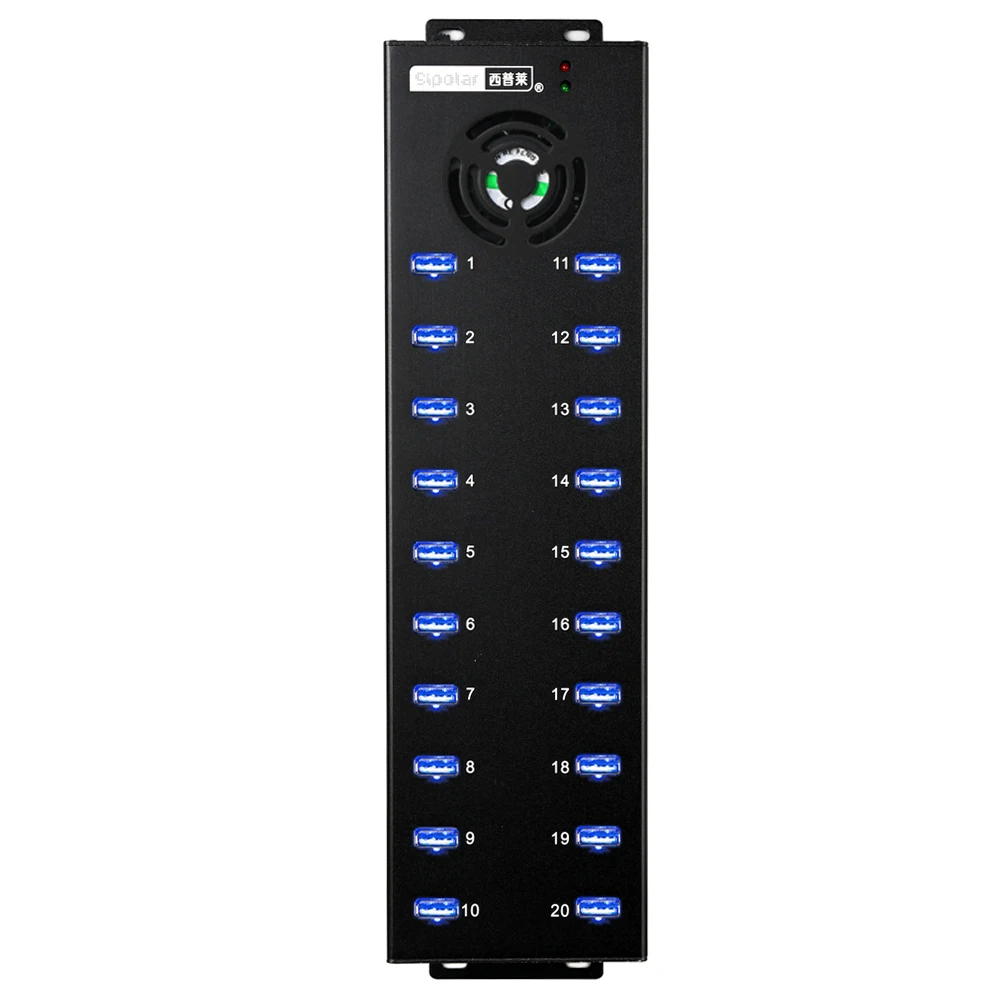
Imagine this scene: your mining farm is running like clockwork, but suddenly you realize that the free USB ports on your motherboard are as scarce as honest politicians in an old joke. Wires are tangled, devices can't be connected, and the idea of buying another computer seems as luxurious as owning a private island. That's when the true hero of the digital age steps onto the stage — the USB hub. But not just any hub, a specialized one, like the Sipolar A805P 20 Port Industrial USB Hub. Choosing such a gadget is a whole science, or, if you will, an art with elements of shamanism. Let's figure out how to avoid mistakes in your choice, but let's do it with a dose of healthy humor, because mining is a serious business anyway.
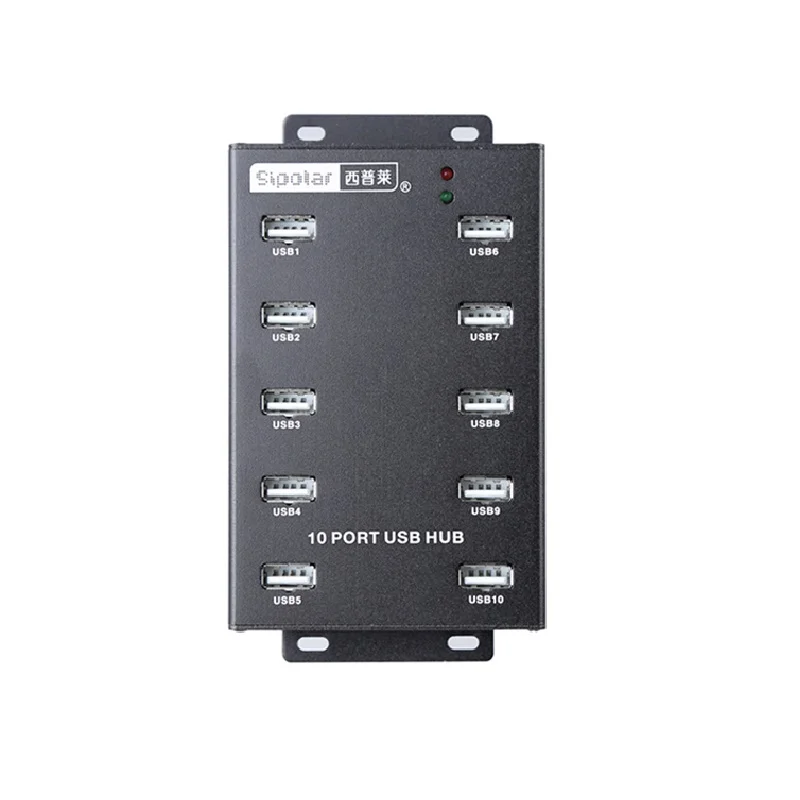
Searching for a "USB hub for mining," you'll quickly realize there are many options, but not all are worth the electricity they consume. Some promise to connect everything from a calculator to a refrigerator, while others look like they were assembled in a basement on a knee. But we need reliability, because every miner disconnected due to a poor-quality hub means lost satoshis and a damaged nervous system. Therefore, the choice must be approached with full responsibility and a few humorous but practical tips.
Tip #1: Count Ports Like Dragons Count Their Gold — The More, the Better (But Wisely)
The first question that arises is: how many ports do you need? The answer is simple: one more than you think you need. You buy a 7-port hub, connect 7 miners, and you're happy. Then you find another old ASIC on the mezzanine that "still has some life left." And that's it, apocalypse. You either have to disconnect something or buy a new hub.
The optimist miner's rule: if you have 10 devices, buy a 20-port hub.
This is where industrial solutions like the Sipolar A805P come to the rescue. 20 ports is not just a number; it's your freedom from annoying limitations. You'll be able to connect your entire farm, spare devices, and still have room to charge your phone. The main thing is to remember that each port must provide stable 1A power so your "iron workers" don't go hungry. Without this, even the coolest hub will turn into an expensive cable stand.
Tip #2: Power Is the Alpha and Omega. Don't Feed a Lion a Salad
The most common beginner mistake is to be tempted by a cheap USB hub without its own power supply. It's like trying to feed an entire zoo from one bowl. The USB port on your computer delivers limited power (usually 0.5A), which is catastrophically insufficient for a group of consumers. The result: devices are not recognized by the system, they restart, or simply don't work.
A serious cryptocurrency hub must have a powerful external power supply unit (PSU). For example, the A805P model comes with a 12V/20A PSU, allowing it to provide a full 1A to each of the 20 ports simultaneously. This is a guarantee of stability. Imagine each of your miners receiving its own separate portion of energy, rather than fighting for crumbs from a common trough. This organization of power prevents "hunger riots" in your farm and significantly reduces the risk of failures.
Tip #3: Appearance Matters. Look for an "Industrial" Look
If the device looks like its case is made from chocolate bar wrapper — run away from it. Mining requires equipment with character. An industrial USB splitter for mining usually has a sturdy metal or thick plastic case that protects against dust, accidental impacts, and overheating.
A humorous durability test: if, looking at the hub, you don't feel like placing a coffee cup on it — that's a good sign.
A metal case, like the one in the mentioned model, also dissipates heat excellently. And heat dissipation is sacred for any electronics running 24/7. Such a hub won't overheat even in a stuffy farm room where dozens of other devices are operating. It must be as resilient as the Ukrainian spirit and work without complaint, regardless of the conditions.
Tip #4: Data and Charging — A Double Game. Don't Settle for Compromises
Some cheap hubs might offer you a choice: either transfer data or charge the device. This is unacceptable for mining. Your ASIC miner or rig constantly exchanges data with the pool and simultaneously needs stable power. Therefore, it's critically important that each port of the hub supports simultaneous data transfer (data sync) and charging.
The technical specifications should clearly state: "1A each port for charging and data sync." This means the device doesn't just split the signal but ensures full-fledged operation for each connected "subordinate." Hubs for farms, like the Sipolar A805P, are built on this very principle. Each port is an independent, full-fledged channel for communication and power. It's like giving each employee a separate phone and unlimited coffee, instead of making them queue for a single device.
Tip #5: Connection — Longer Doesn't Always Mean Better
The final touch — the cable. Industrial hubs often have a separate cable for connecting to the PC (e.g., USB-B type). This is a plus because such a cable is stronger and more reliable than a standard micro-USB. But pay attention to the length! A cable that is too short (0.5 m) will force you to place the hub directly on the system unit, which can be inconvenient for access.
Optimal is a cable 1-2 meters long. This will give you freedom of maneuver for placing the mining device. Hubs with a long, sturdy cable allow you to neatly organize the farm space, move the hub aside for better ventilation, and avoid creating a "web" of wires right on the desktop. Organization is the key to a miner's peace of mind, because it's much more pleasant to look at neatly arranged "hardware" than a chaotic jumble of wires.
Conclusion:
Choosing the right USB hub for mining is not a lottery, but a balanced technical decision. Be guided not by price, but by parameters: the number of powerful ports with 1A power, the presence of a separate power supply unit, a sturdy case, and support for simultaneous data transfer and charging. Models like the Sipolar A805P 20 Port Industrial USB Hub are designed specifically for demanding tasks and will ensure stable operation of your entire farm. Invest in reliability so that your computing power works at full capacity, and you sleep peacefully, dreaming not of technical failures, but of the rising exchange rate.