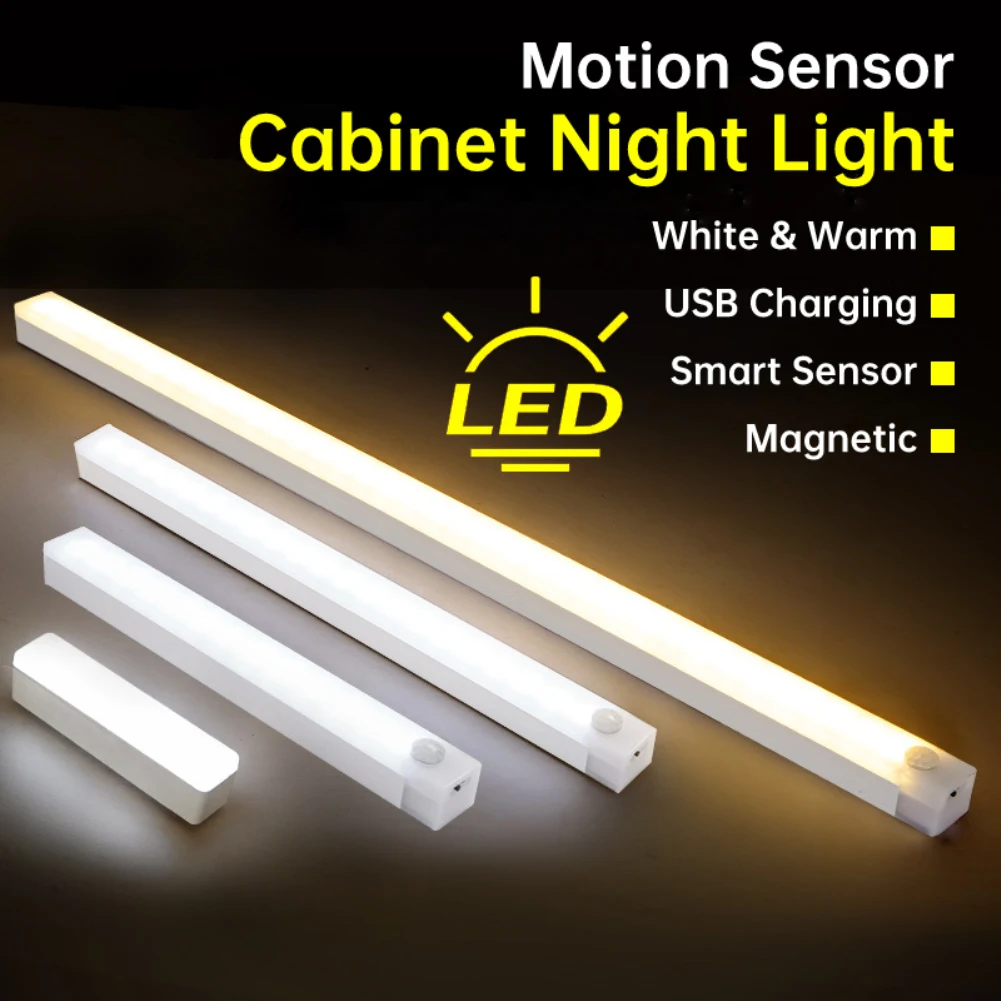
Choosing a night light for a hallway is not just a matter of lighting, but a task of enhancing the comfort and safety of your home. Classic devices often require a constant connection to a power outlet or regular battery replacement, which is not always convenient. A USB night light with a motion sensor becomes the ideal solution: it is autonomous, energy-efficient, and activates exactly when needed. Such a gadget instantly reacts to your presence in a dark hallway, providing soft light without the need to search for a switch. It is a modern, practical, and economical choice for any home.
? Table of Contents
Operating Principle and Advantages of USB Night Lights with Motion Sensor
The heart of such a lighting device is an infrared (PIR) sensor that detects changes in thermal radiation within its coverage area. When you, your child, or a pet enters this zone, the sensor activates the LED lamps. After movement stops, the night light automatically turns off after a set time interval, saving battery power.
The key advantage of such models is their autonomy based on a built-in rechargeable battery that charges via a standard USB port. You no longer need an eternally occupied outlet near the baseboard or constantly buy batteries. It is enough to periodically, for example once every 1-2 months (depending on usage intensity), recharge the device from a power bank, laptop, or wall charger.
Among other important advantages, we can highlight wireless mounting, which allows placing the night light anywhere, high energy efficiency of LED technology, as well as increased safety — the light prevents tripping over objects at night and can deter intruders.
Key Selection Parameters: What to Look For?
To ensure that a USB night light with motion sensor serves long and effectively, it is worth evaluating several technical and practical characteristics when choosing.
Diameter and Brightness of Light.
The diameter of the light panel directly affects the illuminated area. For a narrow hallway, a model with a diameter of 100-200 mm is sufficient, providing local, unobtrusive light. For more spacious foyers or stair landings, it is better to consider options of 300 or even 500 mm — they will provide brighter and more uniform lighting.
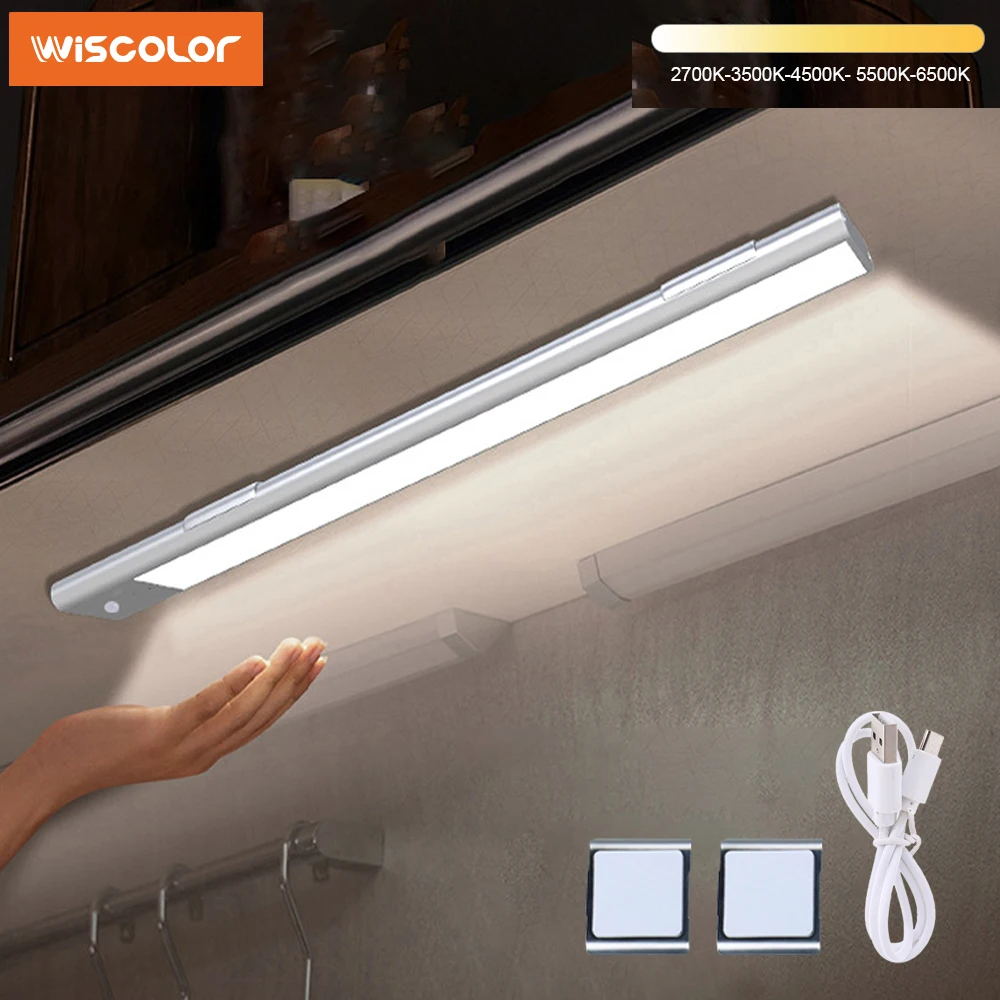
An equally important parameter is the color temperature of the light. For night lighting, warm white light (2700K-3000K) is ideal. It does not hurt the eyes when suddenly turned on in complete darkness, creates a cozy atmosphere, and does not disrupt a sleepy state, unlike cool white light.
Motion Sensor Features and Operating Modes
The quality and settings of the sensor determine the comfort of using the device. It is worth paying attention to the viewing angle (usually 120-180 degrees) and the detection range (on average 3-8 meters). These parameters should ensure stable motion detection from any point in the hallway.
Modern night lights for the hallway with motion sensor often have several operating modes that can be switched by touch:
- Automatic mode: The sensor is active, the light turns on only on motion.
- Night light mode: The device shines constantly, but with minimal brightness, acting as a backlight.
- Lighting mode: The lamp operates at full power like a regular light fixture.
Also important is the function of adjusting the illumination duration after activation (usually from 15 seconds to 5 minutes). For a hallway, a time of about 30-60 seconds is optimal — you will have time to pass through or find your keys, and the light will turn off without wasting battery power.
Mounting Methods and Additional Functions
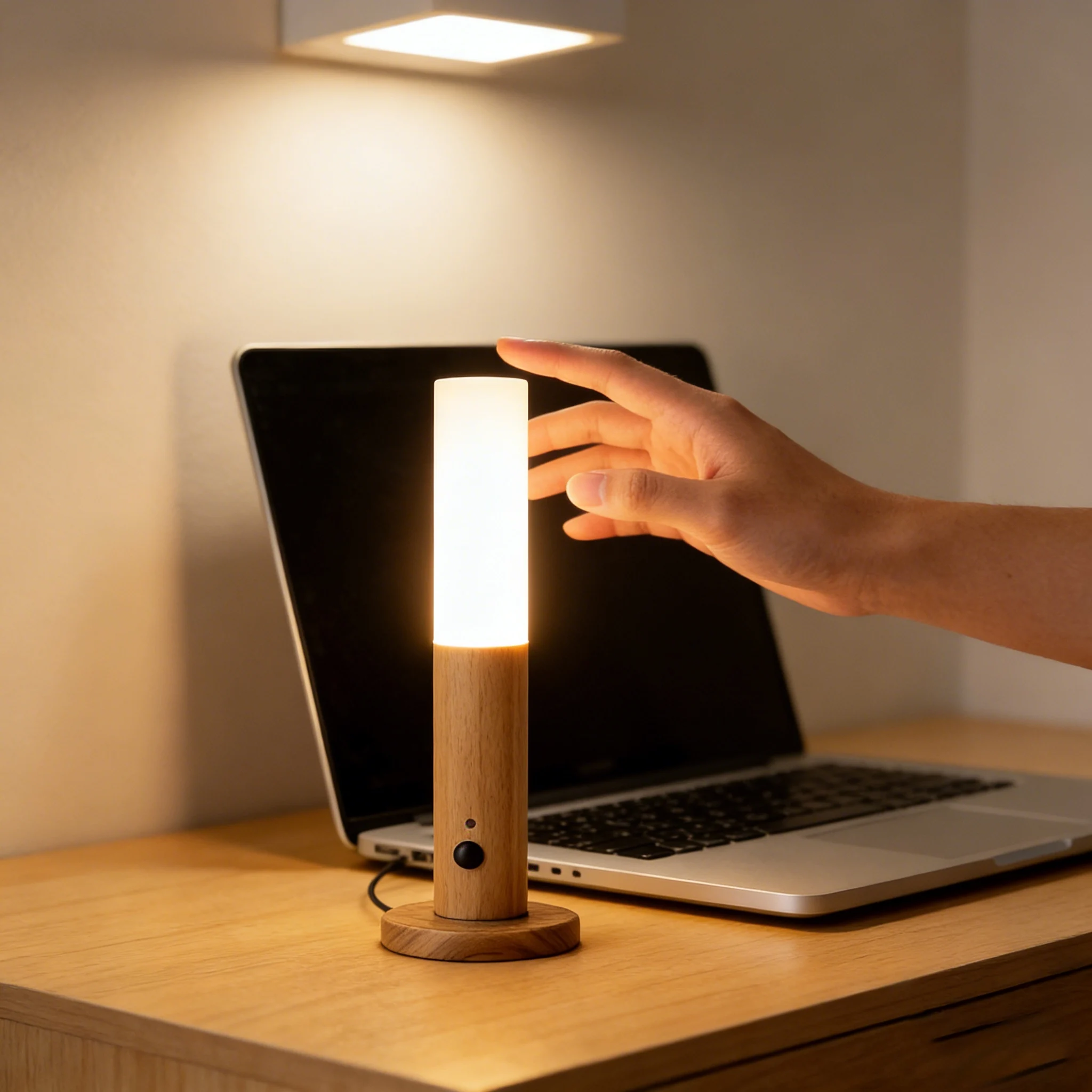
The wireless design opens up wide possibilities for placement. The most common and reliable option is magnetic mounting. The base with a magnet is fixed to the wall or furniture using double-sided tape or screws, and the LED night light with motion sensor itself is easily removed from the base for charging or repositioning. This is very convenient for USB-powered devices.
Where else can such a night light be used?
Although the article is dedicated to the hallway, the versatility of the device allows its use in other locations: in the bathroom, as backlighting for a closet or dressing room, under a bed in a child's room, in the kitchen above a work surface, or near the front door as signal lighting.
Among the useful additional functions, we can note protection against dust and moisture (IP rating), which is important for bathrooms, as well as the presence of a built-in light sensor. The latter allows the device to activate on motion only in conditions of insufficient natural light, which further saves battery power during the day.
How to Properly Place a Night Light in the Hallway?
For maximum effectiveness, it is important not only to choose a USB night light but also to install it correctly. The optimal placement height is 1-1.5 meters from the floor. This is the level at which the sensor best detects human movement, and the light does not blind the eyes.
Avoid placing it directly opposite heat sources (radiators, heaters) or in the path of direct airflow from an air conditioner to prevent false sensor activations. The best place is on a wall perpendicular to the direction of movement, or at the end of the hallway, so the light turns on when entering it.
Also, ensure that the sensor's detection zone is not blocked by large interior items, such as a tall vase or wardrobe. This will ensure stable motion detection from any point.
Conclusion:
A USB night light with a motion sensor is a smart investment for creating safe, comfortable, and energy-efficient lighting in the hallway. When choosing, focus on the diameter, light type, sensor characteristics, and convenient magnetic mounting. Such a device will not only light your way at night but also add modernity and functionality to your home.