An electric car is not just a vehicle, but part of a new lifestyle where convenience starts with your own garage or parking space. To greet every morning with a fully charged battery, it is worth planning the home charging infrastructure in advance. The right choice of equipment and its installation turn a routine task into a fast and safe process that saves time and money. As noted by ComfortShop reviewers, the modern market offers solutions ranging from simple portable devices to powerful stationary stations with intelligent control.
Article Contents
Types of Home Charging Devices
Before deciding what to install for charging an electric car, it is important to understand the difference between the two main categories of equipment. The first type is standard portable charging devices (EVSE), which often come with the car or are purchased separately. They connect to a standard 220 V outlet and provide slow charging at a power of 2.3–3.7 kW.
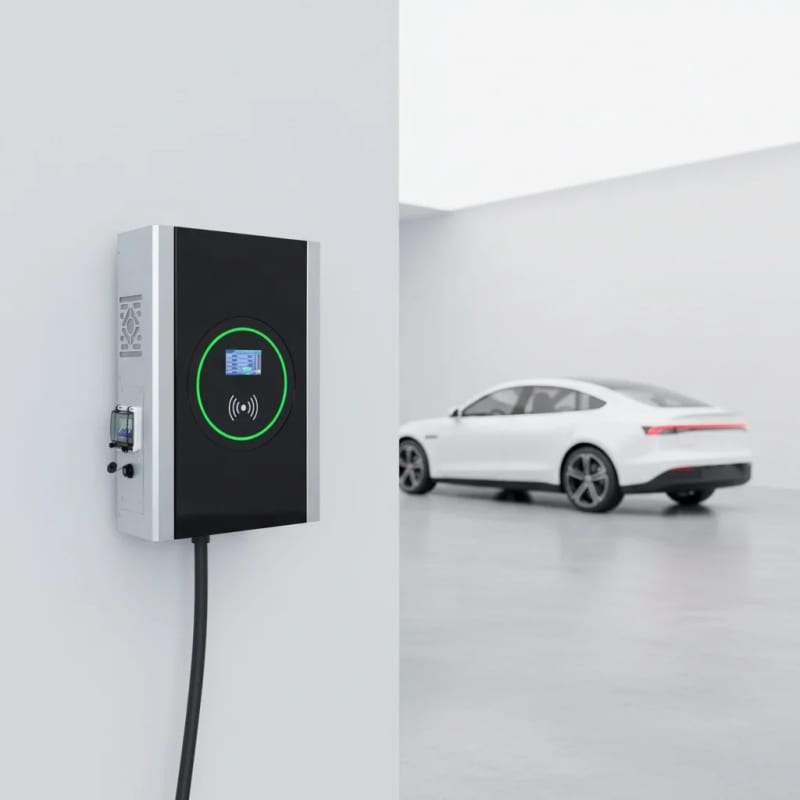
The second type is stationary wall-mounted charging stations (wallbox). They are mounted on a garage wall or on a special stand and connected to a separate electrical line. Such stations provide power from 7.4 to 22 kW, allowing the battery to be charged in 4–6 hours instead of 12–20 hours.
The choice of a home charging station depends on the technical capabilities of your electrical grid and budget. For most modern electric cars, a 7.4 kW station is considered optimal — it provides sufficient speed without overloading the home wiring.
Electrical Grid Requirements and Safety
Equipment for charging an electric car requires careful preparation of the home electrical system. A standard European-style outlet can only withstand a continuous load of up to 2.5–3 kW, so installing a powerful station requires running a separate cable from the distribution board.

It is recommended to use a copper cable with a cross-section of at least 6 mm² for 7.4 kW stations and 10 mm² for 11–22 kW devices. A mandatory element is a circuit breaker and a residual current device (RCD) with a rating corresponding to the station's power.
ComfortShop experts advise paying attention to models with built-in protection against voltage fluctuations, overvoltage, and current leakage. This is critically important because home electric car charging often occurs at night when no one is monitoring the process. Additional protection guarantees safety for both the car and the entire home electrical network.
Criteria for Choosing a Home Charging Station
To make the right choice of a home charging station, it is worth evaluating several key parameters. First, the connector type — most European and Asian electric cars use the Type 2 (Mennekes) standard. Some older models may require Type 1, so be sure to check compatibility before purchasing.
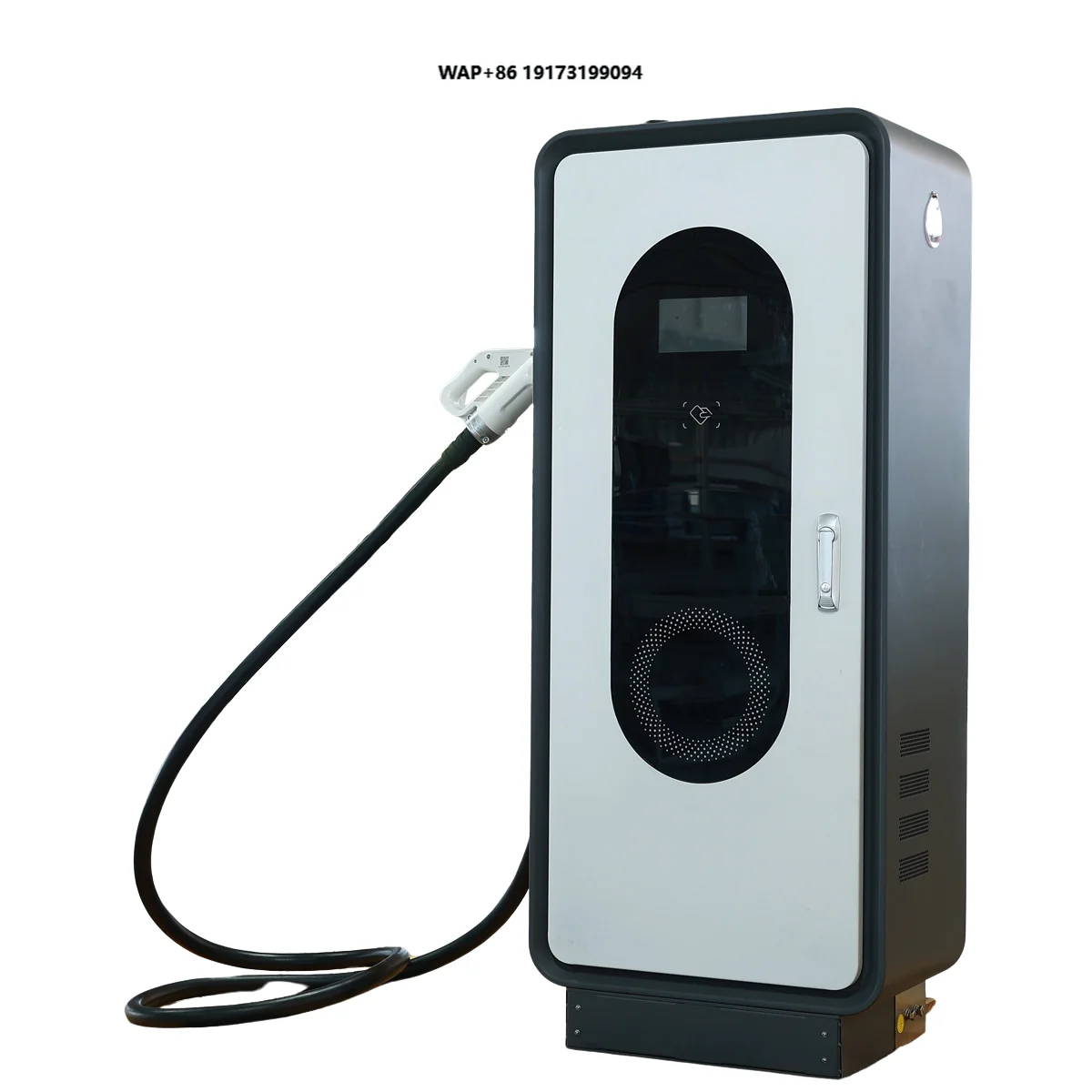
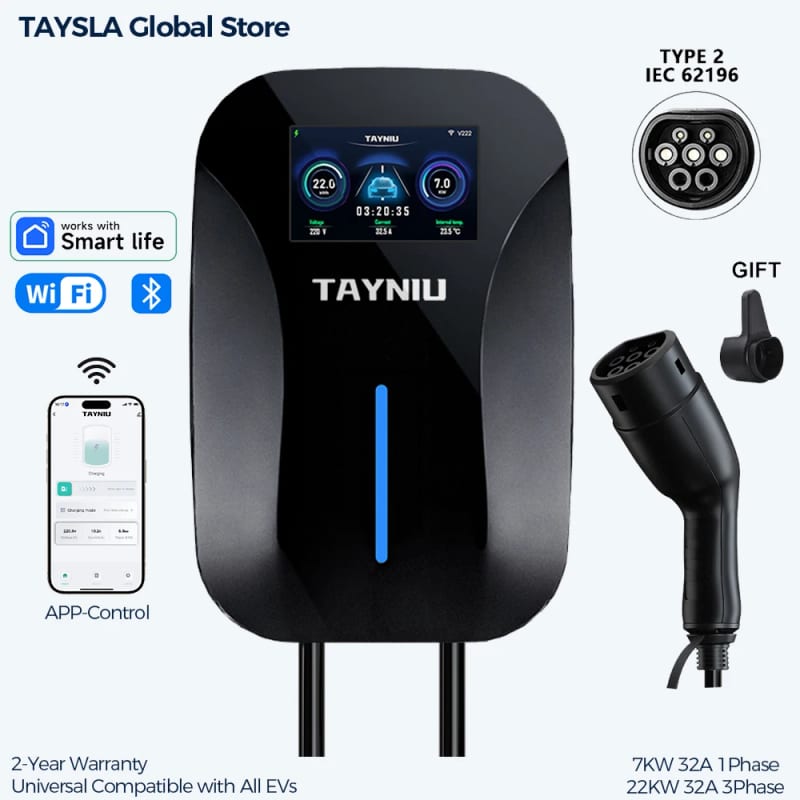
Second, pay attention to the power adjustment function. The best models allow you to set the current level manually or automatically, which helps avoid overloading the home network, especially if other powerful appliances are running simultaneously.
Third, evaluate the availability of intelligent functions. Modern stations can have Wi-Fi or Bluetooth for monitoring via a mobile app, scheduled charging, and integration with home solar panels. This allows you to charge the car during hours with the lowest electricity tariffs.
How to choose the power for charging an electric car in the garage:
For most apartment owners with a parking space in an underground garage, a 7.4 kW station is optimal. It provides approximately 40–50 km of range per hour, which fully covers the daily needs of an average driver. If you have a private house with a three-phase network, you can consider an 11 or 22 kW option — this will reduce charging time to 2–3 hours.
Installation and Placement of Equipment
Proper placement of the charging station affects the convenience of daily use. The optimal location is the garage or parking wall at the level of the car's rear or front bumper. The station's cable should freely reach the charging port without tension, but not lie on the floor where it could be damaged by a wheel.
If you plan to charge your electric car at home in an open parking space, choose stations with a protection class of IP54 or higher — they are resistant to rain, dust, and temperature changes. For outdoor installation, it is also worth purchasing a special bracket or stand that secures the device at the required height.
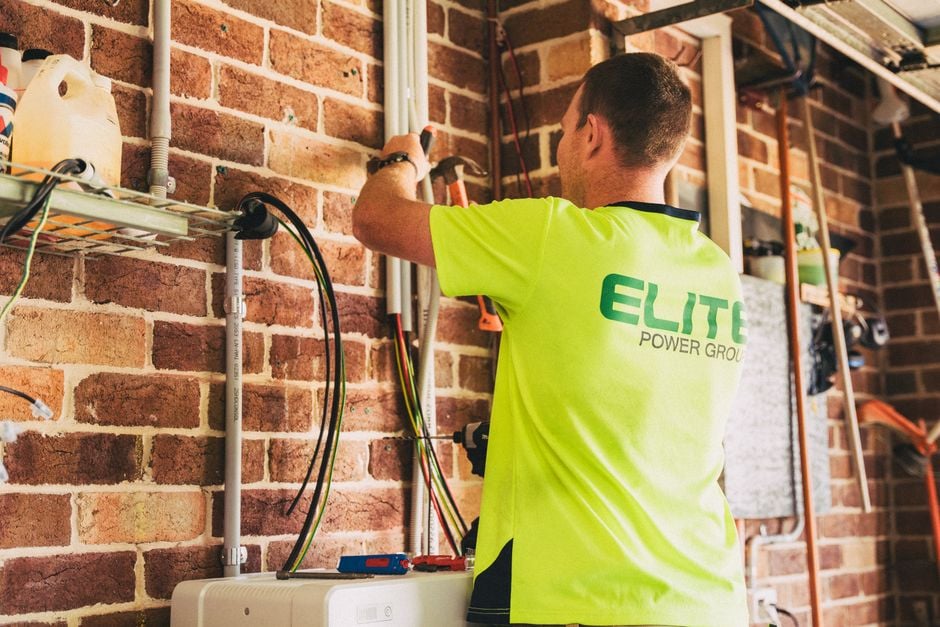
Installation of any equipment for charging an electric car must be performed by a qualified, licensed electrician. Self-connection can lead to car damage, fire, or loss of the station's warranty. The cost of professional installation is usually between 2000 and 5000 hryvnias, depending on the complexity of the work.

Additional Equipment and Accessories
In addition to the charging station itself, it is worth considering several useful accessories that will increase comfort. For example, a cable holder (cable manager) helps neatly store the cord when not in use, preventing tangling and damage.
It is also useful to purchase an additional set of adapters for different types of outlets — this will come in handy if you plan to charge at a friend's house or at work. Some owners install a portable charging device as a backup option for travel.
For residents of apartment buildings, installing a separate electricity meter for the charging station is relevant. This allows for accurate accounting of consumed energy and paying only for your own charging, which is especially important when sharing a parking lot.
Conclusion:
Home electric car charging is an investment in convenience and savings that requires a competent approach to equipment selection. The optimal solution for most owners is a 7.4 kW wall-mounted station with protection against voltage fluctuations and intelligent control. According to the recommendation of the ComfortShop editorial team, before purchasing, it is worth consulting with an electrician about the condition of the home network and choosing a model with a power reserve for the future. A properly installed charging station will become a reliable assistant for many years of electric car operation.
Frequently Asked Questions
Is it mandatory to install a separate charging station, or can I charge from a regular outlet?
Charging from a regular outlet is possible, but it is very slow (up to 20 hours for a full battery) and can be dangerous due to wiring overload. For fast and safe home electric car charging, it is better to install a specialized home charging station.
What power charging station should I choose for home?
For most homes, the optimal choice is a charging station with a power of 7.4 kW (single-phase network) or 11 kW (three-phase network), which allows fully charging the electric car in 4-8 hours. More powerful stations (22 kW) usually require separate permission and electrical grid modernization.
What should I check in the garage before installing charging equipment?
Before installing equipment for charging an electric car in the garage, it is necessary to check the condition of the electrical wiring, the presence of grounding, and the total power of the main circuit breaker. If the network is old or weak, you will need to call an electrician to run a separate line from the distribution board.
Can a charging station be installed outdoors near the house?
Yes, most modern home charging stations have protection against dust and moisture (IP54 or higher) and are designed for outdoor installation. The main thing is to ensure reliable mounting on a wall or separate stand and protection from direct sunlight and precipitation.