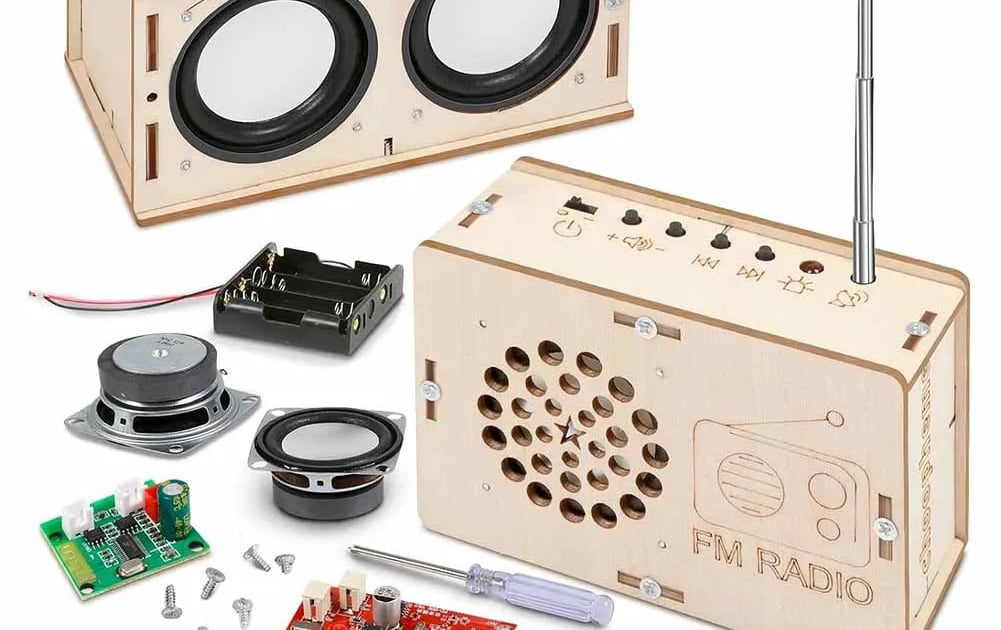
Choosing an educational toy today is no longer just a trip to the store, but a real research project. Especially when it comes to such a complex category as a children's electronic construction kit. Parent reviews are often contradictory: some are delighted with the first assembled circuits, others complain about the complexity or fragility of the parts. This honest review of the construction kit will help you understand the real pros and cons, as well as whether the game is worth the candle. Based on the recommendation of the ComfortShop editorial team, we analyzed the most popular models to give a balanced assessment without unnecessary emotion.
Article Contents
What is an electronic construction kit and why has it become popular

An electronic construction kit for children is a set of components that allows you to assemble real electrical circuits without soldering. Unlike regular LEGO blocks, here the child works with transistors, resistors, speakers, and microchips. The main idea is to show the basics of physics and electrical engineering through play. That is why such sets have become a hit among parents looking for an alternative to mindless gadgets.
The popularity of these sets is driven not only by the STEM education trend. This is that rare case where a toy grows with the child. The first circuits, like a simple flashlight or fan, evolve into complex projects — radios or alarm systems. This stimulates logic and engineering thinking, which is an undeniable plus in any review.
Electronic construction kit for children: pros and cons in practice
To make this review truly honest, it is worth laying all the cards on the table right away. Let's start with the positive aspects that are most often mentioned in reviews.
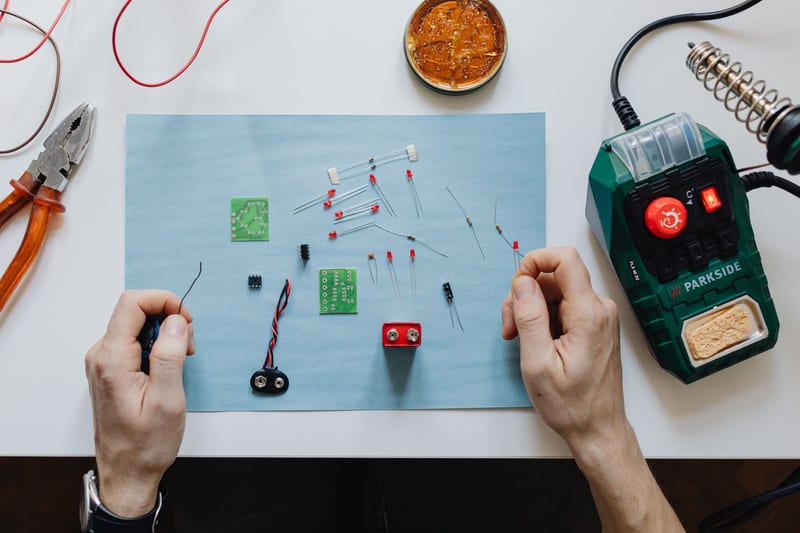
Obvious advantages for a child's development:
- Visualization. Abstract theory from a physics textbook turns into a concrete result: the light bulb lights up, the propeller spins.
- Safety. Modern sets operate on low-voltage batteries, making electric shock impossible.
- Increased interest in science. The child begins to understand how the technology around them works.
However, the children's electronic construction kit receives not only positive reviews. Based on an analysis of the characteristics, ComfortShop recommends paying attention to several critical points.
The main drawback is the fragility of the connecting wires in cheap models. If a child carelessly yanks out parts, the contacts quickly become loose. The second disadvantage is the limited number of parts in starter sets. Often, a child assembles all 15-20 circuits within a week, and the set becomes uninteresting without purchasing additional modules. It is also worth noting the high cost of quality branded construction kits.
How to choose an electronic construction kit: key criteria
The question of "how to choose an electronic construction kit" is particularly acute due to the huge price range. The first thing to look at is the type of part connection. The most reliable is considered to be the button (clip) fastening, as used by well-known brands. It ensures good contact and withstands hundreds of assemblies. Poor contact is the main cause of children's tears when the circuit "doesn't work for some reason."

The second criterion is age appropriateness. For preschoolers, sets with large, bright parts and minimal text in the instructions are suitable. An electronic construction kit for a schoolchild should contain more complex elements: multimeters, solar panels, or programming. After analyzing open sources, the ComfortShop editorial team notes that the ideal starting age is 6-7 years old, when a child can already consciously read circuits.
Pay attention to the number of proposed projects in the instructions. A good set should have at least 50-100 circuits. This guarantees that interest will not fade after one evening. Also important is the availability of a Russified (or better yet, Ukrainian-language) instruction manual with clear explanations of physical principles, not just "do it this way" pictures.
Overview of the best options for different ages
The market offers many solutions, but we have highlighted several categories that deserve mention in this review. This is not an advertisement for specific brands, but an attempt to systematize the choice.
What types of sets are available by difficulty level:
- Beginner level (5+ years). Simple circuits like "flying propeller" or "light music." Minimum wires, emphasis on sensory play.
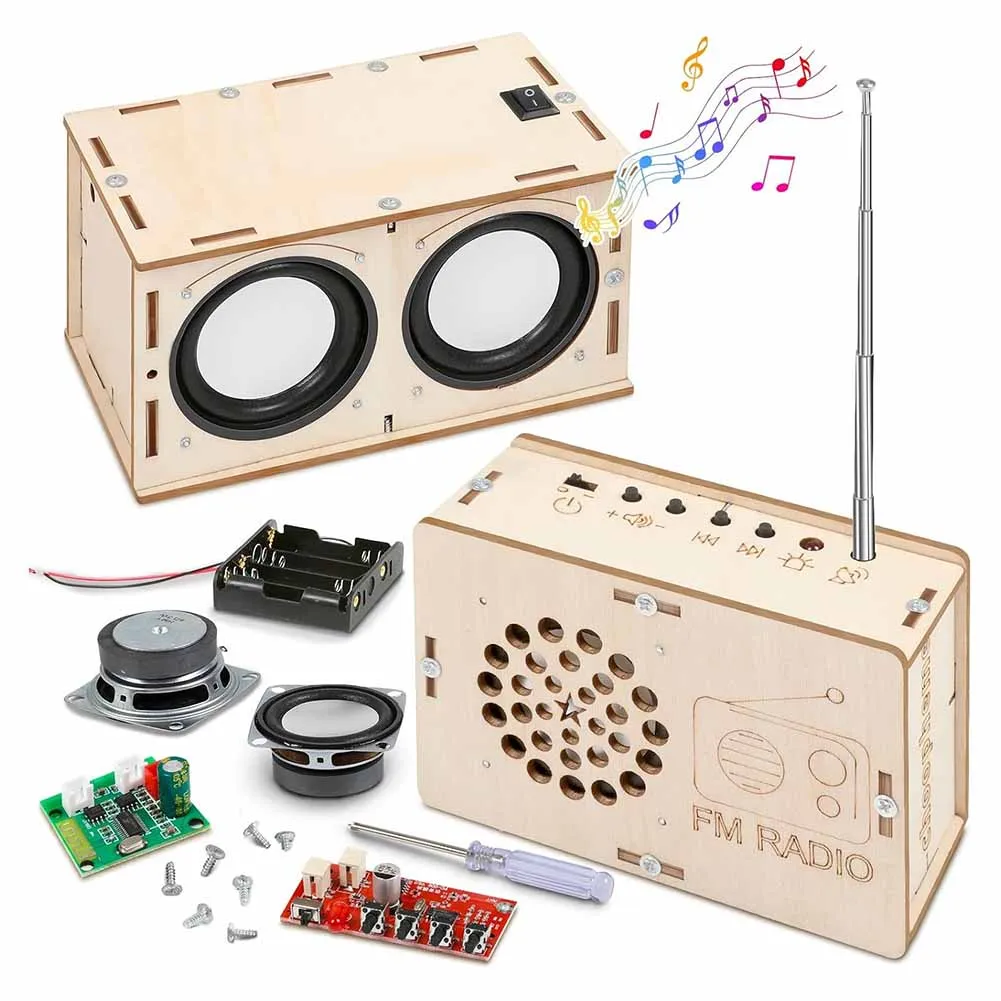
- Intermediate level (8+ years). Introduction to transistors, capacitors, assembling an FM radio or sound amplifier.
- Advanced level (12+ years). Construction kits with Arduino or Raspberry Pi, where programming is required to control robots.
For younger schoolchildren, sets with a base platform where parts are simply plugged in are ideal. They provide quick results and do not require much patience. An electronic construction kit for an older schoolchild is better chosen with the ability to connect with LEGO or a metal construction kit — this opens up space for creativity.
Sets for girls deserve special mention. Contrary to stereotypes, they often show more care and attention during assembly. Manufacturers have started producing lines with transparent colored casings and projects related to lighting design, making the process even more interesting.

Typical parental mistakes when using
Even the best electronic construction kit for children can disappoint if used incorrectly. The most common mistake is buying a set "for growth." If a child is 5 years old and the construction kit is designed for 10, they simply won't understand the physics of the process and will abandon the game. Brain maturation hasn't been canceled.
The second mistake is the complete withdrawal of parents. Yes, this toy develops independence, but at the start, adult help is essential. You need to explain polarity, why you can't short-circuit contacts directly, and how to read circuits. Based on an analysis of characteristics and reviews, the ComfortShop editorial team advises assembling circuits together for the first 2-3 evenings, turning it into a family ritual. This will remove the fear of complexity and prevent component breakage due to incorrect connection.
Conclusion:
An electronic construction kit is not just a toy, but a powerful educational tool that justifies its price when chosen correctly. An honest review of the construction kit shows that there are significantly more pros than cons, the main thing is not to skimp on the quality of connections and age appropriateness. If you are looking for a way to distract your child from passively consuming content and instill a love for engineering, this choice will be one of the best investments in their future.
Frequently Asked Questions
Which electronic construction kit for children is considered the best for a schoolchild?
For a schoolchild, the best choice would be a construction kit with a set of basic circuits (from 15 to 50) and compatibility with a smartphone or Arduino, as this allows a gradual transition from simple connections to more complex projects.
What are the main pros and cons of children's electronic construction kits?
The main advantage is the development of logic, engineering thinking, and programming skills, while the disadvantage is that many cheap sets have fragile connections and poor-quality instructions, which quickly kills a child's interest.
How to choose an electronic construction kit so it doesn't gather dust on the shelf?
Choose a set according to the child's age and interests: for little ones — large parts with magnets, for teenagers — modules with microcontrollers and the ability to create their own toys or robots.
Is it worth buying an electronic construction kit for a child who isn't interested in physics?
Yes, but choose themed sets (for example, "spy devices" or "musical instruments") that present physics through play rather than boring circuits — this often changes a child's attitude toward the subject.